Plumbers Near Me logo
Solar geyser hot-water conversion systems only

100 Litre Solar Geyser Evacuated Tube Conversion System

100 Litre Evacuated Tube Solar Geyser Conversion System For Small Homes, Apartments, Granny Flats And Low-Demand Households

100 litre solar geyser evacuated tube conversion system for solar hot water, GeyserWise control, correct valves, collector planning, installation advice, repair support and free quote support.

  • Phone: 067 657 6109
  • Emergency: 067 895 4361
  • WhatsApp: 072 139 8945
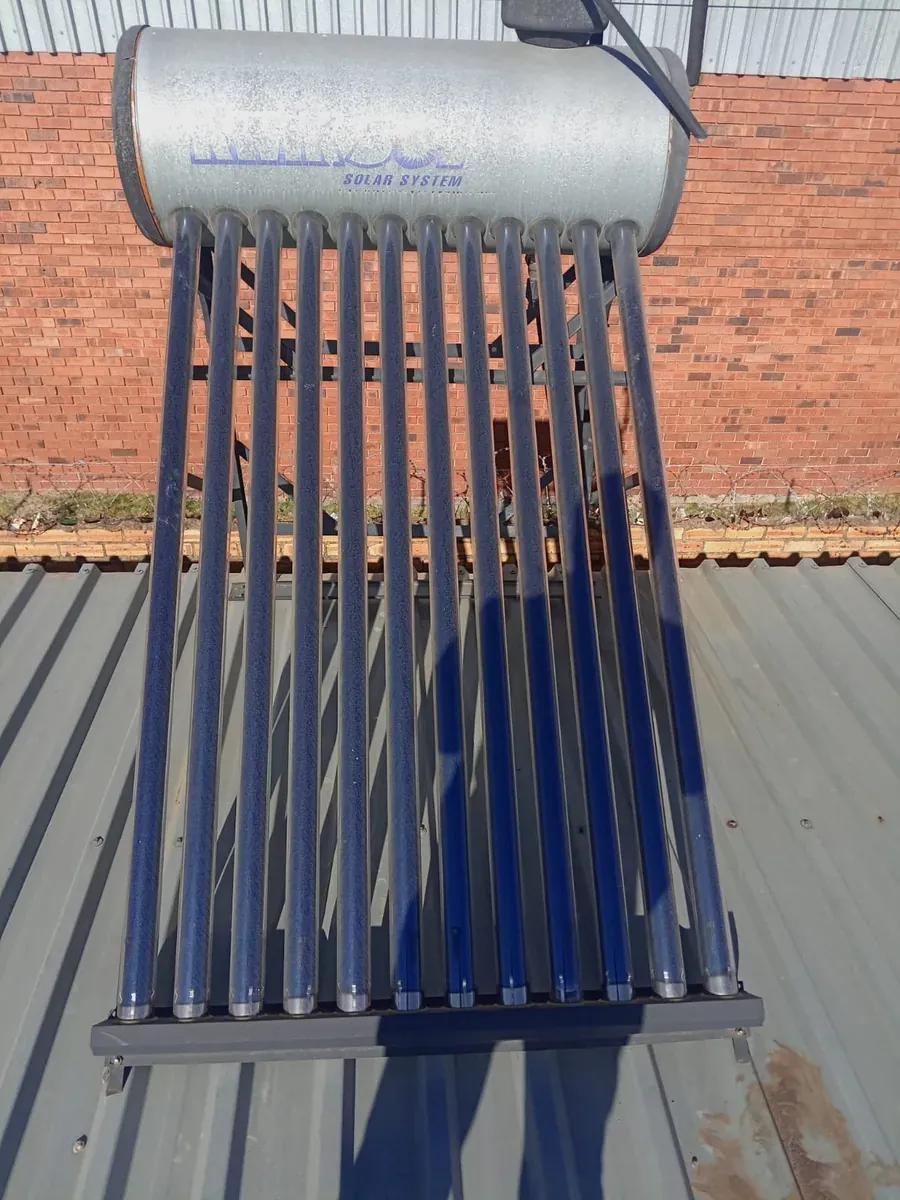
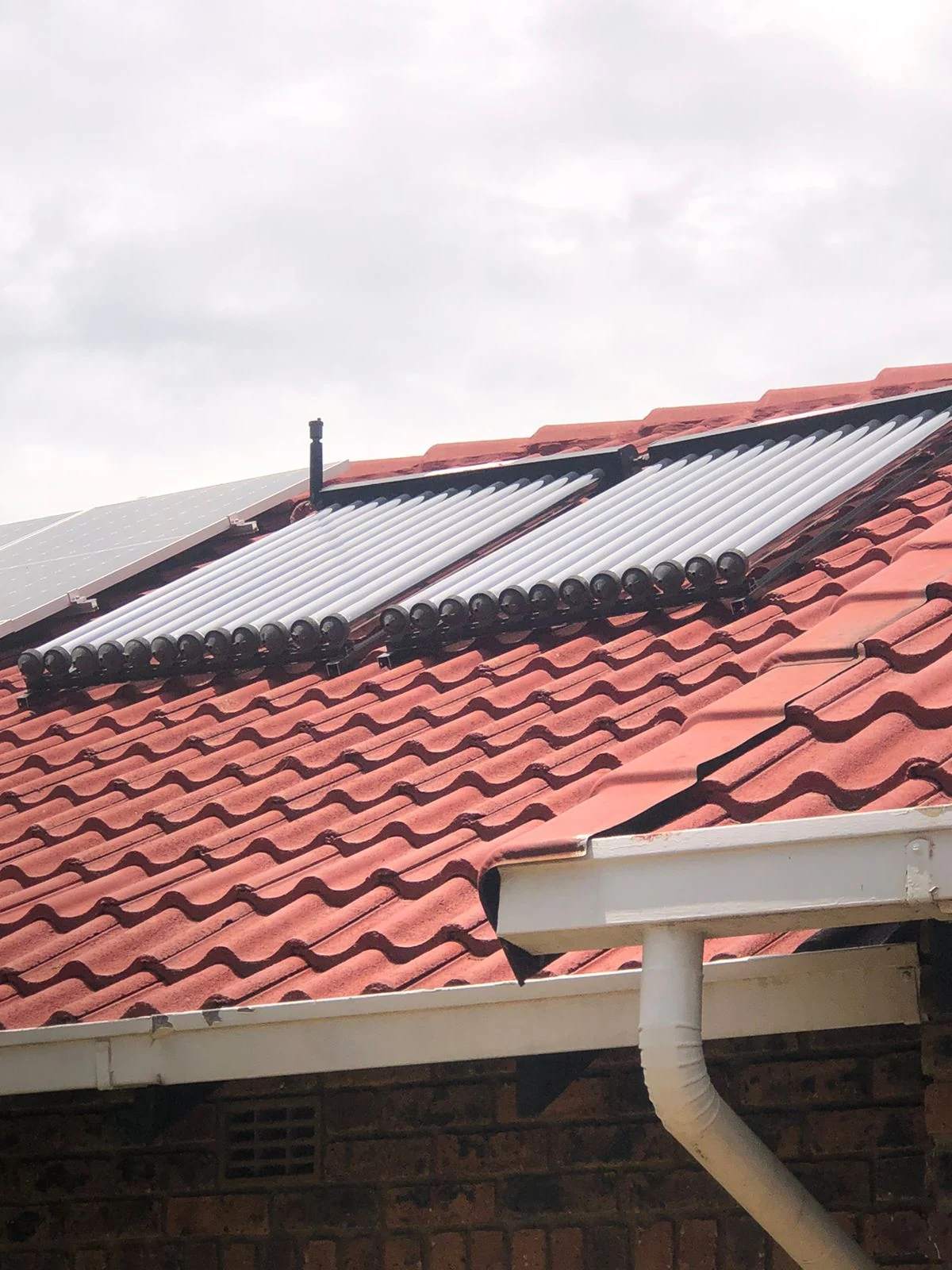
100 litre solar geyser conversion collector installed on a tiled roof

100 Litre Evacuated Tube Solar Geyser Conversion System For Small Homes, Apartments, Granny Flats And Low-Demand Households

A 100 litre evacuated tube solar geyser conversion system is normally best for 1 to 2 occupants where hot-water use is controlled and predictable. It suits apartments, granny flats, garden cottages and small bathrooms where storage demand is modest but the customer still wants solar-assisted hot water with a clear backup heating plan.

A 100 litre evacuated tube solar geyser conversion system is best suited to one or two people, compact apartments, granny flats, staff rooms, small offices or properties where hot-water demand is light and predictable. It is not the correct choice for a busy family bathroom, but it can work very well where showers, basins and kitchen use are limited and the customer wants solar-supported hot water without oversizing the system.

This size is normally considered for 1 to 2 occupants or a low-demand point-of-use style hot-water setup. The final recommendation must still consider shower habits, bath use, roof exposure, pipe distance, valve condition and whether the existing geyser should be reused or replaced.

We can discuss systems and compatibility around Kwikot, Heat Tech, ITS, Megasun, Solahart, SunTank, Chromagen, GeyserWise, Duratherm, Alliance Solar and Solar Shine. The correct option depends on the geyser size, collector choice, roof exposure, pipe route, pressure control, GeyserWise requirements, household demand and whether the current geyser should be reused or replaced.

For existing systems that are not performing correctly, see solar geyser repair. For broader conversion planning, see solar geyser conversion. For old, leaking or undersized tanks, compare the conversion with geyser installation or burst geyser replacement.

Installation Included
Plumbing CoC Where Required
GeyserWise Options
Solar Geysers Only

System Overview

This size is normally considered for 1 to 2 occupants or a low-demand point-of-use style hot-water setup. The final recommendation must still consider shower habits, bath use, roof exposure, pipe distance, valve condition and whether the existing geyser should be reused or replaced.

This is not a generic solar power page. It is for solar geyser hot-water systems only. No inverter, battery or photovoltaic sales language has been added.

Solar Geyser Brands And Controller Options

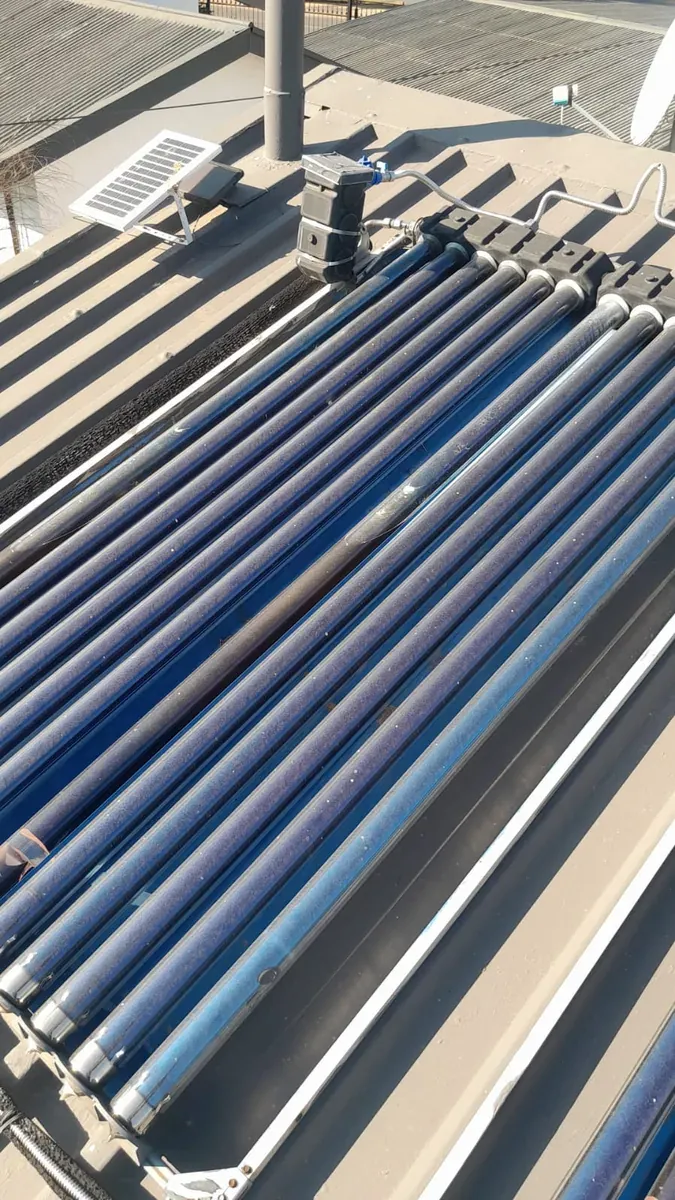
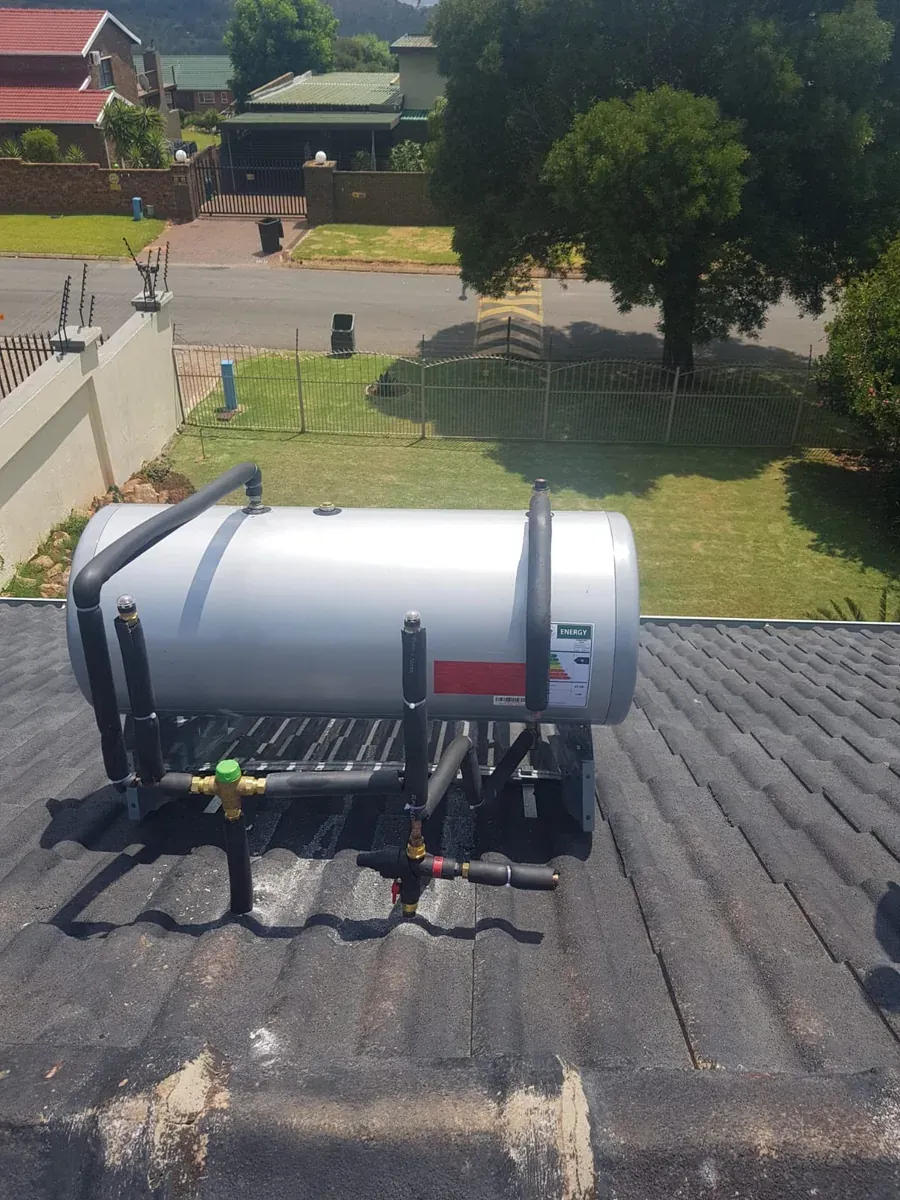
solar geyser controller and collector pipework installed on a tiled roof

Controller And Brand Compatibility

When comparing solar geyser brands, the controller and the roof-mounted collector must be considered together rather than treated as separate parts. A 100 litre evacuated tube conversion can only perform properly when the collector size, sensor position, pipe route, valve layout and backup heating control all work as one system.

The controller should give the customer a clear understanding of water temperature, booster timing and how the system behaves during sunny, cloudy and high-use periods. If the controller is not matched correctly to the system, the customer may get poor readings, unnecessary electrical boosting, weak solar recovery or confusion about when hot water is actually available.

Brand compatibility is also important because different systems can use different sensor pockets, fittings, manifolds, mounting rails, tube layouts and connection methods. A brand may look suitable on paper, but the existing geyser position, roof pitch, available sunlight, pipe distance and service access can change the final recommendation.

The brand discussion should therefore include installation realities, not only product names. The correct choice must allow the plumber to inspect, repair and maintain valves, sensors, pipe insulation, collector connections and controller wiring later without dismantling half the roof installation. That is what turns a product purchase into a reliable solar geyser conversion.

Brand conversations may include Kwikot, Heat Tech, ITS, Megasun, Solahart, SunTank, Chromagen, GeyserWise, Duratherm, Alliance Solar and Solar Shine. Brand suitability depends on availability, correct sizing, warranty conditions, pressure rating, controller setup and whether the installation is thermosiphon or pumped. GeyserWise is often discussed because it helps customers see temperature readings and manage booster times.

Installation And Conversion Requirements

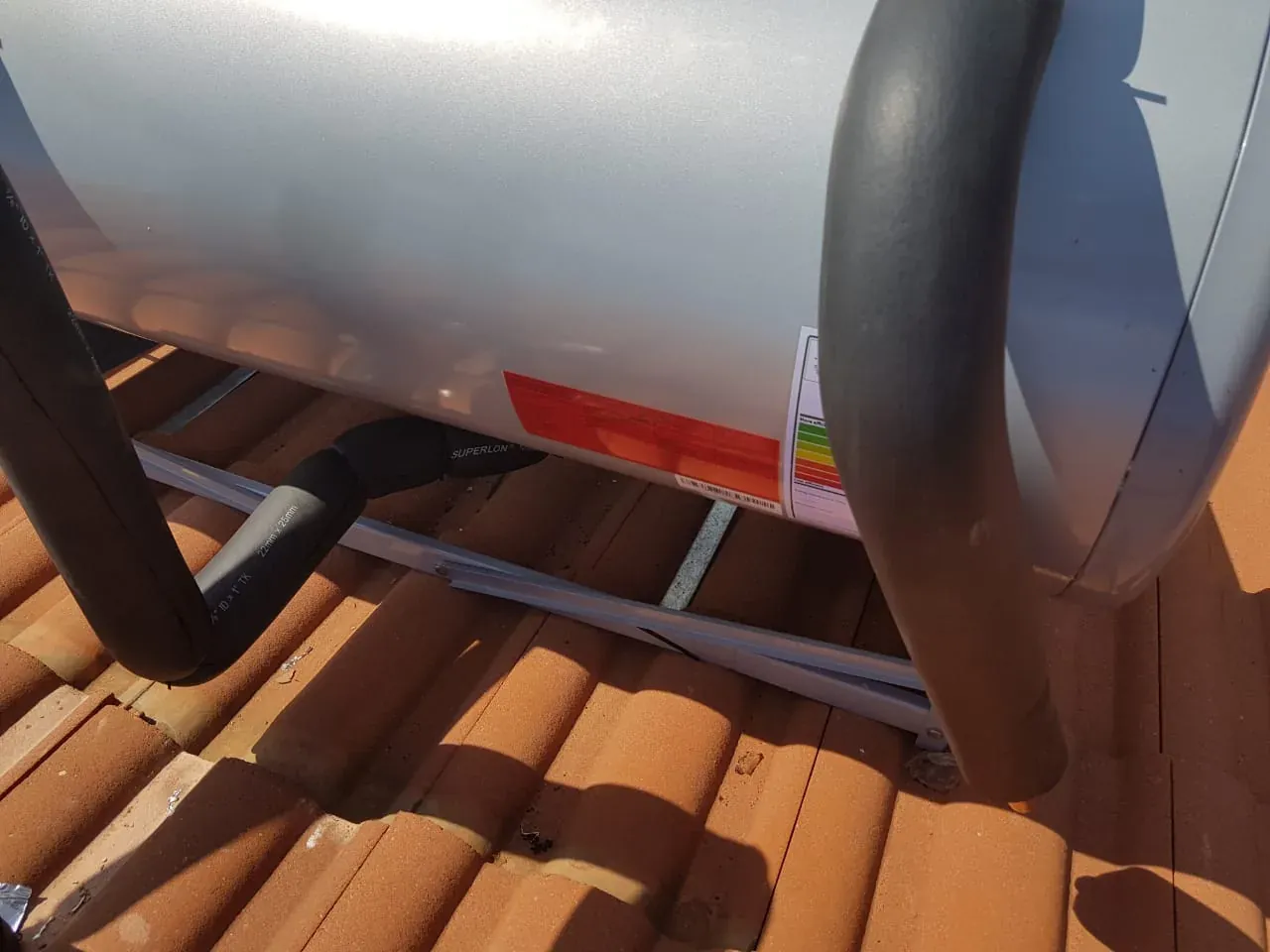
solar geyser evacuated tube collector with pipework and roof conversion requirements

Installation Planning On The Roof

Roof planning is one of the most important parts of a solar geyser conversion because the collector must be positioned where it can receive useful sunlight and still remain safe, serviceable and weatherproof. The roof structure, tile condition, mounting points, pipe entry positions and waterproofing details all affect the quality of the final installation.

A neat-looking collector can still create problems later if the pipe route is too long, poorly insulated, badly supported or difficult to reach during future repairs. The roof pitch and collector position should also be checked against shade from walls, trees, chimneys, parapets and neighbouring roof lines.

Where pipes enter the roof, the penetrations must be sealed properly so the solar conversion does not create a new roof leak. This is especially important on tiled roofs and metal roofs where poor flashing, cracked tiles or untidy sealant can become a bigger problem than the hot-water issue the customer wanted to solve.

The plumber also has to consider how valves, discharge pipes, vacuum breakers, sensors and controller wiring will be reached after installation. Good roof planning protects the solar geyser system, the roof covering, the customer’s ceiling space and the long-term hot-water supply.

Before quoting, the full hot-water layout should be assessed because a solar geyser conversion depends on more than the collector on the roof. The geyser position, tank condition, pressure rating, valve layout, electrical isolator, backup element, controller wiring, roof access, pipe route and maintenance access all affect the final installation. Pipe insulation is especially important because heat can be lost before the water reaches the geyser or the taps. Sensor position also matters because poor readings can cause the controller to boost at the wrong time or fail to show the customer what the system is really doing. The roof area should be checked for shade, safe mounting points, waterproofing risks and whether future repairs can be done without damaging the roof covering. A proper quote should therefore explain the visible work, the hidden checks, the safety items and the parts that may need replacement before the conversion is considered reliable.

Compare Solar Geyser Conversion Sizes

  • 150 Litre Solar Geyser Evacuated Tube Conversion System
  • 200 Litre Solar Geyser Evacuated Tube Conversion System
  • 250 Litre Solar Geyser Evacuated Tube Conversion System
  • 300 Litre Solar Geyser Evacuated Tube Conversion System

100 Litre Evacuated Tube Solar Geyser Conversion System For Small Homes, Apartments, Granny Flats And Low-Demand Households

100 litre solar geyser evacuated tube conversion system for solar hot water, GeyserWise control, correct valves, collector planning, installation advice and free quote support.

  • Phone: 067 657 6109
  • Emergency: 067 895 4361
  • WhatsApp: 072 139 8945

Choosing A 100 Litre Evacuated Tube Solar Geyser Conversion System

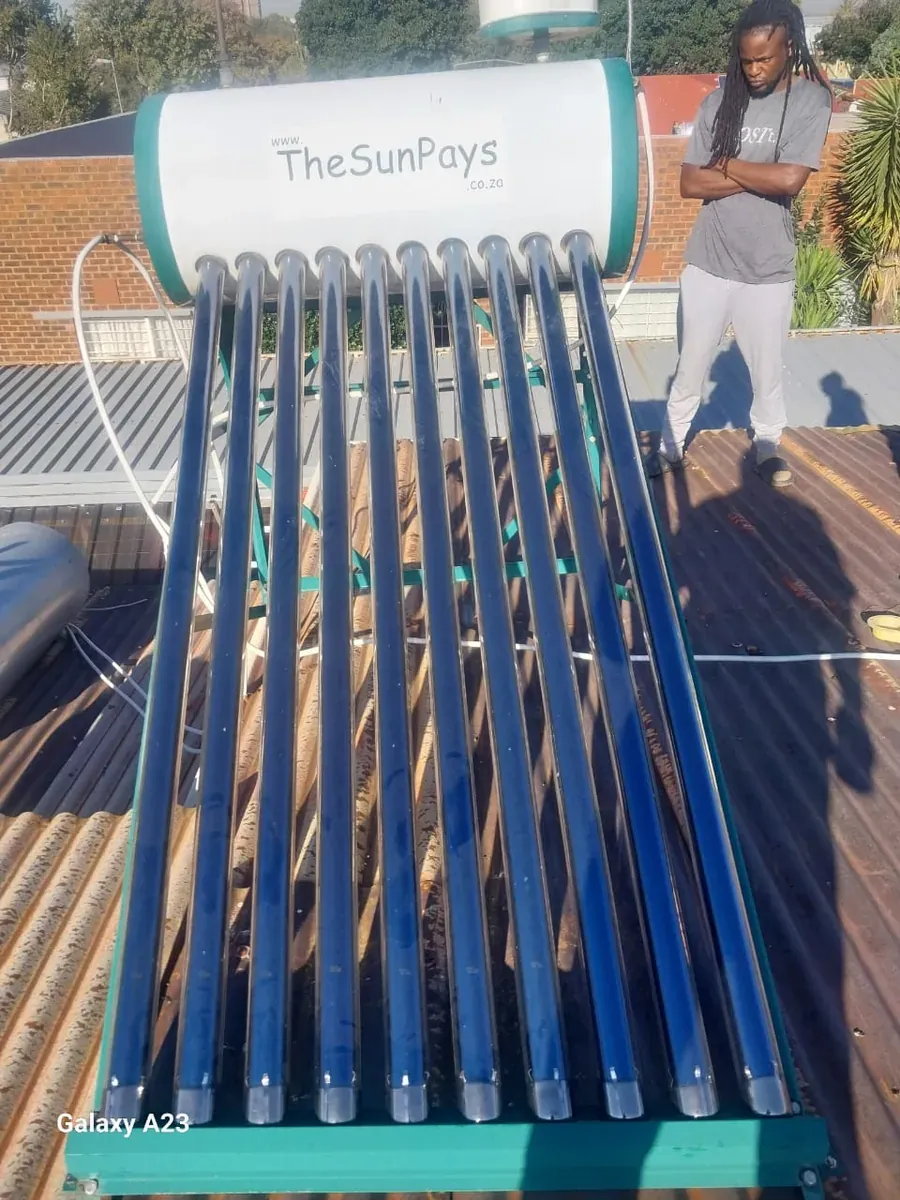
evacuated tube solar geyser system and controller components on roof

Choosing The Right 100 Litre System

Choosing a 100 litre evacuated tube solar geyser conversion system should start with hot-water demand, not with the cheapest available system. This size is usually best for one or two people, a small bathroom, a garden cottage, a granny flat, a small rental unit or a low-demand property where water use is controlled.

If the household uses long showers, frequent baths or several hot-water points at the same time, the 100 litre option may recover too slowly or run short during busy periods. A system that looks affordable at first can become frustrating if it does not match the way the property actually uses hot water.

The existing geyser must also be assessed because converting an old, leaking, rusted or badly positioned tank can waste money. The collector, controller, valves, pipe insulation and backup element should all be matched to the current geyser condition and the expected usage pattern.

A good recommendation should explain what is included, what may need to change, whether a plumbing CoC is required, and whether the installation can be serviced easily later. The right system is the one that fits the property and the customer’s daily demand, not only the advertised litre size.

A 100 litre evacuated tube solar geyser conversion system is normally best for 1 to 2 occupants where hot-water use is controlled and predictable. It suits apartments, granny flats, garden cottages and small bathrooms where storage demand is modest but the customer still wants solar-assisted hot water with a clear backup heating plan.

To make these pages stronger than a basic product listing, the content now explains size suitability, installation inclusions, plumbing CoC requirements, roof access, GeyserWise control, valve changes, collector planning, maintenance access and real hot-water demand. The focus stays on solar geysers only, not inverters, batteries or general solar power.

Related support includes solar geyser conversion, solar geyser repair, solar geyser repairs near me, geyser installation, geyser repair and burst geyser replacement.

What Is Included

  • Supply-and-install enquiry support.
  • Installation included in the quoted scope.
  • Plumbing CoC where required.
  • Pressure, safety valve and pipe route checks.
  • Collector, tank, controller and backup heating advice.

What We Check Before Quoting

  • Geyser condition and pressure rating.
  • Roof access, orientation, shade and mounting space.
  • Existing valves, isolators and discharge routes.
  • GeyserWise controller and sensor requirements.
  • Future access for service and solar geyser repair.

Brands And Control Options

We can discuss compatibility around Kwikot, Heat Tech, ITS, Megasun, Solahart, SunTank, Chromagen, GeyserWise, Duratherm, Alliance Solar and Solar Shine. Final selection depends on availability, geyser size, collector type, roof exposure, warranty requirements and the installation design.

Solar Geyser Size Comparison And Family Suitability

solar geyser evacuated tube system installed on roof for household hot water

Match Collector And Storage Size To Demand

The collector size and the storage size should work together so that the system can collect, store and deliver hot water in a practical way for the household. If the collector is too small for the storage volume, recovery can be weak and the electrical backup may be used more often than expected.

If the storage is too small for the users, the hot water can run out even when the collector is performing well. A 100 litre system is therefore normally matched to light, predictable demand rather than heavy family use or multiple bathrooms.

The timing of hot-water use also matters. A home where two people shower at different times may cope better than a home where several users need hot water close together in the morning or evening. Roof exposure, pipe length, insulation quality, controller settings and backup element scheduling all affect the result.

Proper sizing should look at people, bathrooms, shower habits, bath use, kitchen demand, guest use and future changes to the property. This prevents the customer from choosing a system that looks correct by price but performs poorly in daily life.

Choosing the correct size is one of the biggest differences between a helpful page and a thin sales page. A system should be matched to people in the home, usage habits, bathrooms, roof space and the backup heating schedule.

System sizeBest suited toTypical demandView page
100 Litre1 to 2 occupantsApartment, granny flat or small bathroom use100L conversion
150 Litre2 to 3 occupantsTownhouse, small family home or moderate daily use150L conversion
200 Litre3 to 5 occupantsFamily home with regular morning and evening demand200L conversion
250 Litre4 to 6 occupantsLarge home, multiple users or heavier bathroom demand250L conversion
300 Litre5 to 8 occupantsLarge home, guest house, staff accommodation or high use300L conversion

Installation, Plumbing CoC, Safety Valves And Compliance Checks

Solar geyser conversion work must still be treated as hot-water plumbing work. The quote should confirm installation requirements, plumbing CoC where required, pressure control, temperature and pressure valve discharge, vacuum breakers, isolation, safe support, roof penetrations, waterproofing and future service access.

This is where a plumbing company can compete strongly against a simple product-only listing. Customers need to know who will check the valves, who will issue the required plumbing documentation, who will explain the controller, and who can help later with solar geyser repair if the system stops performing correctly.

When Is A 100 Litre Solar Geyser Suitable

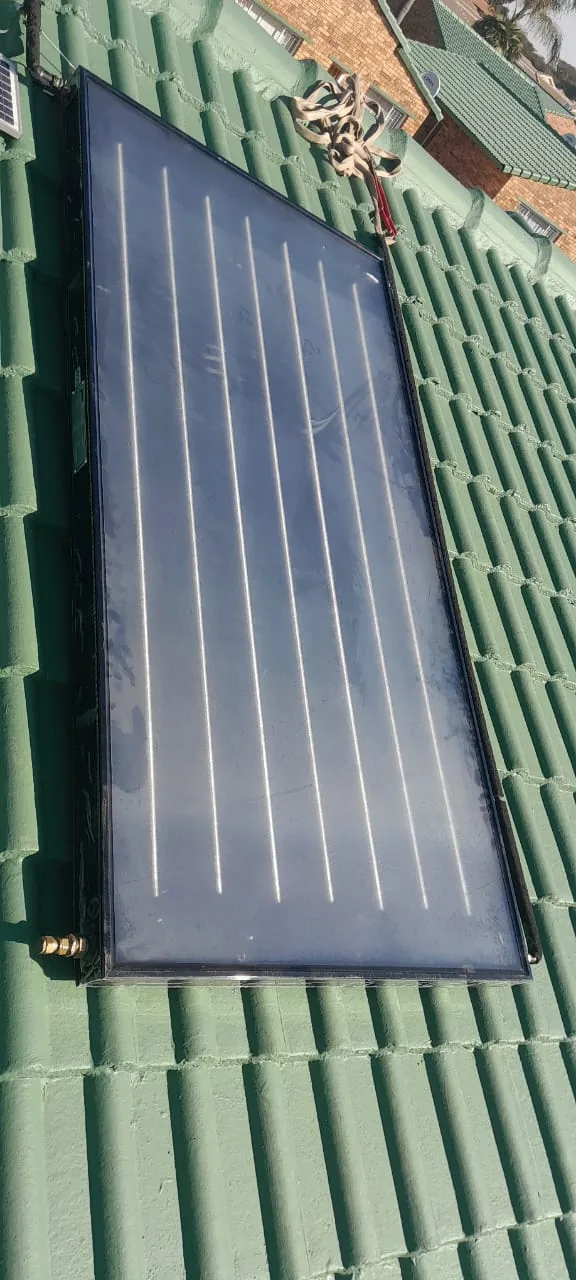
flat plate solar geyser collector installed on a metal roof

When Is A 100 Litre Solar Geyser Suitable

A 100 litre solar geyser conversion is suitable when the property has light hot-water demand and the users understand the limits of the storage size. It can be a good fit for a single person, a couple, a small flat, a garden cottage, staff accommodation, a small office bathroom or a low-use holiday unit.

It is less suitable where several people shower back-to-back, where baths are used regularly, or where the property has multiple bathrooms drawing from the same system. In those cases, a larger solar geyser conversion may be more practical and may avoid complaints about hot water running short.

The goal is not only to install a smaller system, but to make sure the customer is not disappointed by the amount of stored hot water available. Roof area, collector position, pipe distance, insulation, valve condition and backup heating control must all support the final recommendation.

When the demand is modest and the installation is planned correctly, a 100 litre system can provide useful solar-assisted hot water without oversizing the equipment. It works best when the property’s hot-water pattern is simple, predictable and matched to the storage capacity.

A 100 litre evacuated tube solar geyser conversion system is usually best suited to apartments, granny flats, garden cottages, small holiday units and low-demand homes. It is generally considered for 1 to 2 occupants, one bathroom, and homes where the normal pattern is mostly showers, basin use and light kitchen hot-water demand. The final recommendation should still consider roof orientation, collector position, municipal pressure, existing geyser condition, bath use and whether the household expects visitors or future growth.

Choose the 100 litre option when the household demand matches the storage size and the available collector area can recover heat during normal sunny periods. If hot water regularly runs short, if there are frequent baths, or if several bathrooms are used close together, a larger capacity may be safer than choosing only by price.

If this size looks too small or too large, compare the other solar geyser conversion options below before committing.

Household Sizing Guide

Consider how many people shower in the same hour, whether baths are used, whether washing machines or dishwashers draw hot water, and whether guests often stay over. A small home with disciplined shower use can need less storage than a similar home with long baths or heavy evening demand.

When Another Size May Be Better

Move smaller when the property has low demand, one bathroom and limited roof space. Move larger when there are several bathrooms, regular baths, guest accommodation, staff use or a pattern where many people need hot water close together.

Compare Solar Geyser Conversion Capacities

CapacityTypical UseBest Fit
100LLight daily demand1–2 occupants, flatlets, granny flats and small units
150LModerate demand2–3 occupants and smaller family homes
200LFamily demand3–5 occupants and many standard homes
250LHigher demandLarger families, more baths and heavier use
300LHigh demandLarge homes, guest houses and staff accommodation
  • 150L system
  • 200L system
  • 250L system
  • 300L system

Installation, Plumbing CoC And Commissioning

Installation is included in the supply-and-install quotation. The work may include collector mounting, pipe routing, insulation, valve checks, pressure control, GeyserWise setup, testing and final handover. A plumbing CoC is included where required after the completed installation has been checked.

The installation process should not be rushed. Roof type, safe access, existing geyser position, isolation valves, vacuum breakers, pressure control valves, non-return valves and temperature-and-pressure safety valves all affect the final design. When old valves are stiff, leaking or incorrectly rated, they should be corrected during the conversion instead of being hidden behind the new system.

GeyserWise, Brands And Controller Support

Many solar geyser conversions use a GeyserWise controller to manage temperature readings, booster times and customer visibility. Brands and components that may be discussed include Kwikot, Heat Tech, ITS, Megasun, Solahart, SunTank, Chromagen, Duratherm and GeyserWise. The best choice depends on compatibility, parts availability, collector type, existing tank condition and future repair support.

Good controller setup helps prevent unnecessary electrical boosting. It also makes later solar geyser repair easier because sensor readings, booster behaviour and pump operation can point the technician toward the fault.

Maintenance And Common Solar Geyser Faults

A solar geyser conversion should be checked regularly. Maintenance may include evacuated tube inspection, collector cleaning where needed, pipe insulation checks, valve testing, sensor checks, pump checks on pumped systems and GeyserWise setting reviews. Early maintenance helps prevent poor heating, valve discharge, roof leaks near pipe penetrations and unnecessary element use.

Common problems include no hot water after sunny days, broken tubes, poor circulation, failed sensors, incorrect booster settings, leaking valves, damaged pipe insulation and hidden leaks. For moisture around ceilings, walls or pipe routes, professional leak detection or water leak detection may be needed before replacing parts.

Related Solar Geyser And Plumbing Services

Customers comparing conversion systems may also need solar geyser conversion, solar geyser repair, solar geyser repairs near me, geyser installation, geyser repair, burst geyser replacement, leak detection, water leak detection, emergency plumbers near me. These links are included because solar geyser decisions often overlap with tank condition, pressure faults, leaks, burst geyser risk, repair history and emergency hot-water problems.

Why Choose A 100 Litre Solar Geyser Conversion?

A 100 litre solar geyser conversion is a practical option for smaller properties where the hot-water demand is light, predictable and not shared by a large family. It is most often considered for one or two users, a garden cottage, a granny flat, a staff room, a compact apartment, a small rental unit or a low-use office bathroom. The benefit is that the customer can add solar-assisted hot water without automatically moving to a larger and more expensive system.

The best result comes from matching the conversion to the property instead of simply choosing the lowest price. The existing geyser condition, collector position, roof exposure, pipe distance, valve layout, controller setup and backup element all matter. A well-planned conversion can help reduce reliance on electrical heating, while a poorly planned conversion can disappoint the customer even when the equipment itself is not bad.

This is why the page should sell the assessment, not only the product. Customers need to understand whether the 100 litre size is suitable, what must be checked before installation, what repair support is available later and when a larger system may be the better choice.

100 Litre Solar Geyser Repairs We Help With

A 100 litre solar geyser conversion can need repairs when any part of the hot-water, collector, control or valve system stops working correctly. Common symptoms include no hot water, lukewarm water, high electricity usage, leaking valves, damaged tubes, poor winter performance, wrong temperature readings, controller faults or water marks near the roof pipe penetrations.

Good repair work starts with fault finding. The visible problem is not always the real cause. A faulty sensor can look like a geyser fault. Poor pipe insulation can look like weak collector performance. A controller setting can make the customer think the system has failed. The geyser, collector, sensors, valves, pipework, insulation, backup element and controller should therefore be checked as one system.

Controller And GeyserWise Repairs

Controllers monitor temperature and help control when the electrical backup element should assist. A faulty or badly configured controller can cause incorrect readings, unnecessary boosting, poor timing or inconsistent hot water. The display may work while the sensor readings are wrong, or the timer may be set in a way that uses electricity when the customer expected solar heating to do more of the work.

Controller repairs may include checking power supply, relay operation, timer settings, sensor wiring, display readings and whether the controller is suitable for the installed system. Where GeyserWise is fitted, the settings should also be explained clearly so the customer knows how to manage boost times and read the temperature properly.

Sensor Faults And Temperature Problems

Sensor faults can affect the entire system because the controller depends on accurate temperature readings. A damaged sensor, loose connection, moisture-damaged cable, poor sensor pocket or incorrect sensor position can make the controller behave as if the water is hotter or colder than it really is.

Repair work should include testing both the tank and collector readings where applicable. If the sensor is replaced, the installer should also check that the new sensor is positioned securely and protected from avoidable heat loss, water exposure and future service problems.

Evacuated Tube Replacement

Evacuated tubes can be damaged by impact, hail, age, thermal stress or careless handling during other roof work. One or more damaged tubes can reduce the collector’s ability to gather heat, especially on smaller systems where every tube contributes to recovery.

Individual tube replacement may be possible when the collector frame and manifold are still in good condition. The repair should also include checking the seals, tube fitment, manifold condition and whether the system performance improves after the damaged tubes are replaced.

Valve And Pipework Repairs

Valve and pipework problems can cause leaks, pressure issues, heat loss and poor system reliability. Solar geyser conversions may involve pressure control valves, safety valves, vacuum breakers, isolation points, discharge pipes and insulated hot-water pipe runs.

Repairs should not only stop the visible leak. The plumber should also check whether the valve layout is safe, whether discharge water is routed correctly, whether pipe insulation has failed and whether future service access is practical.

Should You Repair Or Replace A 100 Litre Solar Geyser System?

Repair is usually worth considering when the geyser tank, collector frame, pipe route and roof installation are still sound. If the issue is limited to a controller, sensor, valve, tube, insulation, thermostat or backup element, a targeted repair may restore the system without replacing everything.

Replacement becomes more sensible when the geyser is leaking, badly rusted, unsafe, repeatedly failing, badly positioned or too small for the household. If several major parts have failed together, repairing one item may only delay the next breakdown.

A proper recommendation should explain both options. The customer should know the likely short-term cost of repair, the risk of repeat problems and the benefit of replacing the system with a better layout, improved access, better insulation and more suitable storage capacity.

100L vs 150L vs 200L Solar Geyser Systems

A 100 litre system is normally for light daily use. A 150 litre system may suit couples or small families with moderate demand. A 200 litre system is often better for family homes where several people need hot water during the same morning or evening period.

SizeBest Suited ToPossible Problem If Chosen Wrong
100 LitreOne to two users, small flats, cottages, staff rooms and low-demand bathrooms.Can run short if several users shower close together or baths are used regularly.
150 LitreTwo to three users, townhouses and smaller family homes.May still be too small for heavy use or multiple bathrooms.
200 LitreThree to five users and standard family demand.Can be unnecessary if the property has genuinely light demand.

The correct size should be based on people, bathrooms, shower habits, bath use, roof exposure and backup heating expectations. Choosing too small can create daily frustration. Choosing too large can increase cost without adding much benefit.

Annual Maintenance Guide For A 100 Litre Solar Geyser Conversion

Annual maintenance helps keep the system safe, efficient and easier to repair. A practical service check should include the controller, temperature readings, visible valves, pipe insulation, evacuated tubes, collector frame, electrical backup, roof penetrations and any signs of water leaks.

Maintenance is especially useful before winter because weak insulation, poor sensor readings and controller faults become more obvious when sunlight is less consistent. A small issue that is ignored during summer can become a bigger hot-water complaint during colder weather.

The maintenance visit should also confirm whether the household demand has changed. If more people now use the property, a system that was once suitable may no longer match the daily hot-water pattern.

Is This System Right For You?

A 100 litre solar geyser conversion is usually right for light and predictable hot-water use. It can suit a single person, a couple, a small apartment, a garden cottage, a granny flat, a small rental unit, staff accommodation or a low-use office bathroom.

It is usually not the best choice for a large family, multiple bathrooms, frequent baths or several people showering back-to-back. In those cases, a larger system may give a better customer experience and reduce complaints about hot water running short.

Usually A Good Fit

  • One to two users.
  • Mostly showers, not baths.
  • Light daily hot-water demand.
  • Small property or secondary dwelling.
  • Roof has usable sunlight.

Consider A Larger System

  • Three or more regular users.
  • Frequent baths.
  • Multiple bathrooms.
  • Heavy morning or evening demand.
  • Guest, rental or staff use changes often.

The final decision should be based on the roof, existing geyser, valves, controller requirements, pipe route and maintenance access. When those items line up correctly, the 100 litre system can be a sensible solar hot-water upgrade.

Frequently Asked Questions About 100 Litre Solar Geyser Evacuated Tube Conversion System

Who is a 100 litre solar geyser conversion best for?

A 100 litre system is best for 1 to 2 occupants, small flats, granny flats, garden cottages, outside rooms or low-demand bathrooms where hot water is used carefully.

Is installation included with the solar geyser conversion system?

Yes. Supply-and-install enquiries include installation by our plumbing team, and the completed plumbing work includes a plumbing CoC where required. The final quote confirms roof access, pipe routing, valve changes, controller work and any compatibility issues before work starts.

Does the installation include a plumbing CoC?

Yes, where a plumbing CoC is required for the completed geyser installation or conversion work, it is included as part of the compliant plumbing handover. The system must be installed with correct valves, safe discharge routing, pressure control and accessible service points.

Is this for solar geysers only?

Yes. These pages are only for solar geyser and solar hot-water conversion systems. They do not cover inverters, batteries, general solar power systems or household electrical solar panels.

Can GeyserWise be included?

Yes. GeyserWise control can be included where the system design supports it. It helps with temperature display, booster timing, solar circulation behaviour and customer handover after installation.

Which brands can be discussed?

We can discuss options and compatibility around Kwikot, Heat Tech, ITS, Megasun, Solahart, SunTank, Chromagen, GeyserWise, Duratherm, Alliance Solar and Solar Shine, depending on availability and the installation requirements.

What must be checked before installation?

The existing geyser condition, roof access, pipe route, pressure rating, valves, drain points, controller position, collector placement, shade, safety discharge and future service access must all be checked before the final recommendation is made.

What happens during cloudy weather?

The system uses available stored heat first. When solar gain is not enough, the electrical backup element can assist according to the controller settings and the household hot-water demand.

Do evacuated tubes work in winter?

Evacuated tube collectors can still collect useful heat during cooler seasons, but performance depends on sunlight, collector sizing, insulation quality, pipe runs, water usage and backup heating control.

Can an old geyser be converted?

Sometimes, but an old, leaking, rusted, undersized or badly positioned geyser may be better replaced first. Reusing a weak tank can waste money and reduce the benefit of the conversion.

Will the system reduce electricity use?

A correctly sized and configured solar geyser conversion can reduce reliance on the electrical element. Savings depend on usage habits, weather, insulation, collector performance and how the backup heating schedule is managed.

Is roof access important?

Yes. Safe roof access affects the installation time, collector position, pipe routing, waterproofing, future maintenance and the final quote.

Can the system be repaired later?

Yes. The installation should be planned with future service access in mind so valves, sensors, pumps, controllers, collectors and pipe insulation can be inspected or replaced later.

What should I send before asking for a quote?

Photos of the current geyser, roof area, visible valves, controller, pipework and electrical isolator are useful. Also mention how many people use hot water and when the highest demand normally happens.

Is a cheaper system always the best choice?

No. A cheaper system can cost more later if the collector is undersized, valves are wrong, pipework is poorly insulated, the controller is not configured, or the installation is difficult to service.

What makes your pages different from a basic product listing?

Each page explains size suitability, installation requirements, CoC considerations, GeyserWise control, valve checks, roof planning, maintenance access and related plumbing services so the customer can make a more informed decision.

Is a plumbing CoC included?

A plumbing CoC is included where required for the completed installation. The system still needs to be assessed on site because roof access, pressure control, valve changes and pipe routing can affect the final scope.

Can I keep my existing geyser?

In some cases the existing geyser can be reused, but only if the tank, pressure rating, valves, element, thermostat and general condition are suitable. A leaking, badly corroded or unsafe geyser should be repaired or replaced before conversion.

Can evacuated tubes be replaced individually?

Many evacuated tube systems allow individual damaged tubes to be replaced, provided the collector design and available parts support it. The collector condition should be checked before replacing only one part.

What happens during load shedding?

The solar side can still collect heat when sunlight and system design allow it. Electrical boosting, pumps and controllers depend on the specific setup and available power, so this must be discussed during assessment.

How often should the system be maintained?

A practical check once a year is recommended. Valves, insulation, pipework, collector condition, sensors, GeyserWise settings and signs of leaks should be inspected.

What brands can be discussed?

Common brands and components include Kwikot, Heat Tech, ITS, Megasun, Solahart, SunTank, Chromagen, Duratherm and GeyserWise controllers. Final compatibility depends on the existing system and the conversion design.

Can I upgrade to a larger solar geyser later?

Yes, but it is better to size the system correctly from the start. Upgrading later may require changes to storage, collector area, pipework, valves, roof layout and controller settings.

Can a leaking geyser be converted?

A leaking geyser should not be treated as a simple conversion candidate. The leak must be assessed first, and replacement may be safer before adding solar collector and control equipment.

What should be checked before accepting a quote?

Check whether the quote includes installation, valves, controller work, collector mounting, pipe insulation, testing, handover and plumbing CoC where required. Also confirm whether any electrical work is excluded.

Need Help Choosing The Right Solar Geyser Conversion?

Choosing the correct solar geyser conversion is easier when the assessment starts with clear photos and honest information about the property. Send photos of the geyser, roof area, valves, controller, pipework, electrical isolator and any visible leaks or rust.

Also explain how many people use hot water, whether baths are used, when the busiest shower times happen and whether the property is a flat, cottage, family home, rental unit or small business. With that information, we can help decide whether a 100 litre evacuated tube solar geyser conversion is a sensible fit or whether a larger size would be safer.

The discussion should also confirm what is included in the installation, whether valves or pipe insulation need attention, whether a plumbing CoC is required and whether the system can be serviced later. Call 067 657 6109, emergency line 067 895 4361, or WhatsApp 072 139 8945 with the details and photos so the next step can be planned properly.

Work We Have Completed

These photos show real solar geyser repair and maintenance situations linked to evacuated tube collectors, controllers, roof pipework, valves, insulation, tube damage and roof penetrations. Each example explains what the image shows, why the fault matters and how it connects to a reliable 100 litre solar geyser conversion or repair assessment.

solar geyser evacuated tube manifold with vacuum breaker and insulated roof pipework

Vacuum Breaker And Manifold Inspection

This project photo shows the roof-level connection area on an evacuated tube solar geyser where the manifold, vacuum breaker, insulated pipework and collector tubes all need to be checked together. On a small 100 litre solar geyser conversion, this area is important because a minor leak, loose fitting, damaged insulation or incorrect valve behaviour can reduce performance and create roof-level water damage.

The repair approach starts by checking whether the vacuum breaker is fitted correctly, whether the pipe insulation is still protecting the hot-water line, and whether the manifold connection is dry and secure. This kind of inspection connects directly with solar geyser repair because the visible symptom may be poor heating, but the actual fault may be a valve, pipe or collector connection problem.

Where the customer is considering a 100 litre solar geyser conversion, this image is also a reminder that future access matters. A neat installation should still allow the plumber to reach the roof components later for maintenance, testing and repairs.

solar geyser circulation pump inside control box with copper pipework and electrical connection

Solar Geyser Circulation Pump Repair

This image shows a circulation pump inside a solar geyser control box. Pumped solar geyser systems rely on the pump to move water or heat-transfer flow correctly between the collector and the geyser. If the pump fails, sticks, runs at the wrong time or loses power, the customer may experience lukewarm water, poor solar recovery or excessive electrical boosting.

A proper repair does not start by replacing parts blindly. The pump, controller, power supply, wiring, pipe temperature and system configuration should be checked together. If the controller is calling for circulation but the pump is not moving water, the fault may be electrical, mechanical or related to the control settings.

This type of repair is useful content for customers comparing solar geyser repairs near me because it explains why a solar hot-water fault is not always caused by the geyser tank itself. In some systems, the pump and controller are the heart of the repair.

GeyserWise controller display showing water temperature and timer settings

GeyserWise Controller Temperature And Timer Check

This photo shows a GeyserWise controller display with temperature and timer information. On a solar geyser conversion, the controller is one of the most important parts of the customer experience because it tells the user what the system is doing and when electrical boosting is being used.

Controller problems can create confusion even when the collector and geyser are still working. Incorrect timer settings, poor sensor readings, loose wiring or a failed relay can make the system appear weak, unreliable or expensive to run. The repair should include checking the displayed temperature against actual hot-water performance and confirming whether the booster schedule matches the household routine.

For a 100 litre system, controller settings are especially important because storage is limited. Poor timing can leave the customer short of hot water, while excessive boosting can reduce the value of the solar geyser conversion.

roof tiles stained below a solar geyser collector pipe showing possible leak or overflow problem

Roof Staining From Solar Geyser Leak

This image shows staining on the roof below the solar geyser collector area. Staining like this can point to a leak, repeated valve discharge, poor pipe routing, damaged insulation or water escaping near the collector connection. It should not be ignored because small leaks can damage roof surfaces, ceilings and timber over time.

The repair process should check whether water is coming from a valve, pipe joint, collector manifold, roof penetration or overflow route. A customer may only notice marks on the roof, but the real problem could be pressure related, valve related or caused by a connection that opens under heat.

This kind of fault links directly to solar geyser repair and leak-related geyser work. The goal is not only to stop the visible water but also to identify why the water appeared in the first place and whether the installation needs better discharge routing or pipe protection.

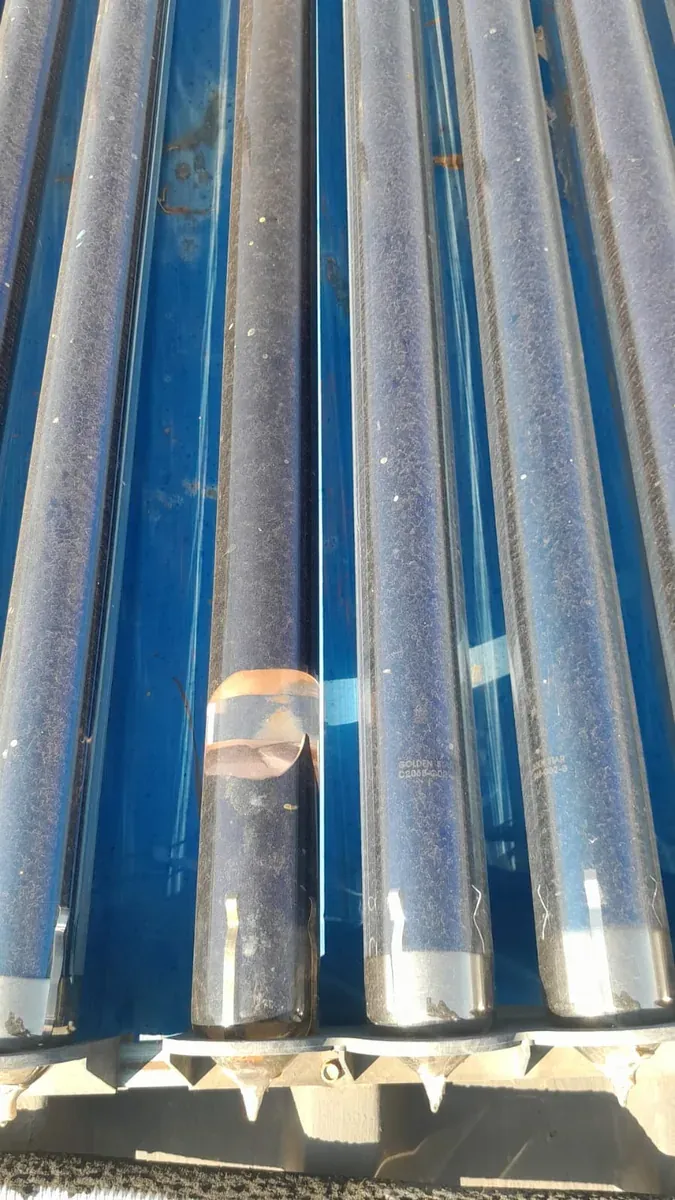
damaged evacuated solar geyser tube marked in green for replacement

Damaged Evacuated Tube Marked For Replacement

This photo shows a damaged evacuated tube highlighted for attention. Damaged tubes can reduce the collector’s ability to gather heat, especially on a smaller hot-water system where each tube contributes to recovery. A single broken or failed tube may not always require replacing the full collector, but it does need to be checked properly.

The repair includes identifying the correct tube size and type, checking the manifold, inspecting seals and confirming that the surrounding tubes are still seated correctly. If several tubes are damaged, the system may need a broader performance assessment rather than a single tube swap.

For customers looking at 100 litre solar geyser conversion systems, this image helps explain why maintenance access and part compatibility matter. A system that can be serviced easily is usually better long term than one that is difficult to repair.

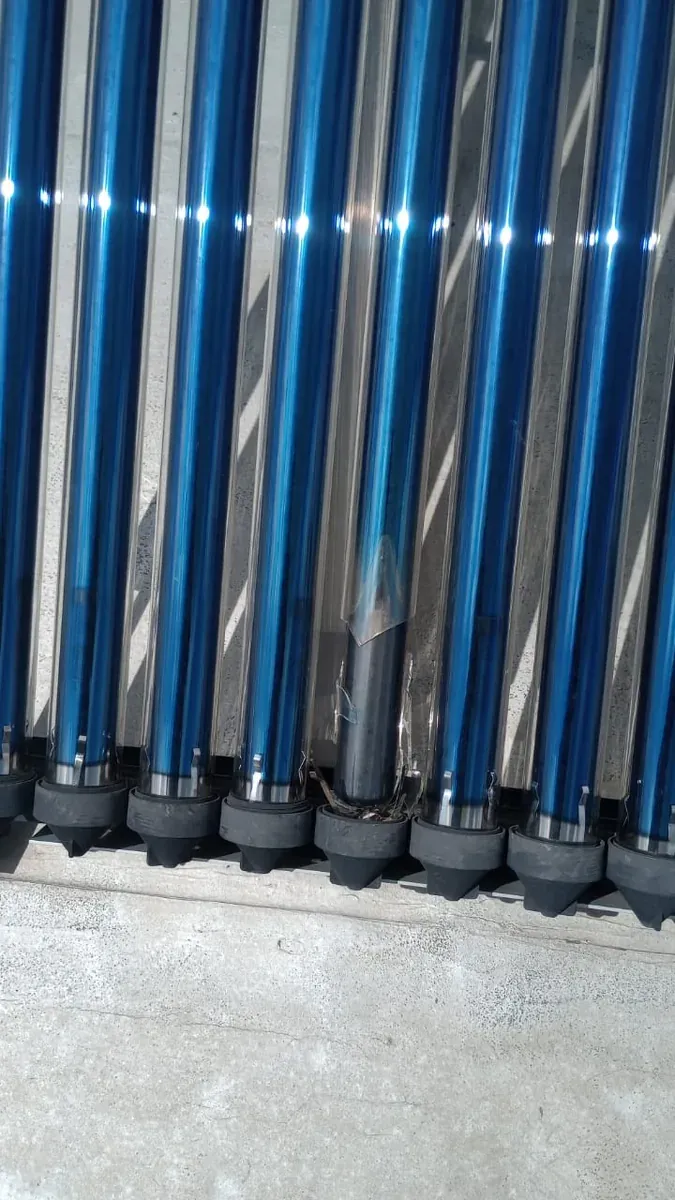
single replacement evacuated tube installed among solar geyser collector tubes

Single Evacuated Tube Replacement

This image shows a replacement evacuated tube installed among the existing collector tubes. Tube replacement is a useful repair where the collector frame and manifold are still serviceable, but one tube has failed, cracked or lost efficiency. It can restore part of the collector performance without replacing the full solar geyser collector.

The job should include more than sliding in a new tube. The plumber should check the tube seating, manifold connection, seals, nearby tubes and whether the collector still heats evenly after the repair. If the replacement tube looks different from the older tubes, the customer should understand that compatibility and correct fitment matter more than appearance alone.

This type of repair belongs naturally on a solar geyser repair page and supports the sales case for a properly installed 100 litre conversion because serviceability should always be considered before the system is fitted.

close up of cracked evacuated solar geyser tube requiring replacement

Cracked Evacuated Tube Repair

This close-up shows a cracked evacuated tube. A cracked tube can reduce heat collection and may also create safety and handling concerns during maintenance. The damage should be assessed before the customer assumes the entire system has failed, because tube replacement may be enough if the collector manifold and frame are still sound.

The repair should include isolating the damaged tube, removing it safely, checking the collector connection and confirming that the remaining tubes have not suffered similar damage. If the damage was caused by impact or hail, the surrounding tubes and roof area should also be inspected.

For customers comparing geyser installation, repair or conversion options, this image shows why choosing a system with available parts and proper maintenance access is important. The easier it is to service the collector, the better the long-term ownership experience.

solar geyser roof pipework with insulation being checked near evacuated tube collector

Roof Pipework And Insulation Repair

This image shows roof-level pipework and insulation near the collector. Pipe insulation is not cosmetic on a solar geyser conversion. It helps protect collected heat as water moves between the collector and the geyser, and poor insulation can make a working collector feel like it is underperforming.

The repair should check exposed pipe runs, damaged lagging, loose joints, roof penetrations and whether the pipe route is longer than necessary. A customer may complain that the system does not heat well, but the problem can sometimes be heat loss from badly protected pipework rather than the collector itself.

This is one of the reasons a 100 litre solar geyser conversion should be assessed as a complete hot-water system. Collector position, pipe distance and insulation quality all influence the final result.

solar geyser pipe penetration on tiled roof with sealant and waterproofing repair area

Roof Penetration And Pipe Seal Repair

This photo shows a roof penetration and sealed pipe area connected to the solar geyser installation. These points need careful attention because poor sealing can create roof leaks even when the solar geyser itself is operating correctly. A leak at the roof penetration can be mistaken for a plumbing failure inside the ceiling.

The repair should check the sealant, flashing, tile condition, pipe movement and whether water can pond around the penetration. If the pipe is not supported correctly, movement from heat expansion and contraction can weaken the seal over time.

This content supports both solar geyser repair and burst geyser replacement comparisons because it shows that roof-level water issues are not always caused by the tank. Sometimes the problem is the way pipework enters or exits the roof.

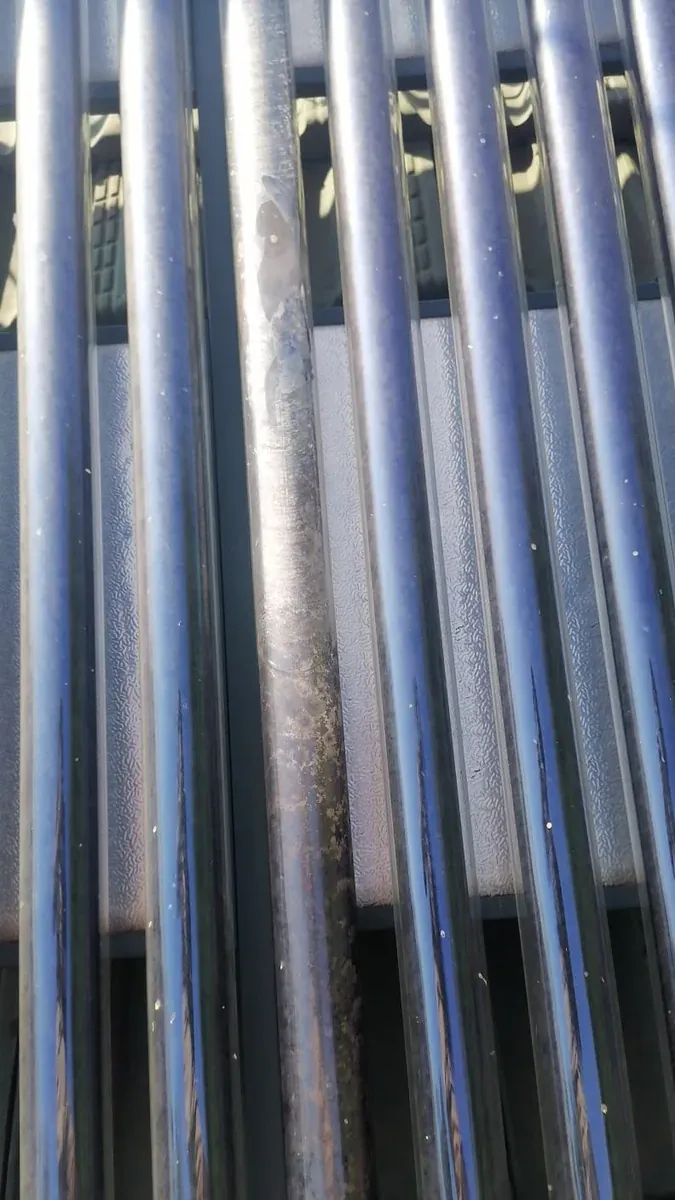
discoloured evacuated solar geyser tube among collector tubes requiring performance check

Discoloured Evacuated Tube Performance Check

This image shows a discoloured evacuated tube among the collector tubes. Discolouration can indicate age, internal failure, loss of vacuum or performance concerns, depending on the tube type and condition. It should be inspected rather than ignored, especially where the customer reports lukewarm water or poor solar recovery.

The assessment should compare the suspect tube with the surrounding tubes, check whether the tube is still seated correctly and confirm whether replacement is needed. On a 100 litre system, even small reductions in collector performance can be noticed more quickly because the storage volume is limited.

This type of image helps customers understand why fault finding matters. A solar geyser may still produce some hot water while one part of the collector is already losing efficiency, and early repair can prevent bigger complaints later.

Call icon WhatsApp icon