✓ No call-out fee✓ Free quotes✓ 24/7/365 service✓ Same-day service
What can I find on this page?
Plumbing services for urgent faults and planned work. Quality workmanship, free call-outs, guaranteed repairs and dependable 24/7 plumbing support.
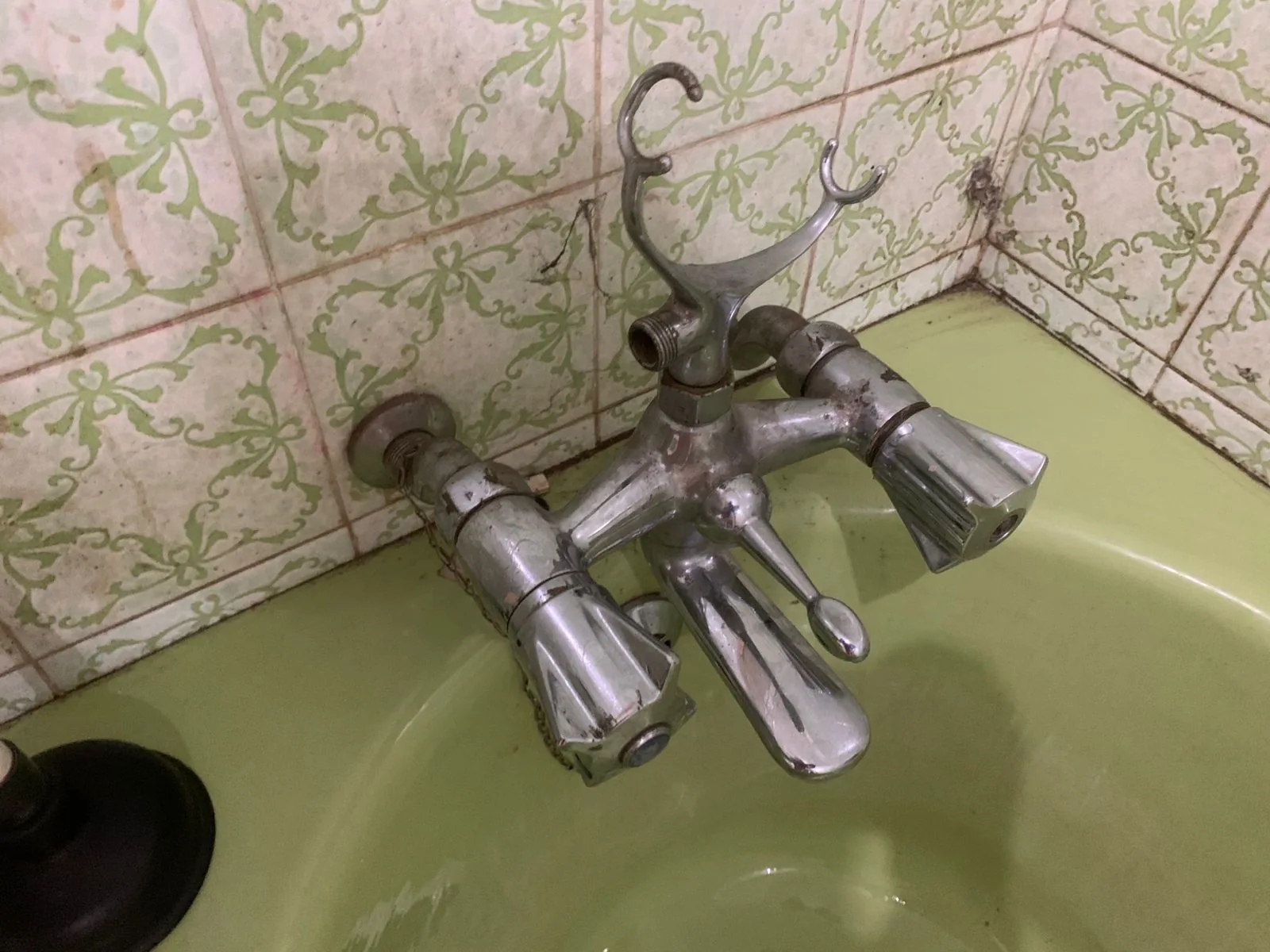
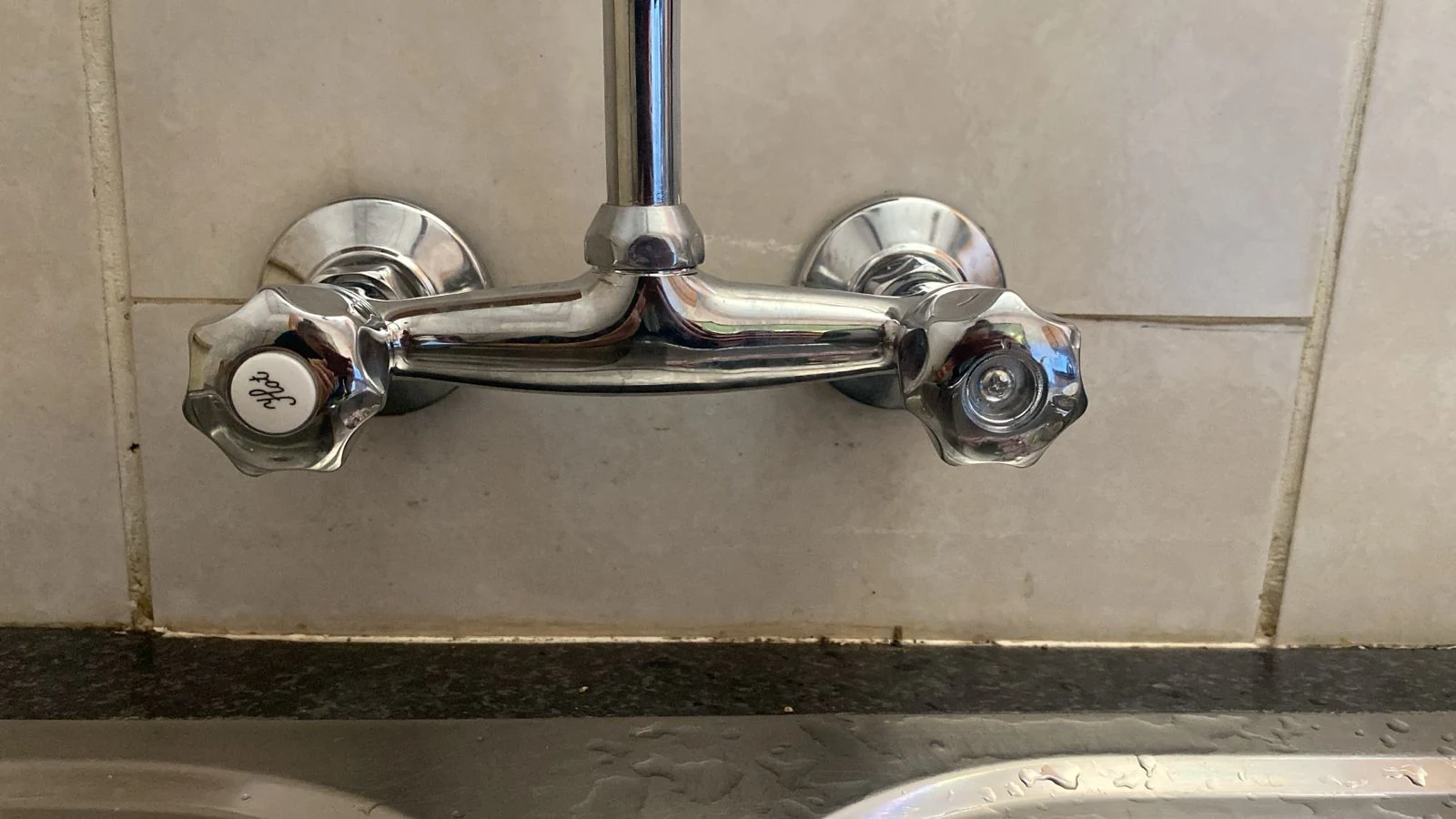
Repairing a bath mixer and shower connection
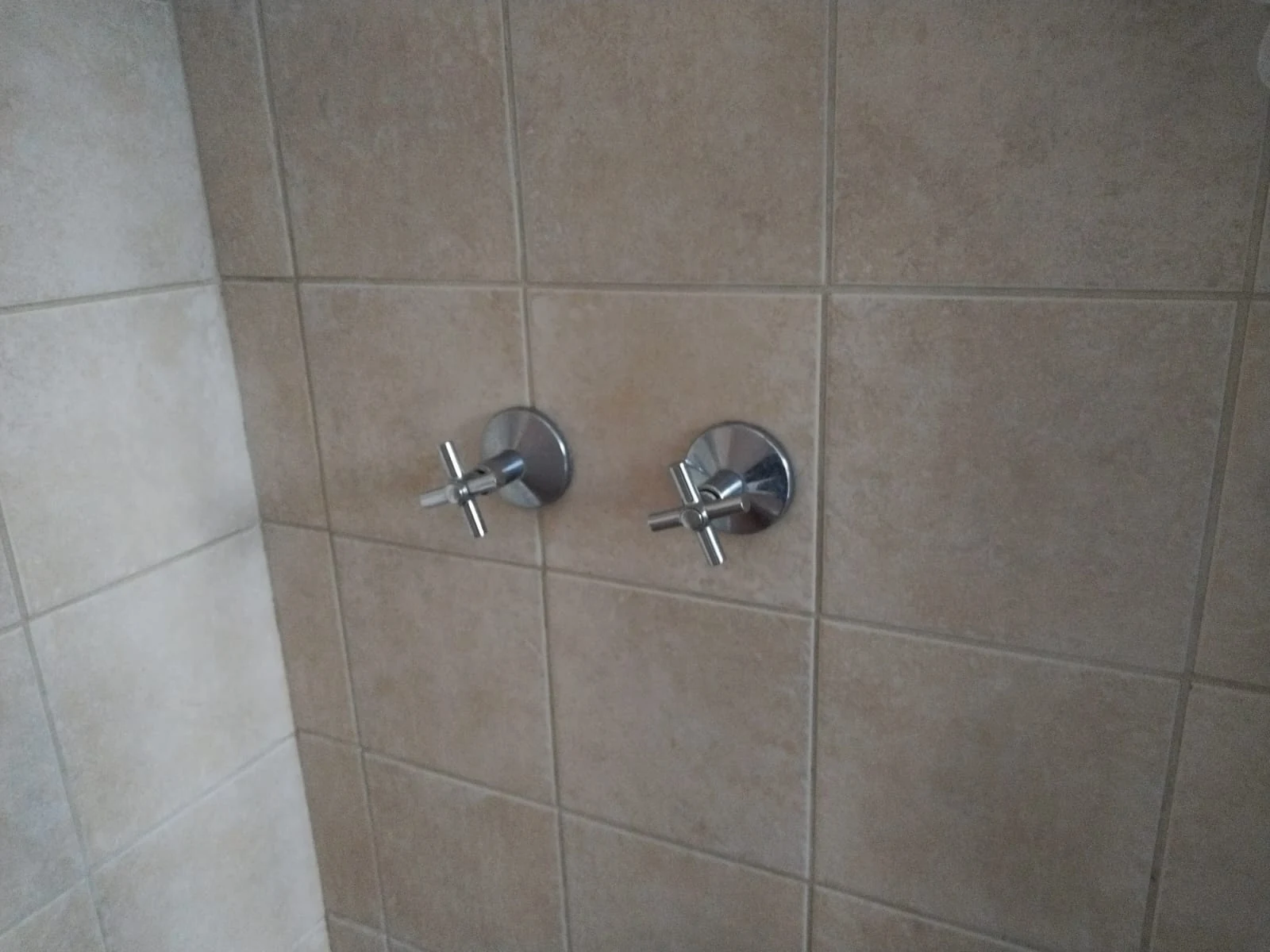
The mixer serves the bath and a handheld shower. Tell us whether the spout drips when both handles are off, or whether water escapes at the hose when the shower is in use. Those are different connections to check.
We assess which fitting needs work and whether suitable parts are available. After the repair we run both outlets and inspect the hose and mixer joints for leaks.
Plumbing FAQs: water supply issues and geyser faults
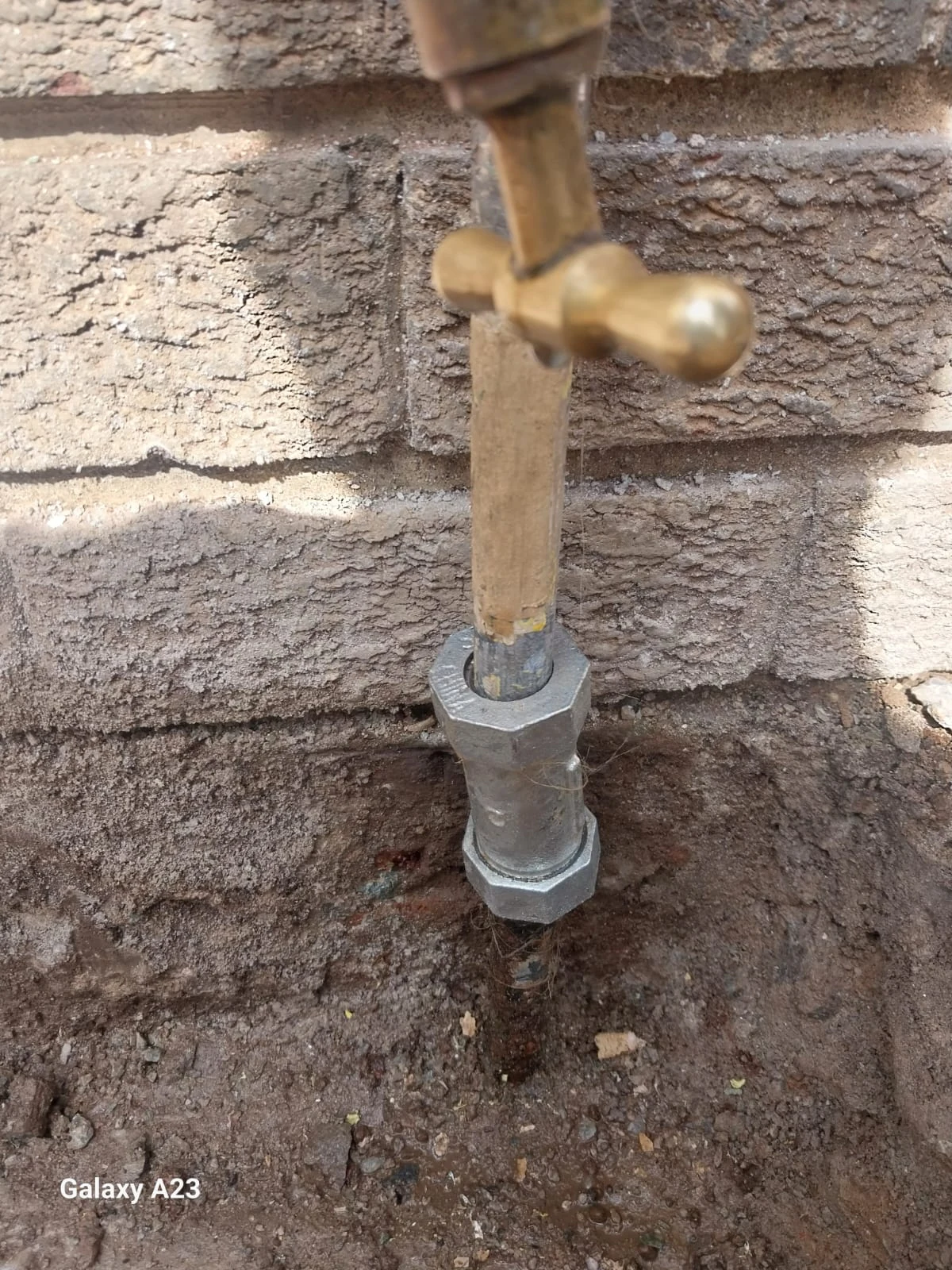
Should I call a plumber or Johannesburg Water about a leak near my water meter?
In Johannesburg, report leaks at the municipal meter or on municipal infrastructure to Johannesburg Water. Leaks on private plumbing within the property are generally the owner’s responsibility and should be assessed by a qualified plumber.
Do I need a plumbing Certificate of Compliance when I replace my geyser?
Yes. The Plumbing Industry Registration Board lists replacement of an electric or solar geyser as work that requires a plumbing Certificate of Compliance. Ask before approving the quote who will issue it and whether it is included.
These photographs show common plumbing components and access points. Use the examples to describe your problem and open the relevant service page. The conditions and work required at your property can then be assessed.
Tree roots and drain access
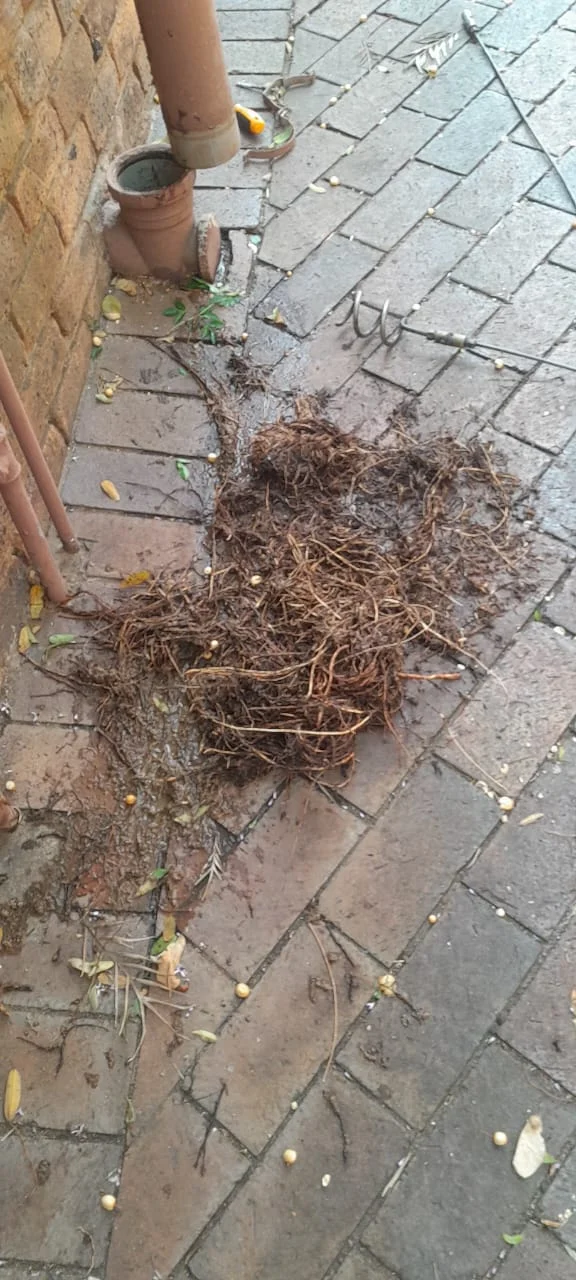
Root material beside an exterior drain connection and paved access area
Root material around a drain connection is a useful detail to include when reporting recurring blockages. Inspection helps establish the route and condition of the affected pipe and whether roots are involved inside it.
The proposed work should explain the access required, the clearing method and whether any damaged pipe sections also need attention. The photograph provides context for a drain-access enquiry.
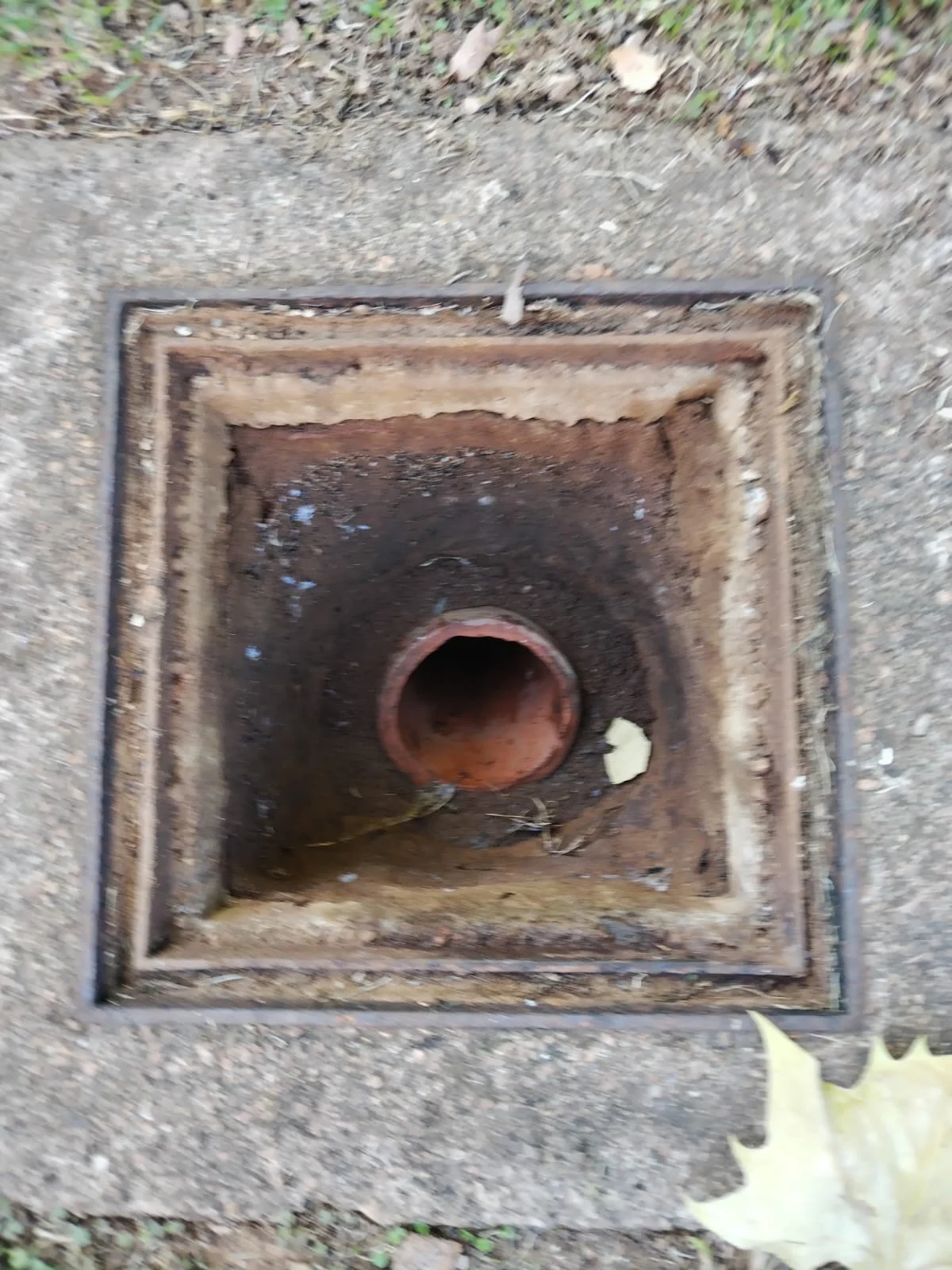
Open drainage inspection chamber with a visible pipe opening
An accessible inspection chamber gives a plumber a place to investigate a restriction and observe drainage. Which fixtures are affected, whether water backs up, and how often the problem returns all help narrow the enquiry.
The condition and route of the pipe influence the work required. A clear photograph of the access point helps the team plan an assessment and explain the proposed clearing or further investigation.
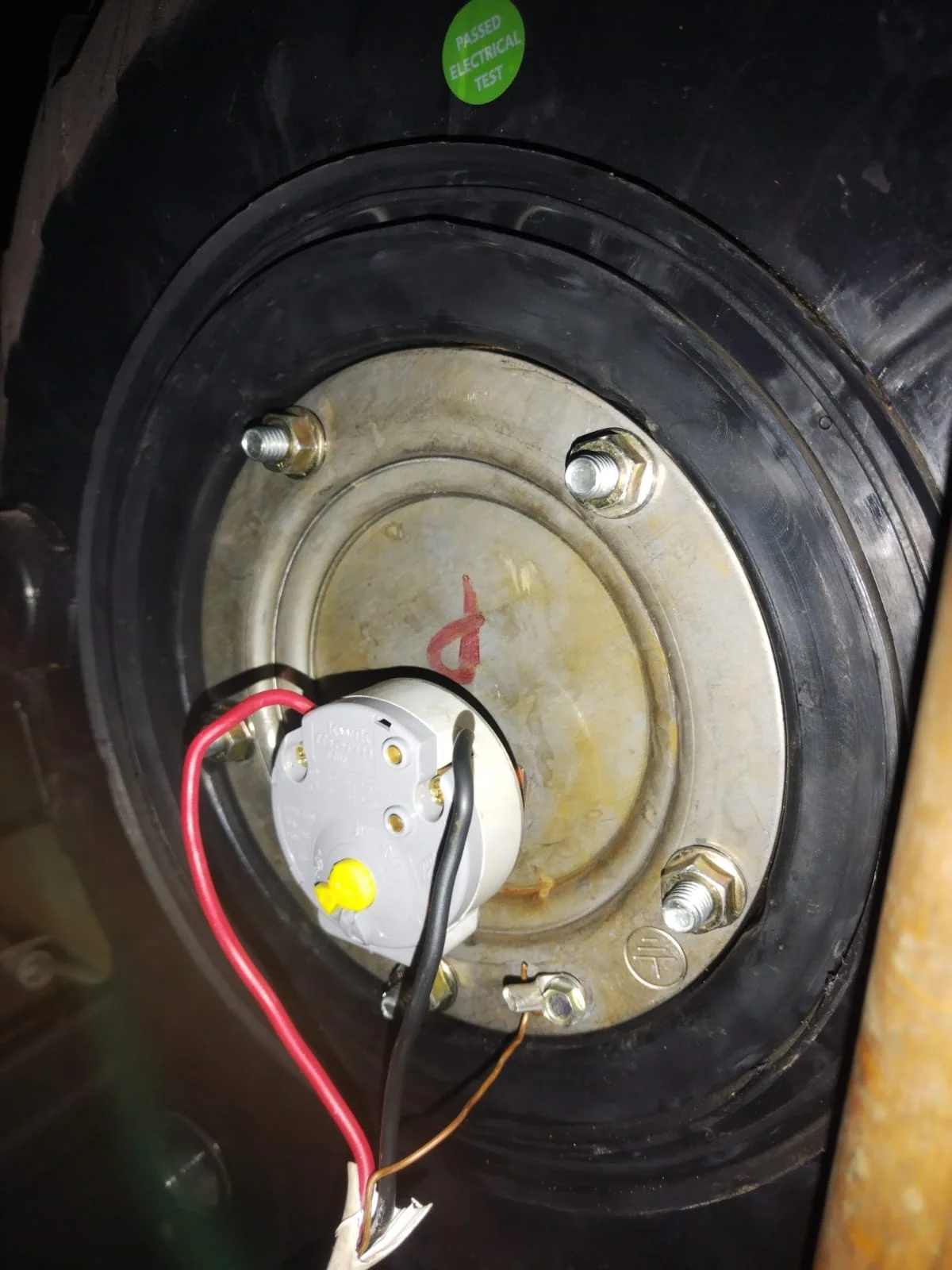
Geyser heating flange with electrical service connections exposed
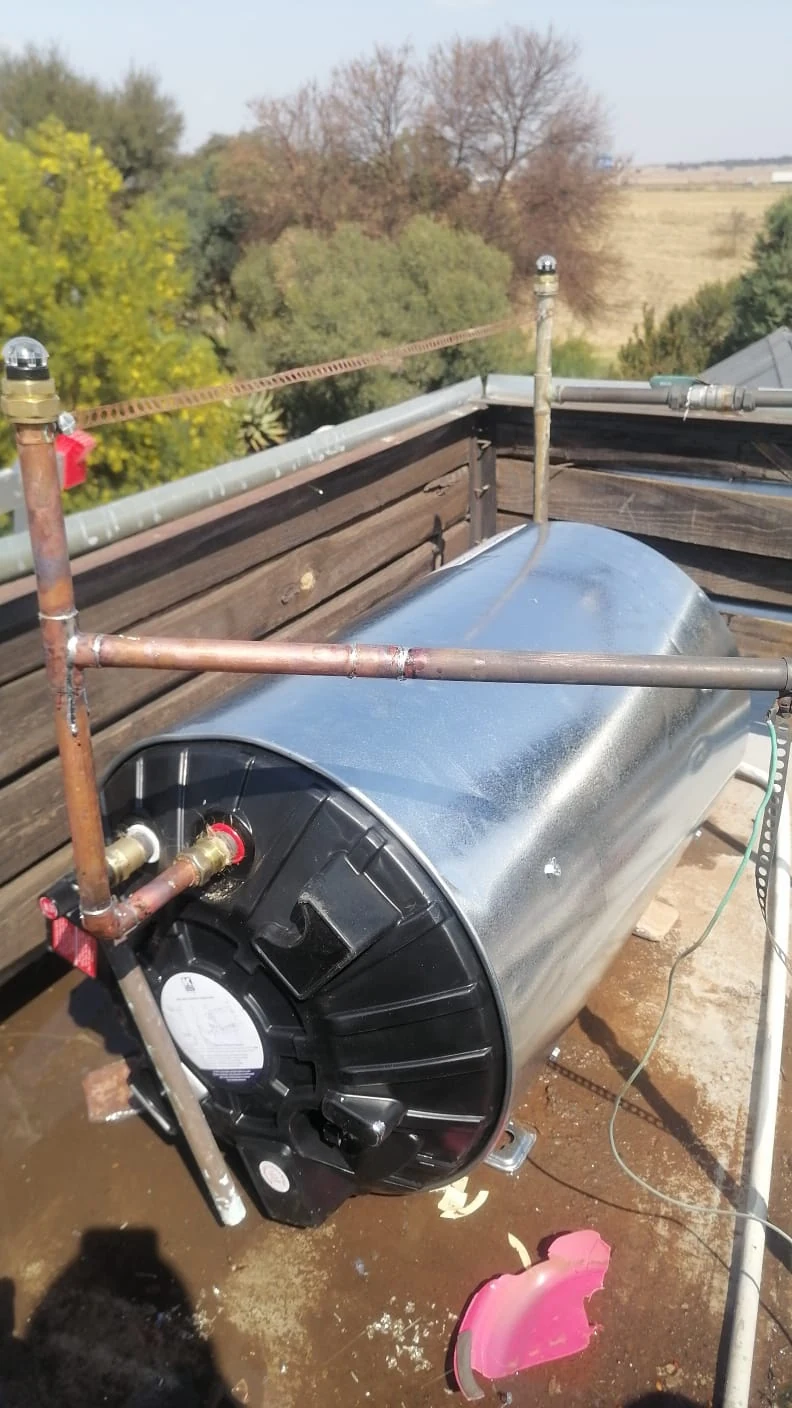
A geyser brings together a storage cylinder, heating components, water connections and control equipment. The exposed service area in this photograph shows why the symptom and the condition of related components need to be assessed together.
A repair recommendation should identify the fault being addressed, the parts involved and how operation will be checked afterwards. Useful enquiry details include the visible leak location, heating behaviour and any accessible model information.
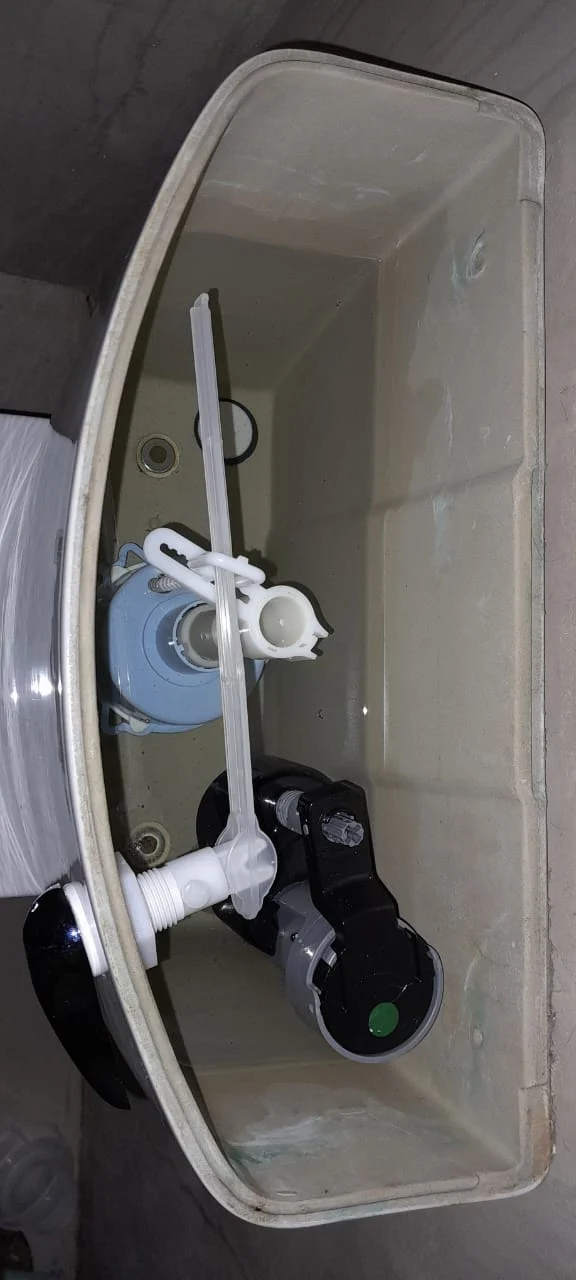
Toilet cistern showing the inlet valve and central flush mechanism
The inlet valve, flush mechanism and seals perform different jobs inside a cistern. Water running into the bowl, slow refilling and an unreliable flush can have different causes, even when the toilet looks similar from outside.
An assessment checks the mechanism and accessible connections before recommending parts or replacement. A photo of the cistern layout, together with a description of the symptom, helps explain which fixture needs attention.
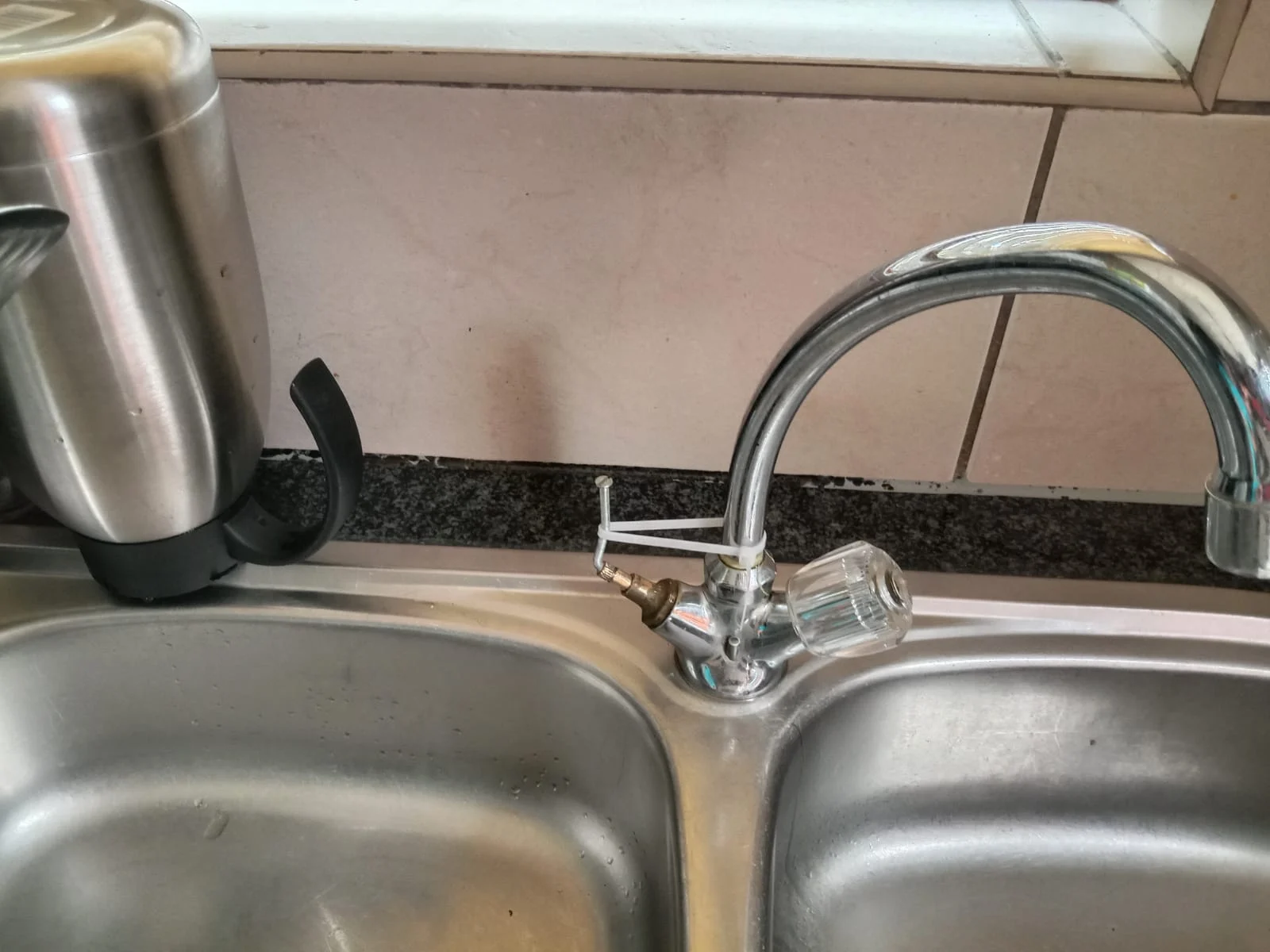
Double-bowl stainless steel kitchen sink with a curved mixer tap
A kitchen sink combines the mixer or taps, water connections, waste outlets and a trap beneath the cabinet. A leak or slow drain should be assessed alongside the condition of accessible joints and the surrounding cabinet.
Planned sink or mixer changes also need practical access to valves and waste connections. This helps define a sensible installation work and leaves the plumbing accessible for future maintenance.
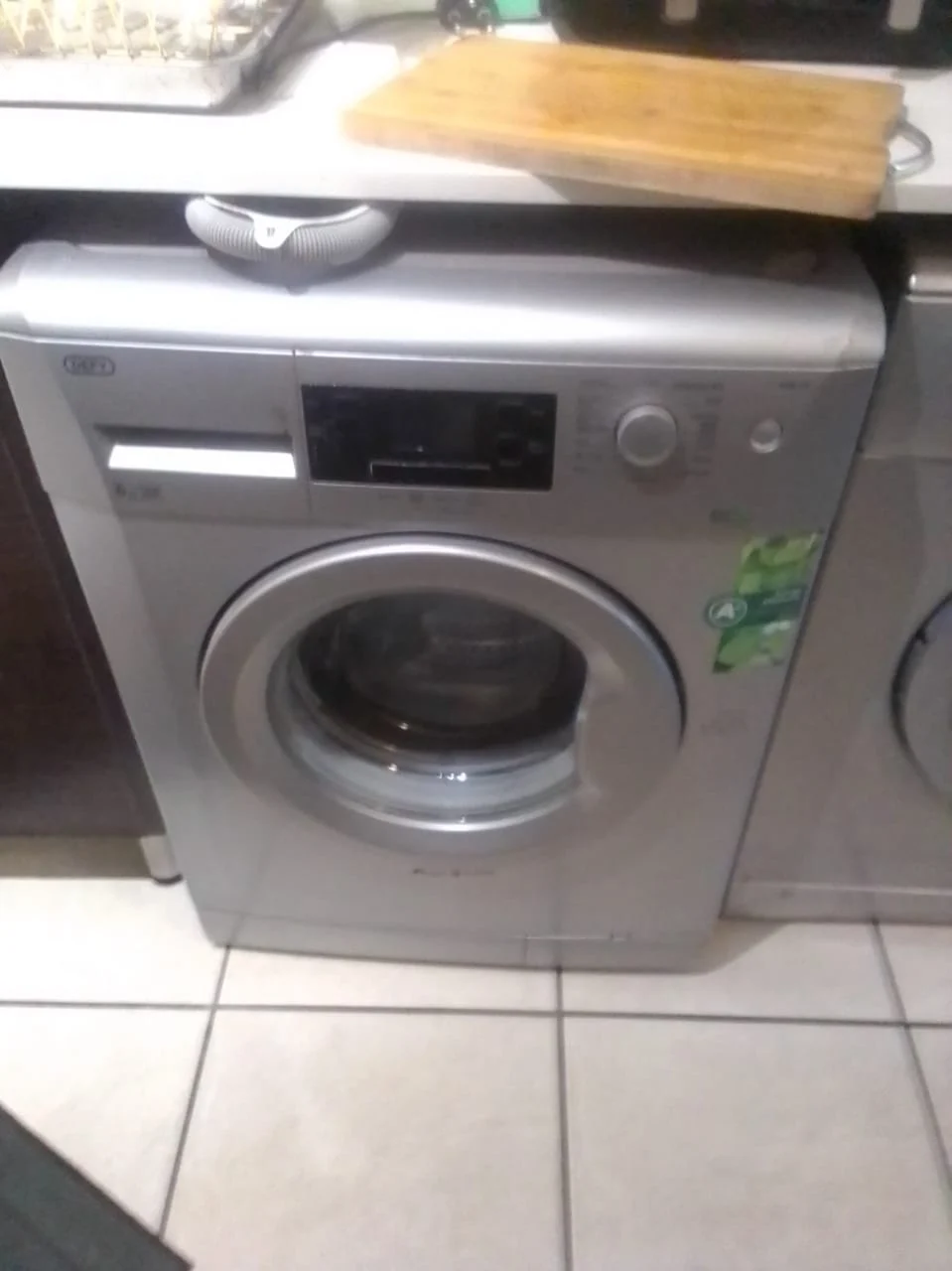
Front-loading washing machine positioned beneath a kitchen worktop
A washing machine needs a suitable water connection and a practical waste route within the available installation space. Hose condition, accessible isolation and the existing drainage arrangement form part of the connection assessment.
After installation or repair, the water and waste connections should be checked during operation. Include the appliance position and existing connection points when asking for installation help so the proposed work can be explained clearly.
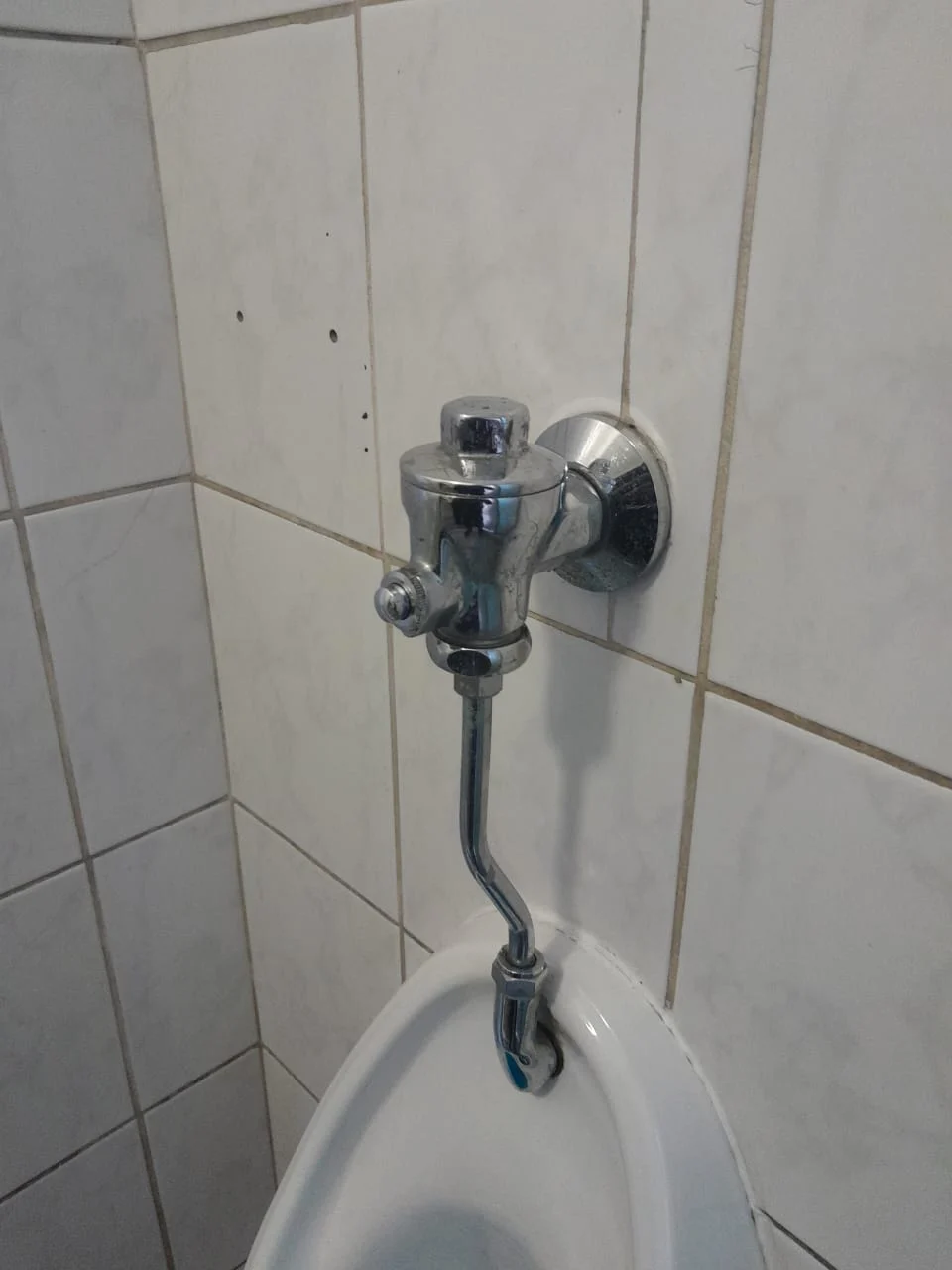
Chrome flush valve and pipework above a wall-mounted urinal
The flush valve and connected pipework shown here are typical components to identify when reporting a washroom fixture problem. Continuous flow, unreliable flushing and leaks at a connection each provide useful information for an assessment.
Access to water controls and the effect of taking fixtures out of use also matter in shared washrooms. A planned repair work should explain the affected fittings and how the work will be checked before the fixture returns to use.
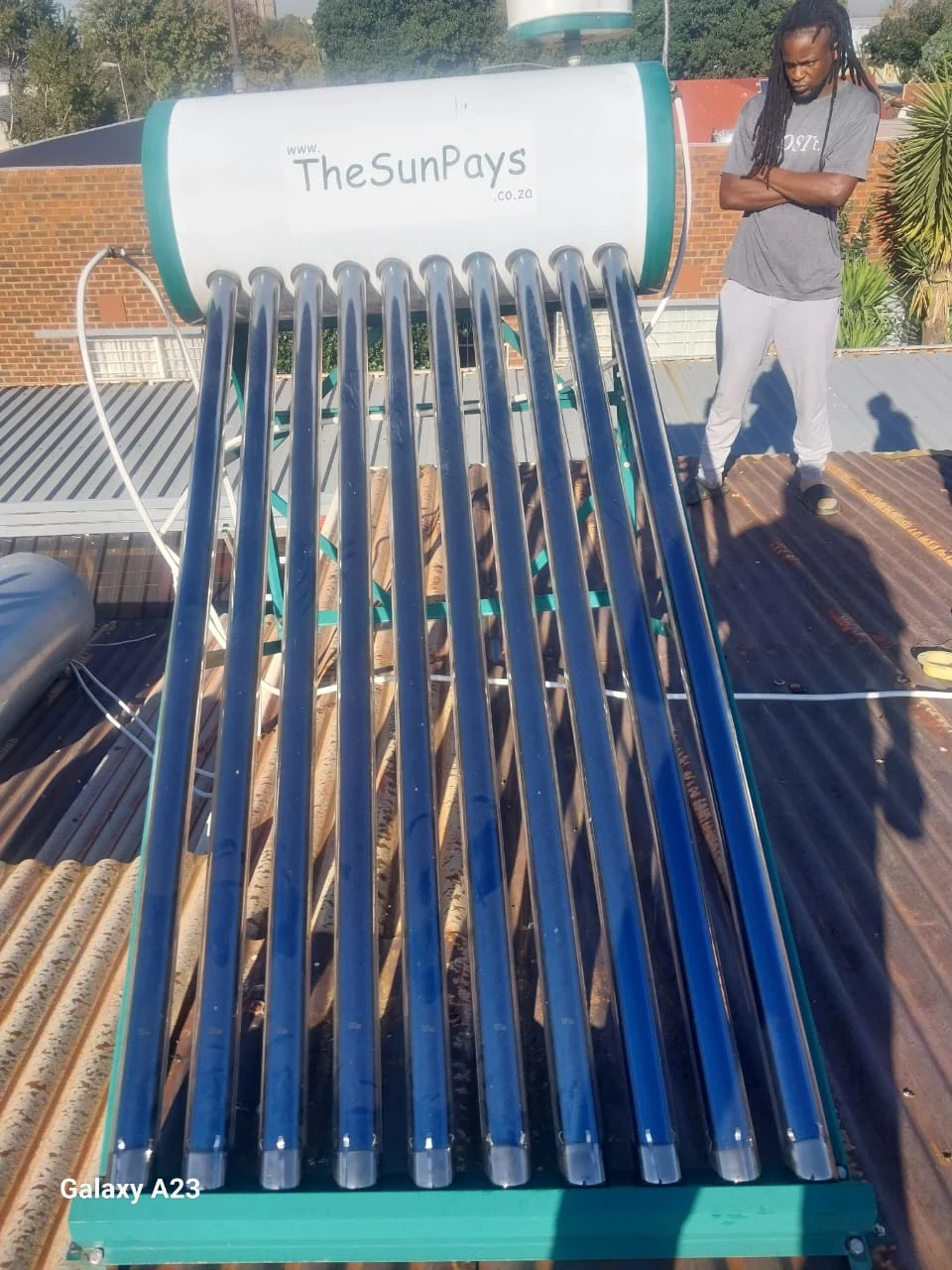
Evacuated-tube solar water-heating assembly with a storage cylinder
A solar water-heating system includes a collector, storage, connecting pipework and associated controls. This photograph shows an evacuated-tube collector and cylinder arrangement, which helps identify the kind of system involved in an enquiry.
Repair and conversion enquiries should describe the existing installation and the fault or improvement required. Compatibility, condition and the proposed connection work need assessment before recommending changes to the system.
Start with the symptom: leaking water, a blocked outlet, weak flow or unreliable hot water. Note whether one fitting or several parts of the property are affected.
What should I be careful of?
Leave wet electrical fittings, hot components and stiff valves alone. Don’t keep using outlets that are backing up or dismantle plumbing to identify the part.
Can I do anything useful now?
Limit further water use where there is a leak or backup. Keep the affected area accessible and take a safe photo if it helps show the problem.
What details should I send you?
Send your address, the symptom, when it began and any earlier repair. For installation work, include the fitting or appliance details and what you want to change.
What happens next?
We explain the proposed work and quotation before starting. The call-out and quote are free, and repair work and parts are priced separately.
What to expect on a visit
If you are unsure which plumbing service you need, start with what you can see. Tell us whether water is escaping, backing up, losing pressure or failing to heat. We ask when it happens and which fixtures are affected so we can identify the first connection or branch to check.
Once the fault is located, we explain the repair and what we will test before putting the fitting back into use. Call or WhatsApp us with a photo and the property address so we can discuss access and the affected service.
When it comes to plumbing repairs in your home, peace of mind matters just as much as the repair itself. One of the most common questions homeowners ask…
When it comes to maintaining your home's plumbing system, one of the most critical decisions you can make is to hire professional plumbers for repairs and…