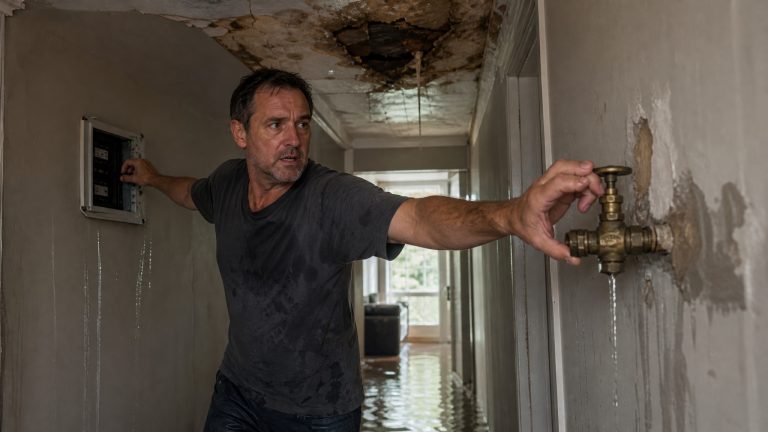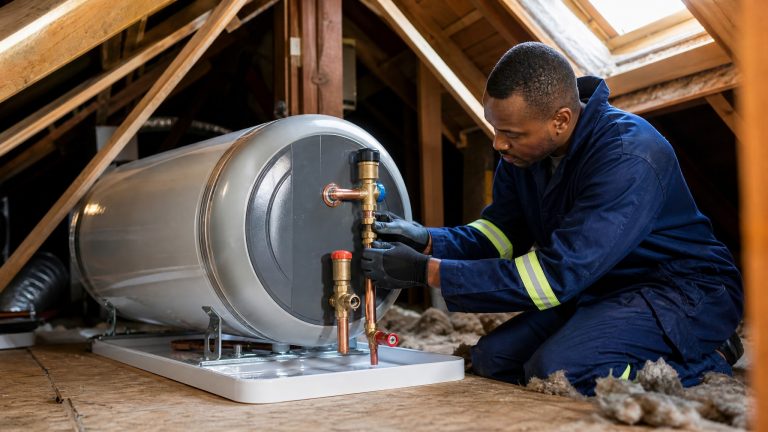
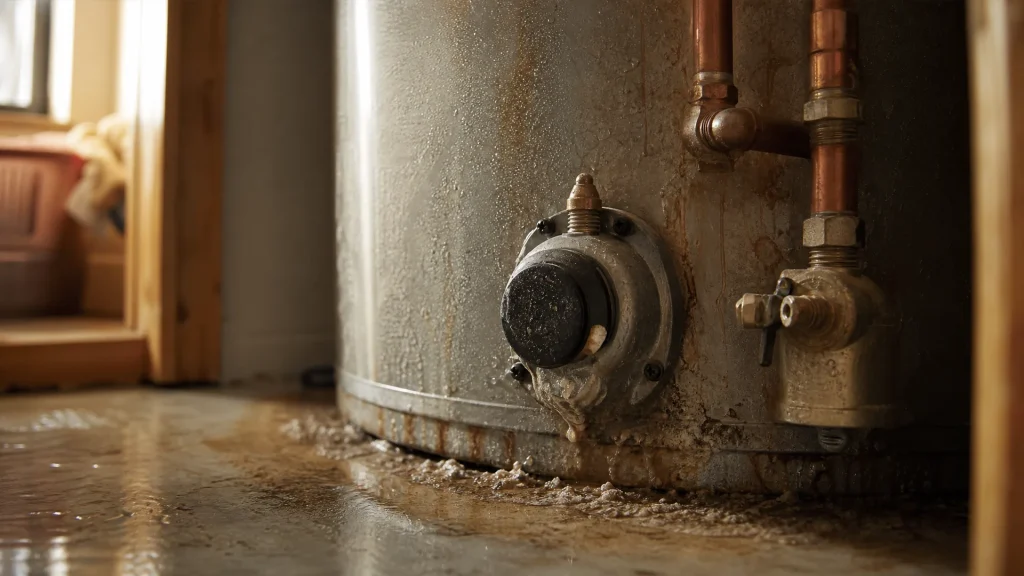
A geyser rarely fails without warning. Before a tank bursts and floods a ceiling or cupboard, it usually makes noise for days or weeks first. Learning to read a geyser making noise before it bursts can save you thousands in water damage and an unplanned replacement.
Why a Noisy Geyser Is Trying to Warn You
A geyser is a sealed metal tank holding water under pressure, heated by an element and controlled by a thermostat. When any part of that system starts to fail, the tank makes noise before it fails completely. That noise is often the only clue you get before a real problem develops.
Common Causes Behind Geyser Noise
Most unusual sounds trace back to one of four issues. Sediment buildup at the bottom of the tank is the most common. A failing heating element is another frequent cause. A faulty thermostat can also cause strange sounds. Pressure buildup inside the tank rounds out the list.
Each cause produces a different kind of sound. That’s why telling them apart matters. We’ll map each one to a specific noise later in this article.
How Sound Travels Through a Tank Under Pressure
A geyser tank is a closed metal cylinder. Sound inside it doesn’t fade the way it would in open air. Instead, it bounces off the tank walls and travels through the pipework into your ceiling or cupboard.
That’s why a small amount of trapped sediment or a loose heating element can sound much louder than the actual problem. The metal shell amplifies vibration, so even a minor fault can produce a noise that feels alarming.
Types of Geyser Noises and What Each One Means
Not all geyser noises mean the same thing. Here’s how to tell them apart.
Popping and Cracking Sounds
A loud popping or cracking noise almost always points to sediment buildup. As minerals settle on the tank floor, water gets trapped underneath the layer of scale. When the element heats that trapped water, steam bubbles form and collapse violently against the hardened sediment. That produces sharp popping or cracking sounds.
This noise usually gets louder over time as more sediment builds up. It’s uncomfortable to listen to, but it’s rarely an emergency on its own.
Banging or Knocking Noises
Banging or knocking noises can come from sediment, but they can also signal a loose heating element or a bracket vibrating against the tank wall. If the sound is sharp and rhythmic, it may line up with a heating cycle turning on and off.
Plumbers generally treat any loud banging combined with visible bulging, rust streaks, or a leaking pressure valve as an emergency, not a wait-and-see situation.
Rumbling or Gurgling Sounds
A rumbling or gurgling sound, sometimes described as a boiling or bubbling noise, is a classic sign of heavy sediment sitting under the heating element. The trapped water boils under the scale layer and pushes bubbles up through the sediment, creating a rumble similar to a kettle left too long on heat.
Geysers reported as “making a rumbling noise” in the weeks before failure very often turn out to have heavy sediment buildup rather than an imminent burst. A smaller share do progress to tank failure if left unaddressed, so rumbling is worth acting on rather than ignoring.
Ticking Sound After Heating
A ticking or clicking sound just after the heating cycle starts is usually the tank expanding as metal parts heat up, or small sediment particles shifting on the tank floor. This is one of the most common early callouts plumbers receive in hard water regions of South Africa, where mineral deposits settle at the bottom of the tank.
On its own, occasional ticking isn’t usually dangerous. But when it appears alongside other noises, it’s a sign sediment has been building for a while.
Sediment Buildup and Mineral Scaling in Hard Water Areas
Sediment is the single biggest cause of geyser noise in South African homes. It’s also one of the easiest to fix if caught early.
Symptoms of Sediment Buildup
Beyond popping and rumbling, look out for these geyser sediment buildup symptoms:
- Longer time for water to heat up
- Reduced hot water pressure at taps
- Discoloured or gritty water coming from hot taps
- A geyser that feels noisier than it did a year ago
- Higher electricity bills from the element working harder
Scale acts like an insulating blanket between the heating element and the water. The element has to work longer and hotter to compensate. That speeds up wear and raises the risk of element burnout.
Why Hard Water Areas in South Africa Are More at Risk
Water hardness varies significantly across South Africa’s municipalities. Homes on harder water supplies see scale build up on the element and tank floor much faster than those on softer water. Geysers in these areas need sediment flushing notably more often than units in soft water regions, simply because minerals settle out of the water more quickly.
If you’re unsure how hard your local water is, a noticeable ticking or popping sound within a year or two of installing or servicing a geyser is a strong hint that your area falls on the harder end of the scale.
Heating Element, Thermostat, and Pressure Valve Faults
Not every noise is about sediment. Some point to parts that need replacing rather than flushing.
Signs of a Failing Heating Element or Thermostat
A heating element nearing the end of its life can produce a buzzing, humming, or sharp crackling sound, sometimes with a burning smell. This differs from the dull pop of sediment; it tends to be sharper and more electrical in character.
A faulty thermostat can cause the element to overheat the water repeatedly. That raises pressure inside the tank and can make popping and knocking sounds worse even after a flush. If a geyser was recently flushed but the noise persists or gets worse, the thermostat or element is a likely next suspect.
Pressure and Temperature Relief Valve Warning Signs
A high-pitched whistling or hissing sound is frequently linked to a faulty pressure relief valve or excess tank pressure. This is a safety issue you shouldn’t leave to monitor overnight. The pressure and temperature relief valve exists specifically to release excess pressure before the tank can rupture. A valve that’s whistling, dripping constantly, or stuck shut needs urgent attention.
Decision Tree: When to Flush, Monitor, or Call an Emergency Plumber
Once you’ve identified the type of noise, the next question is what to do about it. Use this simple decision tree.
Safe to Monitor vs Needs Immediate Action
Safe to monitor, but book a service soon:
- Occasional ticking after heating starts, with no other symptoms
- Mild popping that hasn’t changed in volume or frequency
- Slightly slower hot water with no leaks or discolouration
Needs action within days:
- Rumbling or gurgling that’s getting louder week by week
- Popping combined with reduced hot water pressure
- Discoloured or gritty hot water
Needs an emergency plumber immediately:
- Loud banging combined with visible bulging or rust streaks
- Whistling or hissing from the pressure relief valve
- Any leaking around the tank base or fittings
- Burning smell alongside electrical buzzing
Signs Your Geyser Is About to Burst
The clearest geyser about to burst signs combine noise with a visible change: a bulging tank casing, rust-coloured water, a valve that’s leaking steadily rather than dripping occasionally, or a sudden spike in loud banging after a period of quiet. When noise pairs with any of these, don’t wait for a callout slot next week. Call an emergency plumber the same day.
Protecting Your Home: Prevention and Next Steps
Most noisy geysers can be brought back to quiet, reliable operation if the right fix happens at the right time.
Routine Maintenance to Prevent Noisy Geysers
Flushing the tank once a year removes loose sediment before it hardens into scale. In harder water areas, flushing every six to twelve months keeps noise and element strain down. A licensed plumber can also check the anode rod, which slows corrosion and reduces the rate at which sediment forms in the first place.
Regular servicing catches a failing thermostat or element before it turns into a banging tank or a burst. It’s a small cost compared to water damage repairs after a flood.
When to Call a Professional Instead of DIY
Flushing a geyser and inspecting a pressure relief valve both involve working with a pressurised, electrically connected tank. Getting it wrong risks scalding, electric shock, or a burst that floods the room below. If your geyser is making any of the noises described above, especially banging, rumbling, or whistling, have a professional diagnose the cause rather than guessing.
Plumber-Plumbers.co.za responds to geyser noise callouts across South Africa’s hard water regions and can tell you within minutes whether your tank needs a flush, a part replacement, or urgent attention before it fails. If your geyser is making noise right now, book a diagnostic or emergency visit before the sound turns into a flood.