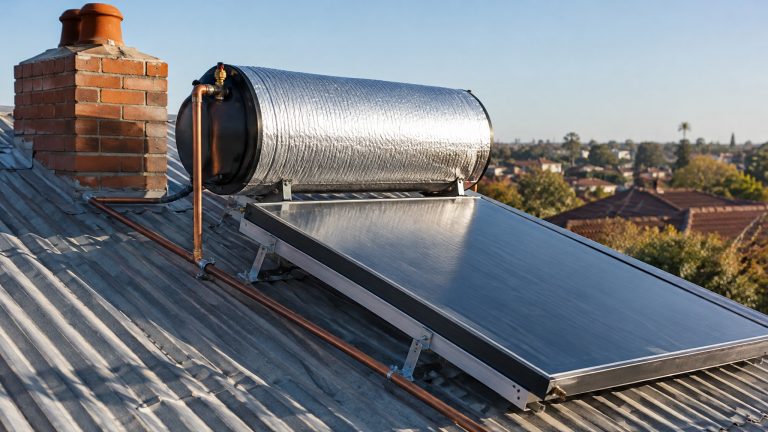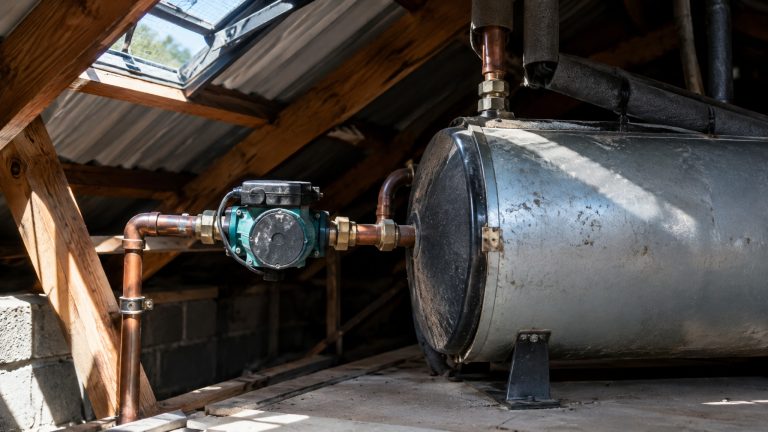
A heat pump is one of the quieter appliances on your property, which is exactly why it gets forgotten. Nobody notices a clogged intake until the water stops getting hot. This heat pump maintenance checklist for South Africa shows you what to check monthly, what to try before you phone anyone, and what belongs to a technician.
It is written for owners of ITS domestic and commercial units. You need no tools beyond a soft brush, a vacuum and a notebook.
Why Heat Pump Maintenance Matters in South Africa
An ITS air-to-water heat pump pulls heat from the outside air and uses it to warm the water in your storage tank. That takes work off the geyser element, which then only tops up what the heat pump cannot deliver. If the heat pump struggles, the element quietly picks up the slack and your electricity bill shows it.
South African conditions make that struggle more likely. Highveld dust and autumn leaf fall clog intakes and fins. Salt-laden air near the coast corrodes exposed metal faster than inland air does. Hard water leaves scale on the water side, and load shedding followed by power surges is hard on controllers and compressors.
Where you live decides how often you look. A unit on the coast or under a jacaranda needs a closer eye than one in a clean, sheltered courtyard, so tighten the cleaning interval if your site is harsh. If you are weighing up heat pump options for load shedding, the same wear factors apply to whichever model you pick.
The work splits cleanly in two. You can clear debris, clean the accessible filter or intake, watch the drain, look for drips and read the controller. A technician handles the refrigerant circuit, electrical connections and anything that needs the casing opened.
Monthly Heat Pump Maintenance Checks
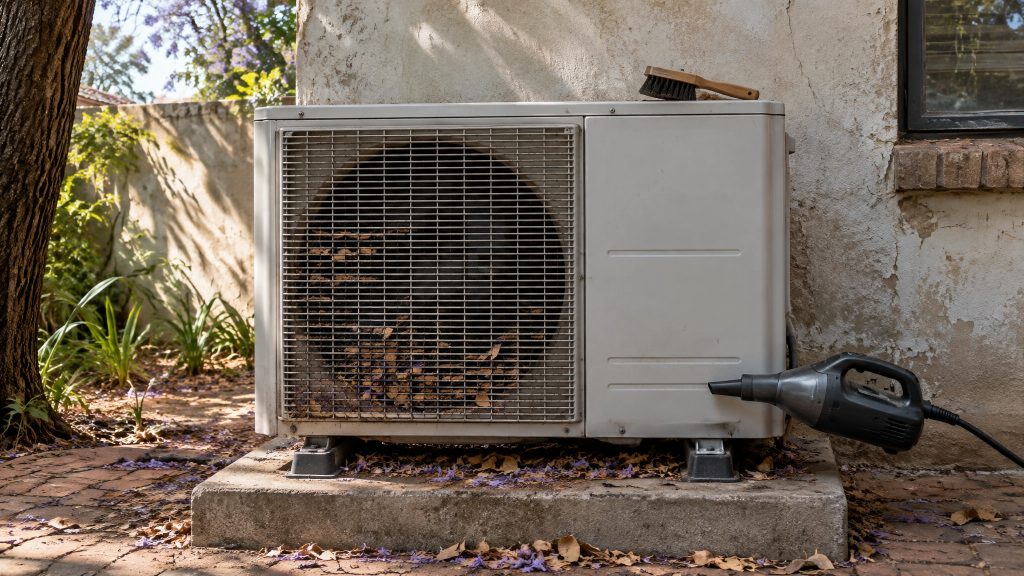
Set aside fifteen minutes on the same day each month. Do a walk-round first and clear leaves, grass cuttings, bags and stored items from around the outdoor unit so air moves freely in and out. Then work through the two jobs below.
Cleaning the Heat Pump Filter Without Damaging the Fins
Dirt on the intake is the most common reason a unit loses efficiency, and it is also the easiest fix. A typical case: an outdoor unit sits in a leafy garden and heats water more slowly over several weeks, until someone clears the debris from around the fan and drain. A short monthly look would have prevented the whole episode.
Work in this order:
- Switch the unit off at the isolator or breaker.
- Brush or vacuum the accessible filter or intake, working gently.
- Rinse only if your manual allows it, and never hit the fins with a high-pressure hose.
- Let every part dry fully.
- Switch the unit back on.
The fins are thin aluminium and bend at a touch. A bent fin blocks airflow just as leaves do, so use a soft brush and follow the fin direction rather than scrubbing across it.
Switching back on while anything is still damp is the mistake owners make most. Wait until it is properly dry.
Checking Drains, Connections and the Controller
Once the intake is clean, confirm that the condensate drain runs freely, because a blocked drain sends water back where it should not go. Look at the water connections and the relief-valve outlet for drips, since a slow weep is easy to miss and costly to ignore.
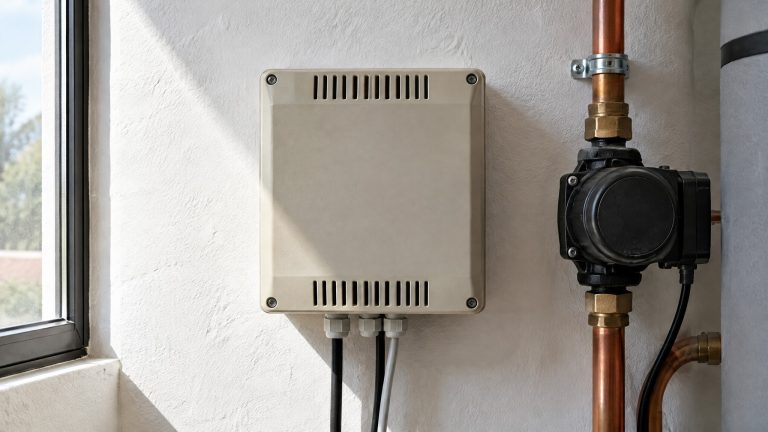
Then read the controller. Note any fault code and write down the set temperature. A logbook entry takes ten seconds, and it means a sudden change in setpoint, whether from a power surge or a family member fiddling with the app, is obvious next month.
Heat Pump Not Heating Water? Troubleshoot These Causes First
When hot water disappears, the cause is usually simple. Go from the easiest check to the most involved, and stop as soon as the water recovers.
Check Power, Mode and Setpoint First
Start with power. Confirm the isolator is on and the breaker has not tripped, because after load shedding a breaker that did not reset looks exactly like a dead heat pump.
Next, look at the controller. Check that it is in heating mode, that no schedule is keeping the unit idle during your peak hours, and that the setpoint has not dropped. A setpoint knocked down after an outage is a common culprit, and the logbook you started above is how you spot it.
Airflow, Drainage and Cold-Weather Causes
If power and settings are fine, look outside. Leaves, a stacked pile of boxes or a fast-growing hedge can choke the airflow, and a blocked condensate drain can stop the unit from running properly.
Cold spells are the other usual cause. In a cold snap the unit has less heat to draw from the air, so recovery is slower and the geyser element may carry more of the load for a few days. That is normal behaviour, not a fault, though you should expect it to be slower than in summer.
None of this is a repair, and it does not replace a diagnosis. If a fault code comes back after you have reset the unit, or the water stays cold once you have worked through these steps, call a qualified technician rather than opening the casing yourself.
Warning Signs That Mean Switch Off and Call a Technician
Some symptoms go beyond routine upkeep, and no amount of brushing will fix them. If you notice any of these, isolate the unit where it is safe to do so and call a qualified technician:
- a burning smell
- scorched or loose wiring
- breakers that trip again and again
- water pooling under the unit
- a relief valve that keeps dripping
- banging, grinding or hissing noises
- the unit cycling on and off constantly
- the same fault code returning
A repeat fault code deserves special mention. One code after a power cut can be a one-off, but the same code twice means something is wrong that a reset will not cure.
Do not try to repair any of these yourself. Water, mains voltage and pressurised refrigerant are a poor mix for a weekend project, and a wrong guess can turn a small fault into a damaged compressor.
Annual ITS Heat Pump Servicing: What a Technician Checks
Your monthly checks keep the outside of the system healthy. A yearly service looks at the parts you cannot safely reach, and it catches slow problems before they become breakdowns. For many owners that is also cheaper in the long run, and the servicing versus replacement costs comparison shows how the sums usually work out.
What a Professional Annual Service Covers
During an annual ITS heat pump servicing visit, a technician works through the whole system and writes down what they find, so you hold a record you can compare year to year. The visit covers:
- the refrigerant circuit and its pressures
- leak testing
- electrical connections
- the condition of the coil and heat exchanger
- the relief valve and scale on the water side
- the controller settings
The written findings matter as much as the checks. They show whether a reading is drifting, they give you something concrete to act on, and they make it easier to decide on a repair later.
If your unit has not been serviced in the past year, book an annual ITS service visit for your domestic or commercial unit. Have the model name, install date and any fault codes ready when you get in touch.
Why Refrigerant and Electrical Work Stays With Professionals
Domestic models do not share one refrigerant. The ITS-6.3HDSuper high-temperature domestic unit uses R134a, while the ITS-7.6HD domestic heat pump uses R410A. Topping up or swapping the wrong one can damage the unit, so the technician confirms the type on the unit’s label first.
Standard South African trade practice treats refrigerant handling as work for a technician certified to handle refrigerants. Fixed electrical work belongs with a registered electrical contractor, who issues a Certificate of Compliance where the rules require one. The same logic is behind the installer versus handyman for geyser work question: the cheaper pair of hands is not always the right one.
An annual service does not make a failing unit new again. It finds and slows wear, but a unit that has reached the end of its life needs a different conversation.
Domestic Heat Pump Upkeep and How Commercial ITS Units Differ
For a home, domestic heat pump upkeep is the routine you have already read: monthly checks, annual service, and a logbook. Residential ITS units follow it with little change, whatever the model. Your own manual still has the final say on what you may clean and how.
Commercial Three-Phase Units Need a Planned Service Schedule
A business cannot afford to find out in the middle of a busy week that its hot water has gone. The ITS-22HD3 three-phase commercial unit is a 22kW unit with horizontal air discharge, so the space in front of the discharge must stay clear of stock, vehicles and growth. Walk the area every month, as you would for a domestic unit.
The three-phase supply is a job for an electrician, not a caretaker. Checking voltage and connections on all three phases needs electrician-level skill, and it should be part of every visit.
Put the service on a planned schedule and keep written logs of dates, findings, fault codes and set temperatures. If you manage a site, that record helps whoever takes over the building, and it makes a pattern of faults visible long before it becomes an emergency.
Heat Pump Lifespan in South Africa: How Routine Care Extends It
No honest article can promise you a specific number of years, because the heat pump lifespan in South Africa depends on the site, the water and how the unit is treated. What you can control is the list of habits that protect it.
- Keep airflow clear, because a unit that breathes easily works less hard.
- Set the temperature your household actually needs rather than the highest the controller allows.
- Fit surge protection where your supply is unstable.
- Control scale in hard-water areas, since scale on the water side reduces heat transfer.
- Deal with small faults early, before they become large ones.
Each of these costs little. Together with the annual service, they are the difference between a unit that quietly gets on with the job and one that is replaced early.
Even with good care, every unit reaches an age where repairs start to stack up. When yours does, the repair-or-replace decision guide will help you weigh the next repair against a new unit.
To keep your heat pump going into 2027 and beyond, book a professional service visit for your domestic or commercial ITS unit. Send us the model name, the install date and any fault codes you have noted, and we will take it from there.
Frequently asked questions
How often should I clean my heat pump filter?
Check it monthly. If you live near the coast or in a dusty or leafy area, look more often, because salt, dust and leaves build up faster. Always switch off at the isolator first, brush or vacuum instead of hosing the fins, and let everything dry fully before switching back on.
Why is my heat pump not heating water?
The cause is usually simple. Check that the isolator is on and the breaker has not tripped, then confirm the controller is in heating mode with the right setpoint. After that, look for blocked airflow or a blocked condensate drain, and allow for slower recovery in a cold spell. If water stays cold after these steps, call a qualified technician.
Can I top up the refrigerant myself?
No. The refrigerant type differs by model, with the ITS-6.3HDSuper using R134a and the ITS-7.6HD using R410A. Handling refrigerant is work for a certified technician, who confirms the type on the unit’s label first.
What does an annual heat pump service include?
A technician checks the refrigerant circuit and pressures, tests for leaks, inspects electrical connections, looks at the coil and heat exchanger, and checks the relief valve, scale and controller settings. The findings are written down so you can track changes year to year.
Do commercial ITS heat pumps need different care?
The monthly checks are the same, but a commercial three-phase unit such as the ITS-22HD3 needs a planned service schedule and written logs. Its three-phase supply should be checked by an electrician, and the area in front of its horizontal air discharge must stay clear.