A burst geyser at 2 AM forces an immediate decision. Most failures, though, give you a brief window to choose between a quick fix and a full replacement. Rushing into the cheapest option often costs more over the next two years, because you end up treating symptoms on a tank that has already reached its mechanical limit. This guide lays out a structured way to weigh age, repair history, and replacement value, so you can stop guessing and start calculating.
The 50% Rule: Comparing Geyser Repair Cost vs Replacement Cost
Plumbers and insurance assessors use a specific financial rule to separate a worthwhile repair from a money pit, and it’s worth applying before you authorise any work on your hot water system. When the quoted price for parts and labour reaches fifty percent of what a comparable new installation would cost, replacement almost always beats another repair on ageing equipment.
The threshold exists because component failures rarely happen in isolation once a geyser passes mid-life. Replacing a thermostat or element might restore hot water today, but the tank keeps degrading under the same thermal stress and mineral buildup that caused the first fault. Spend a large sum on a unit statistically likely to fail again within eighteen months, and you’ve paid twice for the same capacity. New equipment resets the clock entirely.
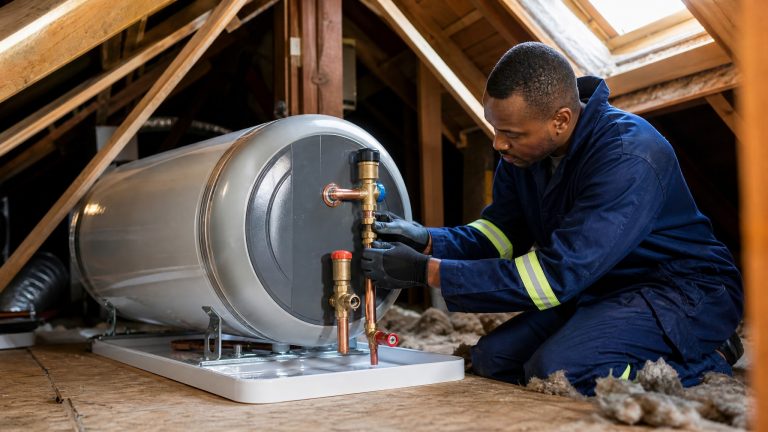
The calculation has to include the full installed price of a replacement, not just the hardware. A new electric geyser installation involves the cylinder, valves, piping adjustments, labour, and compliance certificates. A solar retrofit like the 150L High Pressure Solar Geyser Conversion, priced around ZAR 13,451, adds collector panels and manifold components to that total. If your repair quote approaches half of the installed figure, the maths favours replacement even when the current fault looks minor.
Sunk costs from previous repairs shouldn’t factor into this decision. Money spent fixing the same unit last year is gone and irrelevant to whether today’s expense makes sense. Only the costs ahead of you matter when weighing geyser repair against replacement.
Geyser Lifespan South Africa: When Age Dictates Replacement
Most standard electric geysers in South African homes reach their functional end between eight and twelve years, though local water chemistry can compress that window significantly. Hard water regions speed up internal corrosion and scale buildup, so a unit in some municipalities can fail years before one in a softer-water area reaches the same state.
Age alone doesn’t mandate replacement, but it changes the risk profile of any repair you’re considering. A seven-year-old geyser with a failed heating element still has plenty of service life left, so replacing that part is a reasonable call. The same repair on an eleven-year-old unit is closer to gambling, because the tank lining and sacrificial anode have likely used up their protective capacity regardless of which part failed this time.
You can’t inspect internal tank condition without destructive testing, so age is the best available proxy for structural integrity. Manufacturers design cylinders around expected corrosion rates for average water quality, and once you exceed that design lifespan you’re operating on borrowed time even without visible leaks. That’s the honest answer to whether it’s worth repairing an old geyser: past the ten-year mark, every rand spent on components buys less, because the tank itself is the ticking clock.
Solar conversions offer a middle path when the tank is sound but efficiency has become the real issue. Retrofit packages such as the 200L High Pressure Solar Geyser Conversion, priced around ZAR 15,449, keep the existing cylinder while cutting electricity use. That only makes sense, though, if the base tank has verified structural integrity and enough remaining lifespan to justify the investment.
Critical Signs You Need a New Geyser Immediately
Some failures allow deliberation. Others demand immediate replacement because they point to irreversible damage rather than an isolated component fault. Catching these end-of-life signals early saves you a wasted call-out and protects your property from water damage that gets worse by the hour.
Tank Corrosion and External Moisture
Rust streaks, damp insulation, or moisture pooling around the base mean the inner steel cylinder has breached its protective lining and started corroding through to the outside. No component swap fixes this, because the pressure vessel itself is compromised and will keep deteriorating until it ruptures. You might temporarily seal a pinhole leak, but the metal around it is just as thin and will fail elsewhere within days or weeks.
Persistent valve leaks sometimes look like tank corrosion, so check the source before condemning the whole unit. Water tracking down from the temperature and pressure relief valve or vacuum breaker often means replaceable seals, not tank failure. Water emerging from beneath the insulation jacket or from welded seams, though, confirms a structural breach. The distinction matters: seal replacement costs a fraction of a full unit swap, while mistaking tank corrosion for a valve issue wastes money on parts that can’t touch the real problem.
Sediment Noise and Thermal Inefficiency
Loud rumbling, popping, or cracking during heating cycles signals sediment that has hardened onto the element and tank floor. That calcified layer insulates the heating element from the water, forcing it to run hotter and longer to hit set temperature, which speeds up both element burnout and tank corrosion from localised overheating. Flushing can clear loose sediment, but hardened scale bonded to the tank interior can’t be removed without damaging the glass lining. The noise means permanent efficiency loss and ongoing damage.
This symptom often shows up as a jump in electricity consumption before the geyser fails outright. The unit works harder to heat water through the sediment layer, burning more power while delivering less hot water and shorter recovery between uses. When sediment noise combines with rising energy costs and falling performance, the geyser is in terminal decline, whether or not it’s still producing warm water.
Repeated Component Failures Within Short Intervals
Replacing the same component twice within two years, or different components in quick succession, points to systemic degradation rather than bad luck. Thermostats, elements, and valves should each last several years under normal conditions, so clustered failures suggest the whole environment has turned hostile to every component at once. Corroded wiring connections, poor water chemistry, or a failing tank lining create cascading stress that no single part replacement can resolve.
This pattern shows up most in geysers nearing or past typical lifespan expectations in South Africa, where years of thermal cycling have fatigued several systems at once. Each repair buys less time, because the next weakest link is already close to failing. That’s a cycle of rising costs and falling reliability. At this stage, continued repair spending is really deferred replacement financing, at bad terms, and spotting the pattern early stops you throwing good money after bad.
Not every symptom calls for full replacement, and telling the fixable from the terminal takes an honest look rather than wishful thinking. No guide removes the uncertainty entirely, but applying these criteria consistently means your decision rests on evidence, not hope.
Frequently Asked Questions
How do I know if my geyser is worth repairing?
Apply the 50% rule: if the repair quote exceeds half the cost of a new installation, replacement typically offers better value. Also consider the unit’s age; repairs on geysers older than ten years carry high risk of near-term secondary failures regardless of which component is fixed now.
What is the average geyser lifespan in South Africa?
Standard electric geysers typically last eight to twelve years, though hard water areas can reduce this to six or eight years due to accelerated corrosion and scaling. Regular anode replacement and maintenance can extend service life toward the upper end of this range, but cannot prevent eventual tank degradation.
Can I convert my existing electric geyser to solar instead of replacing it?
Yes, if the existing tank is structurally sound and under roughly eight years old. Retrofit conversion kits add solar collectors and controls to compatible electric geysers, reducing electricity consumption while preserving the current cylinder, but this only makes financial sense when the base unit has sufficient remaining lifespan.
What signs mean my geyser needs immediate replacement?
Visible rust or moisture on the tank exterior, loud rumbling from hardened sediment, and repeated component failures within short intervals all indicate irreversible damage. These symptoms represent terminal decline rather than fixable faults, and delaying replacement risks catastrophic rupture and property damage.
2 Comments