A pump-only replacement usually costs far less than a new solar geyser. The final bill turns on three things: the type of pump, how easy it is to reach the roof, and whether the controller or a sensor needs work as well. This guide shows you how to confirm the pump is the problem before you pay for one, what a fair quote contains, and when a complete system makes more sense.
What a Solar Geyser Circulation Pump Does
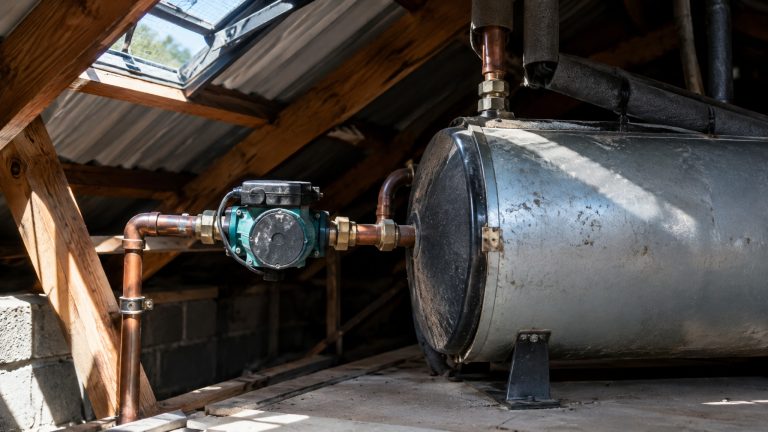
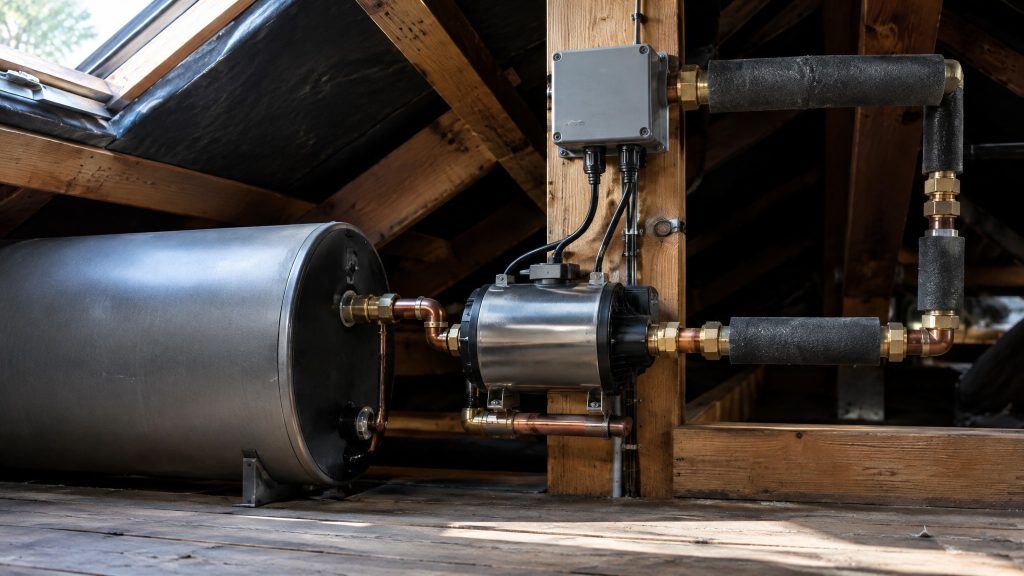
In a pumped (forced-circulation) system, the circulation pump moves fluid between the collectors on the roof and the storage cylinder. The controller switches it on when the collector is hotter than the water in the cylinder, and off again when the gain disappears.
Pumps are typically fitted where the cylinder cannot sit above the collectors, for example when the tank has to stay inside the roof space or on the ground.
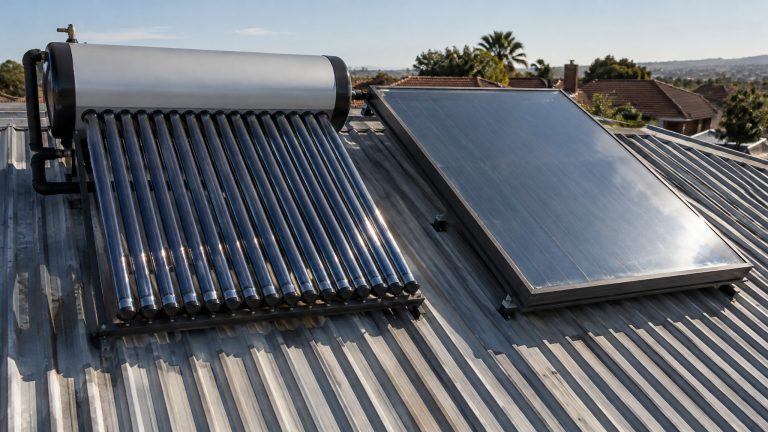
Thermosyphon systems work differently. Hot water rises by convection from the collector into a tank mounted higher up, so there is no circulation pump to fail.
If your system is a thermosyphon, this guide is not for you. A cold geyser on that kind of system points to the collectors, the tank, the element or the plumbing, not a pump.
Solar Geyser Pump Not Working? Signs the Pump Has Failed
A dead pump rarely announces itself. Most owners notice it indirectly: the water is lukewarm on a sunny afternoon, or the electricity bill creeps up because the backup element is doing all the work.
Common Symptoms of a Failing Pump
These are the signs that most often point to the pump:
- The collector stays cool, or the pipe leaving it does, even in strong sun.
- The pump hums but does not move fluid, or stays silent when it should be running.
- Fluid leaks at the pump body or its unions.
- A breaker or fuse trips when the pump starts.
- You hear grinding or rattling from the pump housing.
Every one of these can also come from somewhere else. A faulty controller, a failed temperature sensor or air trapped in the loop will produce the same cool collector and silent pump, so a replacement pump bought on symptoms alone can be money wasted.
Note the date, the time and the weather each time you see a symptom, because a log like that helps whoever diagnoses the fault.
Solar Geyser Controller and Pump Fault: How to Tell Them Apart
Three checks, done in order, separate a pump fault from a controller or sensor fault. The order matters because each one rules out a cheaper problem before you get to the expensive part.
Check the Controller Indicators and Sensor Readings First
Start at the controller. Look at its display or indicator lights to see whether it is calling for the pump, and read the temperatures it reports for the collector and the cylinder.
A sensor that reads absurdly high, absurdly low or shows an error can stop the controller from ever starting the pump. In that case the pump is fine and the sensor, or the controller itself, needs attention. Our guide to solar geyser controller replacement cost and troubleshooting covers that route.
If the readings look sensible and the controller shows the pump calling on, move to the next check.
Confirm Whether the Pump Gets Power When Called
With the controller calling for the pump, the next question is whether voltage actually reaches the pump terminals. On a PV-powered DC pump, that includes the solar panel feeding it.
Here is how the results read:
- Calling, but no voltage at the terminals: the fault lies in the controller output, a relay, the wiring, a fuse or the supply. The pump is not the culprit.
- Voltage present, rotor does not turn: the pump itself has failed. This is the third check, and a registered person confirms it by seeing whether the rotor spins.
Testing live voltage is not a homeowner job. Mains-voltage measurements and anything inside the pump wiring should be left to a registered electrician.
What Solar Geyser Pump Replacement Costs in South Africa
We have not put a single rand figure on the pump here, because a number copied from one job would mislead on the next. What you can rely on is how the bill is built and which factors push it up or down.
Solar Geyser Circulation Pump Cost: What the Bill Covers
A pump-only job on an accessible roof sits at the low end of the range. A fair quote lists these lines separately:
- Diagnosis or call-out
- The pump itself
- Labour
- Fittings, such as unions, valves or insulation
- Any fluid, if the loop is drained and refilled
- Any controller or sensor work
Ask for each line by name. A quote that shows only one total gives you nothing to compare, and our guide on how to compare plumber quotes shows how to benchmark every line against another installer’s quote.
Be sure the diagnosis line is there. Paying a little to confirm the pump is dead is far cheaper than paying for a pump that turns out to be fine.
What Moves the Solar Geyser Pump Price Up or Down
Roof access and pump type swing the total the most. A pump that sits near the cylinder at ground level costs less to fit than one on a steep or high roof, where the installer needs safe access and more time.
A few things push the bill up:
- Controller or sensor work found during the diagnosis
- Draining and refilling the collector loop
- Difficult roof access
- A pump type that is harder to source, such as a particular DC model
A straightforward swap of a like-for-like pump in easy reach pulls the bill the other way.
One more point: a cheap pump does not guarantee a cheap job. If the cause was an air lock or a failing sensor, the new pump will not fix it, and you pay twice.
DIY Risk vs Calling a Plumber for Pump Replacement
The pump sits between live electrics, hot fluid and a roof, so the line between what you can do and what you should not is easy to draw. Most of the homeowner’s value lies in the checks before anyone climbs a ladder.
Where DIY Stops and a Registered Pro Starts
Here is what you can safely do yourself:
- Check that the breaker for the system has not tripped.
- Read the controller display and note any error code or odd temperature.
- Keep a log of symptoms, with dates and weather.
Everything beyond that belongs to a professional. Mains wiring, work on the roof and anything on pressurised or hot pipework should go to a registered electrician or plumber, because a slip means electric shock, scalding or a fall.
Pump wiring is also fixed electrical work, which generally needs a registered person and a Certificate of Compliance under South Africa’s Electrical Installation Regulations. Confirm the current requirements with your electrician. This is general guidance, not legal advice.
If you are weighing a handyman against a qualified fitter, read our comparison of an installer or handyman for geyser work first.
Solar Geyser Pump Replacement Parts and Where to Buy Them
Buying a pump that looks right but does not match is the commonest and most avoidable mistake. Match the replacement to the old unit on these points:
- Supply type: mains-powered or PV-powered DC.
- Flow and head ratings: the pump must move the right volume against the height and resistance of your loop.
- Port size: the connections must fit your pipework.
- Controller compatibility: the controller must be able to switch that pump.
Read the data plate on the old pump and photograph it before it comes off. Then ask your installer to confirm the match before anything is ordered, because they know how the loop was built.
Source the pump by exact model, either through a registered installer or a supplier that lists the model you need. Our Solar Geyser Pumps collection is one place to look; send us the data-plate details and we will help you check the fit.
When a Complete Solar Geyser Beats a Pump Swap
A new pump is a sensible fix when the pump is the only thing wrong. It does nothing for a leaking cylinder or worn-out collectors, and it will not turn an ageing system into a young one.
Repair Quote vs Complete System: The Break-Even Check
A whole-system swap makes more sense in three cases:
- The cylinder or collectors are also failing, so you would be repairing one part of a tired system.
- The system is old enough that a new pump would not buy many reliable years.
- The repair quote climbs toward the listed price of a complete system.
For the last point you need a yardstick. Complete high-pressure solar geysers are listed at around ZAR 14,805 for the 100L, around ZAR 19,325 for the 200L and around ZAR 28,085 for the 300L, and those prices are subject to change. If the itemised repair total approaches the figure for your size, it is time to compare seriously.
Our geyser repair or replace decision guide walks through that call in more detail.
Choosing Between the 100L, 200L and 300L High-Pressure Solar Geysers
Size the replacement to your household’s daily hot-water use, not to the old unit by default. Our notes on choosing a solar geyser size for your family help you work out the demand.
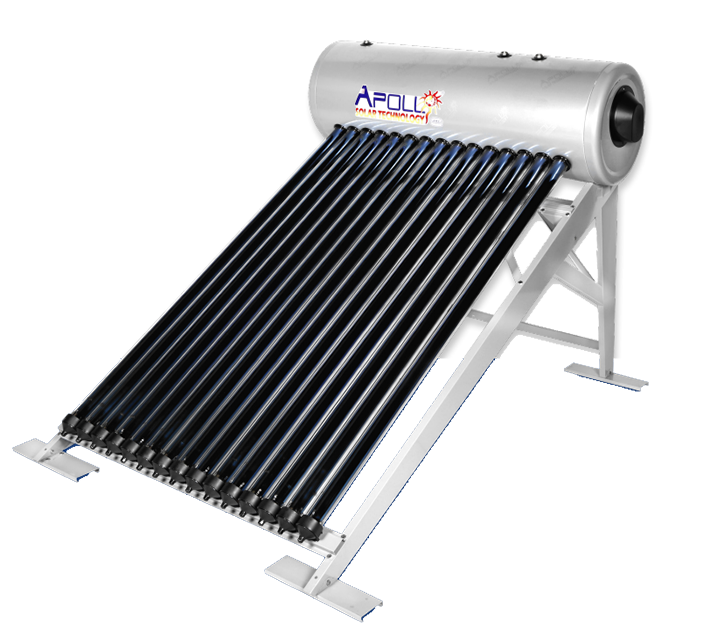
- The 100L high-pressure solar geyser suits smaller households, flats, cottages and properties with moderate daily demand.
- The 200L high-pressure solar geyser suits medium to larger households, such as family homes and townhouses, that need dependable hot water every day.
- The 300L high-pressure solar geyser suits heavy demand, such as guest houses and shared accommodation.
These are thermosyphon designs, so they circulate by convection without a circulation pump, subject to your roof and tank layout. That removes one failure point, though it does not suit every roof.
If your pump is confirmed faulty, request an itemised pump diagnosis and quote from us and you will see each line before you decide. If the numbers point to a new system, open the product page for your size.
Frequently asked questions
How do I know if it is the pump or the controller that has failed?
Read the controller first. If it shows the pump calling on, check whether voltage reaches the pump terminals. No voltage means the controller output, relay, wiring, fuse or supply is at fault, while voltage with a rotor that will not turn means the pump has failed. Have a registered electrician do the voltage test.
Can a solar geyser pump be repaired, or must it be replaced?
In most cases a failed pump is replaced rather than repaired, because the motor and rotor sit in a sealed unit. First rule out trapped air, a bad sensor and a controller fault, since those mimic a dead pump. A like-for-like swap by an installer is then usually the simplest fix.
Does my solar geyser have a circulation pump at all?
Only pumped (forced-circulation) systems do. If the storage tank sits above the collectors and water moves by convection, you have a thermosyphon system with no pump. The complete 100L, 200L and 300L high-pressure geysers we list are thermosyphon designs, subject to roof and tank layout.
Do I need a Certificate of Compliance after a pump replacement?
Pump wiring is fixed electrical work, which generally needs a registered person and a Certificate of Compliance under South Africa’s Electrical Installation Regulations. Ask your electrician whether one applies to your job and confirm the current wording of the rules.
When is it better to buy a new solar geyser than replace the pump?
Consider a new system if the cylinder or collectors are failing too, if the system is old, or if the repair quote nears the price of a complete system. Those are listed at around ZAR 14,805 (100L), ZAR 19,325 (200L) and ZAR 28,085 (300L), and may change.