A solar geyser pump that stops working can leave you with a cold tank and a higher electricity bill, often before you notice anything is wrong. Before you ask what a replacement costs, two things need settling: whether your system has a circulation pump at all, and whether the pump is really the fault.
This guide covers failure signs, the faults that mimic a dead pump, what the bill is made of and who should do the work. We do not quote a single rand figure for the pump itself, because the price depends on the unit and the job. You will see how the bill is built, so you can read a quote properly.
Does your solar geyser have a circulation pump?
Not every solar geyser has one. A circulation pump only appears in pumped designs, where a controller switches the pump on when the collector is hotter than the tank.
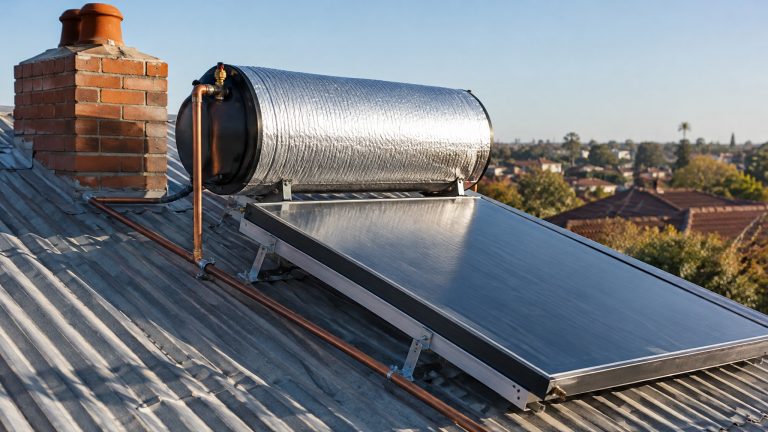
Thermosyphon systems work differently. Hot water rises from the collector into the tank by convection, and cooler water sinks back down, so nothing needs to push it. The 150L, 200L and 300L high-pressure solar geysers listed on this site are all thermosyphon systems, which means there is no circulation pump to replace on them.
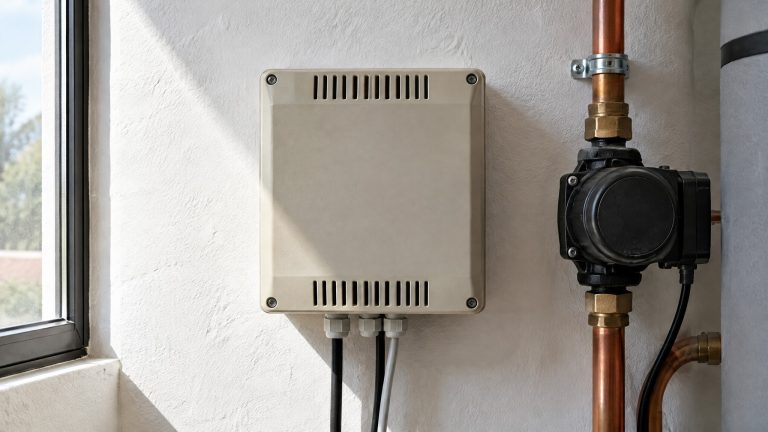
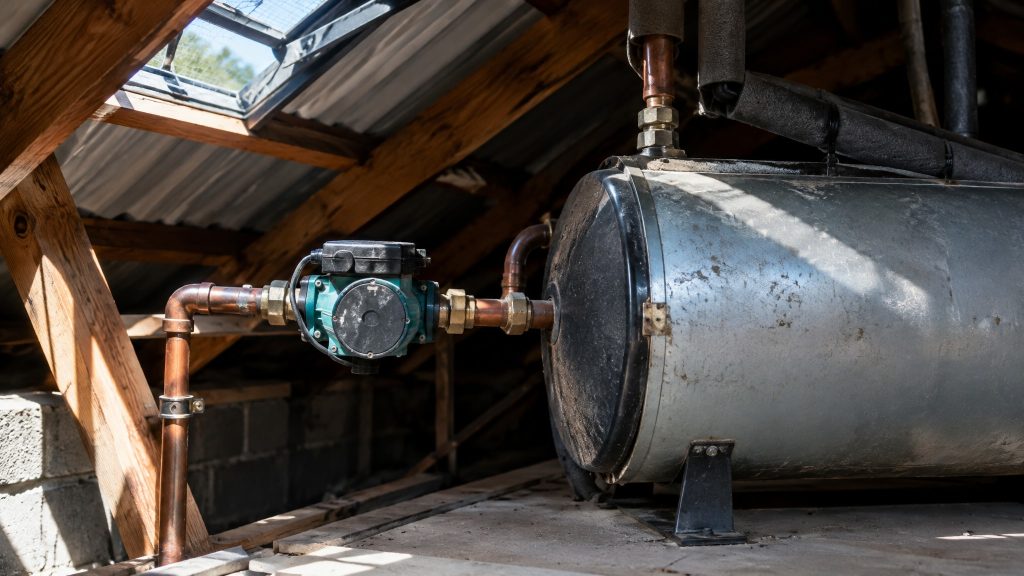
You can usually tell by looking. A tank mounted directly above or beside the collector on the roof, with short pipes between them, points to thermosyphon. A tank in the roof space or beside the house, with a small pump, a controller and longer pipework, points to a pumped system. If you are unsure, check the installation paperwork or ask the installer, because the whole question of pump cost only applies once you have confirmed a pumped design.
Signs your solar geyser pump is not working
The symptoms below separate a pump problem from the many other reasons a geyser runs cold.
Symptoms that point to the pump itself
These are the signs most likely to mean the pump has failed:
- The pump stays silent when the controller is calling for it.
- It hums but no water moves through the loop.
- Water leaks from the pump body or its connections.
- The breaker trips the moment the pump starts.
- You hear grinding or rattling from the pump.
A burning smell is different. Isolate the supply at the breaker and call an electrician. Do not wait to see whether it passes.
Early warning signs before a full failure
Pumps rarely die without warning, and these changes show up first. On a sunny day, the collector pipes are hot to the touch while the tank stays cold. Hot water output drops slowly over several months. Then your electricity bill climbs, because the backup element is heating more of the water than it used to.
That last sign is easy to miss. The geyser still delivers hot water, so nobody complains, but the sun is no longer doing its share of the work. If you have noticed the bill creeping up with no change in household habits, it is worth having the loop checked.
Pump or controller? Faults that look like a dead pump
A healthy pump can sit idle for reasons that have nothing to do with the pump. A loose or failed temperature sensor can tell the controller the collector is cold, so it never starts the pump, and a controller fault can do the same. Replacing the pump in those cases wastes money and leaves the real problem in place.
Consider a typical case. A pumped system’s collector is hot at midday, the tank is cold and the pump is silent. The owner assumes the pump is dead. A look at the controller display shows the collector sensor reading far too low, and the probe has slipped out of its pocket. Refitting it brings the pump straight back to life.
Checks that separate a pump fault from a controller or sensor fault
Work through the checks in this order, because each one rules out something cheaper than the one after it:
- Controller readings. Look at the collector and tank temperatures on the display. A collector reading that does not match how hot the pipes feel suggests a sensor fault.
- Sensor position. Sensors must sit firmly in their pockets or against the pipe. A loose probe gives false readings, and a failed one can show an error or an impossible value.
- Pump power. Confirm the pump is actually receiving power. This is a job for a qualified person, since it means working near live wiring.
- The pump itself. Only when the first three check out do you turn to the pump, which should run when called and move water without noise or leaks.
One more thing can fool you. Some pumps are powered by a small PV panel, and these naturally stop in weak light. On a cloudy morning or late in the afternoon a quiet pump is normal, so judge it on a bright day around midday.
Hot-water complaints after dark often have nothing to do with the loop. A tripped or worn thermostat, or a failed backup element, gives similar symptoms, so compare against our notes on geyser thermostat replacement cost and element replacement pricing before you blame the pump.
What a solar geyser pump replacement costs in South Africa
Solar geyser pump replacement cost is better understood as three tiers than as one number. Which tier you land in depends on what the diagnosis finds, and a good plumber will tell you before any part is ordered.
- Controller or sensor fix. The cheapest tier. The pump is fine, and the job is a repositioned probe, a replacement sensor or a controller repair.
- Pump-only swap. The failed pump is removed and a matching unit fitted, with the loop drained, refilled and bled.
- Pump plus controller job. The larger tier, where the pump, controller, check valves and fittings are replaced together, often because the whole circuit is ageing.
We have not put rand figures on these tiers. Pump ratings and local supplier prices differ too much for an honest number, so ask for a written quote.
Solar geyser circulation pump price: what moves it
Several things push the solar geyser circulation pump price up or down:
- Pump rating and power type. A mains-powered pump and a PV-powered pump are different products, and a higher-rated pump costs more.
- Access. A tank in a tight roof space or a collector on a steep roof means more labour time.
- Labour and call-out. Travel and time on site are billed on top of the part.
- Electrical work. Wiring changes may need a registered electrician and a Certificate of Compliance.
Many circulation pumps are replaced as a unit rather than rebuilt, so expect the pump to be a whole-part cost rather than a cheap repair.
Solar geyser pump repair or replacement in South Africa: how the bill splits
A fair quote has separate lines for the pump, labour, parts such as check valves and fittings, and any electrical work. Ask for it that way. A single lump sum hides whether you are paying for a part you did not need, and it makes two quotes impossible to compare. If you want a method for this, see how to compare itemised plumber quotes.
DIY or professional: who should fit a solar geyser pump?
Some of the diagnosis is yours to do, and none of the fitting is. The line sits where observation ends and opening up the system begins.
Checks a homeowner can safely make
You can do these without tools or risk:
- Confirm the breaker for the pump and controller is switched on.
- Read the controller display and note any error message.
- Look for drips or damp patches around the pump and pipes.
- Note what the system does on a sunny day: is the collector hot, is the pump running, is the tank warming?
Write these observations down. They give the plumber a head start and can shorten the call-out.
Do not open a live controller or touch the pump wiring. This guide is not for anyone planning to swap the pump themselves.
Why the swap itself needs a qualified professional
Replacing the pump means isolating and draining the hot, pressurised side of the system, fitting the new unit and bleeding trapped air from the loop. Those are plumbing jobs, and a mistake can scald someone or flood a ceiling.
Mains wiring belongs to a registered electrician, who issues a Certificate of Compliance where the work calls for one. Unqualified work can also complicate warranty or insurance claims, which is a poor trade for saving a call-out fee. If you are weighing who to call, our comparison of an installer or handyman for geyser fitting sets out the risks.
If your observations point to a pump, controller or sensor problem, request an itemised quote or an on-site diagnosis from a qualified plumber. The fault gets confirmed before any part is priced, so you do not pay for a pump you did not need.
When a whole new system beats a pump swap
A pump swap suits a system that is otherwise sound. It makes less sense when the rest of the system is on its way out, because you pay for labour twice within a few years.
Solar water heating pump cost versus a whole new system
Set the pump-only job against a complete system. The 150L high-pressure solar geyser is listed at around ZAR 16,332, the 200L at around ZAR 19,325 and the 300L at around ZAR 28,085. Those prices are approximate and change, so check the product pages before you plan around them.
Whole-system replacement is worth serious thought in two cases. The first is when the tank, element and pump are all ageing together, so fixing one part just brings forward the next call-out. The second is when the pump keeps failing. Repeated failures usually point to an installation or design fault, such as poor loop layout, trapped air or a mismatched pump, and a new pump will not cure that.
If your tank is also ageing and the household is small, the 150L high-pressure solar geyser is a thermosyphon complete system, so it has no circulation pump to fail. For bigger households the 200L and 300L are listed alongside it.
The conversion range is a different thing. It only suits a household with a sound electric geyser that wants solar added, not one that needs a fix for a failing pumped system.
For wider cost context, see our repair-or-replace decision guide and the page on full solar geyser installation costs.
Preventing the next solar geyser pump failure
A pumped loop lasts longer when someone looks at it every year. Book a check with a qualified plumber or solar technician, and have them cover loop pressure and air, controller readings, sensor position, electrical connections and weatherproofing.
Solar geyser maintenance parts worth checking each year
Some solar geyser maintenance parts wear faster than the pump and take it down with them. Ask the technician to look at these:
- Check valves, which stop water flowing backwards and can stick or fail.
- Isolation valves, which must still shut and open freely when needed.
- Pressure relief valves, which protect the tank and loop from over-pressure.
Three protections cost little compared with a failed pump. Surge protection on the controller circuit guards against lightning and grid spikes. Freeze protection matters in cold areas, where frozen pipes damage the loop. Descaling helps where the water is hard, because scale clogs narrow passages and makes the pump work harder.
A yearly check costs less than a new pump and controller, and the figures for servicing versus replacement costs show where the balance tips.
If your pump is already showing signs, do not wait for the yearly visit. Write down what you have seen, then request an itemised quote or an on-site diagnosis from a qualified plumber.
Frequently asked questions
Can I replace a solar geyser circulation pump myself?
No. Replacing the pump means draining the hot, pressurised side, bleeding air from the loop and often touching mains wiring. A plumber should do the plumbing and a registered electrician the wiring. Unqualified work can also complicate warranty or insurance claims.
Why is my solar geyser pump not working on a sunny day?
Often the pump is fine and the cause is a loose or failed sensor, a controller fault or a tripped breaker. If your pump is PV-powered, weak light also keeps it off, so judge it around midday. Check the controller readings first, then call a plumber if the collector is hot and the pump stays silent.
How much does solar geyser pump repair cost in South Africa?
There is no single figure. The bill depends on whether the fault is a sensor or controller, the pump alone, or a pump with controller, check valves and fittings. Roof access, labour, call-out and any electrical work also change it, so ask for a quote with each part and labour listed separately.
Do the 150L, 200L and 300L high-pressure solar geysers have a circulation pump?
No. These are thermosyphon systems, which move water by convection, so they have no circulation pump to fail. Pump questions only apply to pumped designs.