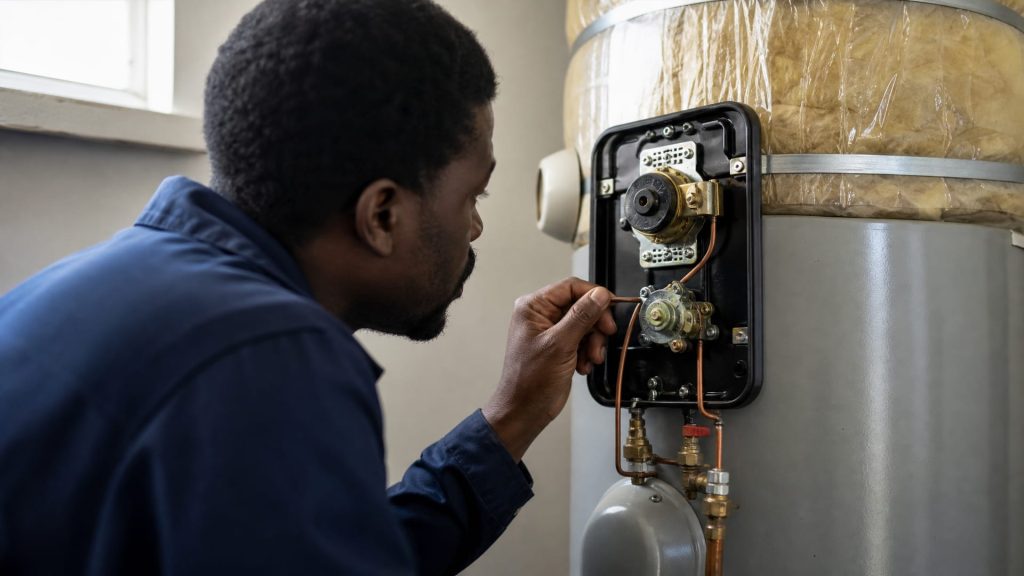
A geyser that won’t heat water, or runs dangerously hot, often points to a failed thermostat rather than a burst tank or burnt-out element. Thermostat failures are among the top three most common geyser faults in South Africa. Non-specialists frequently misidentify them as element failures without testing anything first. Knowing the real geyser thermostat replacement cost helps you avoid paying for a full unit replacement when a minor electrical repair would restore your hot water safely and legally.
Average Geyser Thermostat Replacement Cost Breakdown
Budget for both the component price and the licensed plumber’s labour charge when working out the total geyser thermostat replacement cost for your home. The final invoice reflects how complicated it is to access the electrical components inside the geyser casing, not just the retail price of the part.
Single vs Double Thermostat Pricing
A double thermostat system includes a control thermostat and a separate safety overheat protector, so two distinct components need testing and possibly replacing during a single service call. This dual-component setup typically costs more because the technician has to verify that both devices communicate correctly and trip at their designated temperatures, which adds diagnostic time on top of simply swapping a part. The second component does add material cost, but the bigger price driver is the extra wiring complexity and the mandatory safety testing needed to confirm the backup overheat protector will work if the primary control fails.
Labour and Call-Out Fee Expectations
Labour charges cover the time it takes to isolate power, partially drain the geyser if needed, get to the thermostat housing, and run post-replacement safety tests. Call-out fees generally include the first hour of work and travel, but complex installations in tight roof spaces may attract additional hourly rates if the job runs long. Comparing this expense to other maintenance items, like vacuum breaker replacement costs, gives you useful context for budgeting annual geyser upkeep without assuming every fault means catastrophic spending.
Geyser Thermostat Not Working Symptoms to Watch For
Catching geyser thermostat not working symptoms early stops a minor electrical fault from turning into a major plumbing disaster. Watching for specific changes in your hot water supply gives a technician the first useful data point before they even arrive.
Water Running Too Hot or Overheating
Scalding water that triggers the pressure relief valve, or steam coming from taps, means the thermostat contacts have welded shut or the sensor has failed. This geyser running too hot fix needs immediate attention, because sustained overheating builds internal pressure that stresses the tank past its design limits. Intermittent heating, where water swings wildly between scalding and lukewarm, often points to failing thermostat contacts making poor electrical connection rather than a fully broken element.
No Hot Water Despite Power Supply
Completely cold taps, with the isolator switch on and the circuit breaker untripped, suggest the thermostat has failed in the open position. This symptom mimics a burnt element, but the key difference is that electrical supply reaches the geyser without ever being regulated or passed through to the heating element. Working through structured hot water shortage diagnosis steps helps separate electrical supply issues from internal component failures before you commit to a repair.
Geyser Thermostat vs Element Fault Diagnosis
Telling a geyser thermostat fault from an element fault takes systematic electrical testing, not visual inspection or guesswork. Misdiagnosing this is a common reason homeowners end up paying for a full geyser replacement when only a small electrical component actually failed.
Testing Continuity and Resistance
Technicians use multimeters to test continuity across thermostat terminals and check resistance values against manufacturer specifications. An open-circuit element shows infinite resistance no matter what the thermostat is doing, while a faulty thermostat may show correct resistance when cold but fail to close the circuit once it heats up. That distinction decides whether you’re looking at a simple geyser not heating water cost to fix, or a more expensive element replacement, which is why accurate testing matters for fair pricing.
When the Reset Button Trips Repeatedly
A safety reset button that trips again right after you reset it means there’s an active fault the thermostat can’t resolve on its own. Usually the overheat protector is doing its job, cutting power to prevent damage, but the underlying cause is still there. Ignoring repeated trips and just resetting the button over and over bypasses a safety mechanism and risks fire or tank rupture. Professional diagnosis stops being optional at that point.
Why Delaying Thermostat Repair Risks a Burst Geyser
Replacing a thermostat early prevents thermal stress cracking in the enamel lining, the primary cause of premature tank failure that has nothing to do with water quality. Our own emergency call-outs regularly turn up “burst geysers” that were actually preventable thermostat faults, left unchecked until the safety valve failed catastrophically.
Overheating Damage to Tank Lining
Sustained temperatures above 65°C degrade the glass enamel lining that protects the steel tank from corrosion and rust. Once that barrier cracks from thermal expansion, water reaches bare metal and corrosion moves fast toward a leak. The financial risk is stark. A timely thermostat repair costs a fraction of a full unit replacement, but delay turns a minor electrical fix into thousands of rands in water damage and a new installation.
Warranty Implications of Neglect
Manufacturer warranties explicitly exclude damage from neglected maintenance or operation outside the specified temperature range. A stuck thermostat that allows prolonged overheating voids cover, because the resulting tank failure comes from abuse, not a manufacturing defect. The warranty and insurance claim process explains why documented professional repairs matter more than cheap temporary fixes when you’re protecting your investment.
Repair or Replace Decision Guide for Geysers
A malfunctioning thermostat doesn’t automatically mean the whole geyser needs replacing, provided the tank itself is still structurally sound. Age and physical condition decide whether thermostat replacement still makes financial sense, or whether tank corrosion has made repair uneconomical even with a cheaper component.
Geysers older than ten years, with visible external corrosion, persistent leaking from the tank body, or a history of patch repairs, usually justify full replacement rather than another component swap. Units under eight years old with intact linings and no leak history are worth repairing regardless of the specific thermostat cost quoted. Industry lifespan standards suggest weighing cumulative repair spend against replacement value once annual maintenance exceeds twenty percent of the cost of a new unit, use that threshold as your decision framework rather than sentiment about aging equipment.
Safety Risks and Licensed Plumber Requirements
Replacing a geyser thermostat without a licensed plumber is unsafe and potentially illegal, because of electrocution risk and regulatory compliance requirements. Only registered professionals can legally certify geyser electrical work for warranty and safety compliance in South Africa, which makes DIY attempts both dangerous and financially reckless.
Dangers of DIY Electrical Geyser Work
Geyser circuits carry enough current to kill even when the main isolator looks switched off. Backfeed from solar systems, incorrect isolation, or degraded wiring insulation create hazards an untrained person can’t spot or manage safely. Choosing between an emergency plumber versus DIY fixes should never mean gambling with your safety to save on a call-out fee.
Certificate of Compliance Necessity
Insurance companies require a valid Certificate of Compliance for all geyser electrical work before they’ll honour a burst or fire claim. Uncertified repairs void cover completely, leaving you personally liable for property damage and third-party injuries from a faulty installation. This legal requirement exists because improper thermostat installation can start fires that spread beyond the geyser itself, so professional certification isn’t really optional for a responsible homeowner.
Getting an Accurate Geyser Repair Quote
Transparent quoting separates diagnostic costs from the actual replacement price, so you know exactly what you’re paying for before work begins. Giving plumbers detailed symptoms upfront means they arrive with the likely parts in hand and spend less billable time diagnosing something obvious.
Describe specific behaviour, temperature fluctuations, reset button trips, or a complete loss of hot water, rather than a vague complaint about “geyser problems,” when requesting a geyser repair quote in Johannesburg. Ask whether the quote includes testing, certification, and cleanup, so nothing extra shows up after the job’s done. Reputable providers itemise labour, parts, and call-out fees separately, so you can judge fairness and compare quotes without hidden markups inflating the total.