A burst geyser is stressful enough without trying to figure out who pays for the damage. Most homeowners assume the manufacturer will simply replace the tank, or that their insurer will cover everything without question. In reality, the geyser burst warranty claim process and the home insurance claim process are two separate paths. Different rules apply, different paperwork is needed, and the odds of success differ too. Knowing which one applies, and what to prepare before a plumber even arrives, can be the difference between a fast payout and a rejected claim.
Manufacturer Warranty vs Homeowners Insurance: What Covers a Burst Geyser?
A manufacturer warranty covers defects in the geyser tank or its components. It kicks in when the tank fails because of a manufacturing fault, not because of old age, water pressure damage, or poor installation.
Homeowners insurance is different. It covers the damage the burst geyser causes to your home: flooded ceilings, damaged floors, ruined furniture. Many policies also cover the cost of replacing the geyser itself, depending on the policy wording and any add-on cover you’ve selected.
These two types of cover often overlap in people’s minds. But a geyser insurance claim in South Africa usually deals with the resulting water damage. A warranty claim deals only with the unit itself. If your geyser is still within its guarantee period, you may need to pursue both routes at once: the manufacturer for the tank, and your insurer for everything the leak damaged.
How long is a geyser guarantee in South Africa?
Most geyser manufacturers in South Africa offer a warranty of around 5 to 8 years on the tank, though this varies by brand and model. Non-compliant installation, unauthorised repairs, or a lack of servicing records can void this cover. So even a geyser well within its warranty window can end up uncovered if it wasn’t installed or maintained correctly.
Always check the specific warranty card or manual for your unit. Some components, like heating elements or thermostats, often carry shorter cover than the tank itself.
What homeowners insurance typically covers after a geyser bursts
A typical household policy covers water damage to walls, ceilings, flooring, cabinetry, and personal belongings. Many insurers also cover the geyser replacement itself, but this can be subject to age limits, wear-and-tear exclusions, and a valid compliance certificate.
Read your policy schedule closely. Some insurers cap geyser-related payouts or require specific geyser cover to be added separately from standard buildings insurance.
The First 24 Hours After a Geyser Bursts
The first day after a burst geyser sets the tone for the entire claim. What you do, and don’t do, in these hours can strengthen or weaken your case.
Start with safety and damage control:
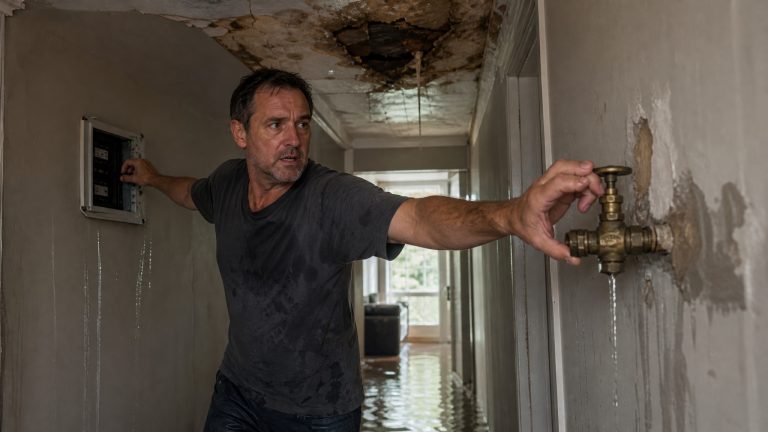
- Switch off the water supply at the mains to stop the flooding.
- Turn off electricity to the geyser circuit at the distribution board.
- Move furniture and valuables away from the water if it’s safe to do so.
- Avoid throwing away damaged items until you’ve photographed them.
Once you’ve handled the immediate danger, move on to documentation. This is the part homeowners most often skip, and it’s the part insurers care about most.
Documents and photos to collect before calling a plumber
Before a plumber arrives, try to gather:
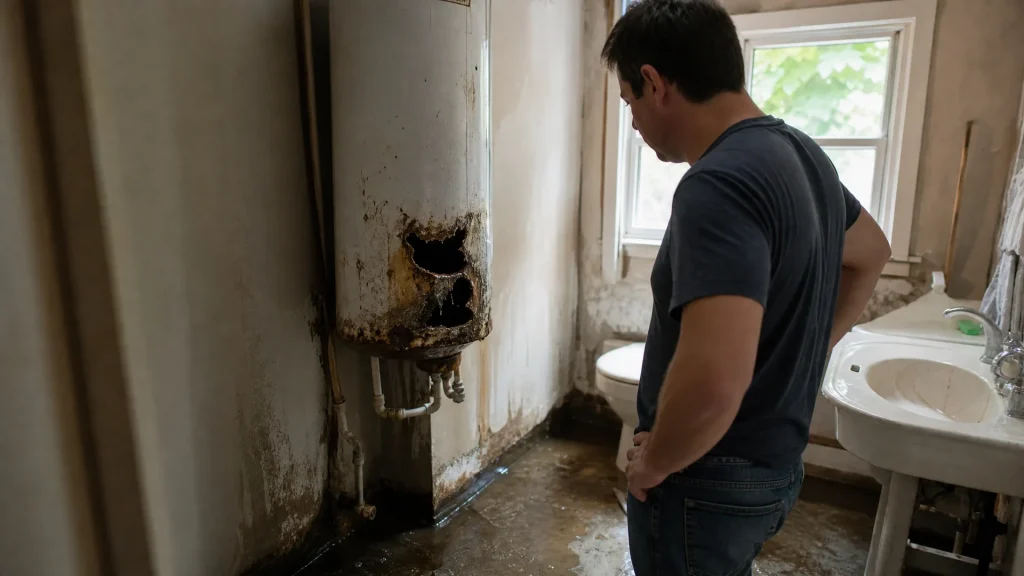
- Photos of the burst geyser, the surrounding pipework, and the damage to ceilings, walls, or floors.
- A clear photo of the geyser’s data plate, showing the model, serial number, and manufacture date.
- Proof of purchase or invoice for the geyser, if you have it.
- Any previous compliance certificate (COC) from when the geyser was installed or last serviced.
- Your insurance policy number and a note of when you first noticed the leak.
If you noticed warning signs a geyser is about to burst in the weeks before the failure, such as unusual noises or a geyser leaking from the pressure relief valve, mention this to your plumber and insurer. It helps establish a timeline and shows you acted reasonably once problems appeared.
Why Insurers Require a Valid Geyser Installation Certificate (COC)
South African insurers almost universally require a valid Certificate of Compliance before paying out on a geyser claim. This isn’t insurer red tape for its own sake. It’s a legal requirement under the Occupational Health and Safety Act, which governs how geysers and their electrical and plumbing connections must be installed.
Without a COC on file, an insurer has no proof the geyser was installed to a recognised safety standard. That makes it easy for them to argue the failure resulted from non-compliant work rather than a covered event, and to decline the claim on that basis.
What is a SABS approved geyser installation certificate?
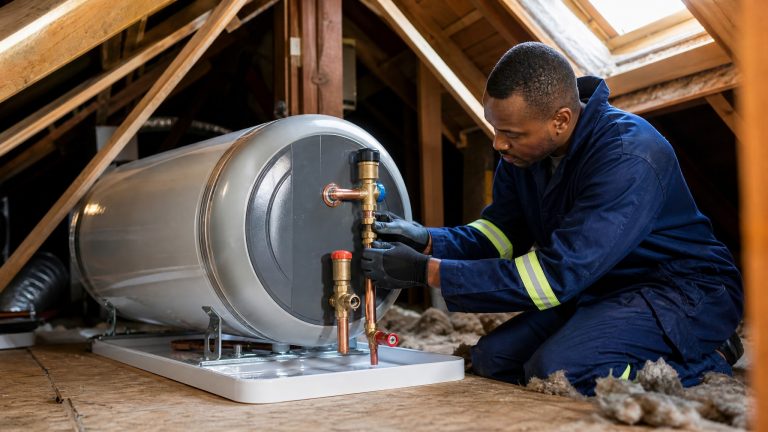
A SABS approved geyser installation certificate confirms the geyser, its wiring, its plumbing, and its safety fittings (like the pressure relief valve and vacuum breaker) meet the required South African standards. A qualified, registered installer issues it after the work is inspected and signed off.
Following SABS-compliant geyser installation requirements isn’t just about ticking a legal box. It’s the single document most likely to make or break your claim. If you’re not sure whether your existing installation has a valid certificate on file, check before you ever need to claim, not after.
The Geyser Burst Warranty Claim Process, Step by Step
Once the immediate damage is under control and you’ve gathered your documents, the geyser burst warranty claim process generally follows the same pattern across most South African insurers.
- Report the incident to your insurer immediately. Most policies require notification within a set number of days, so don’t delay.
- Get an emergency plumber out to stop further damage and provide an initial assessment.
- Request a written plumber report detailing the cause of failure, the geyser’s age, and its compliance status.
- Submit your claim with photos, the plumber report, your COC, and any proof of purchase.
- Arrange the assessor visit, where an independent assessor inspects the damage in person or reviews the evidence submitted.
- Wait for approval, then get quotes for repair or replacement if the insurer requests them.
What a plumber report for insurance claims must include
A plumber report for an insurance claim needs to give the assessor everything they need to decide, without guessing. At minimum, it should document:
- The geyser’s age and model, based on the data plate.
- The likely cause of failure, such as corrosion, pressure buildup, or a manufacturing fault.
- Whether the installation was SABS compliant, and whether a valid COC exists.
- Photos of the tank, valves, and surrounding pipework taken on-site.
- Any evidence of prior repairs, servicing, or DIY modifications.
Our plumbers routinely prepare the compliance certificates and damage reports South African insurers request before approving a geyser burst claim. When our team is called to a burst geyser, we photograph the tank, valve, and pipework on arrival, specifically so the homeowner has assessor-ready evidence before repairs begin. A vague or incomplete report is one of the most common reasons claims stall for weeks.
How the insurance assessor report and approval work
Once your claim is lodged, most insurers appoint an independent assessor. The assessor reviews the plumber’s report, the photos, and the policy terms. Then, depending on the extent of the damage, they either visit the property or work from the submitted evidence.
The assessor report and approval process usually takes anywhere from a few days to a few weeks. Claims move faster when the paperwork is complete on first submission, so gathering everything upfront saves real time later.
Common Reasons Geyser Burst Insurance Claims Get Rejected
Insurance assessors commonly cite three recurring reasons for rejecting geyser burst claims: an expired or missing installation certificate, evidence of DIY plumbing work, and a geyser installed beyond the insurer’s age cutoff without proof of maintenance.
Other frequent rejection triggers include:
- Undisclosed geyser age. If the policy asked for the geyser’s age at inception and it wasn’t accurately declared, insurers can use this to void cover.
- Wear-and-tear exclusions. Most policies exclude gradual deterioration, so an insurer may argue the burst resulted from age rather than a sudden event.
- No compliance certificate on file at all. Even a technically sound installation can be declined if there’s no paper trail proving it.
- Unregistered or unqualified installer. Work done by someone without the correct registration can invalidate both the COC and the claim.
A homeowner in a Johannesburg townhouse complex had a claim rejected because the geyser installation had no valid SABS compliance certificate on file, even though the geyser itself was still within its manufacturer warranty period. The tank fault wasn’t in question. The missing paperwork was enough for the insurer to decline the payout. It’s a reminder that compliance documentation, not just the geyser’s condition, often decides the outcome. Understanding broader plumbing permit and compliance requirements helps homeowners avoid the same trap.
Excess vs Claiming: When It’s Cheaper to Pay Out of Pocket
Before lodging a claim, do quick maths on your geyser replacement insurance excess. If your excess is close to, or higher than, the cost of repairing or replacing the geyser, claiming may not be worth it. You’ll pay the excess either way, and a claim on your record can affect future premiums.
Compare your excess against current geyser replacement costs before deciding. If the excess is a small fraction of the total cost, especially where there’s significant water damage to ceilings, floors, or electrics, claiming almost always makes financial sense. If it’s just the geyser unit itself and the excess is high, paying out of pocket and getting a geyser repair quote might be the cheaper, simpler route.
How our plumbers help with compliance certificates and claim paperwork
Whichever route you choose, the paperwork matters. Our plumbers guide homeowners through the full geyser burst warranty claim process, from photographing the damage on arrival to issuing a SABS compliant COC and a detailed plumber report your insurer can act on.
If your geyser has burst, or you’re seeing early warning signs of one, get a qualified plumber out before you lodge anything with your insurer. To get claim-ready documentation and a proper assessment, you can find a reliable plumber near you and book a callout today.