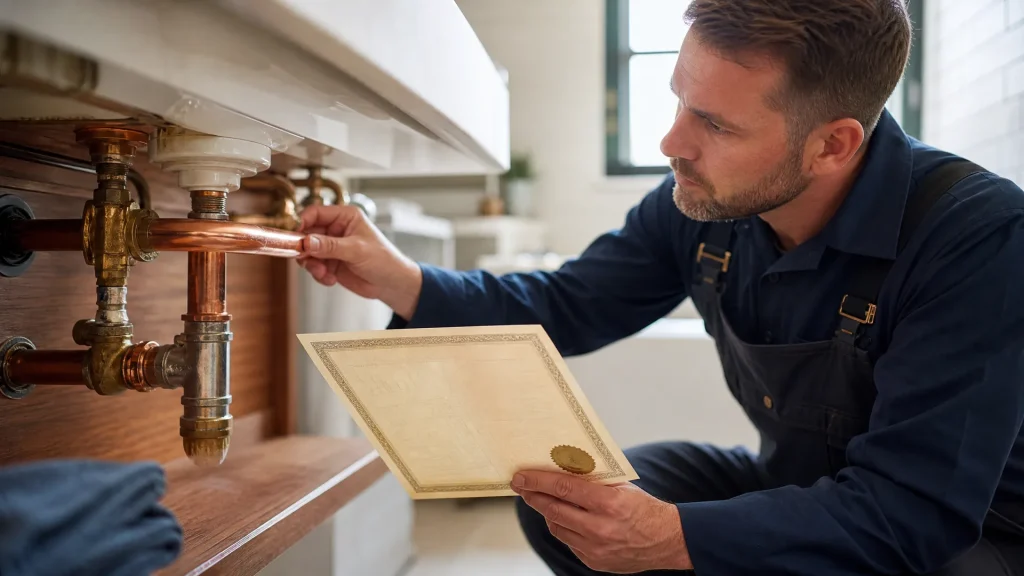
Plumbing permit requirements in South Africa are genuinely confusing, municipal websites are often outdated, provincial rules vary, and the cost of getting it wrong can be severe. This guide covers when permits are legally required, how the rules differ between major metros, what a Plumbing Certificate of Compliance (COC) involves, and what happens if you skip the process entirely.
Why Plumbing Permits Exist in South Africa
South Africa’s plumbing permit system is built on South Africa’s National Building Regulations and Building Standards Act (Act 103 of 1977), which requires approved building plans before any notifiable construction or alteration begins. Every municipality’s by-laws flow from this Act.
Permits exist for three core reasons:
- Homeowner protection. Substandard plumbing causes property damage, health hazards, and financial loss.
- Buyer protection. A valid COC is required for property transfer, it confirms the installation was done legally and safely.
- Public network protection. Faulty drainage or illegal connections can contaminate shared water and sewer infrastructure.
Framing this as bureaucracy misses the point. Permits are a consumer protection tool. They create a paper trail that benefits you as an owner, and your buyer when you eventually sell.
When a Plumbing Permit Is Required: The Key Triggers
Not every plumbing job requires a permit. The key distinction is between minor maintenance and notifiable plumbing work, any work that alters, extends, or connects to a drainage or water supply system in a way that could affect structural integrity, health, or the municipal network.
New Installations and Major Alterations
A permit is generally required for:
- New construction, any plumbing in a new building
- Extensions and additions, adding a bathroom, laundry room, or wet area
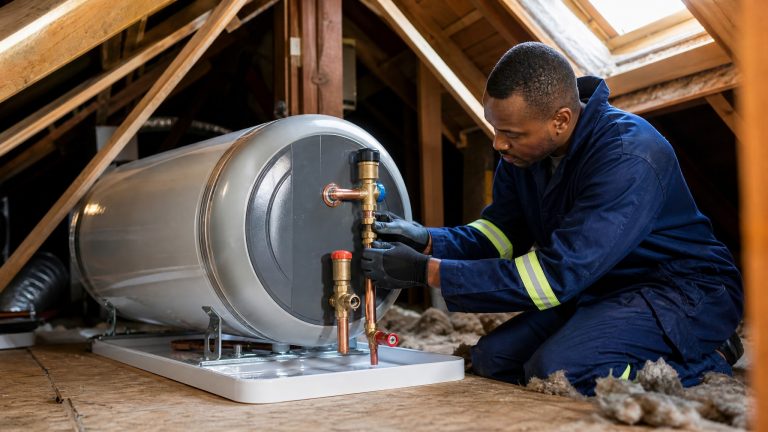
- Geyser replacement or installation, one of the most common triggers; see geyser installation requirements in South Africa for a full breakdown
- Drainage alterations, re-routing or extending drain lines
- Municipal connection work, connecting to or altering the link to the municipal water main or sewer
- Bathroom renovations involving drainage or supply changes, use the bathroom renovation plumbing checklist to assess whether your project crosses this threshold
If work changes the layout, capacity, or connection point of any plumbing system, treat it as notifiable and apply for a permit.
DIY Plumbing: What South African Law Actually Allows
South African law does not ban homeowners from touching a tap. Minor maintenance, replacing a washer, fixing a leaking tap, clearing a blocked drain, sits outside the permit system. The legal line is drawn at notifiable work.
Any task that alters the drainage layout, installs new pipework, or affects a geyser or municipal connection is notifiable. That work must be performed by a registered plumber and submitted for inspection. Doing it yourself, or hiring an unregistered tradesperson, creates compliance, insurance, and resale problems.
When DIY is acceptable versus calling a professional is worth understanding before you pick up a wrench.
Plumbing Permit Requirements by Province and Major Municipality
National legislation sets the floor; municipalities set the detail. The practical experience of applying for a permit varies significantly across metros.
Gauteng (City of Tshwane, Ekurhuleni, City of Johannesburg)
All three Gauteng metros follow the same foundational Act, but their submission processes differ.
City of Johannesburg (CoJ) requires building plan approval through the Johannesburg Development Agency’s e-building portal for most notifiable plumbing work. A Notice of Completion must be submitted once work is done, after which a municipal inspector schedules a site visit. Turnaround on inspections varies, typically two to four weeks in 2026, though backlogs in high-density areas can stretch this.
City of Tshwane operates a similar plan submission process via its Building Development Management unit. Geyser replacements in Tshwane have historically fallen under minor works exemptions if the capacity and position remain unchanged, but homeowners should confirm this with the municipality’s Building Inspectorate before starting work, as interpretations shift.
Ekurhuleni processes applications through its Building Control Department. The metro has moved toward digital submission for straightforward residential jobs, though in-person submissions remain common for more complex work.
Across all three Gauteng metros, the plumber must be PIRB-registered to issue the COC at the end of the process.
Western Cape (City of Cape Town) and KwaZulu-Natal (eThekwini)
City of Cape Town applies the National Building Regulations strictly and has published detailed guidance through its Building Development Management by-laws. A step that many homeowners miss: the City requires a Notice of Completion before a final plumbing inspection is scheduled. Skipping it delays the COC, sometimes by weeks. Applications go through the City’s Development Management portal. Cape Town also requires a separate certificate of compliance for solar and heat-pump geyser systems connected to the municipal grid.
eThekwini Municipality (Durban) processes plumbing permits through its Development Planning, Environment and Management unit. Residential plumbing tied to new developments follows the standard building plan approval route. For alterations and geyser installations, eThekwini’s inspection turnaround times are broadly comparable to Gauteng metros. eThekwini has been expanding its online submission capacity, though many contractors in the metro still submit physically at the relevant district office.
Rules change. Always verify current requirements directly with your local municipality’s Building Inspectorate before submitting plans or starting work.
Plumbing Contractor Licence Requirements in South Africa
South Africa does not have a single national plumbing licence. Instead, the Plumbing Industry Registration Board (PIRB) is the recognised body that registers and certifies plumbers, and only PIRB-registered contractors can issue a legally valid Plumbing Certificate of Compliance.
PIRB Registration and What It Means for Homeowners
The PIRB registers plumbers at different competency levels, from apprentices to master plumbers, and maintains a searchable database of registered practitioners. A registered plumber carries a PIRB membership number and is bound by the board’s code of conduct.
The practical consequence for homeowners is simple: if your plumber is not PIRB-registered, they cannot issue a valid COC. A COC from an unregistered tradesperson is not legally acceptable for a property transfer, and it will not satisfy an insurer’s requirements when you claim for related water damage.
This is not a technicality. It has real financial consequences. When our registered plumbers attend jobs where a previous owner used an unlicensed contractor, the COC is missing, and the current owner must commission and pay for retrospective compliance work before the property can be sold.
To avoid that scenario, how to find a PIRB-registered plumber in South Africa is the right starting point before any notifiable work begins.
The Plumbing Inspection Certificate Process: Step by Step
The full process from permit application to a valid COC follows a clear sequence:
- Application and plan submission, Submit building plans to your municipality’s Building Control or Development Management department. Plans must include the proposed plumbing layout.
- Plan approval, The municipality reviews and approves the plans. Work cannot legally begin before this step.
- Work completed, The PIRB-registered plumber completes the installation in line with approved plans.
- Notice of Completion, The homeowner or contractor submits a Notice of Completion to the municipality, signalling that work is ready for inspection.
- Inspection, A municipal inspector, or in some cases a PIRB-accredited inspector, visits the site to verify the work matches the approved plans and meets the National Building Regulations.
- COC issued, If the work passes, the plumber issues a Plumbing Certificate of Compliance. If it fails, a re-inspection is required after defects are corrected.
For property buyers, knowing what to check in a new house plumbing inspection helps you verify that a COC on record is genuine and complete.
What Inspectors Check
Inspectors assess:
- Pipe sizing, materials, and fall angles on drainage lines
- Watertightness, the drainage system is pressure- or water-tested
- Compliance with the approved plans (no deviations without amended approval)
- Correct venting of drainage systems
- Geyser installation specifics: pressure-limiting valves, drip trays, expansion relief valves, and shut-off isolation
Costs and Typical Timelines
Permit fees are set by each municipality and calculated based on project value or a fixed schedule of fees for minor works. For a standard geyser replacement or single bathroom alteration, residential permit fees are modest, typically a few hundred rand. Larger projects tied to building plan submissions carry higher fees calculated as a percentage of the declared project value.
Inspector call-out fees, when charged separately from the permit fee, vary by municipality. Re-inspection fees apply if the first inspection fails. PIRB-accredited inspector fees are set independently and vary by region and project complexity. Ask your contractor for a written estimate of all compliance costs, permit, inspection, and COC, before work starts.
Penalties, Insurance Implications, and Unlicensed Plumber Risks
The consequences of skipping plumbing permit requirements fall into three categories: legal, financial, and transactional.
Legal penalties. The National Building Regulations carry criminal and civil sanctions for non-compliant work. Municipalities can issue a notice to demolish or remove non-compliant structures or installations. Wilful non-compliance can result in prosecution.
Property resale. A valid COC for all notifiable plumbing work is required for a property to transfer. Without it, the transfer is blocked until retrospective compliance is achieved, which is almost always more expensive than doing it correctly the first time. Our registered plumbers regularly assist homeowners who discover, at the point of sale, that a previous owner’s bathroom renovation or geyser replacement was done without a permit. Retrospective work under time pressure, when a sale is pending, is costly and stressful.
Insurance. South African short-term insurers, including Santam and OUTsurance, include policy exclusions for damage arising from non-compliant installations. If a geyser installed without a permit and COC bursts and causes water damage, the insurer can decline the claim on the basis that the installation did not comply with building regulations. This is an increasingly common reason for claim rejection, and it applies even if the homeowner was not the one who commissioned the original work.
Liability. If faulty, unpermitted drainage causes sewage backup damage and liability to neighbouring properties or the municipal network, the homeowner, not the unlicensed plumber, may bear the financial liability.
The risks of using an unlicensed plumber are not theoretical. They are a predictable outcome of skipping a process that exists precisely to prevent them.
Understanding your obligations before starting any plumbing project is the best financial decision you can make as a property owner. If you are unsure whether your planned work requires a permit, or you need to assess the compliance status of existing installations, one of the PIRB-registered plumbers in our network can review your situation and give you a clear, obligation-free picture of where you stand. Use the contact form on this site to request a compliance consultation.