Buying a home is the largest financial commitment most South Africans ever make, and hidden plumbing defects are consistently among the costliest surprises waiting on the other side of transfer. A new house plumbing inspection, done before you sign the offer to purchase, gives you documented evidence of what is actually inside those walls. This guide covers exactly what to check, what red flags mean, and when a finding is serious enough to renegotiate or walk away.
Why a Plumbing Inspection Matters Before You Sign
South African property is sold voetstoots, roughly “as is”, which limits your recourse once transfer has gone through. A seller who did not actively conceal a defect is generally protected. That puts the burden squarely on you, the buyer, to find problems before the deal closes.
Plumbing defects are particularly deceptive. A corroded pipe looks fine from the outside. A slow drain seems minor until you discover the sewer line has root intrusion running 15 metres. A non-compliant geyser installation carries no obvious visual warning, until it leaks through a ceiling. Repair bills for these issues routinely run into tens of thousands of rands, and they are almost entirely avoidable with a proper pre-purchase inspection.
This guide is structured as a practical checklist. Work through it yourself on a viewing, then bring in a registered plumber for the full assessment before you commit.
What to Check: The New House Plumbing Inspection Checklist
Pipes: Material, Age, and Condition
The pipe material inside a home tells you most of what you need to know about its risk profile. The main options you will encounter in South African homes are:
Copper, the gold standard. Copper pipes are durable, corrosion-resistant, and can last 50 years or more with reasonable water quality. Look for green patina (verdigris) around joints, which signals slow leaks. Copper is expensive to replace but rarely fails catastrophically.
uPVC and CPVC (rigid plastic), widely used from the 1990s onwards. These are light, cheap, and resistant to corrosion. uPVC is used for cold-water lines; CPVC handles hot water. Inspect joints for hairline cracks and check for any signs of UV degradation on exposed outdoor runs.
Galvanised steel, common in homes built before the mid-1980s. The problem with galvanised pipe is that it corrodes from the inside out. Flow reduces to a trickle while the pipe appears intact from the outside, a failure mode that only becomes obvious after purchase. If a pre-1985 home still has original supply lines, budget for replacement.
Asbestos-cement and lead lines, rare but not unheard of in older SA suburbs, particularly in pre-1960s stock. Both are health hazards and must be replaced. Run the tap for a few minutes and, if in doubt, request a water test.
For any replumbing job, copper and CPVC dominate the decision. Copper costs more upfront; CPVC is faster to install but less forgiving of poor workmanship at joints.
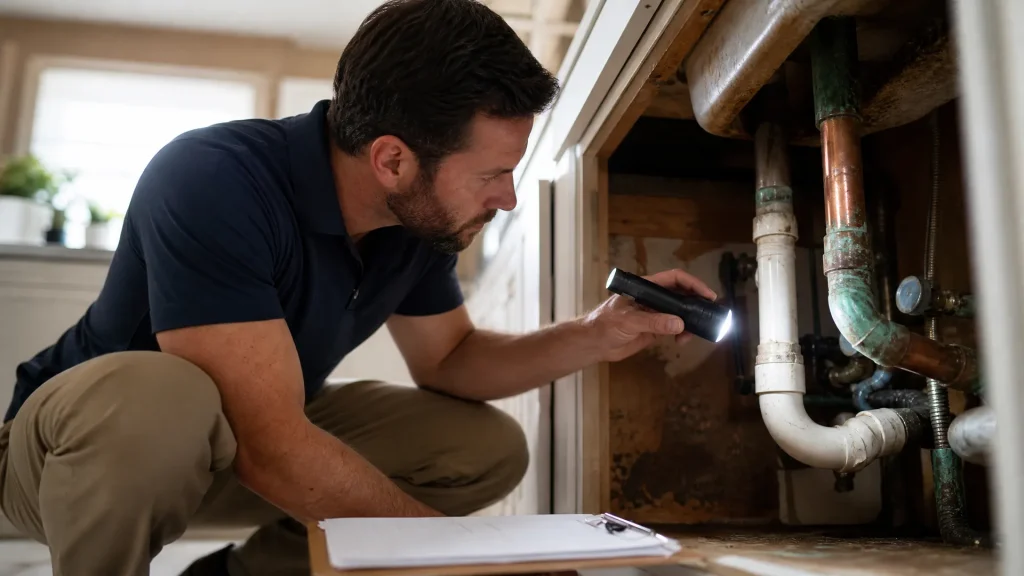
Check every visible pipe run for:
- Active drips or staining around joints
- Scale build-up at outlets (indicates hard-water corrosion internally)
- Obvious DIY repairs: mismatched fittings, thread tape on push-fit joints, flexible braided hose used as a permanent fix
- Lagging (insulation) on hot-water pipes, especially in roof spaces
Drainage, Waste, and Sewer Lines
Run every tap, flush every toilet, and fill every basin simultaneously, then watch how quickly everything drains. Slow drainage across multiple points usually means a partial blockage or a collapsed line, not just a dirty trap.
Key checks:
- Toilet flush and refill, a running toilet wastes hundreds of litres daily and often signals a worn flapper or fill valve. Test by adding food colouring to the cistern; if colour appears in the bowl without flushing, the flapper is leaking.
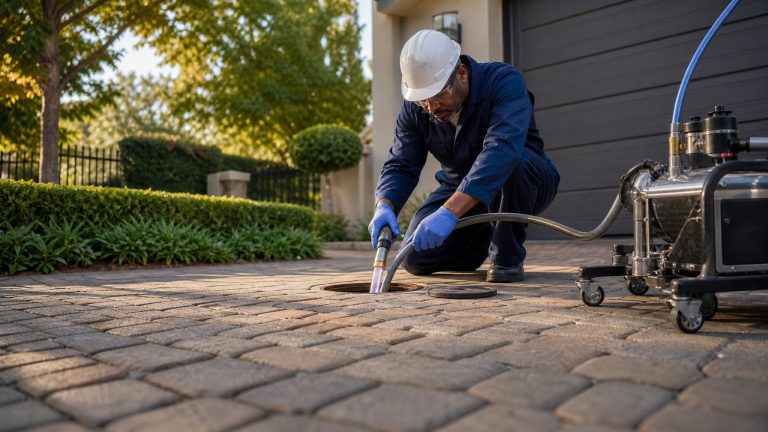
- Sewer access point, locate the external inspection chamber and look for standing water, root ingress, or cracked benching.
- CCTV drain camera access, on older properties, ask the seller to allow a CCTV drain survey before transfer. Blocked drain cleaning costs can be significant, but a collapsed clay sewer line is several times more expensive.
- Stormwater vs. sewage, South African municipalities require these to be completely separate. Connected downpipes feeding into the sewer system is a compliance failure that the local authority can require you to rectify at your own cost after purchase.
Old House Plumbing Problems Common in South African Homes
Galvanised and Polybutylene Pipe Failures
Homes built in South African suburbs before the 1990s carry two specific pipe risks worth understanding in detail.
Galvanised steel supply pipes corrode from the inside out over decades. The rust builds up as scale, narrowing the internal bore until water pressure at fixtures drops to a trickle. From the outside the pipe can look completely fine. By the time low pressure becomes noticeable, the pipe is often close to failure. Replacement means opening walls and ceilings, a disruptive and costly job.
Polybutylene, the grey plastic pipe used in South African homes during the 1980s and early 1990s, carries a different failure mode. It becomes brittle with age, especially where exposed to UV light or chlorinated municipal water. Fittings crack without warning, producing sudden leaks inside wall cavities. Several insurers now flag polybutylene as a material underwriting risk. If you see grey plastic supply lines in a home from this era, get a specialist opinion on their current condition before proceeding.
Pre-purchase assessments on older Gauteng and Western Cape homes most commonly flag three issues: corroded galvanised supply lines, non-compliant DIY geyser installations, and tree-root intrusion into clay sewer lines. All three are expensive to ignore but negotiable if identified before transfer.
Water Pressure and Municipal Supply Issues
Low water pressure is one of the most common complaints in older South African homes, and it rarely has a single cause. Water pressure problems common in South African homes can stem from corroded internal pipe bore, an undersized municipal connection, a faulty pressure-reducing valve, or the property sitting at a high elevation relative to the municipal main.
During your inspection, test pressure at the kitchen tap, a bathroom basin, and an outside tap simultaneously. A marked drop when two outlets run at once points to either a supply restriction or severe internal corrosion. Note the municipal meter location and check whether it has been recently replaced, an old meter in poor condition can restrict supply on its own.
Building Regulations and Certification Red Flags
Two South African National Standards govern residential plumbing: SANS 10252 covers water supply installations, and SANS 10400 Part P covers drainage and sanitation. All work must comply with these standards, and all new or altered installations require sign-off by a registered plumber.
The registration body is the Plumbing Industry Registration Board (PIRB). Only a PIRB-registered plumber, or a plumber registered with an accredited body such as the Institute of Plumbing South Africa (IOPSA), can issue a valid compliance certificate for a plumbing installation in South Africa.
Before transfer, ask the seller to produce:
- A plumber’s compliance certificate for any work done after the original construction
- The COC (Certificate of Compliance) for the electrical geyser element, issued by a registered electrician
- Any council-approved plans for extensions that included new plumbing
A missing compliance certificate is a red flag on two fronts. First, it may complicate or delay transfer, conveyancers and some bond originators require these documents. Second, it can void your home insurance if a claim arises from non-compliant work. If a seller cannot produce certificates for a recently installed geyser or bathroom, insist on a PIRB-registered plumber inspecting and certifying the work as a condition of sale.
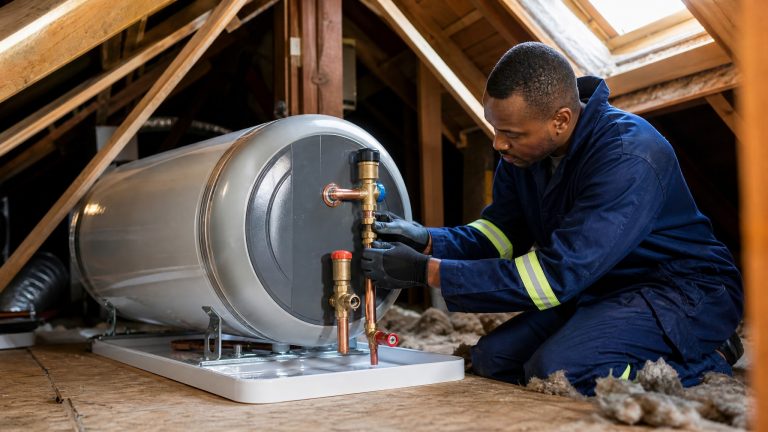
DIY geyser installations are especially common and especially dangerous. Signs include incorrect pipe sizing, missing pressure-relief valve discharge lines, and no drip tray, all SANS 10400 non-compliances.
Plumbing Inspection Cost: What to Budget in 2026
A standalone plumbing inspection by a PIRB-registered plumber covering the full supply, drainage, and geyser system typically costs less than a full structural building survey but more than a basic home inspector’s plumbing walk-through. The price is shaped by several factors:
- Property age, a pre-1980 home takes longer because more components need individual assessment
- Property size, more bathrooms, kitchens, and outdoor taps mean more to check
- CCTV drain camera, adds cost but is highly recommended for any home over 20 years old or with mature trees near sewer lines
- Location, call-out fees vary between urban centres and outlying areas
Bundling the plumbing inspection with a general home inspection can reduce the total cost, but check that the home inspector is specifically PIRB-registered for the plumbing component, not all are. A general report rarely provides the same depth on plumbing as a dedicated specialist assessment.
The inspection fee is trivial compared to the alternative. Replacing galvanised supply lines throughout a three-bedroom home, re-laying a cracked sewer line, or fixing a non-compliant geyser installation can each run to five figures. Burst pipe repair costs in South Africa give a clear picture of what deferred plumbing maintenance ultimately looks like on your bank statement.
When to Call a Professional Plumber vs. Walk Away
Not every plumbing finding is a reason to panic. Use this rough triage framework:
Fixable, negotiate a price reduction or repair before transfer:
- Single corroded joint or section of pipe
- Running toilet or dripping tap
- Missing geyser drip tray or pressure-relief discharge pipe (can be rectified and certified)
- Slow single drain (likely a simple blockage)
Serious, require specialist assessment and price renegotiation:
- Widespread galvanised or polybutylene supply lines in a large home
- Evidence of tree-root intrusion in the sewer line confirmed by CCTV
- DIY geyser installation without any compliance certificate
- No compliance certificates for recent bathroom or kitchen renovations (see a bathroom plumbing checklist for renovations to understand the scope)
Walk away, or require full remediation as a sale condition:
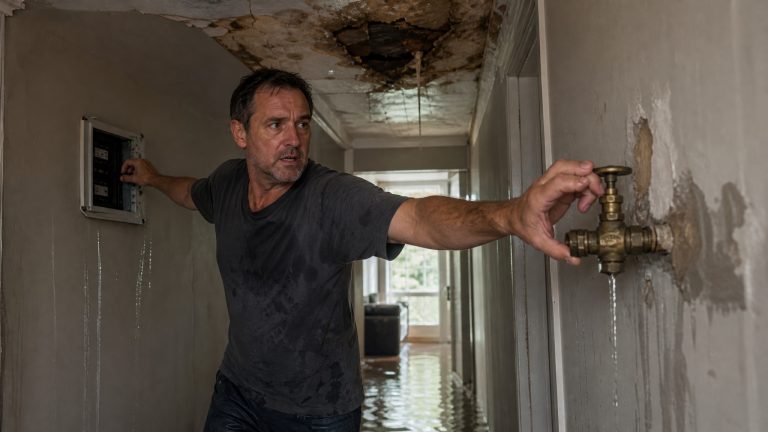
- Active sewage backing up into the property
- Asbestos-cement or confirmed lead supply lines with no budget plan for replacement
- Structural sewer collapse requiring full excavation and re-lay
- Seller refuses to allow a professional inspection or produces fraudulent certificates
The key principle: a finding you know about before transfer is a negotiating tool. The same finding discovered after transfer is just your problem.
To conduct a thorough inspection, you need a registered plumber, not a general handyman. How to find a qualified plumber in South Africa will help you identify PIRB-registered professionals in your area. Book the inspection before you finalise your offer, or make it an explicit condition in the offer to purchase, so you have time to act on the findings before you are committed.