
When a pipe bursts or a geyser fails at 2 AM, panic is understandable. But the decisions you make in the next few minutes determine how much damage you’re dealing with. The debate between emergency plumber vs DIY temporary fix is not an either/or argument. The smart move is almost always to stabilise first, then get a professional in. This guide walks you through exactly that: what you can safely do yourself, what you should not attempt, and how to get a qualified plumber fast when you need one.
Your First 60 Seconds: Stop the Water Before Anything Else
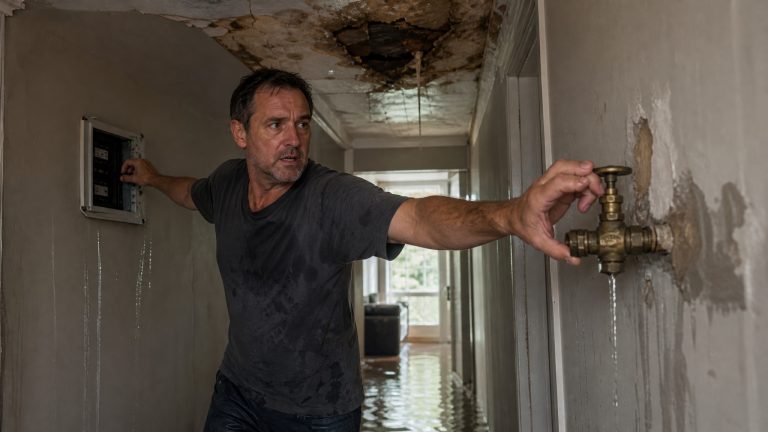
The single most important action you can take is to stop the flow of water. Every second water runs unchecked, damage compounds, to flooring, ceilings, walls, and electrical fittings. Do not reach for your phone before you reach for the stopcock.
How to Shut Off Your Water Main in South Africa
Knowing how to shut off your water main is a basic survival skill for any homeowner. In most South African properties, the main stopcock is in one of two places:
- The boundary box, a small underground chamber near the pavement or property boundary, usually covered by a plastic or metal lid. You’ll need a flat-head screwdriver or a dedicated stopcock key to turn the valve inside.
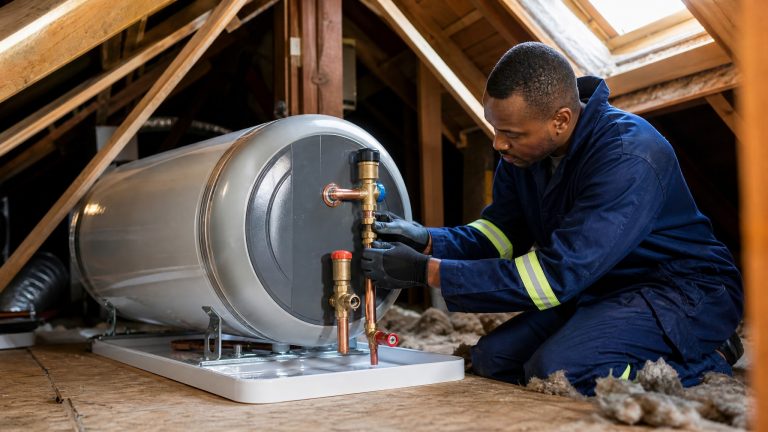
- Near the geyser, many homes have a secondary mains isolation valve inside the roof void or utility area close to the hot water cylinder. This is especially useful when the problem is geyser-related.
Turn the valve clockwise to close it. If it hasn’t been moved in years, it may be stiff, use slow, steady pressure rather than forcing it. Once you hear the flow reduce and stop, you have bought yourself time.
If you notice low or fluctuating water pressure in the days before a major leak, treat it as an early warning sign. Locate your stopcock before an emergency forces you to find it in a hurry.
Isolating a Single Fixture vs. the Whole House
You don’t always need to kill the whole house supply. Most modern South African homes have isolation valves behind or beneath individual fixtures, toilets, basins, and washing machines typically have a small quarter-turn tap on the supply pipe. A burst toilet cistern or a weeping basin tap can often be isolated at the fixture itself, keeping the rest of the house supplied.
If the leak is from a geyser, a burst supply pipe, or a point with no local isolator, the mains shutoff is your only option. When in doubt, shut the mains first and work backwards.
Safe Temporary Plumbing Repairs You Can Do Right Now
With the water off, you have a window to apply a holding repair. These are temporary plumbing repairs only, they buy time, not permanence.
Burst or Leaking Pipe: Pipe Repair Tape and Push-Fit Caps
Self-amalgamating silicone pipe repair tape and rubber patch clamps are available at South African hardware chains such as Builders Warehouse and Leroy Merlin. For a pinhole leak or hairline crack on an accessible pipe, they work well as a short-term measure:
- Dry the pipe completely before applying tape, moisture prevents the silicone from bonding.
- Stretch the tape as you wrap, overlapping each layer by half. Start 5 cm before the leak and finish 5 cm past it.
- For a larger crack, a rubber patch clamp (a rubber pad with a metal band tightened by screws) provides more mechanical hold.
Push-fit isolation caps are useful when a pipe end has failed, simply push the cap onto the pipe end to seal it. These require no tools and work on standard 15 mm and 22 mm copper or CPVC pipe.
None of these repairs are rated for sustained mains pressure. They can fail, and on a pressurised supply line, failure means a bigger flood than before. Treat them as a bridge to a proper repair, not a solution. For realistic expectations on what fixing the pipe properly will cost, see burst pipe repair costs in South Africa.
Overflowing Toilet or Geyser: Float Valve and Pressure Relief
An overflowing toilet cistern usually means a faulty float valve or ball cock. Lift the cistern lid and manually lift the float arm, if the water stops, the float is failing. You can rest a piece of timber across the top of the cistern to hold the arm up temporarily, stopping the overflow until a plumber replaces the valve.
A burst geyser is one of the most common plumbing emergencies in South African homes, particularly in winter. Because geysers sit under mains pressure in ceiling voids, a failed unit can release hundreds of litres before a homeowner notices. Your immediate steps:
- Switch off the geyser element at the distribution board (DB board), it’s typically labelled “geyser” or “HWC.”
- Shut the cold water supply to the geyser using the isolation valve on the cold inlet pipe directly below the unit.
- Leave the temperature and pressure (T&P) relief valve alone, do not attempt to tamper with it.
This limits damage and prevents the element from burning out dry. A geyser replacement or repair is not a DIY job; call a plumber.
Emergency Water Damage Control While You Wait
Once the water is off and a temporary hold is in place, shift focus to limiting secondary damage.
- Towels and buckets first, soak up standing water immediately. The longer water sits, the deeper it soaks into subfloor and wall cavities.
- Lift rugs and move furniture off wet flooring. Timber and laminate floors warp quickly; getting them off the wet surface helps.
- Switch off electrical circuits near the leak at the DB board. Water and live wiring is a serious hazard, when in doubt, cut the circuit.
- Open windows and doors to start ventilation. Moving air slows mould development.
- Photograph everything before you clean up. Your insurance claim will require documented evidence of the original damage.
Water damage left unaddressed for more than 24–48 hours significantly increases the risk of structural timber rot and mould growth, which can multiply remediation costs several times over compared to catching the leak early. Act fast even on what looks like a minor seep.
When to Call an Emergency Plumber, Non-Negotiable Scenarios
Knowing when to call an emergency plumber is just as important as knowing your stopcock location. Some situations are beyond any temporary fix and worsen with delay.
Signs the Situation Is Beyond a Temporary Fix
Call a 24/7 plumber immediately, do not attempt DIY, if you face any of the following:
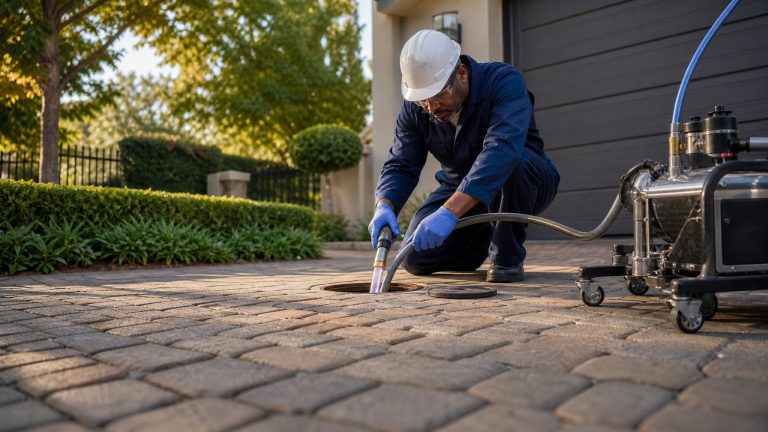
- Sewage backup into a bath, basin, or toilet. Raw sewage is a health hazard and the source is often a blocked main drain or collapsed pipe underground.
- Geyser making rumbling or banging noises, or the T&P relief valve discharging steam. These are signs of dangerous pressure buildup.
- A leak inside a wall or under a concrete slab. You cannot access these without professional equipment, and digging blind makes it worse.
- Gas pipe proximity. If the leak is near a gas line or you smell gas, evacuate and call emergency services first, then a plumber.
- The leak is growing despite the mains being shut off. This suggests a pressurised secondary source or a more complex system failure.
If you’re unsure whether blocked drain cleaning costs apply to your backup or whether it’s a deeper sewer collapse, a plumber can diagnose on-site.
What to Expect from Emergency Plumbing Response Times in South Africa
In major metros, Johannesburg, Cape Town, Durban, Pretoria, a 24/7 emergency plumber typically arrives within one to two hours of a call, depending on traffic and call volumes. In peri-urban and rural areas, response windows stretch to three to five hours, which makes the temporary stabilisation steps above even more critical.
Call as soon as you’ve shut the water off, do not wait to see if the temporary fix holds overnight. Our 24/7 emergency plumbing team responds across major South African metros, and readers who call early consistently experience less damage and lower final repair bills than those who wait.
📞 Call or WhatsApp the plumber-plumbers.co.za emergency line now, our team is available around the clock and can advise you over the phone while en route.
Understanding Emergency Plumbing Costs in South Africa
Emergency plumbing costs are genuinely higher than standard call-outs, and knowing what to expect prevents unpleasant surprises.
After-hours and weekend call-out fees in South Africa carry a surcharge compared to daytime weekday rates. The specific amount varies by plumber and region, but the premium is real and worth planning for. Some plumbers charge a flat emergency call-out fee; others bill a higher hourly rate from the first minute. Ask upfront before agreeing to the work.
The more important comparison is emergency plumber now vs. delayed repair later. A temporary fix that fails overnight can turn a localised pipe repair into a ceiling replacement, a mould remediation project, and a damaged electrical system. Those compound costs dwarf any after-hours surcharge.
For context on what common repairs run, the guide to burst pipe repair costs in South Africa sets realistic benchmarks. If a sewage backup is involved, blocked drain cleaning costs gives comparable guidance.
Pay the after-hours rate once, or pay far more later.
How to Choose the Right Emergency Plumber Fast
In a crisis, you don’t have time for lengthy vetting. Use this short checklist to filter fast:
- PIRB registration, Plumbers registered with the Plumbing Industry Registration Board (PIRB) meet minimum competency standards in South Africa. Ask for their PIRB number before work begins. It takes 30 seconds and filters out unqualified operators who can worsen the problem.
- 24/7 confirmed availability, not every plumber who lists an emergency number actually answers it after midnight. Confirm when you call.
- Upfront quote, a reputable plumber will give you a call-out fee and an estimated scope before starting. Refuse open-ended “we’ll see what it costs” agreements.
- Local proximity, closer plumbers arrive faster. In an active leak situation, response time matters more than anything else.
For a fuller decision framework, see how to find a reliable plumber quickly. If you’re debating whether a smaller drip also needs professional attention, whether to DIY or call a plumber for a leaky tap applies the same logic to lower-stakes situations.
The emergency plumber vs DIY temporary fix question comes down to this: temporary measures are legitimate, safe, and smart when they’re used to buy time for a professional, not to avoid calling one. Shut the water off, apply a holding repair if the situation is clearly low-risk, limit the secondary damage, and then get a qualified plumber on the way.
📞 Call or WhatsApp plumber-plumbers.co.za right now, 24/7 emergency response across South Africa. The sooner you call, the less it costs.