A sewage backup in your house is one of the most unpleasant and potentially dangerous plumbing emergencies a South African homeowner can face. Raw sewage backing up into bathrooms, laundry rooms, or kitchens carries serious health risks, causes expensive damage, and often signals a larger problem in the pipe network. Understanding the sewage backup in house causes solutions available to you helps you act fast, protect your family, and make the right decisions about repairs and insurance.
What Causes a Sewage Backup in Your House?
Sewage backups happen when wastewater can’t flow freely through your drainage system and reverses direction. The cause determines the fix, and, critically, who pays for it.
Common causes include:
- Tree root intrusion into sewer pipes
- Municipal sewer surges or blockages in the main line
- Grease and solid build-up from years of incorrect disposal habits
- Collapsed or cracked pipes due to age, ground movement, or corrosion
- Septic tank overflow on properties not connected to a municipal sewer
The boundary between homeowner responsibility and municipal responsibility usually sits at the point where your private lateral pipe connects to the council’s main sewer. Problems on your side of that connection are yours to fix. Problems on the council’s side are the municipality’s responsibility, but proving that distinction matters enormously for your repair costs and insurance claim.
Septic tank systems, still common on smallholdings and properties on the urban fringe of cities like Pretoria East and the Cape Winelands, require pump-outs every two to three years on average. A neglected tank will eventually back up into the home’s drains, mimicking a pipe blockage and causing the same unpleasant results.
Tree Roots in Sewer Lines (A Common Problem in Older SA Suburbs)
Tree root intrusion is one of the most frequent causes of sewage backup in South African homes, particularly in established suburbs with mature trees. Jacarandas, oaks, figs, and willows all have aggressive root systems that seek moisture, and a sewer pipe is a reliable water source.
Older suburbs across Johannesburg, Pretoria, and Cape Town, many with pipe infrastructure laid in the 1970s and 1980s, are particularly prone to root intrusion because service pipes were often laid using clay or asbestos cement. Both materials crack over time, and even small cracks draw roots in. Once inside, roots grow quickly and can block the pipe entirely within months.
Municipal Sewer Blockages and Failing Infrastructure
If multiple drains in your home back up simultaneously, the problem may not be on your property at all. A blockage or surge in the municipal main line can cause sewage to reverse into every connected fixture in the house.
Municipalities such as the City of Johannesburg and the City of Cape Town publish separate fault-reporting lines for sewer blockages on public infrastructure. Reporting the fault to your municipality is the correct first step when you suspect a main-line issue, and documenting that report is useful if an insurance claim follows. That said, municipalities are not always quick to respond, so calling a licensed plumber to diagnose the source is often the fastest path to a clear answer.
How to Tell Where the Sewage Smell Coming from Drains Is Coming From
A sewage smell coming from drains is often the first warning sign before visible backup occurs. Don’t ignore it.
Use these clues to self-diagnose:
- Single drain affected: A smell or slow drain in one fixture, say a bathroom basin, usually points to a localised blockage in that branch pipe, a dry trap, or a venting problem. Less urgent, but worth fixing.
- Multiple drains backing up at once: This signals a blockage deep in the main drain line or a municipal sewer issue. More serious, and needs a plumber promptly.
- Gurgling sounds: Air trapped behind a partial blockage makes the drain gurgle when water flows nearby. Gurgling in your toilet when you run the shower is a classic sign.
- Slow drains throughout the house: When every fixture drains slowly, the restriction is almost certainly in the main line, not individual branches.
- Wet patches in the garden near sewer lines: A saturated patch of lawn along the path of your sewer pipe, especially if it smells, suggests a cracked or collapsed section leaking underground.
The earlier you catch these signs, the simpler and cheaper the fix. A single slow drain fixed today is far less costly than a full backup next week.
Immediate Safety Steps When Raw Sewage Is Backing Up Into Your House
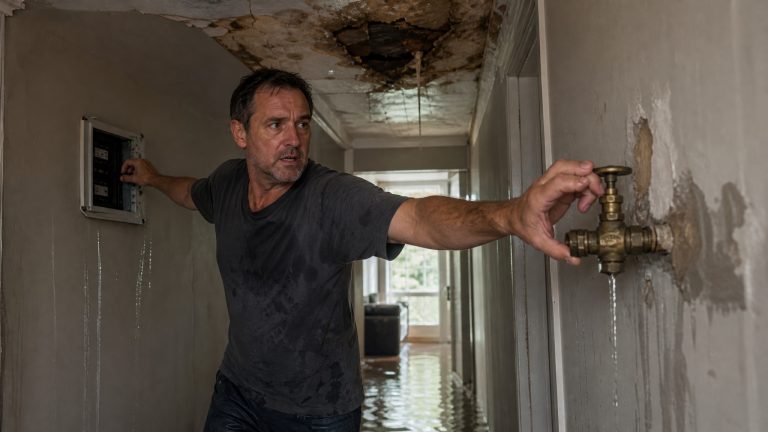
When you have raw sewage backing up into your house, stop everything and prioritise safety before touching anything.
Immediate actions:
- Keep children and pets completely out of the affected area.
- Stop using all water in the house, do not flush toilets or run taps.
- Switch off the electricity supply to affected rooms if there is any risk of water contact with electrical fittings.
- Open windows to ventilate the space.
- Put on rubber gloves and rubber-soled boots before approaching the affected area.
Knowing when to call an emergency plumber vs. attempting a temporary fix can save you time and prevent you from making the situation worse.
Health Hazards of Raw Sewage Exposure
Raw sewage is genuinely dangerous. It contains pathogens including E. coli, Hepatitis A virus, Salmonella, and Leptospira bacteria. Even brief skin contact without protective gear poses a real infection risk, particularly for children, the elderly, and anyone who is immunocompromised. Inhalation of sewage gases, including hydrogen sulphide, can cause nausea, dizziness, and at high concentrations, serious respiratory harm. The World Health Organization’s guidance on sanitation-related disease confirms that untreated sewage exposure is a significant public health risk.
Temporary Containment While You Wait for a Plumber
While you wait for professional help, these steps limit the spread of contamination:
- Block floor drains with an inflatable drain plug (available at hardware stores) to stop further backup at ground level.
- Mop standing sewage into a bucket using a dedicated mop you’ll discard, not one you use elsewhere in the house.
- Disinfect surfaces that sewage has contacted using a diluted bleach solution (1 part bleach to 9 parts water).
- Bag and seal any contaminated materials, towels, mats, clothing, in heavy-duty rubbish bags before disposal.
Do not use a regular vacuum cleaner on sewage water. Do not run the dishwasher or washing machine until the line is cleared.
Sewage Backup Repair Solutions: From Drain Cleaning to Pipe Replacement
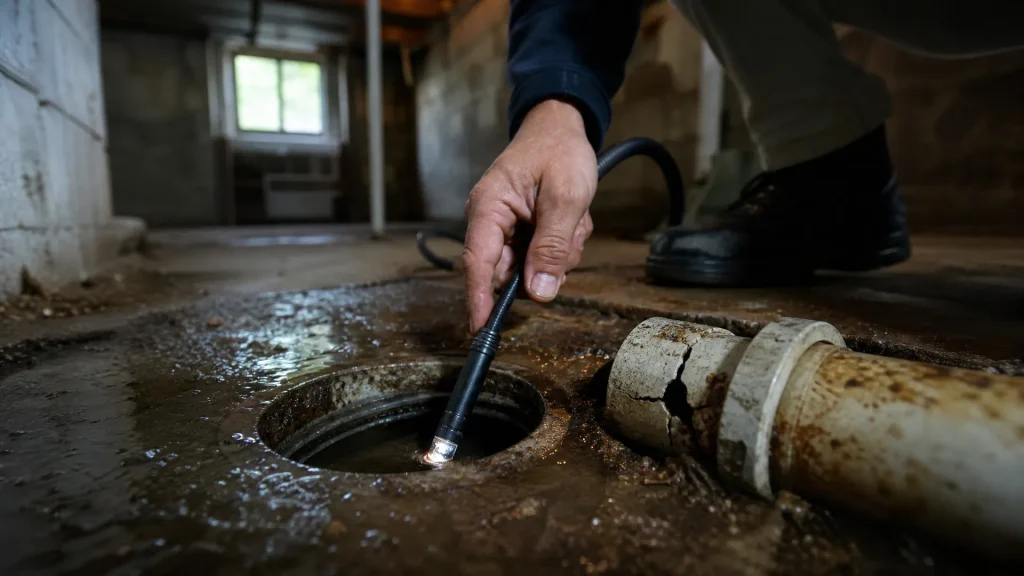
The right repair depends on what the diagnosis reveals. When our plumbers attend sewage backup call-outs, a CCTV drain camera inspection is almost always the first diagnostic step. It pinpoints whether the blockage is root intrusion, a collapsed section, or a grease build-up, and determines which side of the boundary the problem sits on.
Once the cause is confirmed, repair options run from least to most invasive:
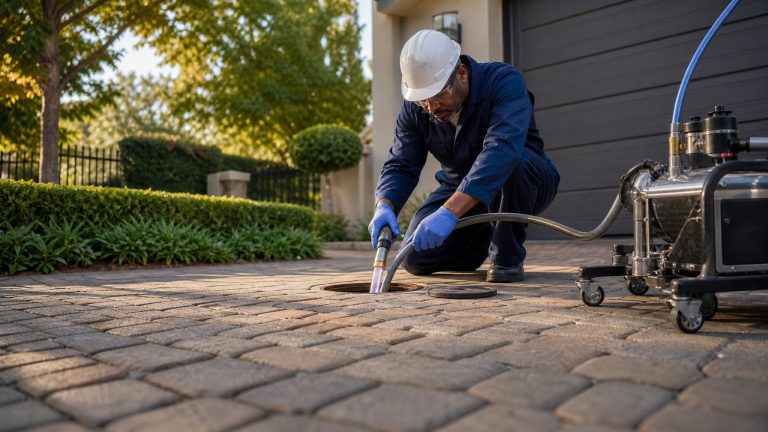
- Hydro-jetting: High-pressure water blasts through grease, sludge, and minor root masses. Fast and effective for build-up blockages.
- Mechanical rodding: A motorised drain snake breaks up or retrieves blockages. Good for solid obstructions.
- Root cutting: Specialised cutting heads on a drain machine sever root intrusions inside the pipe. Often combined with hydro-jetting to flush debris.
- Pipe relining (no-dig): A flexible liner is inserted and cured inside the existing damaged pipe, effectively creating a new pipe within the old one. No excavation required. This is a mid-to-upper-cost option but avoids garden and driveway disruption.
- Full excavation and pipe replacement: Necessary for severely collapsed sections or pipes in very poor condition. The highest-cost option, with burst pipe repair costs and what drives the price following similar dynamics.
For a broader picture of what professional drain work runs, blocked drain cleaning costs in South Africa gives useful context before you call.
Roots in Sewer Line: Costs and Repair Methods in South Africa
Roots in sewer line cost varies widely depending on how far the roots have penetrated, the depth and accessibility of the pipe, and the repair method needed.
As a general guide: hydro-jetting root intrusions is the least expensive option and may be sufficient if roots are caught early. Mechanical root cutting costs more. Pipe relining sits in the mid-to-upper range but is often the best value over time because it seals the cracks that drew roots in the first place. Full excavation and replacement is the highest-cost route and is only necessary when the pipe is structurally beyond saving.
Getting a CCTV inspection first is money well spent, it prevents paying for the wrong solution.
Making a Sewage Backup Insurance Claim in South Africa
Most short-term home insurance policies in South Africa cover sudden and accidental sewage backup damage. However, gradual deterioration, such as a pipe that has been cracking for years, is typically excluded. Municipal-side causes can also complicate claims, because many policies only cover damage originating from your own infrastructure.
To give your sewage backup insurance claim the best chance of success:
- Document everything before cleanup. Take video and photos of every affected area, including the drain access points and any visible damage to flooring, walls, or fittings.
- Get a written plumber’s report. Your insurer will want a professional assessment confirming the cause and identifying whether the problem is on your property or the council’s.
- Notify your insurer promptly. Most policies have a notification window, check your policy schedule and don’t delay.
- Keep all receipts. Emergency call-out fees, repair costs, replacement materials, and professional cleaning costs can all form part of your claim.
If the cause turns out to be a municipal main-line failure, you may need to pursue the municipality separately. The plumber’s CCTV report is your key piece of evidence either way.
Sewage Backup Prevention: How to Protect Your Home Long-Term
Preventing a sewage backup is far cheaper and less stressful than dealing with one. These practical sewage backup prevention measures are worth building into your home maintenance routine:
- Annual drain inspections: A CCTV inspection once a year catches root intrusion, build-up, and early pipe deterioration before they become emergencies.
- Correct disposal habits: Never put cooking grease, wet wipes (even “flushable” ones), food scraps, or sanitary products down the drain. These are the leading cause of preventable blockages.
- Install a backflow prevention valve: A backflow valve on your main drain prevents municipal surges from pushing sewage back into your home. A licensed plumber can fit one during a routine inspection.
- Choose sewer-safe plants: Keep fast-growing trees and shrubs with invasive roots, figs, willows, poplars, well away from the path of your sewer line.
- Pump out your septic tank regularly: If your property uses a septic system, schedule a pump-out every two to three years. Don’t wait for warning signs.
- Get a plumbing inspection when buying a property: A plumbing inspection checklist when buying a new home helps flag ageing pipes and root-prone sewer lines before they become your problem.
A slow drain today rarely fixes itself. If you’ve noticed gurgling sounds, a sewage smell coming from drains, or any drain running slower than usual, book a CCTV inspection now, before a small blockage becomes a full sewage backup.
The team at plumber-plumbers.co.za handles emergency sewage backup call-outs and routine CCTV drain inspections across South Africa. A professional inspection gives you a clear diagnosis, protects your insurance position with a written report, and keeps your family safe. Contact us to book, and find out how to find a reliable plumber in South Africa if you want guidance on vetting any contractor before you commit.