If you are weighing an evacuated tube vs flat panel solar geyser, the honest answer is that neither wins everywhere. Each collector loses heat in a different way, and South Africa’s weather punishes those weak spots differently from Cape Town to the Highveld.
This guide compares the two on cold-weather output, cost, durability and regional fit. It then shows how the collector decision sits alongside the bigger one: the size and install type that match how much hot water your household actually uses.
Solar geyser collector types: how evacuated tube and flat panel designs differ
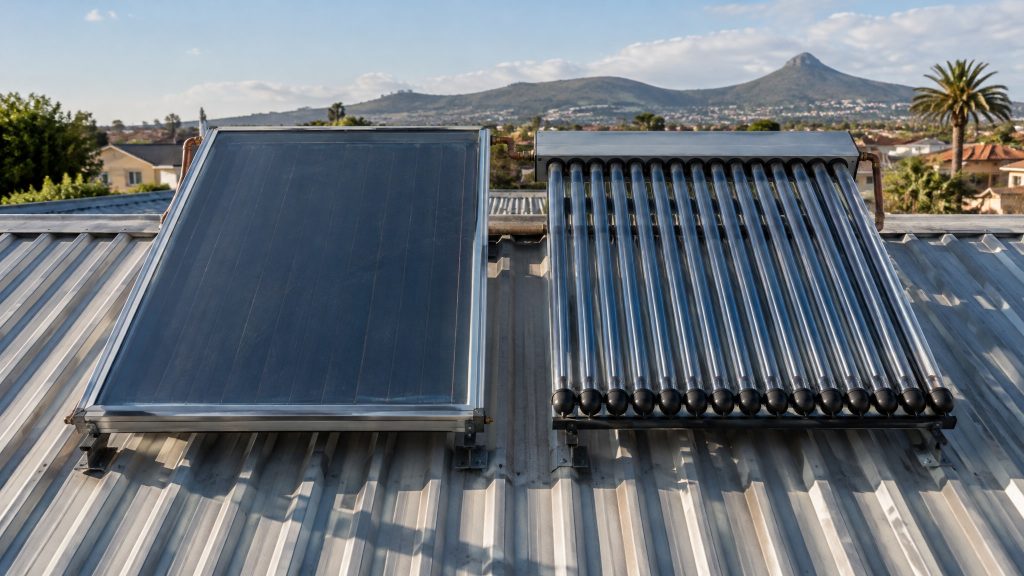
A flat panel is the familiar rooftop rectangle. An evacuated tube is a row of glass tubes, each holding its own absorber. Both do the same job, which is turning sunlight into heat in the water, but they get there with different construction.
Construction and the vacuum: how each collector loses heat
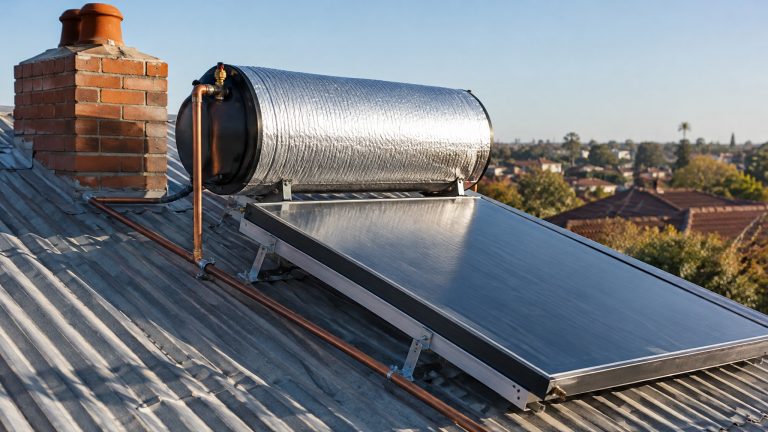
A flat panel is an insulated, glazed box around a dark absorber plate. Sunlight passes through the glass, the plate heats up, and the water or heat-transfer fluid carries that heat away. The box slows heat loss, but the plate still sits in an air-filled space behind the glass, and the cover and frame lose heat to cold air and wind.
An evacuated tube puts each absorber inside its own glass tube, with a vacuum between the inner and outer walls. A vacuum has almost no air to carry heat by convection or conduction, so the tube behaves like a thermos flask for the absorber. The heat that does arrive tends to stay put.
Tube designs also differ inside. Heat-pipe tubes transfer heat to the water circuit at the top of the tube, which on many designs means you can replace one tube without opening the water circuit. Direct-flow tubes carry the water or fluid through the tube itself, so a swap is usually a bigger job.
A tube does not make a system “better” by default. The vacuum only helps while it holds, and that is a point we come back to under maintenance.
Best solar collector for cloudy days and cold winters
Weather decides this question more than any spec sheet. You will get the clearest answer by splitting it into cold and cloudy days on one side, and clear, mild days on the other.
Evacuated tube solar geyser efficiency on cold and cloudy days
Evacuated tubes generally hold more output on cold, overcast winter days because the vacuum suppresses convective and conductive loss. The absorber stays warm even when the air outside is not.
That advantage matters most on frosty, cold-start mornings. A flat panel has to heat its plate and the air inside the box while the cover and frame lose heat to the cold. A tube starts from a better-insulated position, so it can begin delivering useful heat sooner.
Shape helps too. A cylindrical tube takes in light across a wider range of angles than a flat plate, which is useful in low winter sun and on thick, overcast days when the light is scattered rather than direct.
Highveld winters are often clear and frosty, so a vacuum-insulated tube tends to lose less heat overnight and on cold starts than a flat panel, which gives up more heat to the cold air.
Evacuated tube solar geyser efficiency is therefore best read as winter efficiency. Tubes do not make more heat from weak light than the light contains. They simply waste less of what they collect.
Where flat plates keep pace on clear, mild days
When the sky is clear and the air is mild, there is less heat for either collector to lose, so the vacuum has less to prevent. A well-sited flat panel can close much of the gap in those conditions, and it usually costs less.
Siting matters here. Your roof’s orientation, tilt and shading affect a flat panel’s output as much as any technology choice, and a poorly placed panel will lose to a well-placed one of any type.
If most of your hot-water demand falls in warm months, you are paying a premium for winter performance you may rarely need. If you live somewhere cold, the reverse holds.
Which South African climate suits which collector type
Collector choice follows your postcode more than your preference. Broadly, cold and cloudy regions lean toward tubes, while warm and sunny ones lean toward flat panels.
Frost-prone inland and cloudy winter coast: where tubes earn their place
Inland frost areas such as the Highveld and the Karoo have cold nights and cold starts, which is exactly where a vacuum earns its keep. A tube holds on to more of yesterday’s heat and picks up faster in the morning.
The Western Cape winter coast is a different problem. It is cool, wet and often overcast, and on long overcast spells the cylindrical tube, which takes in light from a wider range of angles, tends to hold up better than a flat panel.
Frost-prone sites need freeze protection whatever collector you choose. A tube’s insulation does not replace it, so ask your installer how the system is protected before you sign off.
Flat plate solar collectors in warm, sunny and hail-prone parts of South Africa
In warm, sunny regions such as the Lowveld and the KZN north coast, a flat plate solar collector in South Africa usually does the job without the tube premium. Winter there is mild, so the extra insulation has little to prove.
Hail is the other factor. Glass evacuated tubes break more readily under hail than a flat panel’s glazing, so a hail-prone roof tips the balance toward flat panels.
Gauteng sits in the middle of this trade-off. It faces frost in winter and hail in summer, so local hail history should weigh heavily for Highveld roofs. If your street has taken hail damage in recent years, that may count for more than a few colder mornings. If it has not, and your winters are sharp, tubes make a stronger case.
Cost comparison: upfront price and total ownership
Flat panels usually cost less to buy and install. Tubes typically carry a higher upfront price, so the case for tubes rests on the extra winter output they deliver, not on a lower bill at the till.
Tubes do not pay for themselves everywhere. In a mild, sunny region the extra winter output is small, and the higher price buys you little. In a cold or overcast one, you get more of your hot water from the sun in the months when electric heating costs the most.
That is the whole calculation, and it is worth running with your own winter in mind rather than an average.
Installation scope and what drives the final bill
The collector is only part of the bill. Roof fixing, pipework runs, the condition of your existing plumbing and any conversion work all move the total, and a complicated roof can cost more than the difference between two collector types.
For a realistic picture of what labour and site work add, see this breakdown of solar geyser installation costs. Quote comparisons only make sense when each quote covers the same scope.
Prices for the complete systems range from around ZAR 14,805 for the 100L up to around ZAR 28,085 for the 300L. These figures are indicative and subject to change, so treat each product page as the source of truth.
Lifespan and maintenance: glass, seals and collector checks
Each design has a weak point, and knowing it tells you what to check. Upkeep is light for both, but it is not the same.
Tubes can break, and they can lose their vacuum. A cracked tube is easy to spot, while a de-vacuumed one may look fine but perform worse, often showing as a tube that stays cool or looks cloudy inside. On many tube designs, you can replace a single tube for less than a full collector replacement.
Flat panels fail in a different way. Seals can degrade, and condensation under the cover is the sign that moisture is getting in. Cleaning the cover and checking those seals once or twice a year catches most problems early.
Collector type is not the only thing that decides lifespan. Installation quality and hard-water scaling affect how long a system lasts as much as the collector does, because scale builds up inside pipes and heat exchangers and quietly cuts output.
When a system is old and the repairs keep coming, the repair or replace decision is worth working through before you spend more.
Matching a high-pressure solar geyser size and install type to your home
Collector choice is half the decision. The other half is size, and you should make both together. A perfect collector on a tank that is too small still leaves you reaching for the electric element.
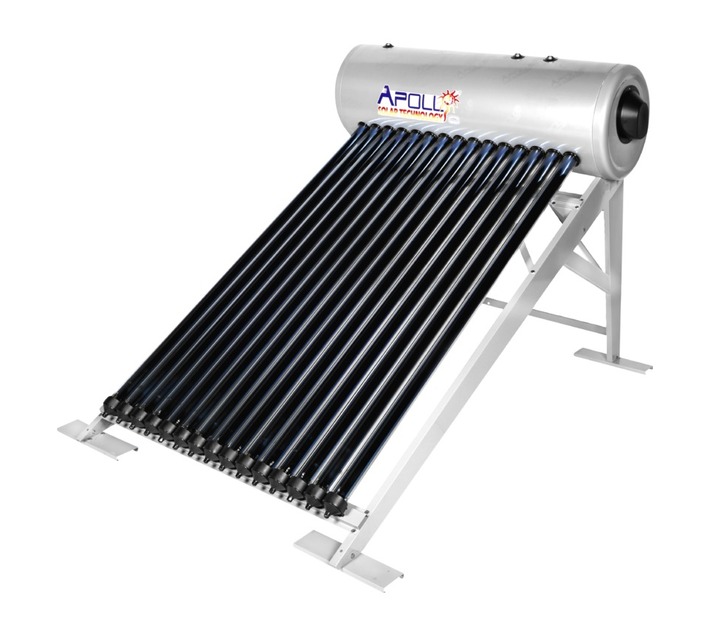
The units below are described by size and install type, since that is what decides whether a system fits your household. Collector fit for your roof and region is something to settle during the site assessment.
Complete systems: 100L, 150L, 200L and 300L high-pressure solar geyser
Complete systems replace your existing geyser with a new high-pressure solar hot water system. They suit homes that need a new geyser anyway, or where the old one is past saving.

- The 100L high-pressure solar geyser suits compact homes, flats, cottages and garden units with moderate demand.
- The 150L high-pressure solar geyser suits smaller homes, townhouses and flats.
- The 200L high-pressure solar geyser for larger households is for medium to larger households that need dependable hot water every day.
- The 300L high-pressure solar geyser suits bigger households, guest houses and small lodges.
To work out which tier matches your daily use, this guide to how to choose a solar geyser size for your family walks through the numbers.
Conversions: 150L, 200L and 300L High Pressure Solar Geyser Conversion
A conversion keeps your existing electric geyser and adds solar-assisted heating to it. It only fits if you already have a compatible electric geyser of the same size, and that geyser must be in good working order.

If your geyser is leaking or near the end of its life, a conversion is not the right route. Fitting solar to a failing tank wastes the saving.
The range covers the 150L High Pressure Solar Geyser Conversion, the 200L high-pressure solar geyser conversion and a 300L option. Indicative prices start at around ZAR 13,451 for the 150L and around ZAR 15,449 for the 200L, with the 300L at around ZAR 19,482. For a closer look at retrofit budgets, read about solar geyser conversion pricing.
Which collector wins in SA for your climate and budget
Tubes generally win on cold, cloudy winter output and on frost-prone inland sites. Flat panels win on upfront cost, hail resilience and warm, sunny regions.
Choose by climate first, then size by daily demand. If winters on your roof are sharp or grey, lean toward tubes. If they are mild and your area sees hail, a flat panel is the sounder buy. In Gauteng, weigh frost against hail for your own street.
Neither collector fixes an undersized tank, and neither removes the need for freeze protection in cold areas. If you are still unsure whether solar is the right technology at all, compare heat pump versus solar geyser before you commit.
Ready for a number? Request a site assessment and quote, and tell us how many people use hot water daily and whether you have a serviceable geyser. We will match a complete system or a conversion to your household, for example the 200L high-pressure solar geyser conversion if you already have a sound 200L electric geyser.
Frequently asked questions
Do evacuated tubes work better than flat panels in winter?
Generally, yes. The vacuum around each absorber cuts heat loss on cold, overcast days and frosty mornings. On clear, mild winter days, a well-sited flat panel can close much of the gap.
Is a flat panel solar geyser cheaper than an evacuated tube one?
Usually. Flat panels typically cost less to buy and install, while tubes carry a higher upfront price. The case for tubes rests on the extra winter output, so it is strongest in cold or cloudy regions.
Which solar collector is better for Gauteng?
It depends on which risk matters more for your roof. Gauteng has frost in winter, which favours tubes, and hail in summer, which favours flat panels because glass tubes break more readily. If your area has a recent hail history, weigh that heavily.
Can I replace one broken tube, or do I need a new collector?
On many tube designs you can replace a single tube, which usually costs less than replacing the whole collector. How easy the swap is depends on whether the design is heat-pipe or direct-flow. Ask your installer which type your system uses.
Can I add solar to my existing electric geyser?
Yes, if you have a compatible electric geyser of 150L, 200L or 300L in good working order. A High Pressure Solar Geyser Conversion keeps that tank and adds solar-assisted heating. If the geyser is leaking or near the end of its life, a complete system is the better choice.