
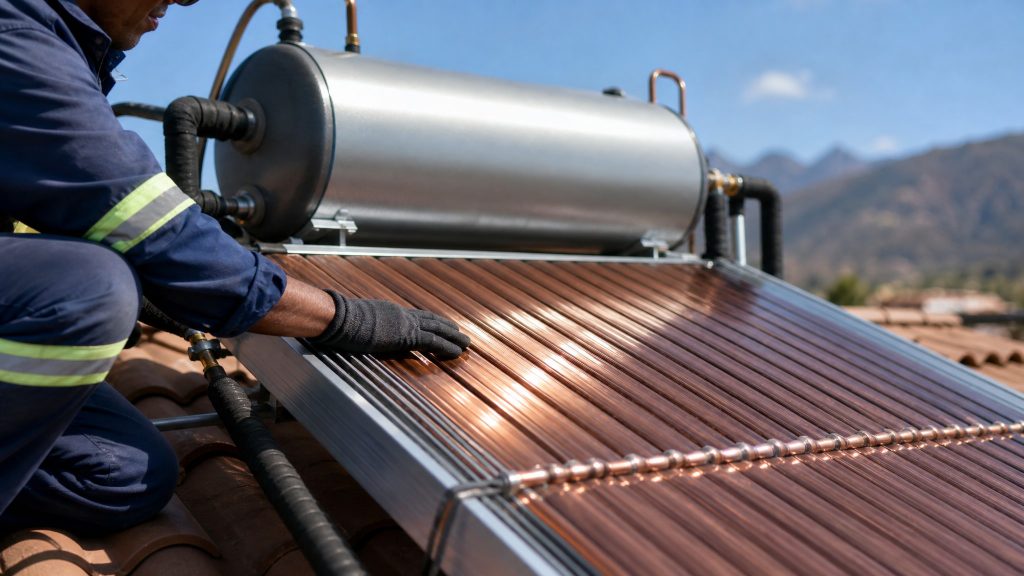
Budgeting for a solar water heater means separating the equipment price from the labour and compliance variables that actually set the final invoice. Online searches for solar geyser installation cost South Africa often return broad averages, but your roof type, household demand, and existing plumbing decide where you land within those bands. This guide breaks down 2026 pricing so you can read quotes accurately and avoid underestimating what a compliant, warrantied system really costs.
Average Solar Geyser Installation Cost in South Africa (2026)
Current market pricing reflects higher component costs and skilled labour rates, not the historical figures still floating around online. Solar geyser installation cost in South Africa typically spans a wide band in 2026 because installers have to account for site-specific complexities that a generic price list can’t capture. High-pressure flat plate solar systems typically sit at the mid-to-upper tier of residential installation costs, because they need pressurised tanks and copper absorber plates. Low-pressure options cost less but do less.
Price Ranges by System Size and Type
Low-pressure thermosyphon systems generally occupy the entry-level bracket and suit simple retrofits where municipal pressure isn’t a concern. These units rely on gravity feed and skip the pumps and valves a high-pressure delivery needs, which keeps material and labour costs down. Flat plate collectors paired with high-pressure cylinders cost more because they plug directly into existing pressurised plumbing without needing extra header tanks. Evacuated tube systems often sit at the premium end, thanks to better thermal efficiency in cooler climates, though their modular design can sometimes cut replacement costs if individual tubes fail later.
Labour vs Component Breakdown
The hardware itself often accounts for less than half of the final quote once professional installation includes full compliance documentation. Skilled plumbers charge for the time spent working through roof cavities, extending pipe runs, and getting electrical safety isolators up to code. Complex retrofits on older properties may need extensive re-piping for new valve configurations or circulation loops, which pushes labour hours well past a standard new-build job. You’re paying for expertise that stops leaks, keeps heat transfer efficient, and satisfies insurance requirements, not just for someone bolting collectors to a roof.
Solar Geyser Price Factors That Influence Your Quote
Tile roofs often need specialised flashing kits and extra labour time compared to IBR or corrugated iron, and that shows up directly in the quote. Installers have to carefully lift and replace tiles to build watertight seals around mounting brackets, while metal roofing lets them seal penetrations faster with rubber flashings. Double-storey installations add further complexity, since lifting heavy cylinders and collector arrays to upper levels needs more people and specialised rigging equipment. Structural assessments become mandatory when rafter spacing exceeds standard dimensions, or when timber trusses show weathering that could compromise load-bearing capacity long-term.
Roof Type and Structural Requirements
Corrugated iron and IBR profiles let installers work quickly, because fasteners go straight through the sheeting into rafters with minimal weatherproofing effort. Clay and concrete tiles need careful handling to avoid breakage during access, and each penetration point needs custom lead or rubber flashing to keep the roof watertight. Steep pitches above thirty degrees slow the job down, because workers need extra fall protection gear and anchor points. If your roof structure lacks enough rafter strength, the installer may need to add reinforcement before any mounting hardware goes up.
System Capacity and Household Demand
Undersizing a system to save money upfront guarantees frustration during peak usage, when hot water runs out before everyone has showered. A household of four typically needs a 200-litre high-pressure system with two flat plate collectors, or an equivalent evacuated tube array, to keep supply steady through winter. Larger families or homes with multiple bathrooms may need dual-cylinder setups or larger collector fields, which pushes both material and installation costs up substantially. Oversizing wastes capital on unused capacity and stretches out the payback period unnecessarily, so sizing the system to actual occupancy matters more than a generic chart.
This approach doesn’t suit households with very low hot water use, or properties shaded by permanent structures that block solar gain. For these situations, tank versus tankless water heating options may pay off better than forcing a solar installation onto a site that doesn’t suit it.
Solar Geyser vs Electric Geyser Cost Comparison
Comparing solar geyser vs electric geyser cost comes down to a trade-off between what you can afford now and what you save later. Replacing a failed electric element or thermostat costs a fraction of a full solar thermal installation, which is why conventional repairs stay attractive when budgets are tight. But that comparison only holds up if you look at total ownership cost across each system’s lifespan, not just the invoice in front of you.
Upfront Investment Differences
A standard electric geyser replacement typically costs between R8 000 and R15 000, depending on cylinder size and accessibility, see our breakdown of standard geyser replacement costs. Solar installations start at roughly double that for basic low-pressure systems and climb well beyond it for high-pressure flat plate or evacuated tube setups. The gap exists because solar needs collectors, circulation pumps, controllers, differential thermostats, and plumbing modifications that an electric replacement simply skips. You’re buying energy independence infrastructure, not just a water storage vessel.
Long-Term Savings and Payback Period
Eskom tariffs in 2026 keep climbing, which shortens the payback period for solar thermal investment compared to previous years. Households using 200 litres of hot water daily can expect solar systems to offset sixty to seventy percent of their water heating electricity use under typical conditions. Payback timelines vary by usage pattern, orientation, and local climate, but most well-sized installations recover their premium over electric alternatives within five to eight years. After that, hot water is nearly free for the rest of the system’s fifteen-to-twenty-year life.
Picking the right equipment matters as much as installation quality when you’re weighing long-term value, geyser brand comparisons for 2026 can help with that decision.
Government Rebates and Incentives for Solar Water Heaters
Rebate availability shifts often and depends entirely on which municipal or national programmes are active when you buy. Some municipalities offer partial reimbursements for SABS-approved solar water heaters installed by accredited professionals, while Eskom’s rebate programme has gone through periodic suspensions and funding constraints in recent years. Eligibility almost always requires proof of installation by a licensed practitioner, plus valid compliance certificates and manufacturer documentation. Check current incentive status directly with the relevant authorities before you assume any financial assistance will be there, since budget allocations change without much notice.
Claiming any solar geyser rebate South Africa offers takes careful paperwork and strict adherence to programme-specific technical standards that unaccredited installers can’t meet.
Choosing a Qualified Solar Geyser Installer Near You
PIRB-registered plumbers must sign off solar geyser installations to comply with SANS 10254 and keep manufacturer warranty coverage intact. Searching for a solar geyser installer near me turns up plenty of results, but only verified accreditation protects you from workmanship bad enough to void warranties and create insurance liabilities. Manufacturers routinely reject claims tied to improper installation, which leaves homeowners fully on the hook for failures that proper compliance would have covered. Our plumbing permit and compliance guidelines can help you tell legitimate professionals from unqualified operators offering suspiciously low quotes.
Accreditation and Warranty Implications
Manufacturer warranties explicitly require installation by accredited practitioners holding current PIRB registration and the relevant solar thermal certifications. Non-compliant installations invalidate those protections immediately, so any leak, corrosion, or component failure afterward becomes your problem to pay for. Insurance companies also demand valid compliance certificates when processing claims tied to water damage from geyser failures. Paying a bit more for accredited installation preserves warranty cover worth tens of thousands of rand in potential future repairs.
What to Expect During Site Assessment
Our installation quotes include full site assessments covering shading analysis, structural integrity checks, and existing plumbing compatibility evaluations. Assessors measure roof pitch, work out the best collector orientation, and check whether existing pipe diameters can handle solar circulation without modification. They also check electrical distribution boards for spare capacity to power backup elements and circulation pumps safely. A phone quote can’t account for any of this, which is why a written specification after a physical inspection gives you a far more reliable number than a ballpark guess.
Hidden Costs and Maintenance Considerations
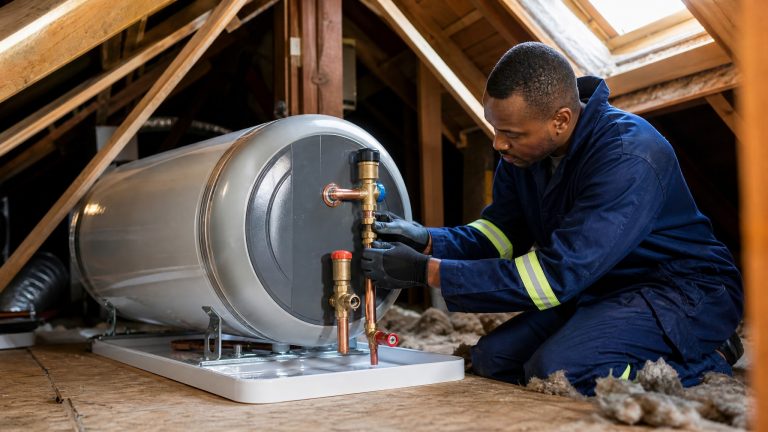
Vacuum breakers, pressure control valves, and electrical isolation switches often turn up on the final invoice because they’re mandatory for safe operation. Many homeowners overlook drip tray installation requirements until the installer flags them as essential protection against catastrophic water damage from tank failures. Existing plumbing may need upgrading to handle solar system pressures or temperatures, adding copper piping and valve costs a preliminary estimate can’t predict. Budget ten to fifteen percent above the quoted amount as a contingency, because these discoveries surface once work starts inside walls and roof cavities.
Ongoing ownership costs run beyond installation too: anode rods need replacing every three to five years, and collectors need annual cleaning to hold their thermal efficiency.
Planning Your Solar Geyser Installation Budget
Get at least three detailed written quotes that itemise components, labour hours, compliance fees, and contingency allowances separately, rather than accepting a lump sum. A vague quote invites scope creep and surprise charges once the installer hits complications mid-project that should have shown up during assessment. Compare specifications line by line to make sure each installer is quoting equivalent system sizes, collector types, and warranty terms before you weigh price differences. Ask for references from recent installations similar to yours in complexity and roof type, to check that quoted timelines and workmanship hold up.
Your solar geyser installation cost South Africa investment deserves real due diligence, not optimistic assumptions about what generic pricing should cover. A detailed written specification from an accredited installer is what accurate budgeting and a project without financial surprises actually rest on.
1 Comment