If your geyser sits in a roof space, a small metal or plastic tray under it might be the only thing standing between a slow leak and a ruined ceiling. Homeowners usually only think about geyser drip tray installation cost once a plumber points out the tray is missing, cracked, or was never fitted in the first place. This guide breaks down what that job actually costs in South Africa, when it’s required for compliance or insurance, and why it’s rarely worth doing on your own.
What Is a Geyser Drip Tray and Why Do Insurers Require One?
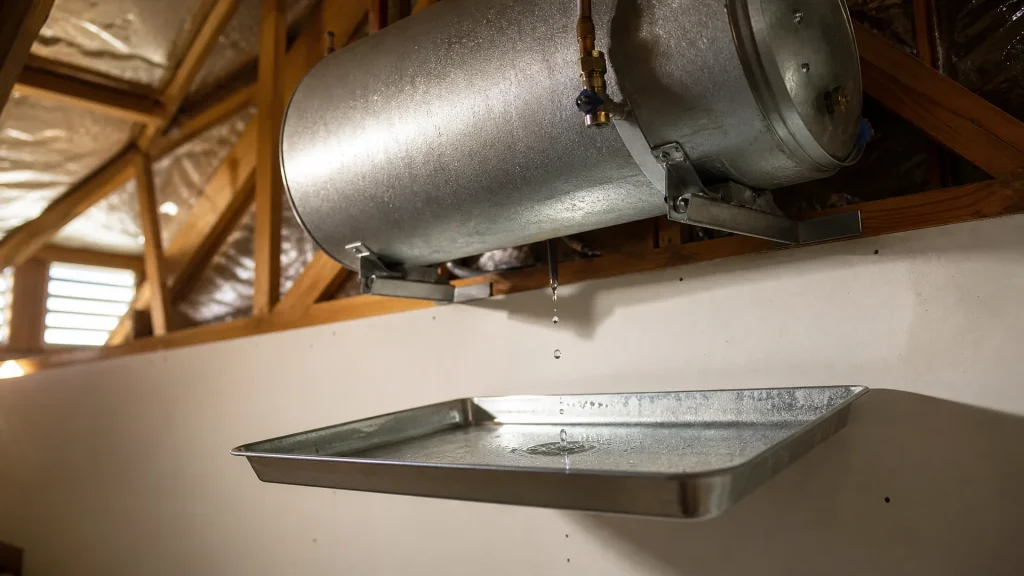
A geyser drip tray is a shallow catchment pan installed directly under a geyser. It catches drips, condensation, and minor leaks before they reach the ceiling below.
It doesn’t stop a major burst on its own. But it buys time. It limits damage until someone notices the water or it drains away through a connected pipe.
That’s exactly why SANS 10254, the South African standard covering the installation of fixed electric water heaters, treats a drip tray as standard practice for geysers installed in ceilings or roof spaces. Most insurers follow the same logic. If a geyser sits above a ceiling with no tray to catch drips, it’s harder to argue that any resulting water damage was unavoidable.
Drip Tray vs Overflow Pipe: What’s the Difference?
People often use “drip tray” and “overflow pipe” interchangeably. They’re not the same thing, and most compliant installations need both.
The overflow pipe runs from the geyser’s pressure relief valve to the outside of the building. It carries away water the valve releases when pressure builds up inside the tank. If your geyser is leaking from the pressure relief valve, the overflow pipe is what’s supposed to direct that water safely outdoors.
The drip tray sits underneath the whole geyser unit. It catches anything that drips down from fittings, condensation, or a small leak in the tank itself. It then usually channels that water out through its own drain pipe.
In short: the overflow pipe handles pressure release water. The drip tray handles everything else that might drip. A compliant geyser installation generally needs both working correctly.
Geyser Drip Tray Installation Cost Breakdown in South Africa
There’s no single fixed price for fitting a drip tray. The job depends heavily on access and the state of the existing installation. What you can expect is a cost structure built from three main components: labour, the tray itself, and any extra pipework needed to drain it.
As a standalone job, retrofitting a drip tray is a relatively quick callout for a plumber compared to most other geyser work. It doesn’t involve draining or replacing the tank, so labour time is usually the biggest line item rather than parts.
What Affects the Price (Access, Material, Geyser Location)
A few factors push the price up or down:
- Roof access. A geyser in an easily reached roof space with a proper ceiling hatch costs less to work on than one tucked into a tight or unboarded roof cavity.
- Tray material. Plastic trays are cheaper and adequate for most residential setups. Galvanised steel trays cost more but hold up better over years of heat exposure and condensation.
- Geyser location and pipe run. If the drip tray needs a new drain pipe routed a long distance to an external wall, that adds labour and materials.
- Condition of the existing setup. If a plumber needs to remove old, corroded pipework or a rotted tray first, that adds time to the job.
- Whether boarding or ceiling repair is needed. If a plumber needs to lay boards to safely reach the geyser, or if the ceiling below has already been damaged by a previous leak, that’s extra cost on top of the tray itself.
Retrofit vs New Install Pricing
Fitting a drip tray as its own callout tends to cost more per hour of work than doing it during a full geyser replacement cost job. That’s because a standalone visit still carries a full callout fee, even if the actual task is small.
When a drip tray goes in alongside a new geyser installation, the plumber is already in the roof space with tools out and access sorted. Adding the tray is a marginal cost, not a fresh job. This is the cheapest route if you’re due for a geyser swap anyway.
Geyser Drip Tray Regulations and Insurance Requirements in South Africa
SANS 10254 sets out the technical requirements for installing electric storage water heaters in South Africa. It forms the basis for the compliance certificate that plumbers issue after geyser work. A drip tray under a ceiling-mounted geyser is one of the details a competent installer checks against this standard.
This matters beyond a paperwork exercise. Municipalities and insurers both lean on SANS 10254 compliance as the baseline for what counts as a properly installed geyser. If you’re planning any geyser work, it’s worth understanding the full geyser installation requirements in South Africa before a plumber arrives, so you know what should be checked off.
Most South African insurers will check geyser-related water damage claims for SANS 10254 compliance. A missing or incorrectly installed drip tray is one of the most common reasons a claim gets challenged or reduced.
How a Missing Drip Tray Can Affect a Compliance Certificate or Claim
A licensed plumber won’t issue a valid compliance certificate for a geyser installation that’s missing a required drip tray. Without that certificate, you may struggle to prove the installation was compliant at all. That matters a great deal at claim time.
If a geyser leaks or bursts and there’s ceiling or floor damage, the insurer will typically ask for the compliance certificate and inspect what caused the damage. If no drip tray was fitted and one should have been, the insurer may argue the damage was preventable, and reject or reduce the payout accordingly.
This is one reason it’s worth reading up on claiming warranty or insurance after a geyser bursts before you actually need to file one. Knowing what insurers expect ahead of time can save you from a rejected claim down the line.
Signs Your Geyser Drip Tray Is Missing, Damaged or Non-Compliant
You don’t need to climb into your roof to get a first read on this. A few practical clues usually give it away:
- Ceiling stains or watermarks below where the geyser sits, even faint or old ones, often point to a tray that’s missing or failing to drain properly.
- A musty smell in the roof space or in the room below can indicate slow, ongoing moisture that a tray isn’t catching.
- Visible rust or cracks in the tray itself, if you can see it through a ceiling hatch.
- No tray at all on older installations. Many geysers installed before insurers and municipalities tightened enforcement of SANS 10254 were never retrofitted.
- A drain pipe with no slope, or the wrong diameter, which stops water draining away properly even if a tray is present.
- An overflow pipe that dead-ends indoors instead of running outside, which is a separate but related compliance issue worth flagging to your plumber.
A homeowner with a ceiling-mounted geyser in a Johannesburg roof space might only discover a rusted-through drip tray after a slow leak stains the ceiling below. Plumbers see this scenario repeatedly on older homes that were never retrofitted after the original installation. If you notice any of these signs, it’s worth checking further before assuming your geyser is fine. See the broader warning signs a geyser is about to burst for related red flags.
DIY vs Hiring a Licensed Plumber for Drip Tray Installation
Fitting a drip tray looks simple on the surface: a plastic pan and a length of pipe. In practice, a few details make this a job better left to a licensed plumber.
Correct tray sizing and positioning matter. It needs to sit under the full footprint of the geyser and its fittings, not just roughly underneath. The drain pipe needs the right diameter and a proper slope, so water actually flows out instead of pooling and overflowing the tray itself.
There’s also the roof access problem. Working safely in a confined roof space, especially over ceiling boards that won’t take your weight, is a real risk for anyone unfamiliar with the space.
Why Compliance Certificates Require a Qualified Installer
A DIY drip tray install, even done well, won’t get you a compliance certificate. Only a registered, qualified plumber can issue one. Insurers and municipalities generally won’t accept anything else as proof of compliant work.
Licensed plumbers on plumber-plumbers.co.za regularly fit or replace drip trays during geyser replacement callouts. They also often flag missing trays during routine repair inspections, catching a compliance gap before it turns into a claim dispute. That inspection step alone is often worth the callout, since it’s the kind of thing homeowners rarely check themselves.
Bundling Drip Tray Installation With Geyser Replacement
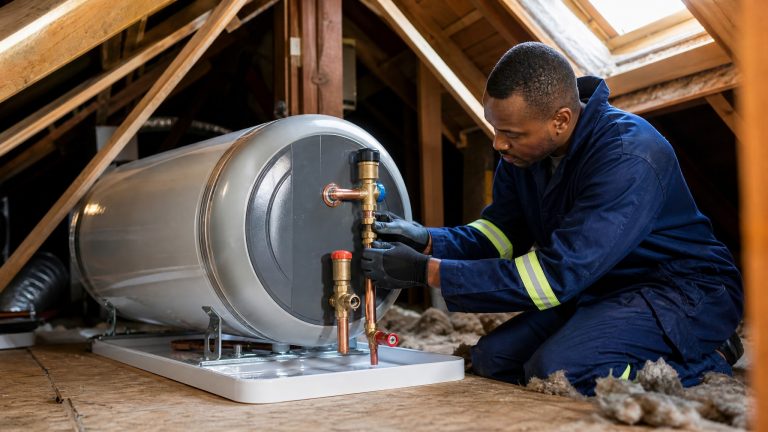
If your geyser needs replacing, or you’re due for a repair callout anyway, that’s the cheapest and most practical time to sort out the drip tray too. The plumber is already in the roof space, tools are already out, and access has already been arranged.
Geyser drip tray retrofit costs in South Africa typically sit well below a full geyser replacement, since the job mainly involves labour, a tray, and minor pipe adjustment rather than a full unit swap. Bundling it into a replacement or repair visit spreads that cost even further, since you’re not paying a second callout fee for a separate trip.
It also closes a compliance gap before it becomes a problem. A new geyser with no drip tray, or an old tray left in place through a swap, can undermine an otherwise valid compliance certificate. If you’re comparing quotes for repair work, it helps to understand what a geyser repair quote typically includes, so you can ask specifically whether drip tray inspection and replacement is part of the scope.
If you’re planning a geyser replacement, repair, or just want your drip tray checked for compliance, it’s worth booking a licensed plumber to assess it properly. Getting it right the first time is far cheaper than dealing with a rejected insurance claim after ceiling damage has already been done.