Choosing the wrong water heater for a South African home is an expensive mistake, not just at installation, but for the next decade of electricity bills, maintenance calls, and cold showers during load shedding. The tank vs tankless debate looks straightforward on paper, but the SA context changes the calculation significantly. Municipal pressure fluctuations, persistent power outages, hard water in many regions, and older housing stock all affect which system actually performs for you.
Both systems are regulated under SANS standards, and both require a certificate of compliance. Before you buy, it pays to understand exactly how each works, and what each costs in real South African conditions.
Understanding the Core Difference: Storage Geyser vs Instant Water Heater
How a tank (storage geyser) works
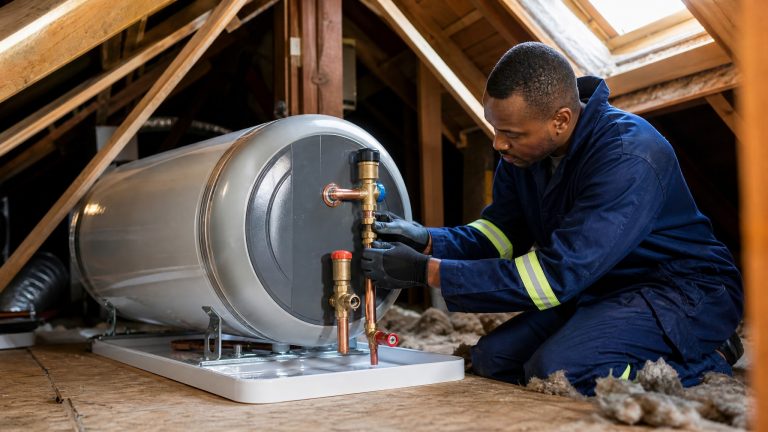
A storage geyser heats a fixed volume of water, typically 100, 150, or 200 litres, and keeps it hot inside an insulated tank. The element cycles on and off to maintain temperature. When you open a hot tap, pre-heated water flows immediately, and cold water refills the tank from the bottom.
This is the dominant system in South African homes, and most local plumbers have decades of experience installing and servicing them. They comply with geyser installation requirements in South Africa under SANS 10254, and they integrate naturally with solar geyser panels and timer controls. Storage geysers account for roughly 40–50% of a typical household’s monthly electricity bill, which makes the choice of system, and how you manage it, genuinely consequential for your budget.
How a tankless (instantaneous) water heater works
A tankless unit heats water on demand as it flows through the device. There is no stored volume. The moment you open a tap, a flow sensor activates a gas burner or high-draw electric element to raise the water temperature in real time.
Tankless units avoid standby heat loss, energy wasted keeping a tank warm around the clock. In theory, this makes them more energy-efficient. In practice, the South African grid and water infrastructure introduce complications that most overseas comparison guides never mention.
Tankless Water Heater Installation Cost vs Storage Geyser: What SA Homeowners Actually Pay
Upfront unit and labour costs
A standard 150-litre electric storage geyser is well-established in the SA market. Installation by a licensed plumber in a straightforward ceiling-void situation is a relatively predictable cost. Tankless units, whether gas or electric, carry a higher purchase price for equivalent capacity, and the installation labour is more complex, so the total upfront spend is meaningfully higher.
Gas instantaneous heaters are popular in coastal cities and off-grid properties, but they require a correctly sized gas supply line and a compliant gas certificate in addition to the plumbing certificate. Electric tankless units powerful enough to supply a whole home typically require a 32–40 amp dedicated circuit, which often means upgrading the distribution board, an additional cost many homeowners don’t budget for.
Hidden costs: pipe rerouting, gas lines, and electrical upgrades
Older SA homes, particularly those built before the 1990s, were designed around a ceiling-mounted geyser with a specific pipe layout. Switching to a wall-mounted tankless unit often means rerouting hot and cold supply lines, adding pressure-reduction valves if municipal supply is irregular, and potentially relocating the installation point closer to high-use areas.
In practice, the total installed cost of a gas tankless unit in a typical Johannesburg or Cape Town home, including gas line extension, plumbing modifications, and compliance certificates, can run to roughly double the cost of a like-for-like storage geyser replacement. The plumbing permit requirements for new water heater installations are the same regardless of which system you choose, so that cost is constant.
Load Shedding Impact: Why a Tank Water Heater Wins During Power Cuts
This is the section that most overseas water heater guides skip entirely, but for South African homeowners it is often the deciding factor.
A well-insulated 150–200 litre storage geyser retains usable hot water for 4–6 hours after the power is cut. During Stage 4–6 load shedding cycles in 2024 and 2025, households with storage geysers consistently had access to at least one full bath or multiple showers after an outage began, provided the geyser had been allowed to reach temperature beforehand.
An electric tankless unit produces zero hot water the moment load shedding starts. There is no buffer, no stored volume, and no fallback. Gas tankless units do better here, gas supply is unaffected by grid outages, but they carry the higher installation costs and gas compliance requirements described above.
Storage geysers also pair naturally with solar geyser panels. A thermosiphon or pumped solar system uses the existing tank as the storage vessel, and the element acts as a backup. This makes tank systems the natural choice for homeowners looking to reduce grid dependence over the long term, a meaningful consideration as electricity tariffs continue to rise through 2026 and into 2027.
If you are currently experiencing inconsistent hot water, diagnosing hot water shortages and geyser faults before committing to a system change can save you from an unnecessary upgrade.
Municipal Water Pressure Requirements for Tankless Heaters in South Africa
Tankless water heaters rely on a flow switch to activate heating. That switch requires consistent minimum inlet pressure, typically between 150 and 300 kPa depending on the unit, to trigger and maintain operation. Below that threshold, the heater either won’t fire at all or will cut in and out, producing the frustrating cold-burst effect that many SA homeowners experience after switching to an instantaneous unit.
This is a real and documented problem. In Cape Town and Johannesburg, areas with known municipal pressure fluctuations, instantaneous water heaters cut out or deliver cold bursts when inlet pressure drops below the unit’s activation threshold. SA plumbing contractors report this as one of the most common callbacks on tankless installations. Our plumbers regularly encounter situations where homeowners switched to a tankless unit for energy savings, only to call back within a year to resolve pressure-related cold-water bursts or scale blockages, particularly in hard-water areas like Pretoria and the East Rand.
Storage geysers buffer against pressure variation. Because the tank is always full and under its own static head, delivery pressure at the tap is far less sensitive to municipal supply fluctuation.
If your property already experiences pressure issues, read about the water pressure problems that affect tankless heater performance before committing to an instantaneous system. A pressure-reducing valve or accumulator tank can help, but both add cost and complexity to the installation.
Water Heater Lifespan and Maintenance Costs Over Time
Annual servicing and anode rod replacement for tank geysers
Storage geysers in South Africa have a typical lifespan of 8–12 years when maintained correctly. The key maintenance item is the sacrificial anode rod, which protects the tank lining from corrosion. It should be inspected and replaced every 3–5 years, a straightforward job for a licensed plumber, but one that many homeowners skip, significantly shortening the unit’s life.
Annual servicing should also check the pressure-relief valve and thermostat. Skipping this is one of the most common causes of premature geyser failure, burst tanks, and ceiling water damage. Total annual maintenance costs for a tank system are modest compared to the cost of an emergency replacement.
Maintenance needs for tankless units in SA’s hard-water areas
Tankless units can exceed 15 years of service life, but that figure assumes annual descaling in municipalities with hard water above 150 mg/L TDS. Much of the Gauteng interior, parts of the Western Cape, and areas supplied by older municipal infrastructure fall into this category.
Scale buildup on heat exchanger elements reduces efficiency and, if left untreated, causes failure. Descaling a tankless unit requires a licensed technician, a descaling solution flush, and typically more time on-site than a geyser anode check. Over a 10-year ownership period, these service costs can close much of the gap between tank and tankless on total cost of ownership, particularly when you factor in the higher upfront installation cost of the tankless unit.
Space-Saving Water Heater Options and Energy Efficiency in South Africa
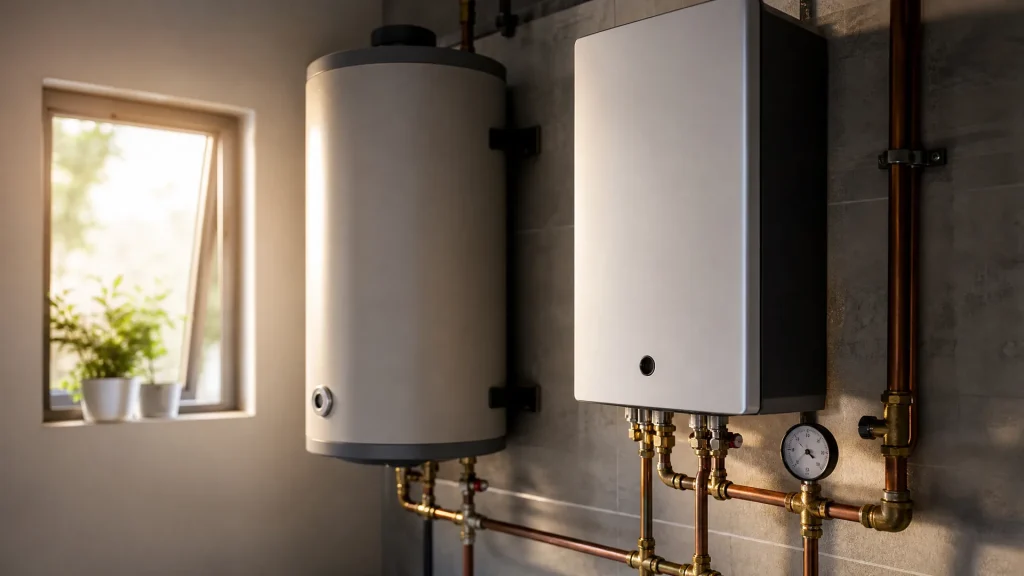
Tankless units have a clear advantage on physical footprint. A wall-mounted gas or electric instantaneous heater takes up a fraction of the space of a 150-litre ceiling geyser. This makes tankless a practical choice for smaller urban apartments, backyarder units, and sectional title properties where ceiling void space is limited or shared. Body corporates in sectional title developments often have specific rules about geyser placement and insurance requirements, check these before specifying a system. For multi-unit buildings, plumbing maintenance schedules for apartment buildings can help property managers plan servicing across multiple units efficiently.
On energy efficiency, tankless units avoid standby heat loss, the energy consumed keeping a tank at 60°C around the clock. In a grid-stable environment, this is a genuine saving. In South Africa’s current load-shedding environment, the picture is more complicated. When power is cut, a tankless electric unit saves nothing because it produces nothing. A storage geyser on a timer or solar panel, by contrast, can pre-heat during off-peak periods and retain that heat through an outage.
For homeowners focused on water-saving plumbing fixtures that complement an energy-efficient system, low-flow showerheads and aerated taps reduce hot water demand for either system, and are worth specifying regardless of which heater you choose.
If you are planning a bathroom update alongside a heater change, a bathroom renovation plumbing checklist helps you scope the full project and avoid costly rework.
The tank vs tankless decision comes down to your specific property, your local water pressure, your load-shedding reality, and your long-term budget, not a generic feature list. For most South African homes with standard municipal supply and regular power interruptions, a correctly specified and maintained storage geyser is the more resilient and cost-predictable choice. Tankless gas units make sense in specific situations: consistently good pressure, reliable gas supply, limited space, and a homeowner prepared to invest in annual maintenance.
Get the right answer for your property. Contact the team at plumber-plumbers.co.za for a site assessment and installation quote, we’ll assess your water pressure, electrical setup, and hot water demand before recommending a system, not after.