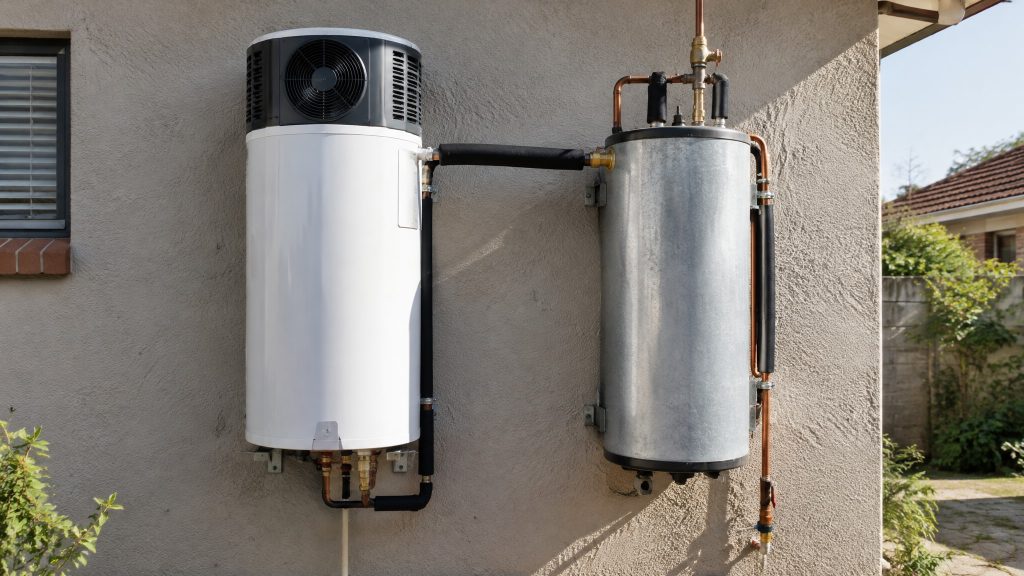
Hot water is one of the biggest electricity jobs in a South African home, and it runs every day of the year. If your geyser element heats the water, your meter records every minute of it. This article explains how heat pumps save electricity on water heating, how to estimate the saving on your own bill, and where the limits sit.
Why Electric Geysers Push Up Your Electricity Bill
Electricity tariffs in South Africa have climbed for years, and the geyser sits right in the path of that increase. An element geyser turns every kilowatt-hour it draws into heat, one for one, so its running cost follows the tariff directly.
That sounds efficient, and in a narrow sense it is. Nothing is wasted at the element. But there is also no multiplier: a 3kW element gives you 3kW of heat, and never more.
Load shedding adds a second pressure. The geyser is a large load that comes back on the moment power returns, and it heats water you may already have paid to heat once. Households that run backup supplies feel this even more, because a big element draws hard on an inverter or battery.
Reducing geyser electricity usage therefore comes down to one question: can the same hot water be made with fewer kilowatt-hours? A heat pump says yes, because it moves heat that already exists instead of manufacturing it from scratch.
How a Heat Pump Extracts Heat from Air
The idea feels odd at first. Cool air seems to have nothing to give, yet it still holds a good deal of usable heat, and a heat pump collects it.
Moving Heat Instead of Making It
Air does not need to feel warm to carry heat. A refrigerant can boil at a temperature far below the outside air, so the air is always warmer than the refrigerant. Heat flows from the air into the refrigerant, and that is the free part of the process.
The electricity goes into lifting that heat to a useful temperature. You pay for the lifting, not for the heat itself, which is why a heat pump can deliver more heat than the electricity it draws.
What Happens Inside the Unit
Four steps repeat in a loop:
- A fan draws outside air across the evaporator coil.
- The refrigerant inside evaporates at a low temperature, absorbing heat from that air.
- An electric compressor squeezes the refrigerant vapour, which raises its temperature sharply.
- The hot refrigerant passes through the condenser, gives its heat to the water, and turns back into liquid to start again.
Recovery is slower than with an element. A heat pump works at a lower power level, so it runs in longer, gentler cycles rather than one short, hard burst. Plan for that when you think about how much hot water you use in the evening.
The unit also needs somewhere to breathe. It must have open airflow around it and enough space for the fan to draw air in and push it out, so a cramped, walled-in corner is a poor site. A heat pump is not a good fit for a home with no outdoor spot that gives the unit clear airflow.
Heat Pump COP Explained
Every efficiency claim for a heat pump comes back to one number. If you understand it, you can read any spec sheet with confidence.
Coefficient of Performance Explained in Plain Terms
COP, short for coefficient of performance, is heat delivered divided by electricity consumed. An element has a COP of 1, because one unit of electricity gives one unit of heat, and it can never return more than it draws. A heat pump with a COP of 3 delivers three units of heat for each unit of electricity, because two of those three units were moved from the air rather than made. (Wikipedia has the formal definition.)
COP is not fixed, though. It falls as the air gets colder, because there is less heat to collect and the compressor has to work harder. It also falls when you ask for hotter water, because the lift is bigger.
So a single COP rating reflects set test conditions, not a promise about your bill. Your own result will sit above or below it depending on your climate, your thermostat setting and the time of year.
Monthly Electricity Savings on Water Heating: Heat Pump versus Electric Geyser
You do not need a headline rand figure from anyone. You can work out your own saving from three things already on hand: your element rating, your heating hours and your tariff.
Heat Pump Electricity Savings in South Africa: How to Estimate Yours
Start with the geyser. Multiply the element rating in kilowatts by the hours it heats each day, then by about 30 days. A 3kW element that heats for four hours a day uses roughly 360kWh a month.
Next, divide that figure by the heat pump’s COP, since the same hot water needs fewer kilowatt-hours in proportion. At a COP of 3, the same 360kWh of heat takes about 120kWh of electricity.
Then price both figures at your own tariff. The difference between them is your monthly saving, and because both figures use the same tariff, any rise in the tariff makes the gap in rand wider.
Check your municipal bill or prepaid purchases for the rate you actually pay. If you cannot tell how many hours the element runs, a plug-in energy meter or a smart meter reading over a week will tell you.
What Moves the Monthly Result
Four things shift the answer more than anything else:
- Tariff structure. If your rate changes by time of day or by consumption block, the kilowatt-hours you remove may be worth more or less than the average rate suggests.
- Hot-water volume. A household that uses lots of hot water has more to save, because there is more heating to be done by the cheaper method.
- Incoming water temperature. Water arrives colder in winter, so the heater has more work to do and the cold air gives the heat pump a lower COP. Expect the saving to be smaller in June than in January.
- The install site. A unit with good airflow in a sheltered, open spot performs closer to its rating than one squeezed against a wall.
The estimate is a guide, not a guarantee. It will not account for a leaking tap, a failing thermostat or a geyser that has lost its insulation, so fix those first.
When a Heat Pump Pays for Itself
The honest trade-off is the upfront cost. A heat pump costs more to buy and install than an element geyser, and that gap is what the saving has to earn back.
Working Out a Simple Payback Period
Simple payback is the installed cost divided by your annual saving. Take the monthly saving from the method above, multiply by twelve, and divide the installed cost by that figure. The answer is the number of years the unit takes to cover its own price.
For the cost inputs, use the ITS heat pump price list, and add your installer’s quote for fitting and any plumbing changes. Prices change, so treat any number as a figure to confirm before you decide.
Timing changes the answer. If your geyser is already near the end of its life, you will have to spend money on a replacement anyway, so the extra cost of the heat pump is smaller and payback is shorter. The guide to replacing an electric geyser with a domestic heat pump walks through that case.
Service life depends more on maintenance than on a fixed number of years. A unit with clear airflow, a clean evaporator and regular checks will last longer than one that is left alone, and a heat pump that is badly installed or neglected will not earn back its price.
If you plan to move within a year or two, the payback may not arrive while you own the house.
Load Shedding Hot Water Solution: Resilience and Its Limits
A heat pump helps with load shedding, but it does not make it go away. It is worth being clear about what it does and does not do.
What a Heat Pump Can and Cannot Do in an Outage
A heat pump still needs power. The compressor and fan cannot run without electricity, so during a block it is as dead as an element.
What it does offer is a lower draw. It uses less electricity for the same hot water, which eases pressure on an inverter or battery if you run one, and it lowers your bill in normal hours. For a household with a backup supply, that can mean the difference between a system that copes and one that trips.
If you are choosing a model with outages in mind, see our notes on heat pump options for load shedding.
Keeping Hot Water in the Tank Through a Load Shedding Block
Your real buffer is the water already stored. A full, well-insulated tank still supplies hot water that evening while the heat pump waits for power. Tank volume sets how much you can draw during an outage, and unit capacity sets how fast the tank recovers once power returns.
Can you run short? Yes. If the family uses more hot water than the tank holds and the unit recovers slowly, the last person in the queue gets lukewarm water. A bigger tank buys you a longer outage, and a bigger unit buys you a faster recovery.
Showering earlier in the day, before a scheduled block, helps. Heating can also be timed so the tank is full as a block begins, using the Wi-Fi control on ITS models.
Energy Efficient Water Heating Options and Where the ITS Range Fits
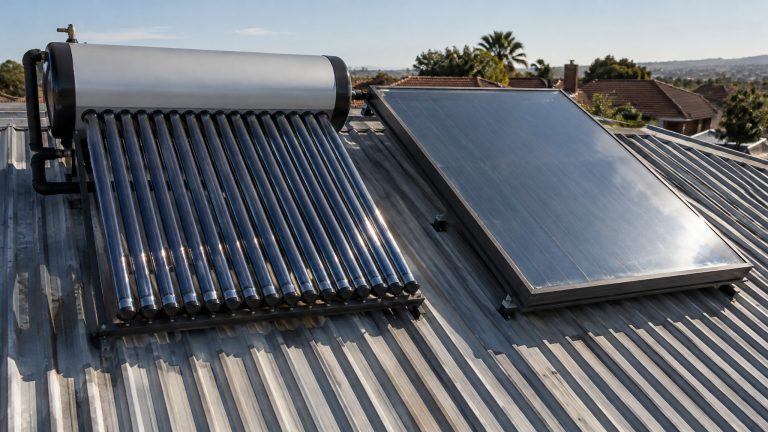
Heat pumps are one set of energy efficient water heating options, and solar geysers are the other common choice. A solar geyser uses sunlight rather than air as its free source, while a heat pump works at night and on overcast days. The comparison of heat pump versus solar geyser covers what each does best.
Every ITS heat pump in the range is listed with Wi-Fi control, and the range runs from domestic units up to a 22kW three-phase commercial model, so one family covers household and light-commercial scale.
For a typical house, two models matter most. The ITS-3.6HD 3.6kW domestic heat pump is suitable for geysers up to approximately 200 litres and is designed to reduce reliance on a conventional element. If your hot-water demand is bigger, the ITS-7.6HD for larger domestic systems is the step up. Between them sit other domestic ratings, plus high-temperature domestic models for larger hot-water needs, and commercial models for bigger loads.
Start with the sizing. Read the guide to heat pump sizing for a four-bedroom home to match capacity to the number of people in your house, then open the ITS-3.6HD and ITS-7.6HD pages and check the ITS heat pump price list to compare your options.
Frequently asked questions
What are the downsides of a heat pump water heater?
The main one is the higher upfront cost compared with an element geyser. It also recovers more slowly, needs open airflow and some outdoor space, and loses efficiency in colder air and at hotter water settings. It still needs electricity, so it does not work during a load shedding block.
Can I run out of hot water with a heat pump?
Yes, if your use outpaces the tank volume and the unit’s recovery rate. A heat pump heats more slowly than an element, so back-to-back showers can drain the tank before it catches up. A larger tank or a higher-capacity unit solves this, which is why sizing to your household matters.
How many hours a day should my heat pump run?
There is no single figure. It runs in longer, lower-power cycles than an element, and the hours depend on your hot-water volume, the water and air temperature, and your thermostat setting. It will usually run longer in winter than in summer.
How long does a heat pump last?
No fixed number applies to every unit, because service life depends on maintenance. Keep the airflow clear, keep the evaporator clean and have the unit checked regularly, and it will last longer than one that is neglected.