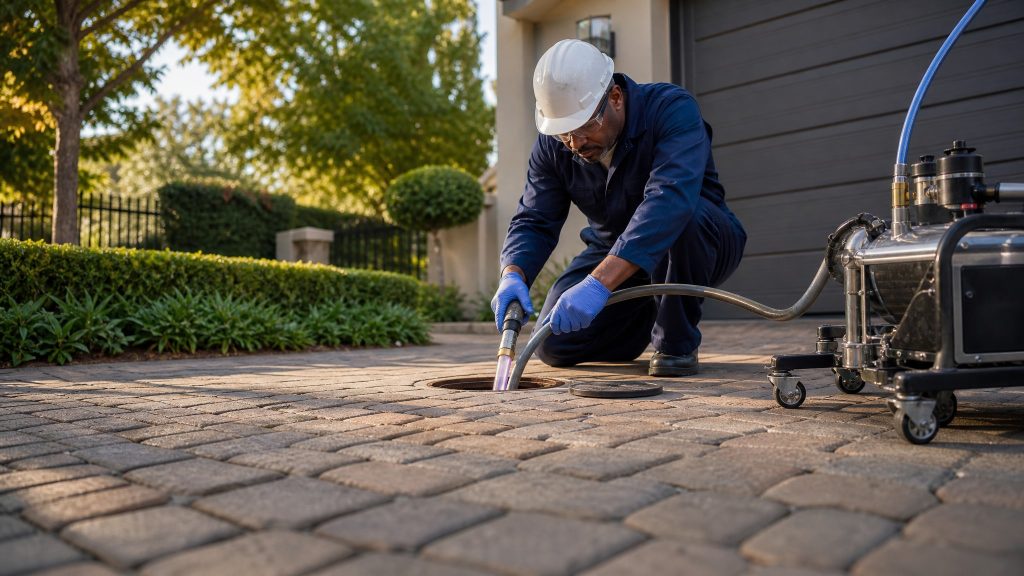
When a sewer line fails, the first worry usually isn’t the pipe. It’s the paved driveway, the garden, or the foundation you’ll have to tear up to reach it. Traditional excavation still makes sense for a total system failure, but trenchless pipe repair in South Africa gives you another route: one that restores flow without wrecking the surface above it. Understanding the pipe relining cost South Africa market means looking past simple metre rates and weighing the total project value against what digging actually costs you once reinstatement is factored in.
This guide covers cured in place pipe repair specifically, as a rehabilitation method. It doesn’t cover full pipe replacement, which uses different equipment, different labor, and different civil engineering entirely. If your pipes have collapsed, or they’re too far gone to host a liner, you need excavation, not the no-dig methods discussed here.
Average Pipe Relining Cost in South Africa for 2026
Pricing for trenchless technology swings a lot, because every blocked or damaged drain has its own access challenges and material needs. Contractors typically calculate the sewer pipe relining price from linear meterage plus a fixed mobilization fee. That’s why smaller jobs often carry a higher per-metre rate than large commercial ones: the baseline setup cost has to be covered either way. Expect your quote to reflect the actual resin volumes and liner dimensions your pipe needs, not some generic industry figure.
The financial case for a no dig pipe repair cost estimate becomes clear once you look past the day the pipe gets fixed. Excavation budgets have to include paving restoration, landscaping repair, and sometimes structural remediation. Relining leaves the surface untouched and skips these costs entirely. For residential properties where surface finishes are expensive to replace, that’s often what tips trenchless methods into being the cheaper option overall, even when the raw rehabilitation price looks similar to digging.
Market rates move with resin chemistry and where the liner is manufactured, so it’s worth getting several detailed quotes to see where current pricing actually sits. A reputable provider breaks the quote into inspection, cleaning, lining, and verification phases rather than handing you one lump sum that hides where the money goes. That breakdown is how you check that the no dig pipe repair cost you’re being asked to pay actually matches the scope of the job.
Key Factors Influencing Sewer Pipe Relining Price
Pipe diameter drives cost more than anything else, because larger pipes need far more resin-saturated liner material and longer curing times. A 100mm domestic sewer line uses a fraction of the material a 250mm commercial main needs, and that gap shows up directly in the cured in place pipe repair quote you get. Length compounds it: longer liners use resin at a steady rate, and they also need specialized inversion or pull-in equipment, which adds to the mobilization side of the price.
How badly the pipe is damaged decides both prep time and liner thickness, and both feed into the final sewer pipe relining price. A pipe with root intrusion or partial collapse needs heavy jetting and mechanical cutting before any liner goes in, and that adds labor hours before the relining even starts. The liner itself may need extra layers or structural resins to bridge gaps and carry load, and that pushes material costs well past what a simple crack seal would need.
Bend radius and access points create their own cost pressure, separate from pipe size. Sharp bends rule out some liner types altogether, and sometimes force the job into several shorter sections joined at access pits instead of one continuous run. Where access is limited, technicians have to work through existing manholes or rodding eyes, which slows installation and sometimes calls for custom equipment.
A CCTV inspection and thorough cleaning before relining aren’t optional; they’re what makes the liner adhere and perform the way it’s designed to. Skip them and you risk the liner failing outright, which is why any credible cured in place pipe repair quote lists diagnostic imaging and prep work as its own line items. That upfront work confirms the pipe can actually take a liner before anyone cuts and saturates expensive material.
You can’t budget accurately for this work without knowing how these variables play off each other. A long, straight, accessible pipe will always cost less per metre than a short, bent, obstructed one. That’s why a site-specific assessment matters more than any general price comparison.
Pipe Relining vs Replacement: Comparing Total Project Value
When Relining Delivers Superior Value
Trenchless rehabilitation wins when the cost of putting the surface back would outstrip what you’d save by digging. Your paved driveway, established garden, or tiled patio is sunk capital. Excavation destroys it; relining preserves it. That’s what makes the no dig pipe repair cost lower in real terms, even when the base prices look similar. It matters most in older residential areas, where decades of landscaping and hardscaping sit on top of aging pipework.
Finishing faster means less disruption and lower indirect costs for you as the property owner. Most relining jobs wrap up in a day or two. Equivalent excavation work can stretch across weeks once you count digging, laying pipe, backfilling, compaction testing, and putting the surface back. For commercial properties, that time difference can mean thousands in avoided business disruption, closed parking, or tenant complaints, costs that never show up on a contractor’s invoice but hit your bottom line anyway.
Relining builds a jointless new pipe inside the old one, which closes off the entry points where roots and groundwater get into segmented systems. That structural improvement extends the pipe’s service life and cuts how often you’ll need maintenance later, spreading your pipe relining cost South Africa investment across decades of use. The smoother interior also improves flow compared to a corroded original pipe, which can solve a capacity problem without needing to upsize at all.
When Full Replacement Remains Necessary
Cured in place pipe repair can’t fix a pipe that’s lost its basic shape or structural continuity. Collapsed sections, serious misalignment from ground movement, pipes crushed by external loads: none of that can be bridged or reinforced by a liner, no matter the resin. In those cases you need full excavation and replacement, because there’s no host structure left to hold a liner up.
Relining also can’t solve an upsizing problem. If your existing pipes are too small for current or projected flow, that’s outside what the technique does; relining can only match or slightly reduce internal diameter, never increase it. Planning authorities sometimes require larger diameters during renovations or subdivisions, and that alone can force a replacement even when the old pipe is structurally fine.
Material incompatibility is another hard limit. Some legacy pipe materials simply won’t bond with modern epoxy or polyester resins, and that mismatch causes adhesion failures that undermine the whole repair. Asbestos cement pipes, some early plastics, and clay with badly degraded, crumbling joints often need to come out rather than get relined, depending on condition and what local regulations require.
Making the Right Choice for Your Property
Choosing between pipe relining vs replacement comes down to technical feasibility first, cost second. A CCTV inspection tells you whether your pipe can even take a liner. Only once you know that does a price comparison mean anything. Paying for relining on a pipe that can’t support it wastes money just as surely as excavating when trenchless would have worked, which is why a proper assessment has to come first.
Look at lifecycle cost, not just the installation price, when you weigh your options. A cheap excavation job that needs repaving every five years because of poor backfill compaction ends up costing more than a relining job done properly, one that keeps both the pipe and the surface above it intact. An expensive relining attempt on a marginal pipe that fails within a decade is worse value than simply doing the replacement right the first time.
What your property allows decides which approach actually pays off. Deep pipes under structures usually favor relining; shallow pipes in open ground often favor replacement; most situations sit somewhere in between and need a case-by-case look at the factors above. Working with specialists who offer both services means the recommendation serves you, not whichever job pays the contractor more.