Plumbers Near Me logo
Local plumbing help in Cape Town

Zanberg Plumber

Fast plumbing support for homes, rentals, businesses and property managers in Zanberg, Cape Town.

Need a reliable Zanberg plumber? We help with emergency leaks, blocked drains, geyser faults, toilet problems, tap repairs, pressure issues and general maintenance, with clear advice before the job starts.

  • Bigger area: Cape Town
  • Province: Western Cape
  • WhatsApp: 072 139 8945

Zanberg booking tips

  • Send a photo of the leak, tap, toilet, drain, geyser or pipe before we arrive.
  • Tell us whether the fault is urgent, spreading, blocked, leaking or causing no hot water.
  • Share access notes, parking details and the exact suburb or landmark near Zanberg.
Zanberg plumber working in Cape Town
Practical local plumbing advice

Plumbing help in Zanberg

A good Zanberg plumber should help you understand what is happening before the job becomes confusing or expensive. A wet cupboard, slow drain, noisy geyser, dripping valve or toilet that keeps filling can all point to a bigger fault, but each one needs a different repair path.

Our work in Zanberg covers fault finding, isolation, repairs, replacement parts and maintenance for homes, rentals and business properties. Where the symptom points to a hidden leak, we check whether water leak detection is needed before unnecessary breaking starts.

We also look at the full installation around the fault. A tap repair may involve an angle valve, a geyser leak may involve pressure control, and a blocked drain may need proper clearing rather than another temporary push-through. That is how a repair becomes useful instead of just looking fixed for a few days.

Local plumbing services in Zanberg

Zanberg properties can have a mix of older pipework, newer fittings, hidden wall chases, outside drain runs, roof-space geysers and busy bathrooms or kitchens. Our service approach is to identify the cause, explain the repair and leave the plumbing safer to use.

Emergency plumbing response

When water is running, a toilet is overflowing or a geyser fault is spreading into the ceiling, a Zanberg customer needs a practical response, not guesswork. Our emergency plumbing response helps isolate the fault, reduce damage and plan the repair safely.

Blocked drain clearing

Blocked drains in Zanberg can start as slow flow at a basin, bath, shower, kitchen sink or outside gully. Our blocked drain clearing service removes the obstruction, checks the likely cause and advises when a camera inspection or further drain repair is sensible.

Leak detection and damp tracing

Hidden leaks can sit behind tiles, cupboards, ceilings and outside walls before a homeowner notices serious staining. Careful leak detection and damp tracing helps trace the source before breaking open more than is needed.

Burst pipe repairs

A burst pipe needs quick control because the water can damage floors, ceilings, timber, cupboards and electrical areas. Our burst pipe repairs cover damaged copper, PVC, PEX or supply pipe sections where the fault is accessible.

Geyser repairs

Hot water problems in Zanberg may come from a leaking valve, failed element, thermostat fault, loose connection, corroded flange or pressure issue. Our geyser repairs start with a proper check before replacement parts are fitted.

Geyser installation support

When a geyser needs replacing, the tank is only one part of the job. Proper geyser installation support checks valves, tray, overflow, supports, pipework and electrical safety so the installation is safer and easier to maintain.

Toilet repairs

Toilets can waste a surprising amount of water when inlet valves, flush valves, pan connectors, seals or isolation valves fail. Our toilet repairs focus on the actual cause so the toilet works properly without constant filling or leaking.

Bathroom plumbing repairs

Bathrooms often hide leaks around basins, baths, showers, mixers and waste fittings. Our bathroom plumbing repairs protect tiles, cupboards and floors from slow water damage while keeping the repair neat and practical.

Kitchen plumbing repairs

Kitchen plumbing faults can come from mixer taps, sink traps, flexible connectors, dishwasher points and blocked waste lines. Our kitchen plumbing repairs keep the sink area usable and make sure the fault is not simply pushed further down the line.

Tap and mixer repairs

Dripping taps, stiff handles, loose mixers and worn cartridges are small faults that become irritating and wasteful. Our tap and mixer repairs are matched to the condition of the fitting, not just the cheapest quick fix.

Low water pressure checks

Weak flow can be caused by blocked strainers, old valves, pipe restrictions, municipal supply issues, PRV faults or geyser-side problems. Practical low water pressure checks help confirm the real cause before replacement parts are recommended.

Drain camera inspections

When drains block repeatedly, a camera inspection can show roots, collapsed pipe sections, scale, poor fall or foreign objects. Our drain camera inspections help avoid repeated unblocking without knowing why the line keeps failing.

Need a Zanberg plumber today?

Call or WhatsApp with your suburb, photos and a short description of the problem. We can guide you on whether the issue needs urgent isolation, drain clearing, geyser repair, toilet repair, leak tracing or general plumbing support.

Call 067 657 6109   |   WhatsApp 072 139 8945

How we approach plumbing faults in Zanberg

First we identify the symptom

We ask whether the problem is clean water, dirty water, hot water, low pressure, a blocked waste line or a visible fitting fault. This helps separate burst pipe repair from a drain blockage, geyser issue or fixture repair.

Then we check the surrounding installation

A single leak can be caused by pressure, age, corrosion, poor support, old sealant, failed washers, loose fittings or a blocked line. When the surrounding installation is ignored, the same problem can return under a different name.

Finally we repair with future access in mind

Good plumbing should be serviceable. Valves should be reachable, drains should have access where possible, geyser safety components should be visible, and pipe repairs should not be left under strain. This is especially important for rental units and managed properties in Zanberg.

Frequently asked questions about plumbers in Zanberg

Do you help with emergency plumbing in Zanberg?

Yes. We assist with urgent leaks, burst pipes, blocked drains, overflowing toilets, geyser faults and water supply problems in Zanberg. If water is actively running, isolate the nearest valve and call as soon as possible.

Can I send photos before booking a plumber?

Yes. Photos or a short WhatsApp video can help us understand whether the issue is a valve, pipe, trap, toilet, drain, geyser or tap problem. This often helps the team plan the right tools and parts before arriving.

Do you repair geysers in Zanberg?

Yes. We help with geyser leaks, failed elements, thermostats, valves, pressure problems, tray overflow faults and no-hot-water complaints. We also advise when repair is sensible and when replacement is safer.

What should I do if a drain is blocked?

Stop adding water to the affected fixture, avoid harsh chemicals and check whether other drains are also slow. If more than one point is affected, the blockage may be deeper in the line and should be cleared properly.

Can you find hidden water leaks?

Yes. We help trace hidden leaks from walls, ceilings, floors, outside supply lines, geyser areas and concealed pipes. The aim is to find the source before unnecessary breaking or damage is caused.

Do you repair toilets that keep running?

Yes. A toilet that keeps filling usually needs the inlet valve, flush valve, overflow setting, seal or handle mechanism checked. It can waste water continuously if it is left too long.

Can you help with kitchen and bathroom tap problems?

Yes. We repair and replace basin taps, kitchen mixers, stop taps, angle valves, flexible connectors and related fittings where the fault is causing dripping, weak flow, leaking or loose operation.

Do you work on outside water and drain lines?

Yes. We assist with outside leaks, underground pipe sections, inspection chambers, waste lines, gully problems and visible water surfacing on paving, soil or garden areas.

How do I know if the issue is a burst pipe or a drain problem?

Clean water under pressure usually points to a supply pipe, while dirty water, bad smells or backup from a drain point usually points to waste or sewer drainage. Photos and symptoms help us guide the first step.

Do you offer general plumbing maintenance?

Yes. We help Zanberg homes, rentals and businesses with preventative maintenance, valve checks, tap repairs, waste fittings, geyser checks, pressure issues and small plumbing faults before they become expensive emergencies.

Work we have done in Zanberg

These examples show common plumbing problems clients can recognise around geysers, taps, drains, toilets, pipework and outside water lines. The visible image metadata is not shown on the page, but the file names, titles, alt tags and schema remain in the background.

Underground drain pipe replacement by a Zanberg plumber

Underground drain pipe replacement in Zanberg

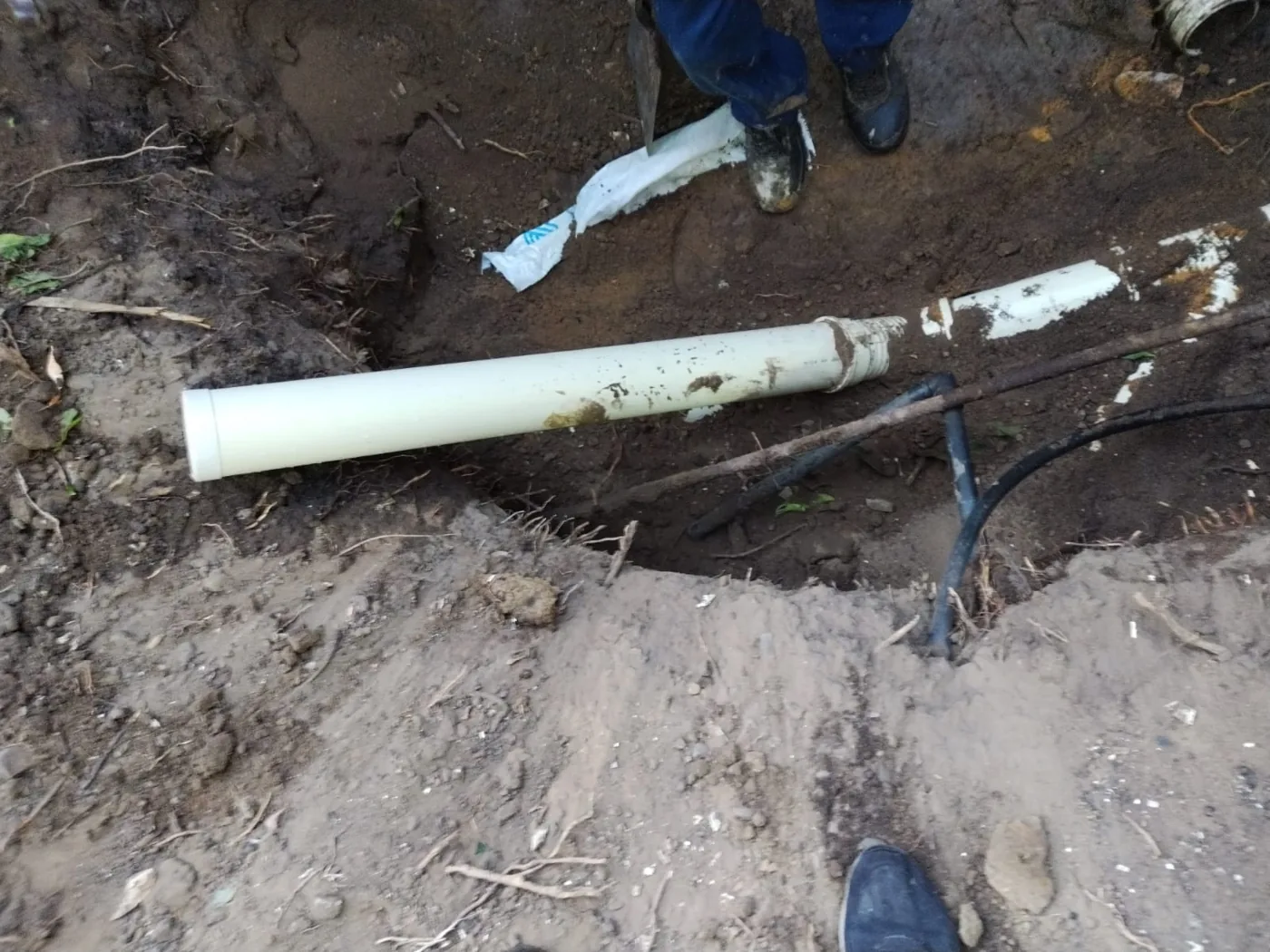
An excavated drain line with new PVC pipe being set into the ground. In Zanberg, this kind of work matters because a plumbing fault seldom stays in one small place for long. Water follows the easiest route, and that route may be through a cupboard, below paving, into a ceiling, behind a tiled wall or along timber in the roof space. A careful Zanberg plumber looks at the visible symptom, checks what the pipe or fitting is connected to, and then decides whether the repair is a simple replacement or part of a bigger drain cleaners near me issue.

The important part is not only replacing the piece that can be seen in the photo. A proper repair also checks the surrounding fittings, the pipe support, the fall of the line, the condition of old joints and whether the same fault is likely to return. If a pipe is under strain, if an old fitting has been overtightened, or if a valve is fitted where it cannot be serviced later, the job may look finished but still be weak. That is why we prefer practical fault finding before cutting, joining or sealing anything.

How to look out for this problem

Clients should watch for early warnings such as damp smells, water marks, slow drainage, bubbling paint, loose tiles, rust around metal fittings, a toilet that keeps filling, weak hot water, water pooling outside or a geyser tray that starts discharging. One small sign is often the first clue that the plumbing system is under pressure, blocked, corroded or leaking somewhere nearby. Taking a clear photo and noting when the problem happens helps the plumber understand the fault before arriving.

Another helpful step is to check whether the problem is isolated or spreading. If only one tap, toilet, basin, shower or outside point is affected, the fault may be local to that fixture. If several points are affected at once, the issue may sit deeper in the system. Avoid repeated chemical drain cleaners, forcing valves, or wrapping leaks with tape as a permanent fix. These temporary measures can hide the problem until more damage appears.

For this type of underground drain pipe replacement in zanberg, the safest approach is to stop unnecessary water use, isolate the closest valve if water is escaping, keep the area clear, and call for help before the surrounding structure is damaged. Good repair work should leave the installation cleaner, easier to inspect and safer to maintain than it was before the fault appeared.
Two-way vent pipe installation by a Zanberg plumber

Two-way vent pipe installation in Zanberg

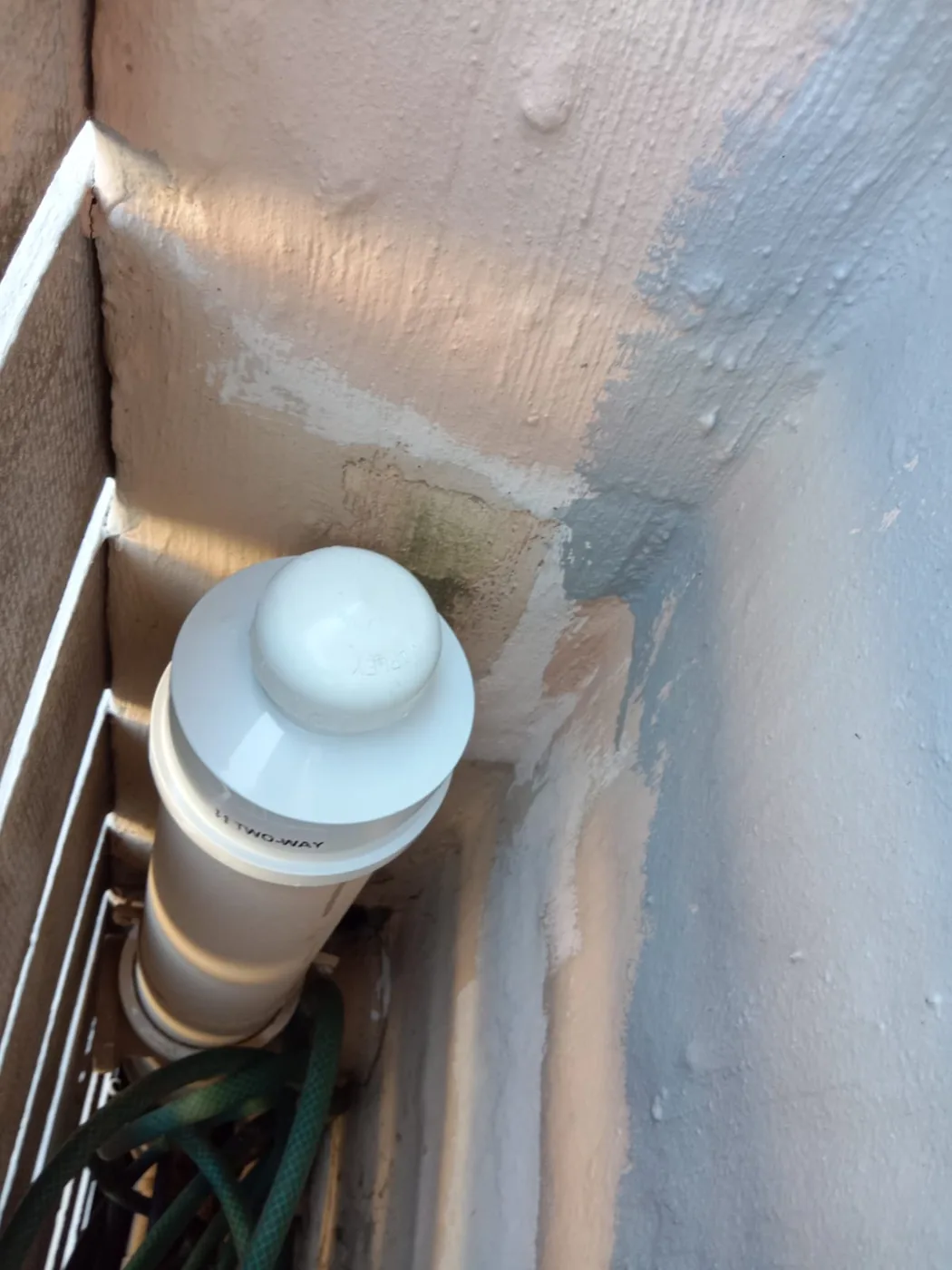
A vertical two-way vent pipe installed outside a wall after drainage work. In Zanberg, this kind of work matters because a plumbing fault seldom stays in one small place for long. Water follows the easiest route, and that route may be through a cupboard, below paving, into a ceiling, behind a tiled wall or along timber in the roof space. A careful Zanberg plumber looks at the visible symptom, checks what the pipe or fitting is connected to, and then decides whether the repair is a simple replacement or part of a bigger new plumbing installations issue.

The important part is not only replacing the piece that can be seen in the photo. A proper repair also checks the surrounding fittings, the pipe support, the fall of the line, the condition of old joints and whether the same fault is likely to return. If a pipe is under strain, if an old fitting has been overtightened, or if a valve is fitted where it cannot be serviced later, the job may look finished but still be weak. That is why we prefer practical fault finding before cutting, joining or sealing anything.

How to look out for this problem

Clients should watch for early warnings such as damp smells, water marks, slow drainage, bubbling paint, loose tiles, rust around metal fittings, a toilet that keeps filling, weak hot water, water pooling outside or a geyser tray that starts discharging. One small sign is often the first clue that the plumbing system is under pressure, blocked, corroded or leaking somewhere nearby. Taking a clear photo and noting when the problem happens helps the plumber understand the fault before arriving.

Another helpful step is to check whether the problem is isolated or spreading. If only one tap, toilet, basin, shower or outside point is affected, the fault may be local to that fixture. If several points are affected at once, the issue may sit deeper in the system. Avoid repeated chemical drain cleaners, forcing valves, or wrapping leaks with tape as a permanent fix. These temporary measures can hide the problem until more damage appears.

For this type of two-way vent pipe installation in zanberg, the safest approach is to stop unnecessary water use, isolate the closest valve if water is escaping, keep the area clear, and call for help before the surrounding structure is damaged. Good repair work should leave the installation cleaner, easier to inspect and safer to maintain than it was before the fault appeared.
Geyser pressure control valve replacement by a Zanberg plumber

Geyser pressure control valve replacement in Zanberg

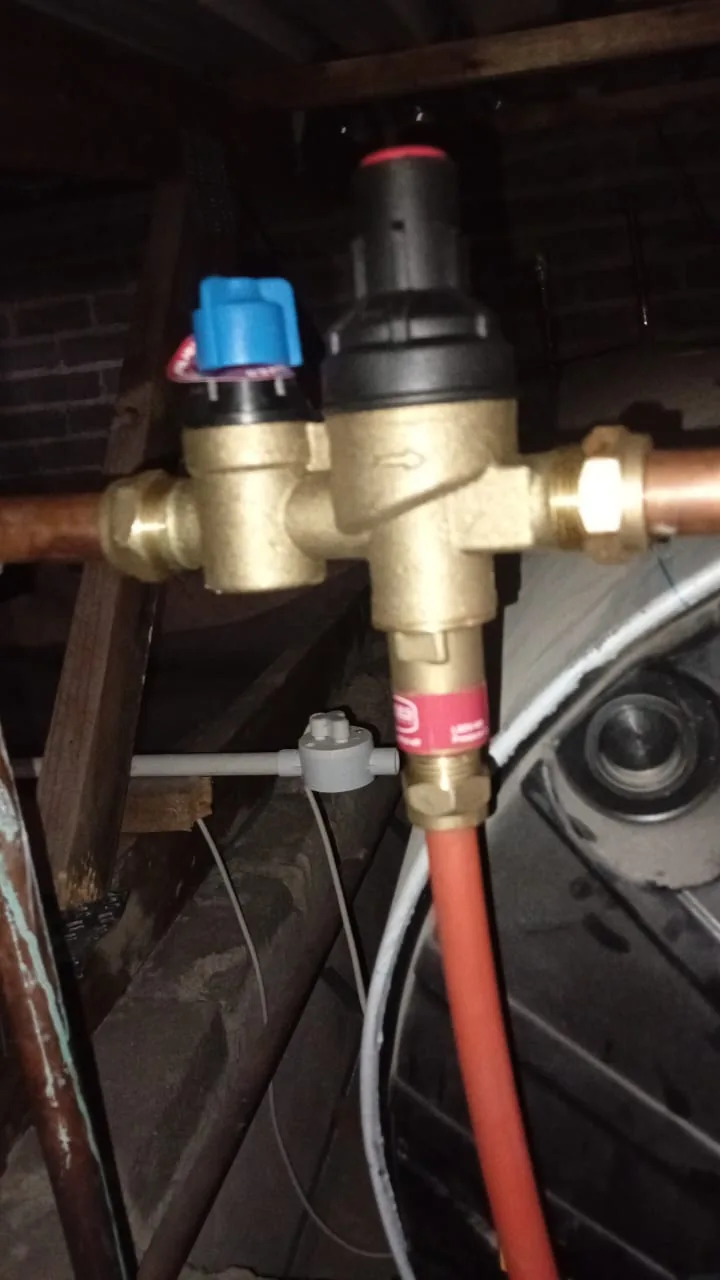
A pressure control valve assembly on a geyser line inside a roof space. In Zanberg, this kind of work matters because a plumbing fault seldom stays in one small place for long. Water follows the easiest route, and that route may be through a cupboard, below paving, into a ceiling, behind a tiled wall or along timber in the roof space. A careful Zanberg plumber looks at the visible symptom, checks what the pipe or fitting is connected to, and then decides whether the repair is a simple replacement or part of a bigger geyser repairs near me issue.

The important part is not only replacing the piece that can be seen in the photo. A proper repair also checks the surrounding fittings, the pipe support, the fall of the line, the condition of old joints and whether the same fault is likely to return. If a pipe is under strain, if an old fitting has been overtightened, or if a valve is fitted where it cannot be serviced later, the job may look finished but still be weak. That is why we prefer practical fault finding before cutting, joining or sealing anything.

How to look out for this problem

Clients should watch for early warnings such as damp smells, water marks, slow drainage, bubbling paint, loose tiles, rust around metal fittings, a toilet that keeps filling, weak hot water, water pooling outside or a geyser tray that starts discharging. One small sign is often the first clue that the plumbing system is under pressure, blocked, corroded or leaking somewhere nearby. Taking a clear photo and noting when the problem happens helps the plumber understand the fault before arriving.

Another helpful step is to check whether the problem is isolated or spreading. If only one tap, toilet, basin, shower or outside point is affected, the fault may be local to that fixture. If several points are affected at once, the issue may sit deeper in the system. Avoid repeated chemical drain cleaners, forcing valves, or wrapping leaks with tape as a permanent fix. These temporary measures can hide the problem until more damage appears.

For this type of geyser pressure control valve replacement in zanberg, the safest approach is to stop unnecessary water use, isolate the closest valve if water is escaping, keep the area clear, and call for help before the surrounding structure is damaged. Good repair work should leave the installation cleaner, easier to inspect and safer to maintain than it was before the fault appeared.
Kitchen sink trap replacement by a Zanberg plumber

Kitchen sink trap replacement in Zanberg

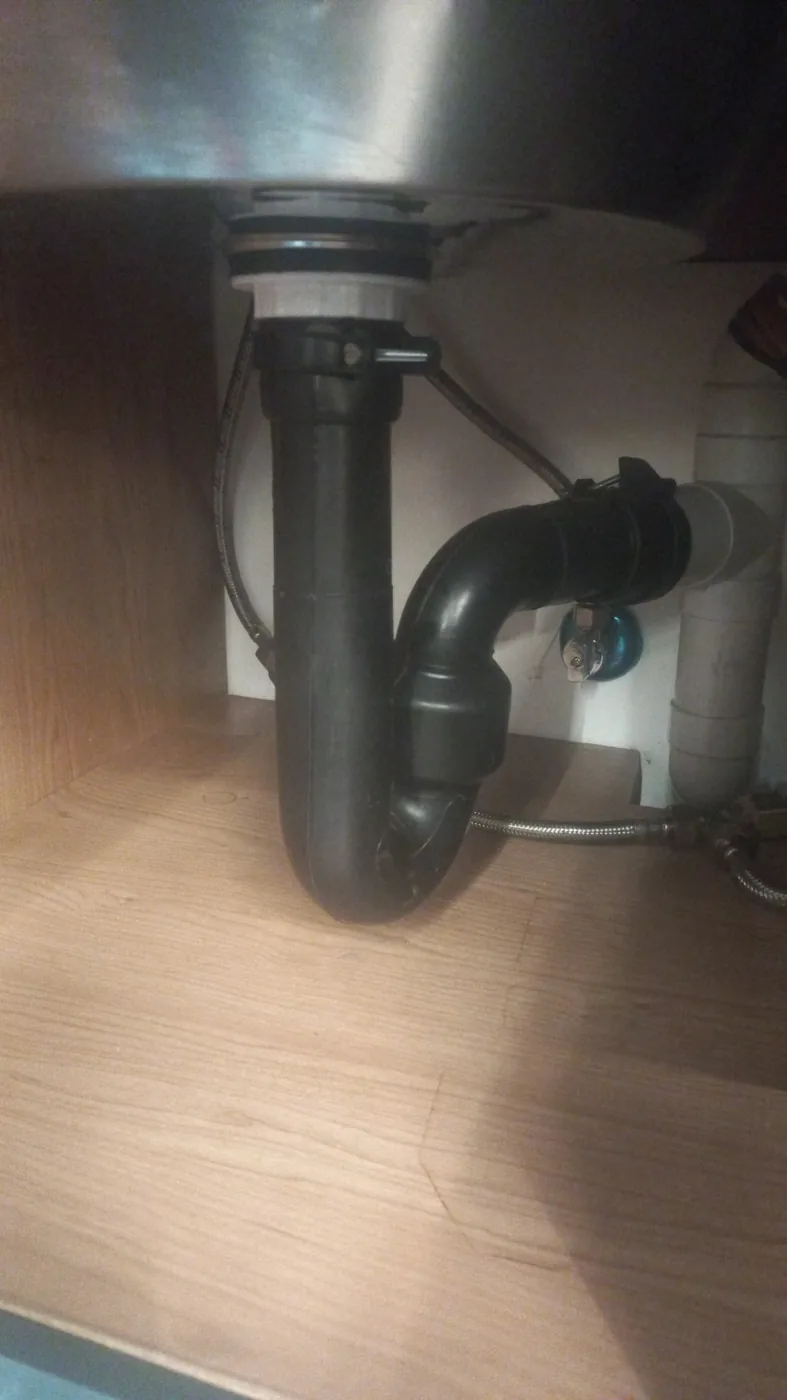
A neat black sink trap and waste line installed under a kitchen sink. In Zanberg, this kind of work matters because a plumbing fault seldom stays in one small place for long. Water follows the easiest route, and that route may be through a cupboard, below paving, into a ceiling, behind a tiled wall or along timber in the roof space. A careful Zanberg plumber looks at the visible symptom, checks what the pipe or fitting is connected to, and then decides whether the repair is a simple replacement or part of a bigger maintenance plumbing issue.

The important part is not only replacing the piece that can be seen in the photo. A proper repair also checks the surrounding fittings, the pipe support, the fall of the line, the condition of old joints and whether the same fault is likely to return. If a pipe is under strain, if an old fitting has been overtightened, or if a valve is fitted where it cannot be serviced later, the job may look finished but still be weak. That is why we prefer practical fault finding before cutting, joining or sealing anything.

How to look out for this problem

Clients should watch for early warnings such as damp smells, water marks, slow drainage, bubbling paint, loose tiles, rust around metal fittings, a toilet that keeps filling, weak hot water, water pooling outside or a geyser tray that starts discharging. One small sign is often the first clue that the plumbing system is under pressure, blocked, corroded or leaking somewhere nearby. Taking a clear photo and noting when the problem happens helps the plumber understand the fault before arriving.

Another helpful step is to check whether the problem is isolated or spreading. If only one tap, toilet, basin, shower or outside point is affected, the fault may be local to that fixture. If several points are affected at once, the issue may sit deeper in the system. Avoid repeated chemical drain cleaners, forcing valves, or wrapping leaks with tape as a permanent fix. These temporary measures can hide the problem until more damage appears.

For this type of kitchen sink trap replacement in zanberg, the safest approach is to stop unnecessary water use, isolate the closest valve if water is escaping, keep the area clear, and call for help before the surrounding structure is damaged. Good repair work should leave the installation cleaner, easier to inspect and safer to maintain than it was before the fault appeared.
Faulty kitchen sink mixer repair by a Zanberg plumber

Faulty kitchen sink mixer repair in Zanberg

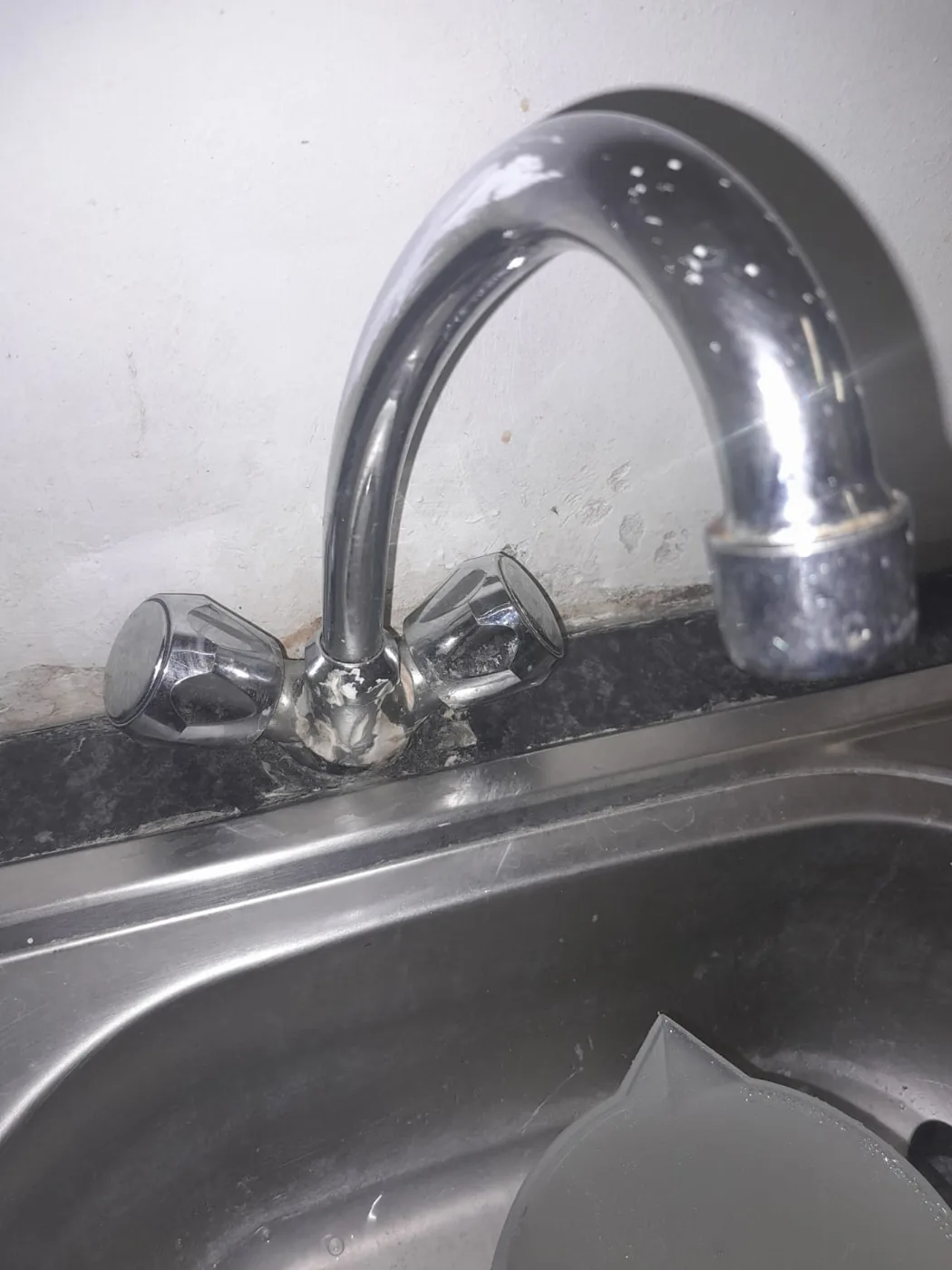
A faulty kitchen sink mixer can drip, leak at the base, become loose, give poor flow or fail to mix hot and cold water properly. In Zanberg, this is a tap and mixer repair, not pipe leak detection. A careful Zanberg plumber checks the cartridge, seals, flexi connectors, mounting nut, angle valves and water pressure before deciding whether the mixer can be repaired or should be replaced. This kind of work fits naturally under tap repairs and replacements because the fault is at the kitchen mixer itself.

The important part is not only replacing the piece that can be seen in the photo. A proper repair also checks the surrounding fittings, the pipe support, the fall of the line, the condition of old joints and whether the same fault is likely to return. If a pipe is under strain, if an old fitting has been overtightened, or if a valve is fitted where it cannot be serviced later, the job may look finished but still be weak. That is why we prefer practical fault finding before cutting, joining or sealing anything.

How to look out for this problem

Clients should look for water around the base of the mixer, a handle that feels loose or stiff, dripping from the spout, water leaking into the cupboard below, weak flow from one side, or a mixer that no longer gives proper hot and cold control. A small drip can damage chipboard cupboards and attract mould, so it is better to repair the mixer before the sink unit is damaged.

Another helpful step is to check whether the problem is isolated or spreading. If only one tap, toilet, basin, shower or outside point is affected, the fault may be local to that fixture. If several points are affected at once, the issue may sit deeper in the system. Avoid repeated chemical drain cleaners, forcing valves, or wrapping leaks with tape as a permanent fix. These temporary measures can hide the problem until more damage appears.

For this type of faulty kitchen sink mixer repair in Zanberg, the safest approach is to stop unnecessary water use, isolate the closest valve if water is escaping, keep the area clear, and call for help before the surrounding structure is damaged. Good repair work should leave the installation cleaner, easier to inspect and safer to maintain than it was before the fault appeared.
Wall-mounted kitchen mixer repair by a Zanberg plumber

Wall-mounted kitchen mixer repair in Zanberg

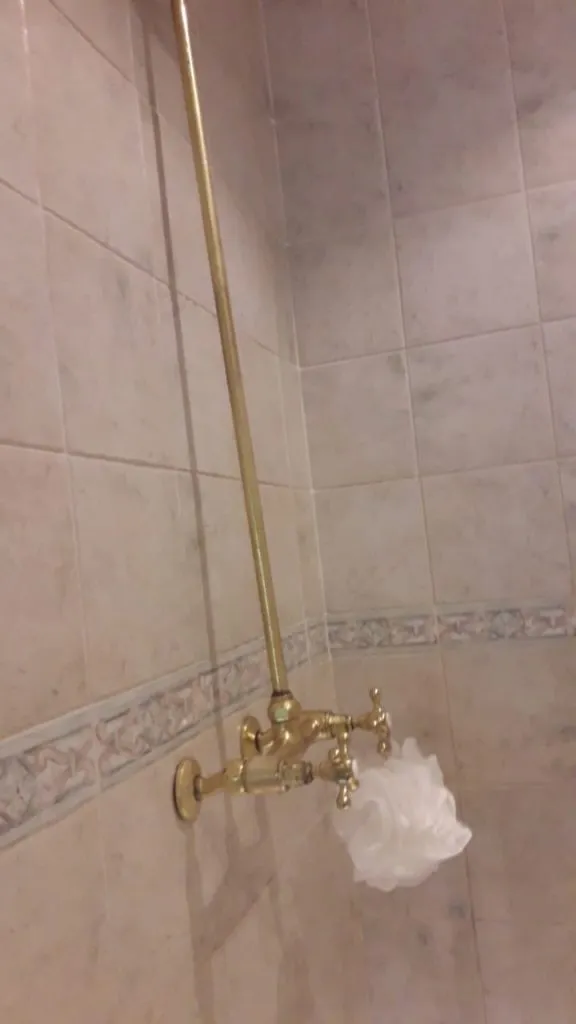
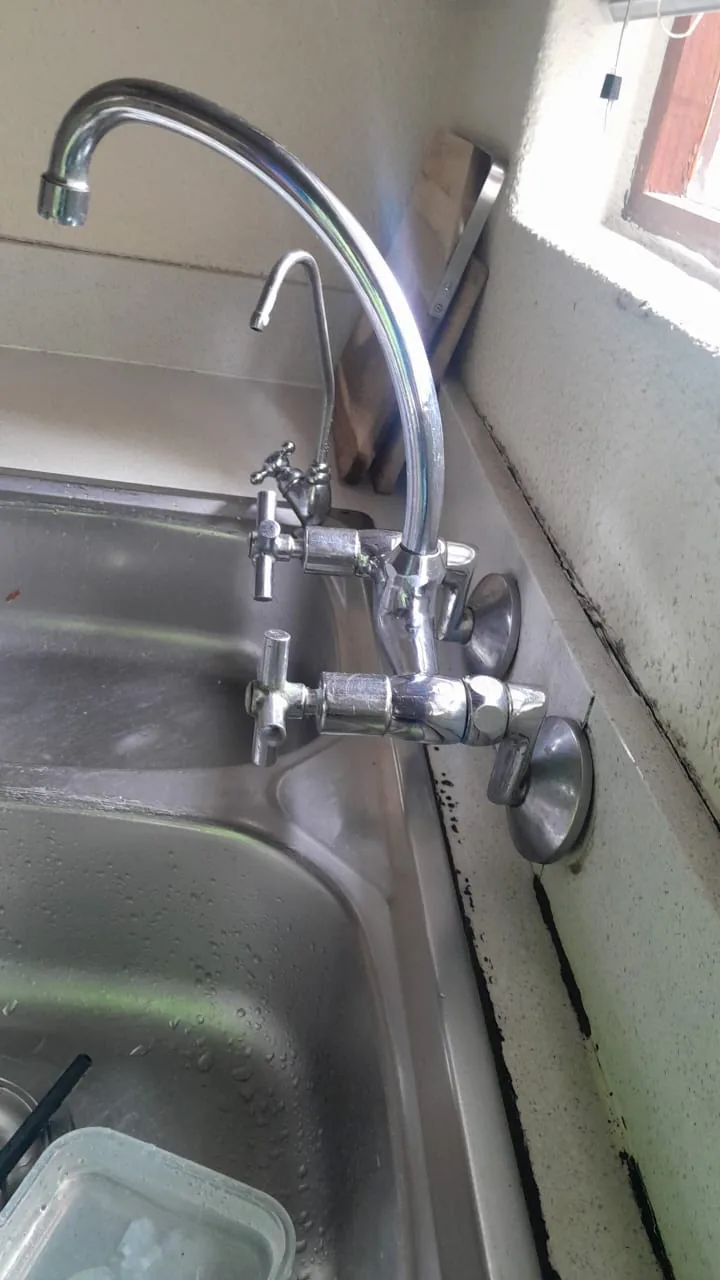
A wall-mounted kitchen mixer above a stainless sink must be secure, watertight and correctly connected to the hot and cold supply points. In Zanberg, this has nothing to do with a water main leak; it is kitchen mixer repair and installation work at the sink. A careful Zanberg plumber checks the wall connections, mixer body, washers, exposed fittings and pipe alignment before tightening or replacing parts. This type of work is part of practical kitchen plumbing because it affects daily washing, food preparation and clean water use.

The important part is not only replacing the piece that can be seen in the photo. A proper repair also checks the surrounding fittings, the pipe support, the fall of the line, the condition of old joints and whether the same fault is likely to return. If a pipe is under strain, if an old fitting has been overtightened, or if a valve is fitted where it cannot be serviced later, the job may look finished but still be weak. That is why we prefer practical fault finding before cutting, joining or sealing anything.

How to look out for this problem

Clients should look for a mixer that moves when touched, leaks from the wall plates, drips from the spout, sprays at the connections, gives uneven hot and cold flow, or leaves water marks behind the sink. Wall-mounted mixers can hide small leaks behind the fitting, so staining or loose tiles nearby should not be ignored. If the mixer is loose, avoid forcing the handles because that can worsen the wall connection.

Another helpful step is to check whether the problem is isolated or spreading. If only one tap, toilet, basin, shower or outside point is affected, the fault may be local to that fixture. If several points are affected at once, the issue may sit deeper in the system. Avoid repeated chemical drain cleaners, forcing valves, or wrapping leaks with tape as a permanent fix. These temporary measures can hide the problem until more damage appears.

For this type of wall-mounted kitchen mixer repair in Zanberg, the safest approach is to stop unnecessary water use, isolate the closest valve if water is escaping, keep the area clear, and call for help before the surrounding structure is damaged. Good repair work should leave the installation cleaner, easier to inspect and safer to maintain than it was before the fault appeared.
Burst pipe leak detection under paving by a Zanberg plumber

Burst pipe leak detection under paving in Zanberg

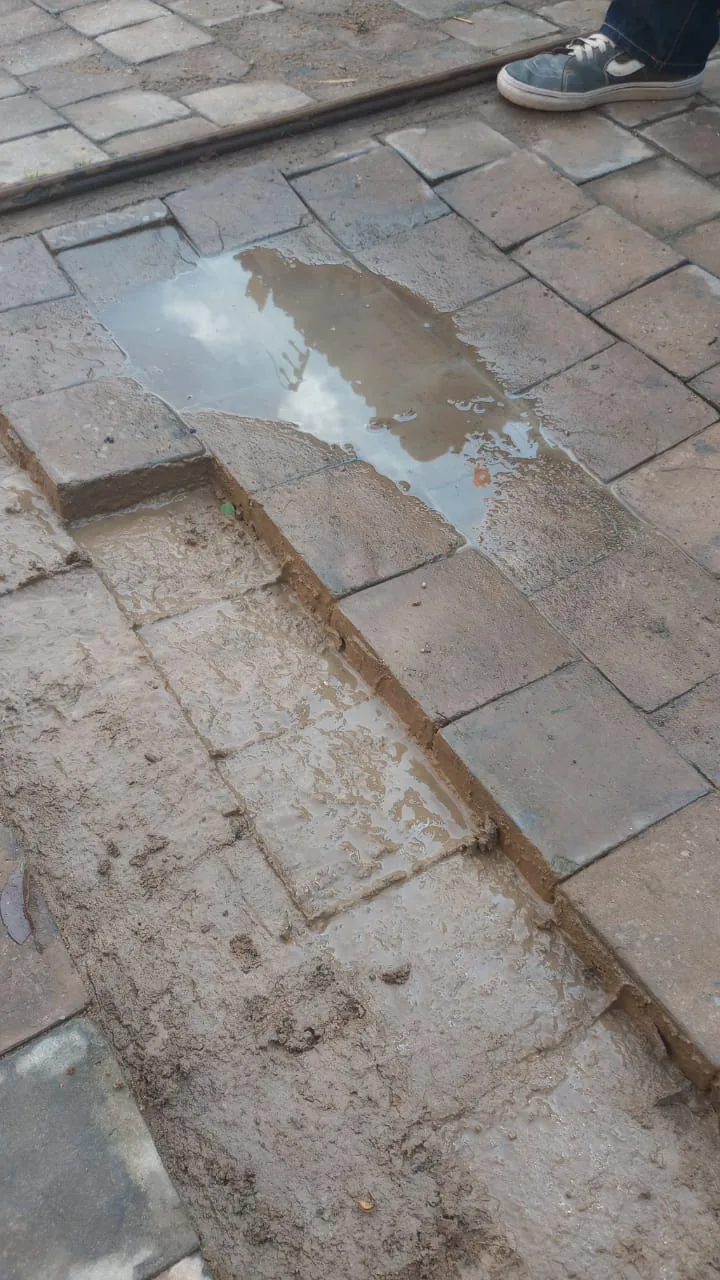
Water pooling on paving can point to a burst pipe under the paving, especially when the water is clean and returns after being swept away. In Zanberg, this is a leak detection job, not a grey water systems issue. A careful Zanberg plumber checks the meter, listens for pressure loss, follows the wet area and decides where to open the paving with the least disruption. Correct leak detection helps confirm the burst pipe position before unnecessary breaking is done.

The important part is not only replacing the piece that can be seen in the photo. A proper repair also checks the surrounding fittings, the pipe support, the fall of the line, the condition of old joints and whether the same fault is likely to return. If a pipe is under strain, if an old fitting has been overtightened, or if a valve is fitted where it cannot be serviced later, the job may look finished but still be weak. That is why we prefer practical fault finding before cutting, joining or sealing anything.

How to look out for this problem

Clients should look for paving that stays wet during dry weather, a patch of mud or sand washing out between bricks, a water meter turning when all taps are closed, reduced pressure inside the home, or clean water surfacing along a path, driveway or courtyard. Do not assume it is rainwater if the patch keeps returning. Isolating the main valve can help confirm whether the leak is on the pressurised supply line.

Another helpful step is to check whether the problem is isolated or spreading. If only one tap, toilet, basin, shower or outside point is affected, the fault may be local to that fixture. If several points are affected at once, the issue may sit deeper in the system. Avoid repeated chemical drain cleaners, forcing valves, or wrapping leaks with tape as a permanent fix. These temporary measures can hide the problem until more damage appears.

For this type of burst pipe leak detection under paving in Zanberg, the safest approach is to stop unnecessary water use, isolate the closest valve if water is escaping, keep the area clear, and call for help before the surrounding structure is damaged. Good repair work should leave the installation cleaner, easier to inspect and safer to maintain than it was before the fault appeared.
Geyser top pipework repair by a Zanberg plumber

Geyser top pipework repair in Zanberg

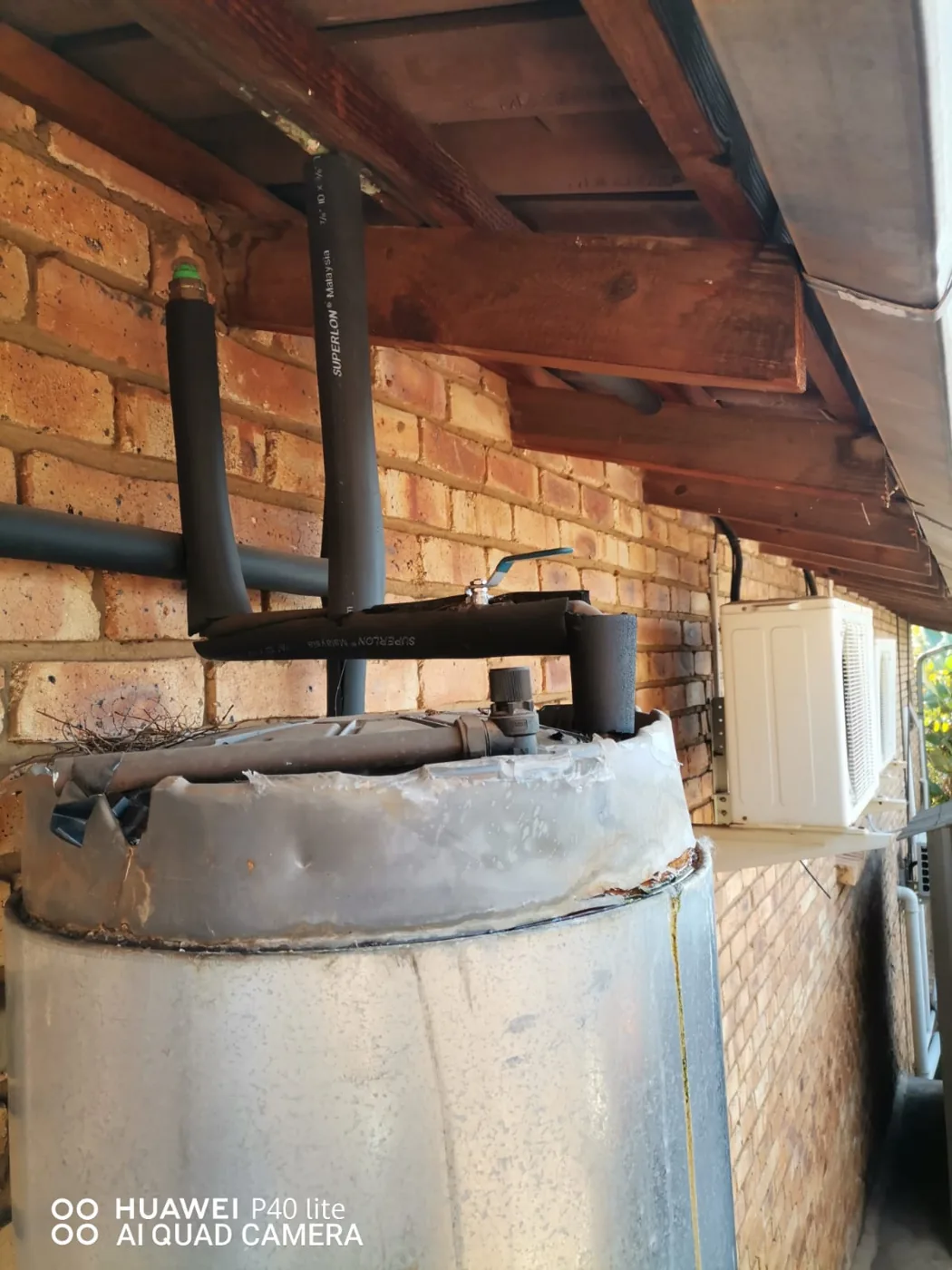
An older geyser top with pipework and insulation needing attention. In Zanberg, this kind of work matters because a plumbing fault seldom stays in one small place for long. Water follows the easiest route, and that route may be through a cupboard, below paving, into a ceiling, behind a tiled wall or along timber in the roof space. A careful Zanberg plumber looks at the visible symptom, checks what the pipe or fitting is connected to, and then decides whether the repair is a simple replacement or part of a bigger geyser plumbers near me issue.

The important part is not only replacing the piece that can be seen in the photo. A proper repair also checks the surrounding fittings, the pipe support, the fall of the line, the condition of old joints and whether the same fault is likely to return. If a pipe is under strain, if an old fitting has been overtightened, or if a valve is fitted where it cannot be serviced later, the job may look finished but still be weak. That is why we prefer practical fault finding before cutting, joining or sealing anything.

How to look out for this problem

Clients should watch for early warnings such as damp smells, water marks, slow drainage, bubbling paint, loose tiles, rust around metal fittings, a toilet that keeps filling, weak hot water, water pooling outside or a geyser tray that starts discharging. One small sign is often the first clue that the plumbing system is under pressure, blocked, corroded or leaking somewhere nearby. Taking a clear photo and noting when the problem happens helps the plumber understand the fault before arriving.

Another helpful step is to check whether the problem is isolated or spreading. If only one tap, toilet, basin, shower or outside point is affected, the fault may be local to that fixture. If several points are affected at once, the issue may sit deeper in the system. Avoid repeated chemical drain cleaners, forcing valves, or wrapping leaks with tape as a permanent fix. These temporary measures can hide the problem until more damage appears.

For this type of geyser top pipework repair in zanberg, the safest approach is to stop unnecessary water use, isolate the closest valve if water is escaping, keep the area clear, and call for help before the surrounding structure is damaged. Good repair work should leave the installation cleaner, easier to inspect and safer to maintain than it was before the fault appeared.
Burst geyser repair by a Zanberg plumber

Burst geyser repair in Zanberg

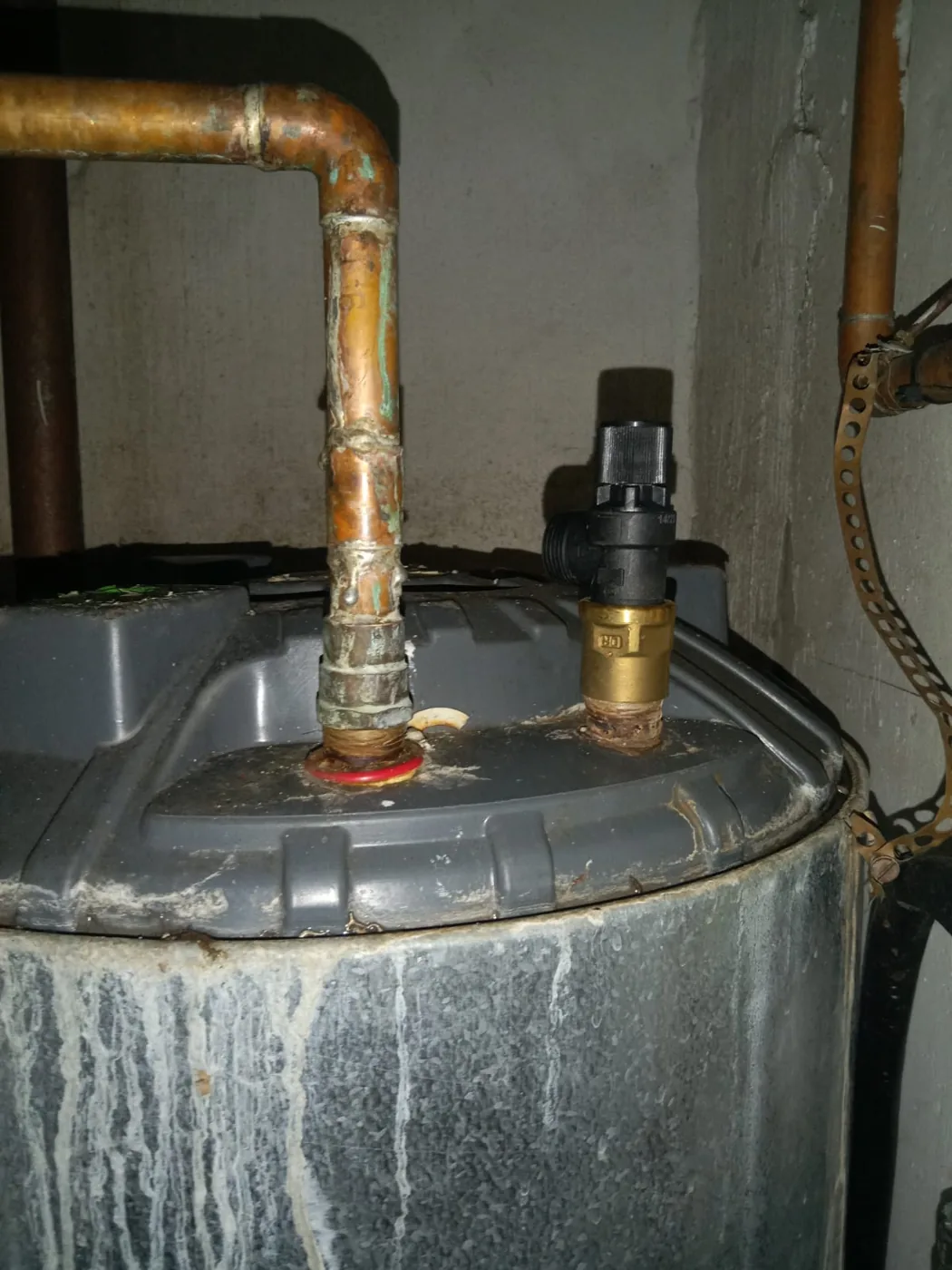
A badly corroded geyser top and valve area can be the warning sign of a burst geyser or a geyser that has reached the end of its safe service life. In Zanberg, this is not a hidden pipe leak; the fault is at the hot water cylinder and its valve assembly. A careful Zanberg plumber checks the geyser body, drip tray, safety valve, pressure control arrangement, discharge pipe and visible corrosion before advising whether the system can be repaired or whether a full geyser repair or replacement is the sensible option.

The important part is not only replacing the piece that can be seen in the photo. A proper repair also checks the surrounding fittings, the pipe support, the fall of the line, the condition of old joints and whether the same fault is likely to return. If a pipe is under strain, if an old fitting has been overtightened, or if a valve is fitted where it cannot be serviced later, the job may look finished but still be weak. That is why we prefer practical fault finding before cutting, joining or sealing anything.

How to look out for this problem

Clients should look for water in the geyser tray, rust marks around the geyser top, white or brown staining on the cylinder, a safety overflow that runs constantly, no hot water, tripping power, or water dripping into the ceiling. A burst geyser can release a large amount of water quickly, so the water supply and power should be isolated as soon as it is safe to do so.

Another helpful step is to check whether the problem is isolated or spreading. If only one tap, toilet, basin, shower or outside point is affected, the fault may be local to that fixture. If several points are affected at once, the issue may sit deeper in the system. Avoid repeated chemical drain cleaners, forcing valves, or wrapping leaks with tape as a permanent fix. These temporary measures can hide the problem until more damage appears.

For this type of burst geyser repair in Zanberg, the safest approach is to stop unnecessary water use, isolate the closest valve if water is escaping, keep the area clear, and call for help before the surrounding structure is damaged. Good repair work should leave the installation cleaner, easier to inspect and safer to maintain than it was before the fault appeared.
Geyser element flange leak repair by a Zanberg plumber

Geyser element flange leak repair in Zanberg

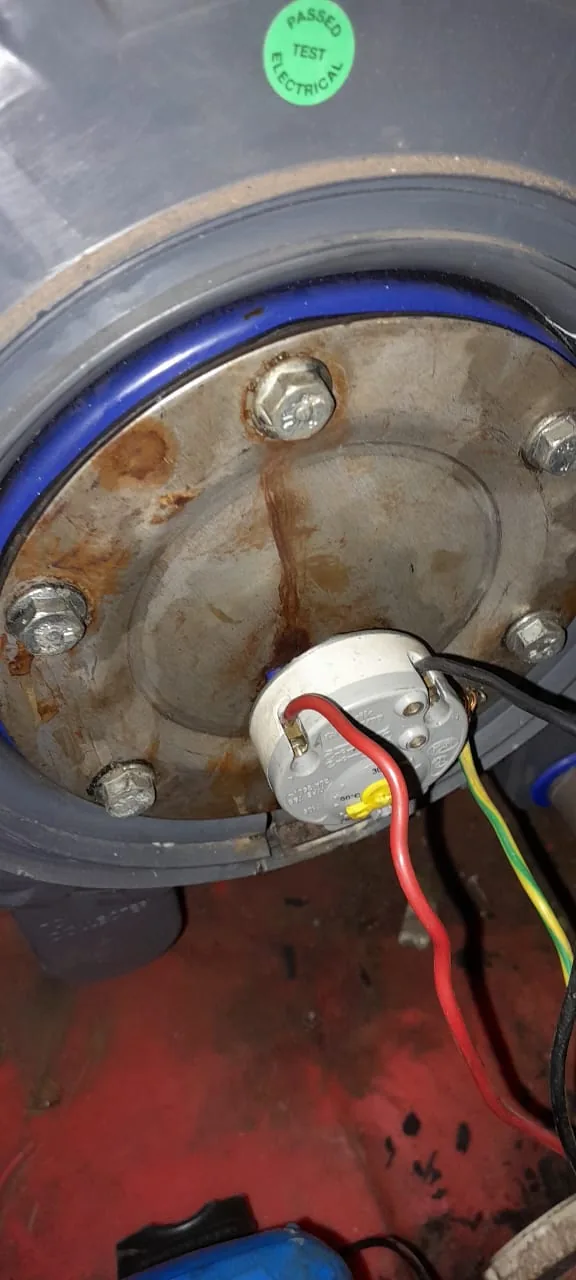
A geyser element flange showing rust marks and moisture staining. In Zanberg, this kind of work matters because a plumbing fault seldom stays in one small place for long. Water follows the easiest route, and that route may be through a cupboard, below paving, into a ceiling, behind a tiled wall or along timber in the roof space. A careful Zanberg plumber looks at the visible symptom, checks what the pipe or fitting is connected to, and then decides whether the repair is a simple replacement or part of a bigger solar geyser repair issue.

The important part is not only replacing the piece that can be seen in the photo. A proper repair also checks the surrounding fittings, the pipe support, the fall of the line, the condition of old joints and whether the same fault is likely to return. If a pipe is under strain, if an old fitting has been overtightened, or if a valve is fitted where it cannot be serviced later, the job may look finished but still be weak. That is why we prefer practical fault finding before cutting, joining or sealing anything.

How to look out for this problem

Clients should watch for early warnings such as damp smells, water marks, slow drainage, bubbling paint, loose tiles, rust around metal fittings, a toilet that keeps filling, weak hot water, water pooling outside or a geyser tray that starts discharging. One small sign is often the first clue that the plumbing system is under pressure, blocked, corroded or leaking somewhere nearby. Taking a clear photo and noting when the problem happens helps the plumber understand the fault before arriving.

Another helpful step is to check whether the problem is isolated or spreading. If only one tap, toilet, basin, shower or outside point is affected, the fault may be local to that fixture. If several points are affected at once, the issue may sit deeper in the system. Avoid repeated chemical drain cleaners, forcing valves, or wrapping leaks with tape as a permanent fix. These temporary measures can hide the problem until more damage appears.

For this type of geyser element flange leak repair in zanberg, the safest approach is to stop unnecessary water use, isolate the closest valve if water is escaping, keep the area clear, and call for help before the surrounding structure is damaged. Good repair work should leave the installation cleaner, easier to inspect and safer to maintain than it was before the fault appeared.
Toilet flush valve repair by a Zanberg plumber

Toilet flush valve repair in Zanberg

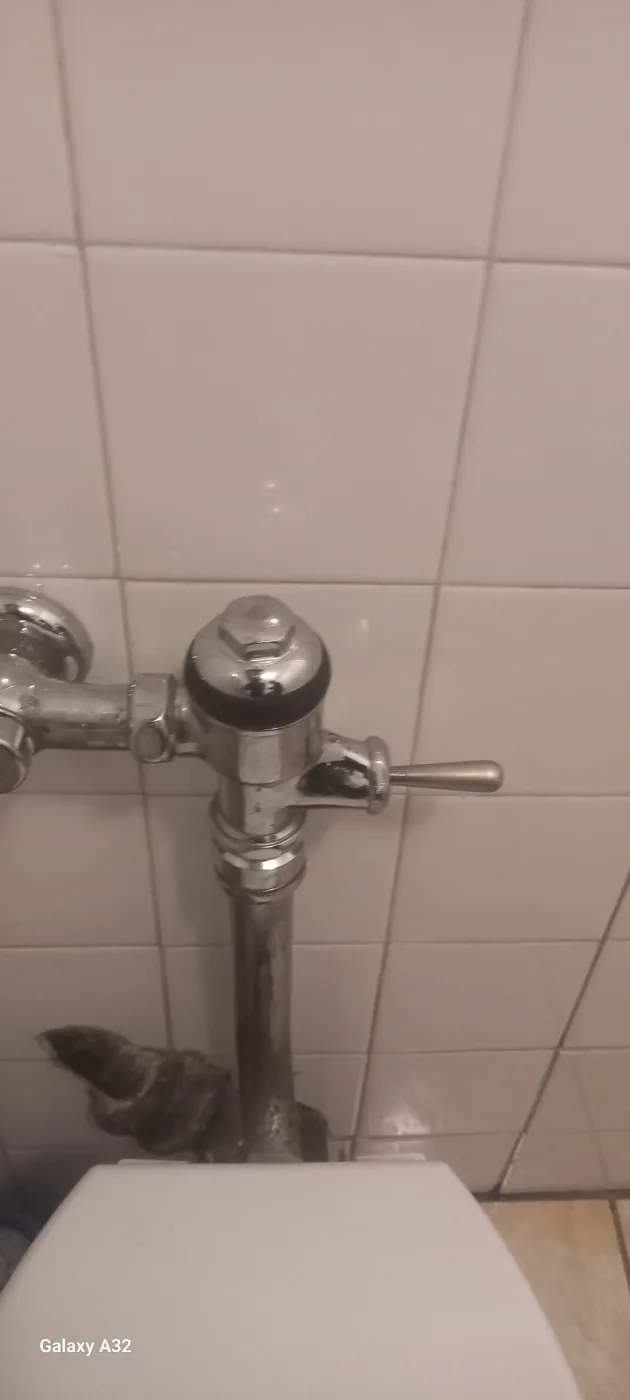
A toilet flush valve and flush handle needing adjustment or replacement. In Zanberg, this kind of work matters because a plumbing fault seldom stays in one small place for long. Water follows the easiest route, and that route may be through a cupboard, below paving, into a ceiling, behind a tiled wall or along timber in the roof space. A careful Zanberg plumber looks at the visible symptom, checks what the pipe or fitting is connected to, and then decides whether the repair is a simple replacement or part of a bigger emergency plumbers near me issue.

The important part is not only replacing the piece that can be seen in the photo. A proper repair also checks the surrounding fittings, the pipe support, the fall of the line, the condition of old joints and whether the same fault is likely to return. If a pipe is under strain, if an old fitting has been overtightened, or if a valve is fitted where it cannot be serviced later, the job may look finished but still be weak. That is why we prefer practical fault finding before cutting, joining or sealing anything.

How to look out for this problem

Clients should watch for early warnings such as damp smells, water marks, slow drainage, bubbling paint, loose tiles, rust around metal fittings, a toilet that keeps filling, weak hot water, water pooling outside or a geyser tray that starts discharging. One small sign is often the first clue that the plumbing system is under pressure, blocked, corroded or leaking somewhere nearby. Taking a clear photo and noting when the problem happens helps the plumber understand the fault before arriving.

Another helpful step is to check whether the problem is isolated or spreading. If only one tap, toilet, basin, shower or outside point is affected, the fault may be local to that fixture. If several points are affected at once, the issue may sit deeper in the system. Avoid repeated chemical drain cleaners, forcing valves, or wrapping leaks with tape as a permanent fix. These temporary measures can hide the problem until more damage appears.

For this type of toilet flush valve repair in zanberg, the safest approach is to stop unnecessary water use, isolate the closest valve if water is escaping, keep the area clear, and call for help before the surrounding structure is damaged. Good repair work should leave the installation cleaner, easier to inspect and safer to maintain than it was before the fault appeared.
Pinhole burst pipe corrosion repair by a Zanberg plumber

Pinhole burst pipe repair in Zanberg

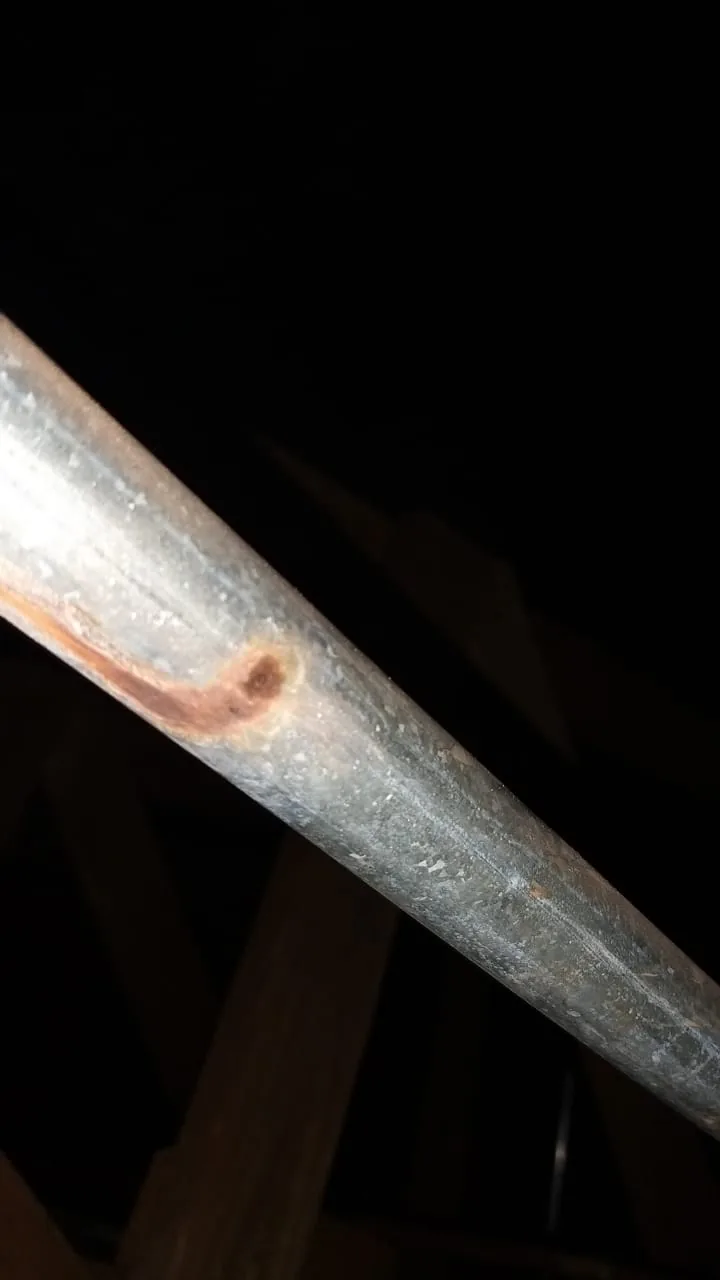
A small corrosion mark on a pipe can become a pinhole burst pipe in the ceiling or roof space. In Zanberg, this is not renovation plumbing; it is a pipe failure that can spray or weep quietly until water marks appear below. A careful Zanberg plumber checks the pipe condition around the pinhole, confirms whether the pipe is under pressure, and decides whether a short section repair or longer pipe replacement is safer. This kind of fault belongs with practical hidden pipe leak warning signs because the leak may only show once the ceiling or timber is already wet.

The important part is not only replacing the piece that can be seen in the photo. A proper repair also checks the surrounding fittings, the pipe support, the fall of the line, the condition of old joints and whether the same fault is likely to return. If a pipe is under strain, if an old fitting has been overtightened, or if a valve is fitted where it cannot be serviced later, the job may look finished but still be weak. That is why we prefer practical fault finding before cutting, joining or sealing anything.

How to look out for this problem

Clients should look for tiny green or brown corrosion spots on copper, small beads of water on the pipe, a fine spray in the roof space, musty smells, water marks on ceilings or damp timber close to a pipe run. A pinhole leak can look harmless at first, but pressure can turn it into a bigger burst without warning. Do not scrape or knock the weak spot; isolate the water and have the pipe assessed.

Another helpful step is to check whether the problem is isolated or spreading. If only one tap, toilet, basin, shower or outside point is affected, the fault may be local to that fixture. If several points are affected at once, the issue may sit deeper in the system. Avoid repeated chemical drain cleaners, forcing valves, or wrapping leaks with tape as a permanent fix. These temporary measures can hide the problem until more damage appears.

For this type of pinhole burst pipe repair in Zanberg, the safest approach is to stop unnecessary water use, isolate the closest valve if water is escaping, keep the area clear, and call for help before the surrounding structure is damaged. Good repair work should leave the installation cleaner, easier to inspect and safer to maintain than it was before the fault appeared.
Ceiling burst pipe repair with compression coupling by a Zanberg plumber

Ceiling burst pipe repair in Zanberg

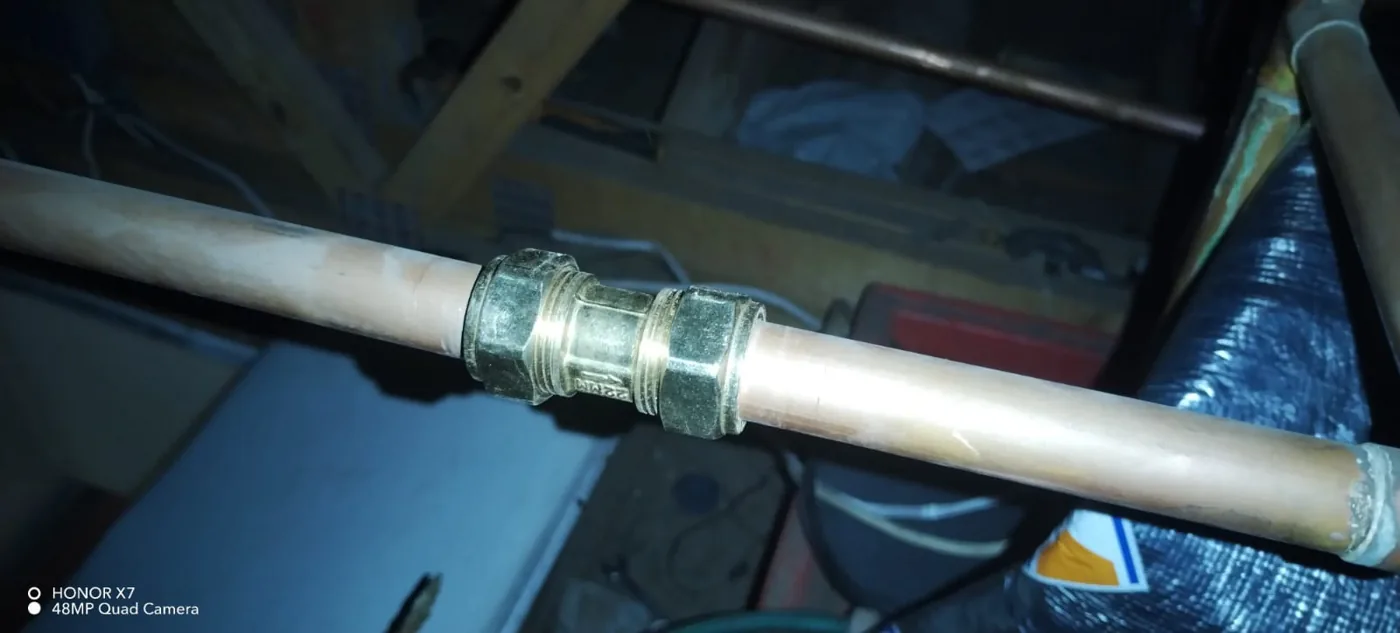
A compression coupling joining a repaired pipe section in the ceiling is normally part of a burst pipe repair, not an installation policy issue. In Zanberg, a burst pipe above a ceiling can wet insulation, timber, lights, cupboards and ceiling boards before the owner sees the full damage. A careful Zanberg plumber isolates the water, exposes the damaged section, checks whether the pipe failed from age, pressure or movement, and then carries out the correct burst pipe repair so the ceiling area is not left with a weak join.

The important part is not only replacing the piece that can be seen in the photo. A proper repair also checks the surrounding fittings, the pipe support, the fall of the line, the condition of old joints and whether the same fault is likely to return. If a pipe is under strain, if an old fitting has been overtightened, or if a valve is fitted where it cannot be serviced later, the job may look finished but still be weak. That is why we prefer practical fault finding before cutting, joining or sealing anything.

How to look out for this problem

Clients should look for water dripping from the ceiling, a damp patch that grows after taps are used, a ceiling board starting to sag, a hissing sound in the roof space, or the water meter moving when all taps are closed. A burst pipe in a ceiling can run along timber before dripping far away from the actual break, so the wet spot is not always directly below the failure. Isolate the water and avoid switching on wet lights.

Another helpful step is to check whether the problem is isolated or spreading. If only one tap, toilet, basin, shower or outside point is affected, the fault may be local to that fixture. If several points are affected at once, the issue may sit deeper in the system. Avoid repeated chemical drain cleaners, forcing valves, or wrapping leaks with tape as a permanent fix. These temporary measures can hide the problem until more damage appears.

For this type of ceiling burst pipe repair in Zanberg, the safest approach is to stop unnecessary water use, isolate the closest valve if water is escaping, keep the area clear, and call for help before the surrounding structure is damaged. Good repair work should leave the installation cleaner, easier to inspect and safer to maintain than it was before the fault appeared.
Concealed copper pipe repair by a Zanberg plumber

Concealed copper pipe repair in Zanberg

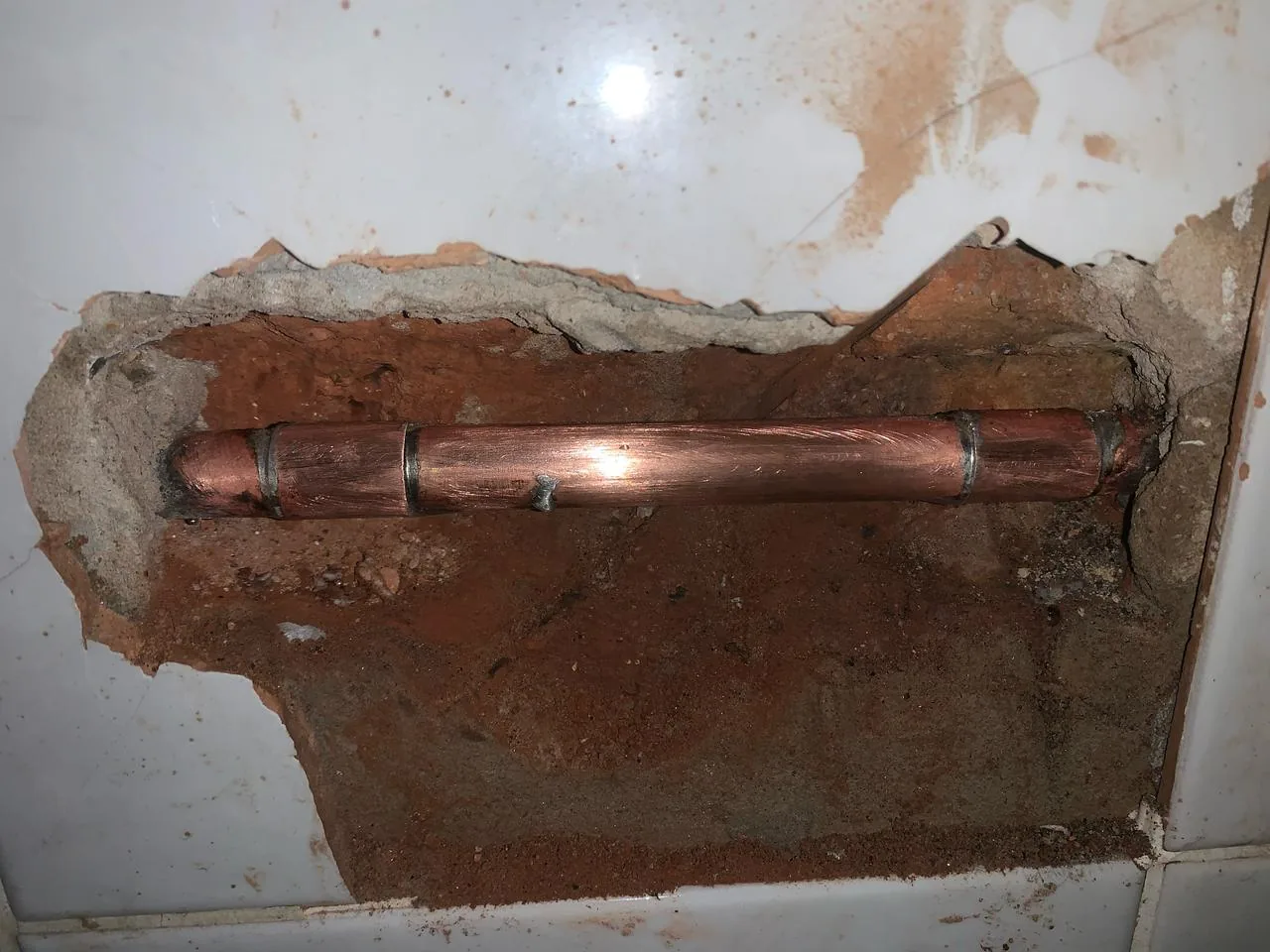
A copper pipe repair exposed behind wall tiles for leak repair. In Zanberg, this kind of work matters because a plumbing fault seldom stays in one small place for long. Water follows the easiest route, and that route may be through a cupboard, below paving, into a ceiling, behind a tiled wall or along timber in the roof space. A careful Zanberg plumber looks at the visible symptom, checks what the pipe or fitting is connected to, and then decides whether the repair is a simple replacement or part of a bigger water leak detection issue.

The important part is not only replacing the piece that can be seen in the photo. A proper repair also checks the surrounding fittings, the pipe support, the fall of the line, the condition of old joints and whether the same fault is likely to return. If a pipe is under strain, if an old fitting has been overtightened, or if a valve is fitted where it cannot be serviced later, the job may look finished but still be weak. That is why we prefer practical fault finding before cutting, joining or sealing anything.

How to look out for this problem

Clients should watch for early warnings such as damp smells, water marks, slow drainage, bubbling paint, loose tiles, rust around metal fittings, a toilet that keeps filling, weak hot water, water pooling outside or a geyser tray that starts discharging. One small sign is often the first clue that the plumbing system is under pressure, blocked, corroded or leaking somewhere nearby. Taking a clear photo and noting when the problem happens helps the plumber understand the fault before arriving.

Another helpful step is to check whether the problem is isolated or spreading. If only one tap, toilet, basin, shower or outside point is affected, the fault may be local to that fixture. If several points are affected at once, the issue may sit deeper in the system. Avoid repeated chemical drain cleaners, forcing valves, or wrapping leaks with tape as a permanent fix. These temporary measures can hide the problem until more damage appears.

For this type of concealed copper pipe repair in zanberg, the safest approach is to stop unnecessary water use, isolate the closest valve if water is escaping, keep the area clear, and call for help before the surrounding structure is damaged. Good repair work should leave the installation cleaner, easier to inspect and safer to maintain than it was before the fault appeared.
Rusted sewer pipe repair by a Zanberg plumber

Rusted sewer pipe repair in Zanberg

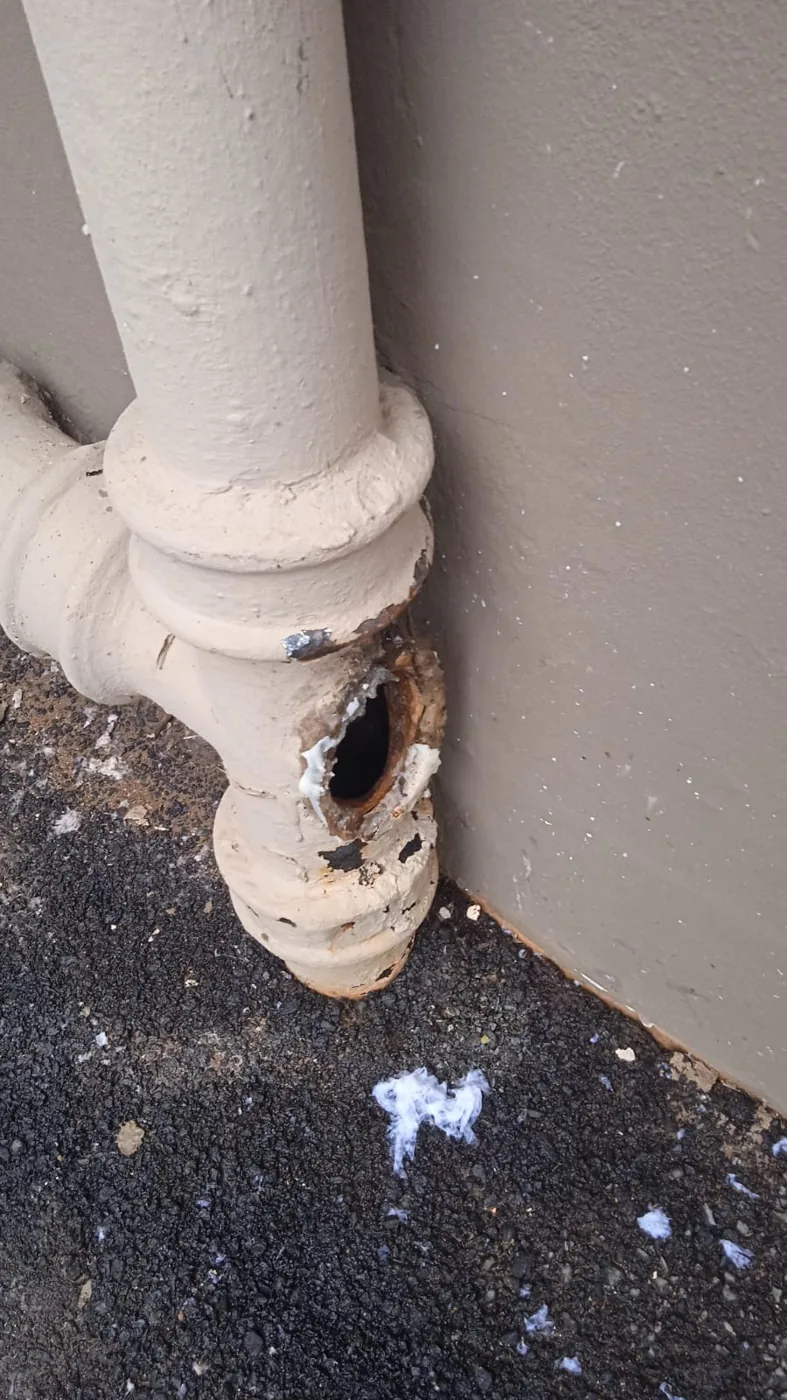
A rusted sewer pipe section with an opening can leak dirty water, release bad smells and allow sewer gases to escape around the wall or floor area. In Zanberg, this is not a JoJo tank matter; it is a sewer and waste pipe repair that must be treated properly because sewage faults can affect hygiene, smell, surrounding plaster and the drain line connected to the fixture. A careful Zanberg plumber checks whether the pipe is still structurally sound, whether the surrounding wall or floor has been damaged, and whether the repair should be a cut-out replacement, coupling repair or fuller waste line correction linked to proper drain and sewer repair work.

The important part is not only replacing the piece that can be seen in the photo. A proper repair also checks the surrounding fittings, the pipe support, the fall of the line, the condition of old joints and whether the same fault is likely to return. If a pipe is under strain, if an old fitting has been overtightened, or if a valve is fitted where it cannot be serviced later, the job may look finished but still be weak. That is why we prefer practical fault finding before cutting, joining or sealing anything.

How to look out for this problem

Clients should look for sewer smells, damp marks around the waste stack, a visible hole in the pipe, staining on the wall, flies around the opening, gurgling fixtures or dirty water marks near the pipe. A rusted sewer pipe should not be covered with tape or paint because the pipe wall may already be weak. If the smell returns after cleaning, or if the pipe has an open gap, the section must be inspected and repaired before the damage spreads.

Another helpful step is to check whether the problem is isolated or spreading. If only one tap, toilet, basin, shower or outside point is affected, the fault may be local to that fixture. If several points are affected at once, the issue may sit deeper in the system. Avoid repeated chemical drain cleaners, forcing valves, or wrapping leaks with tape as a permanent fix. These temporary measures can hide the problem until more damage appears.

For this type of rusted sewer pipe repair in Zanberg, the safest approach is to stop unnecessary water use, isolate the closest valve if water is escaping, keep the area clear, and call for help before the surrounding structure is damaged. Good repair work should leave the installation cleaner, easier to inspect and safer to maintain than it was before the fault appeared.
Drain inspection eye cleaning by a Zanberg plumber

Drain inspection eye cleaning in Zanberg

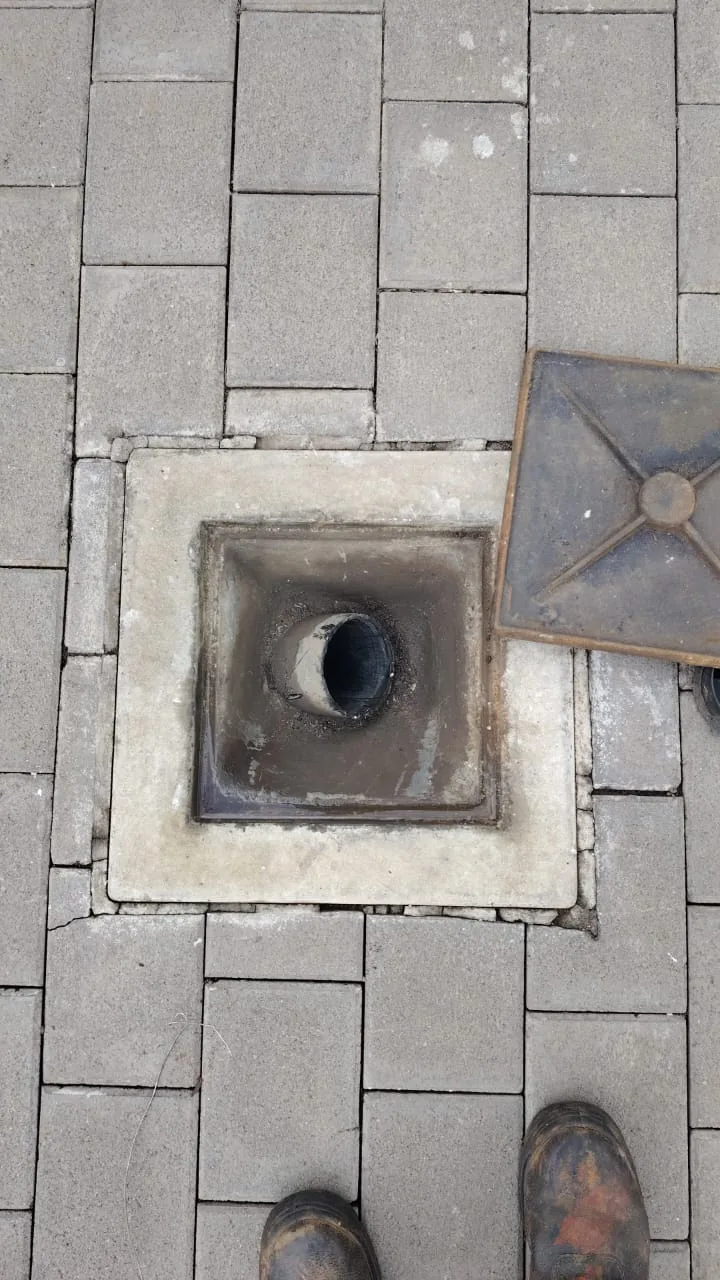
An open drain inspection eye in paving gives access to the sewer or waste line so the blockage can be checked and cleared without guessing. In Zanberg, this kind of work is directly connected to blocked drain cleaning, because a backed-up inspection eye usually means the drain line needs proper clearing, not geyser work or solar repairs. A plumber will check whether the obstruction is at the eye, further down the line, or caused by roots, silt, collapsed pipework, foreign objects or poor fall in the drain.

The important part is to treat the inspection eye as a diagnostic access point, not just an open hole in the paving. If dirty water stands inside it, if waste comes back when toilets are flushed, or if the drain smells strongly outside, the blockage may be affecting more than one fixture in the property. A careful repair means opening the correct access point, clearing the line properly, checking the flow afterwards and making sure the cover is replaced safely so the same drain can be inspected again in future.

How to look out for this problem

Clients should watch for toilets that rise before flushing away, gurgling sounds from basins or showers, bad smells near the outside inspection cover, water pushing out around paving, or more than one drain point becoming slow at the same time. These signs normally point to a drain line problem rather than a tap, geyser or water supply fault. If the inspection eye is overflowing, avoid running more water through the house because every flush, bath or sink can add to the backup.

For this type of drain inspection eye cleaning in Zanberg, the safest first step is to keep children and pets away from the open chamber, stop unnecessary water use, and call before the waste water spreads across paving or into garden areas. Good drain work should leave the line flowing, the access point clean and the cover secure. It should also give the owner a clearer idea of whether the cause was a once-off blockage or a recurring drainage fault that needs further inspection.

Cape Town plumbing hub and core services

Use these authority links to move from this suburb page into city-level plumbing coverage and high-value service pages.

Call icon WhatsApp icon