A blocked toilet is more than an inconvenience. It’s a financial unknown that hits hardest when you can’t find clear pricing. Plenty of guides explain how to plunge a bowl, but few tell you what the invoice will actually look like once the water stops rising. Understanding the true blocked toilet plumber cost in South Africa means looking past the advertised call-out fee to see how labour, equipment and severity combine to form your final bill.
This guide breaks down current 2026 pricing for unblocking toilets, distinguishing standard jobs from complex sewer line failures. You’ll see where DIY saves money, and where it risks turning a minor clog into a major repair bill.
Average Blocked Toilet Plumber Cost in South Africa (2026)
Budgeting for plumbing repairs starts with knowing the baseline rates for standard business hours versus premium emergency slots. Most homeowners run into two distinct pricing tiers depending on when they pick up the phone, and confusing the two is how sticker shock happens.
Standard Call-Out vs Emergency Rates
Emergency call-outs after hours or on public holidays generally carry a premium surcharge over standard weekday rates. During normal working hours, typically Monday to Friday between 8am and 5pm, the initial visit and basic unblocking usually fall within a moderate range that covers travel and the first hour of labour. This standard rate assumes the blockage is accessible and doesn’t need specialised excavation or heavy machinery.
After-hours work sits on a different scale, because plumbers have to compensate staff for unsocial hours and keep rapid-response teams on standby. Weekend, late-night or public holiday call-outs often cost double or even triple the standard daytime rate before any parts are added. If your toilet is overflowing onto the floor at 2am, you’re paying for immediate availability, not just the mechanical fix.
Labour and Time-Based Pricing Models
Plumbers typically bill toilet unblocking one of two ways: a flat-rate job price, or an hourly labour charge plus materials. Flat-rate pricing gives you certainty for common problems like simple paper blockages or trapped objects, since the plumber absorbs the risk if the job runs long. This model works in your favour when the problem is straightforward.
Hourly billing shows up more often when the diagnosis is uncertain, or the blockage resists the first attempt to clear it. Under this model you pay for every thirty minutes the technician spends on-site. That rewards efficiency but exposes you to higher costs if something unexpected turns up. Ask which model applies before work starts, so you know whether the quoted figure is a ceiling or just a starting point.
Cost Breakdown by Unblocking Method and Severity
The method used to clear your drain drives the price more than any other factor, since simple mechanical tools cost a fraction of hydro-jetting equipment. High-pressure jetting is typically required for tree root intrusion or hardened grease, and costs significantly more than manual snaking for a simple paper blockage.
Manual Snaking and Augering Prices
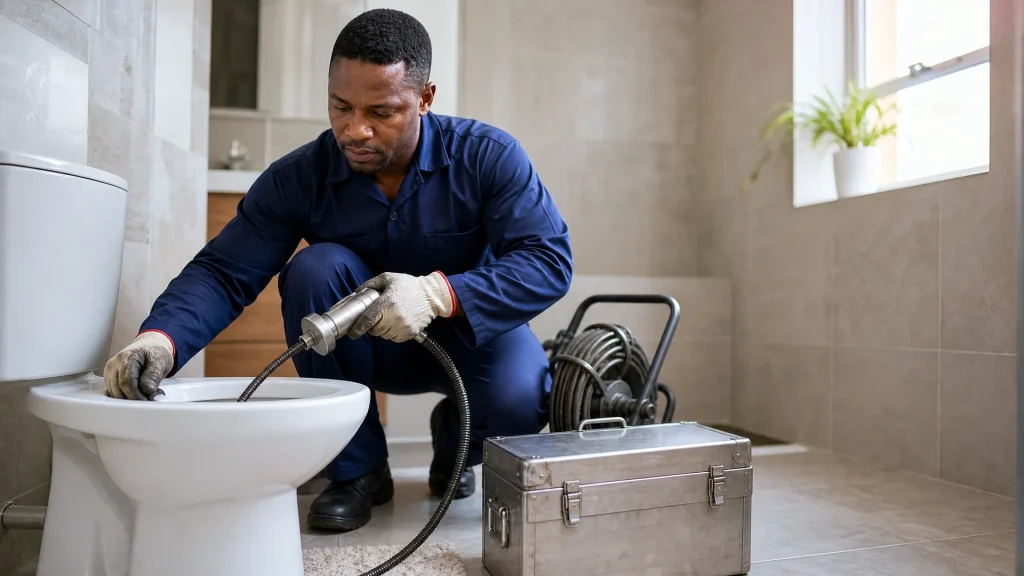
Manual snaking is the most affordable professional fix for localised toilet clogs caused by excess paper or small objects. A plumber uses a hand auger or motorised drum machine to break apart or retrieve the obstruction without damaging the porcelain trap. This service usually sits at the lower end of the pricing scale, because it needs minimal setup time and no expensive consumables.
Expect this method to clear most household toilet blockages within the first hour of labour. If the snake passes through freely but water still drains slowly, the problem likely sits deeper in the system, and it’s time to escalate to more advanced diagnostic tools.
High-Pressure Jetting for Stubborn Blockages
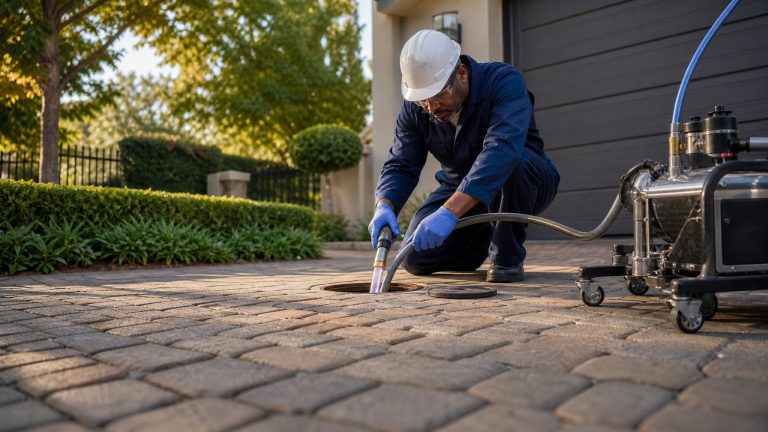
High-pressure water jetting comes into play when snaking fails, or when the blockage is grease, sludge or roots coating the pipe walls. The equipment forces water at extreme pressure through a specialised nozzle, scouring the pipe interior and flushing debris back to the access point. This demands more expensive machinery, higher fuel use and more operator skill, and all of that shows up in the final quote.
Jetting isn’t a default fix for every slow-draining toilet. Using it when it isn’t needed just means paying for overkill. It becomes essential only once a camera inspection confirms buildup a snake can’t remove, or when repeated snaking only brings temporary relief.
CCTV Camera Inspection Fees
Camera inspections are a separate diagnostic line item that stops you paying for guesswork when the cause of a blockage isn’t clear. A waterproof camera feeds live video from inside the pipe, revealing cracks, root intrusion, collapsed sections or misaligned joints that no amount of snaking will fix. It adds an upfront cost, but it frequently saves thousands by avoiding unnecessary excavation or repairs aimed at the wrong problem.
Some plumbers waive the camera fee if you go ahead with the recommended repair; others charge it regardless, as a standalone diagnostic service. Ask about this policy before authorising the inspection, since the fee structure varies a lot between companies.
When a Blocked Toilet Signals a Sewer Line Problem
Not every toilet backup starts in the bowl. Mistaking a main line failure for a simple clog means paying for treatments that won’t work. Multiple fixtures backing up at once, or sewage odours in the yard, are definitive signs of a main sewer line blockage rather than an isolated toilet clog.
Key Warning Signs Beyond the Bowl
Your plumbing system communicates through patterns that separate local clogs from systemic failures. If flushing the toilet causes water to back up into your shower drain or bathtub, the blockage sits downstream, where all the lines converge. Gurgling from multiple drains when you run a washing machine or dishwasher points the same way: restricted airflow in the main stack or sewer line.
Sewage smells coming from garden areas or external inspection chambers suggest waste is escaping through cracks or blocked vents rather than reaching the municipal connection. These symptoms shift the conversation from simple unblocking to infrastructure repair, and that carries very different costs and timelines.
Cost Implications of Main Line Repairs
Clearing a main sewer line costs significantly more than unblocking a single toilet trap, because of the depth, the accessibility challenges and the potential need for excavation. Root intrusion may call for cutting equipment followed by chemical treatment or pipe relining; collapsed sections demand full replacement with new piping. These jobs span days rather than hours, and they bring in municipal permits, landscaping reinstatement and compliance inspections.
The price gap between a R1,500 toilet unblock and a R25,000 sewer repair makes accurate early diagnosis financially critical. A camera inspection upfront protects you from paying for repeated temporary fixes that never touch the underlying structural failure.
Call-Out Fees Explained: What They Cover
A call-out fee buys the plumber’s time, expertise and vehicle deployment to your property. It doesn’t buy a completed repair. It typically covers travel time, the initial assessment and the first portion of labour needed to diagnose the problem accurately. Understanding call-out fee structures helps you tell legitimate charges apart from inflated entry costs.
The fee doesn’t guarantee resolution if the problem goes beyond basic unblocking, or needs parts the technician doesn’t carry. Extra charges kick in when the job runs past the included time allowance, needs specialised equipment outside the base rate, or turns up complications that need extra materials. A transparent plumber explains these thresholds before starting work, so you can decide whether to proceed with the full picture in front of you.
DIY Fixes Worth Trying Before Calling a Plumber
Minor toilet blockages often respond to patient, correct plunging without any professional help. Enzyme-based cleaners can also dissolve organic matter over several hours, which is a low-cost option for slow drains that haven’t fully backed up yet.
Safe Plunging Techniques
Effective plunging depends on a complete seal and controlled force, not frantic motion. Fill the bowl with enough water to cover the plunger cup, then press down firmly to expel air before pulling up sharply to create suction. Repeat that push-pull rhythm ten to fifteen times without breaking the seal, and let the hydraulic pressure gradually work the obstruction loose.
Avoid chemical drain cleaners in toilets. They generate heat that can crack porcelain, and they create hazardous fumes in an enclosed bathroom. A proper flange plunger delivers the mechanical force that chemicals only promise, without the risk to your fixtures or your health.
When to Stop and Call a Professional
Pushing DIY past the point of effectiveness risks driving the blockage deeper, or cracking the toilet trap through excess force. Knowing when to choose emergency plumber over DIY stops a minor problem turning into an expensive one. Stop immediately if water rises toward the rim while you’re plunging. That means the blockage isn’t moving, and more pressure just risks an overflow.
Call a professional once three plunging sessions have failed to restore normal drainage, or if you suspect foreign objects like toys or sanitary products. At that point your time has value too, and more experimenting often costs more, in frustration and potential damage, than the call-out fee would have.
Getting an Accurate Quote Over the Phone
Accurate phone quotes require knowing the blockage’s location, its severity, and any DIY chemical or mechanical fixes already attempted. A plumber can’t price a job they can’t picture, so a vague “it’s blocked” gets you an equally vague estimate that changes the moment they arrive. Have the specifics ready before you call, and you’ll get a real number instead of a wide range.
Tell the dispatcher exactly when the problem started, whether more than one fixture is affected, and what you’ve already tried. Mention if you suspect foreign objects, recent construction nearby, or known tree root issues near your sewer line. Ask outright whether the quoted price includes VAT, waste removal and any potential extra charges for labour or parts, since it’s those omissions that produce invoice surprises.
Factors Influencing Your Final Bill
Several things beyond the base rate decide what you end up paying for toilet unblocking. Access difficulty adds time when the toilet sits in a cramped en-suite, an upper floor without lift access, or behind a locked security gate that delays entry. Replacement parts push the cost up when flanges, wax rings or cistern components fail during the job, or turn out to be necessary to stop the problem coming back.
Time of day remains the single biggest multiplier, as covered above, but seasonal demand also moves pricing during peak periods, when stormwater overwhelms municipal systems. Ask your plumber to flag which of these apply to your job before work begins. Requesting an itemised quote upfront means you know exactly what’s driving the final figure, and can approve each part of it with your eyes open.