A burst pipe can release water faster than most people expect. The priority is not to make a permanent repair yourself; it is to stop the supply where possible, keep occupants safe and prevent water from spreading while the fault is assessed.
Quick action checklist
- Protect people from water, sewage, heat and electricity.
- Isolate the relevant water supply when safe.
- Stop using affected fixtures and appliances.
- Limit damage without attempting unsafe repairs.
- Take photographs and give the plumber clear information.
1. Keep people away from the affected area
Wet floors, collapsing ceilings, hot water and exposed building materials can cause injury. Move children, pets, customers and staff away from the leak and create a clear path for emergency access.
2. Check for electrical danger
Do not touch appliances, plugs, lights or the distribution board while standing in water. If the board can be reached by a dry route, isolate the affected circuit or main supply. Otherwise leave the area and obtain qualified assistance.
3. Close the nearest isolation valve
If the burst is on a toilet, basin, appliance or geyser feed and a sound local valve is immediately available, close it gently. This may preserve water to the rest of the property.
4. Close the main water supply
When the local valve is missing, inaccessible or ineffective, close the main shut-off valve. Turn it steadily without forcing it. Open a cold tap briefly to release remaining pressure and confirm that the incoming flow has stopped.
5. Switch off the geyser when relevant
If the burst affects hot-water pipework, the geyser or the roof space near the geyser, switch off the geyser circuit if it is safe to do so. Stored hot water may continue to drain even after the incoming supply is closed.
6. Contain and redirect remaining water
Use buckets, towels or a wet vacuum only where there is no electrical or contamination risk. Move furniture, stock, electronics and documents. Do not puncture a bulging ceiling; the saturated material may collapse unexpectedly.
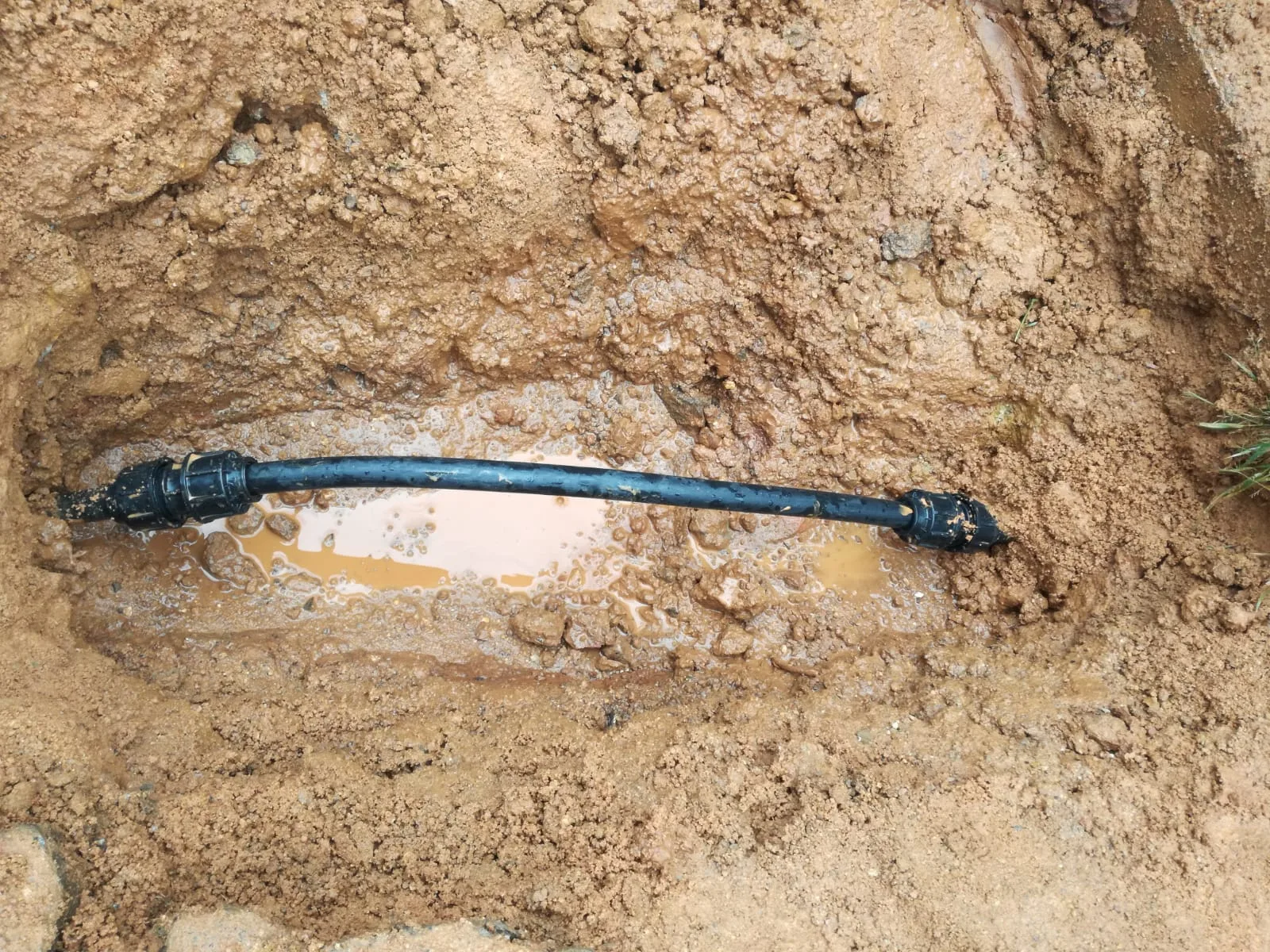
7. Photograph the source and damage
Take wide and close photographs before cleanup where practical. Record the pipe, surrounding room, ceiling or wall damage, affected belongings and meter reading. This may help diagnosis and any insurance process.
8. Contact a qualified emergency plumber
Provide the address, pipe location, whether the water is isolated, whether hot water or electricity is involved and whether the pipe is accessible. Send photographs or video so the team can prepare suitable tools and materials.
9. Avoid unreliable temporary repairs
Tape, putty and improvised clamps can fail under pressure and conceal the true condition of the pipe. Do not cut into walls or ceilings without understanding the services behind them.
10. Dry and monitor the area after repair
Once the pipe is repaired and tested, remove wet materials where appropriate, ventilate the area and monitor for staining, swelling or mould. Hidden moisture may require professional drying or further investigation.
CUSTOMER QUESTIONS
What is the first thing to do when a pipe bursts?
Protect people from water, electricity and falling materials, then isolate the nearest sound isolation valve or the main shut-off if the local valve is missing or ineffective.
Where is the main water shut-off usually found?
Often near the municipal meter, on the boundary wall, in a meter box, or where the supply enters the building. Know its location before an emergency so you can close it without searching under stress.
Should I switch off the geyser during a burst?
Yes if the burst involves hot-water pipework, the geyser itself, or the roof space near the geyser, and if the distribution board can be reached by a dry route.
Is it safe to walk through water to reach the electrical board?
No. Do not stand in water while touching switches, plugs or the board. Isolate only from a dry path; otherwise leave the area and get qualified help.
Can I repair a burst pipe with tape or a clamp?
Improvised clamps and tape can fail under pressure and hide damage. They are not a substitute for isolation and professional assessment.
What information should I give the emergency plumber?
Address, which room or outdoor line is affected, whether water is isolated, whether hot water or electricity is involved, accessibility, and photos or short video of the leak.
Does a burst pipe always need full replacement?
Not always. The repair depends on material, condition, access and cause. A local repair may be enough, or a longer section may need replacing if corrosion or weak joints are widespread.
What should I photograph after a burst?
Wide and close shots of the pipe, the room, ceiling or wall damage, affected belongings and the water meter reading before major cleanup where safe.
When is a burst pipe an insurance matter?
Many policies cover sudden accidental damage. Keep photos, invoices and a clear timeline. Confirm cover with your insurer after the water is isolated and the plumber is arranged.
What should I do after the pipe is repaired?
Confirm the line is pressure-tested, remove wet materials where practical, ventilate the area and watch for staining, swelling or mould that may need further drying or investigation.
Questions about burst pipe emergency checklist?
Describe the situation around burst pipe emergency checklist so we can advise whether a visit or repair is needed.