
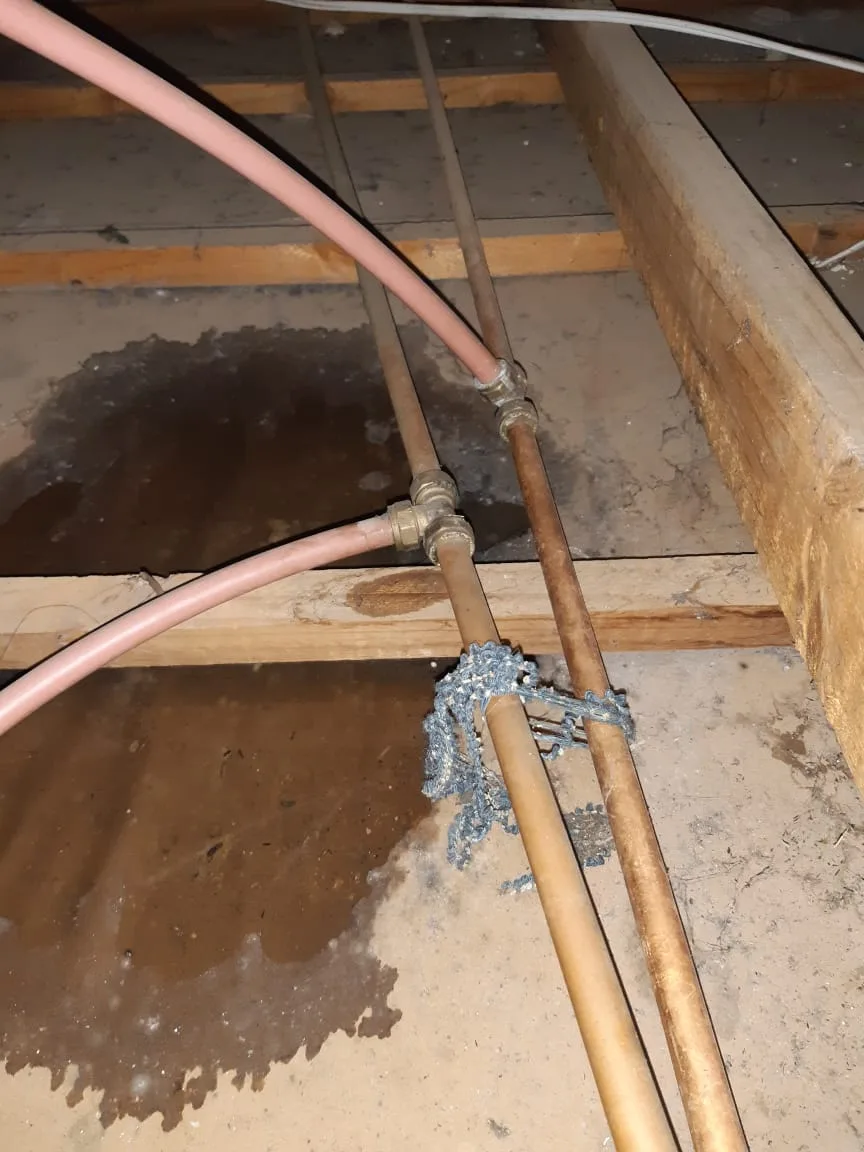
A ceiling leak can come from plumbing, a roof, waterproofing, an air-conditioning drain or water travelling from another part of the building. The immediate priorities are electrical safety, preventing collapse and limiting further damage.
Treat a bulging ceiling as unstable
Waterlogged ceiling boards can fail suddenly. Keep people and pets away and do not stand beneath a sagging area.
Consider electrical hazards
If water is near lights, wiring or electrical fittings, avoid touching switches or wet surfaces. Isolate the affected circuit or main supply only if it is safe to do so and contact the appropriate professional.
Control the water source
If the leak is linked to a plumbing fixture or pressurised pipe, close the local valve or main water supply. For roof ingress, contain water and arrange roof assessment when conditions are safe.
Protect the room below
Move furniture and electronics, place containers under drips and use plastic sheeting where practical. Do not create unsafe trip hazards.
Possible plumbing sources
Bathrooms above, geysers, supply pipes, waste pipes and overflowing fixtures are common causes. Note whether the leak appears after showering, flushing or using hot water.
Roof and waterproofing clues
Leaks associated with rain may result from roof coverings, flashings, gutters or failed waterproofing. Water can travel along rafters before staining the ceiling.
Why the stain may not mark the source
Water follows gravity and structural paths. The entry point can be several metres away from the visible mark.
Drying and mould prevention
Removing the source is only the first step. Wet insulation and ceiling cavities may require ventilation, dehumidification or controlled removal to dry properly.
Document before repairs
Photograph the ceiling, water path, damaged contents and suspected source. Keep invoices and professional reports where insurance may be involved.
CUSTOMER QUESTIONS
What should I do first if the ceiling is leaking?
Keep people clear of any sagging board, consider electrical risk near lights, try to isolate the water source, and catch drips so the room below is protected.
Should I puncture a bulging ceiling?
Usually no. Puncturing can release a large volume of water, cause collapse or create an electrical hazard. Keep clear and have a qualified person assess it.
Why does the ceiling leak only after a shower?
Common causes are a leaking waste, failed seal, waterproofing defect or supply connection in the bathroom above that only runs when the fixture is used.
Can a plumber fix every ceiling leak?
Plumbers handle plumbing sources. Roof coverings, waterproofing, electrical work and ceiling board replacement may need other trades.
Why is the stain not directly under the leak?
Water travels along joists, membranes and structural paths. The entry point can be metres away from the visible mark.
Is a small brown stain urgent?
It can be. Stains often mean water has already sat in the cavity. Monitor growth, check after rain or fixture use, and investigate if the mark expands.
What if water is near ceiling lights?
Avoid touching wet switches or fittings. Isolate the circuit or main supply only if safe, and involve an electrician as well as a plumber if wiring is wet.
How do I tell roof leak from plumbing leak?
Roof leaks often follow rain. Plumbing leaks may appear after showers, toilet use or hot-water use, or run continuously if a supply pipe is involved.
What should I document for insurance?
Photograph the ceiling, water path, damaged contents and any suspected source. Keep invoices and professional reports.
When should I call for help immediately?
Call when the board is bulging or dripping actively, water is near electrics, the leak is spreading fast, or you cannot isolate the source safely.
Need help with ceiling water leak guide?
Share what you are seeing related to ceiling water leak guide and we will suggest sensible next steps.