Budgeting for commercial heat pump installation in South Africa means separating equipment price from total project cost. A facility manager pricing a heat pump for hotel hot water or factory processes runs into variables a domestic quote never touches, from three-phase electrical upgrades to hydraulic balancing. Get these cost drivers wrong and you either blow the budget or install a system that can’t keep up with continuous demand.
Commercial Heat Pump Installation Cost Benchmarks for 2026
New commercial heat pump installations start at around R45,000 in 2026, but that figure only covers smaller light-commercial jobs, not full industrial plants. Large-scale commercial systems can run past R150,000 depending on capacity and complexity, especially once several modular units have to be integrated into an existing boiler room. Treat any quote well below these numbers with suspicion. It likely leaves out balance-of-plant components or the specialised commissioning labour the job actually needs.
Entry-Level vs Large-Scale System Pricing
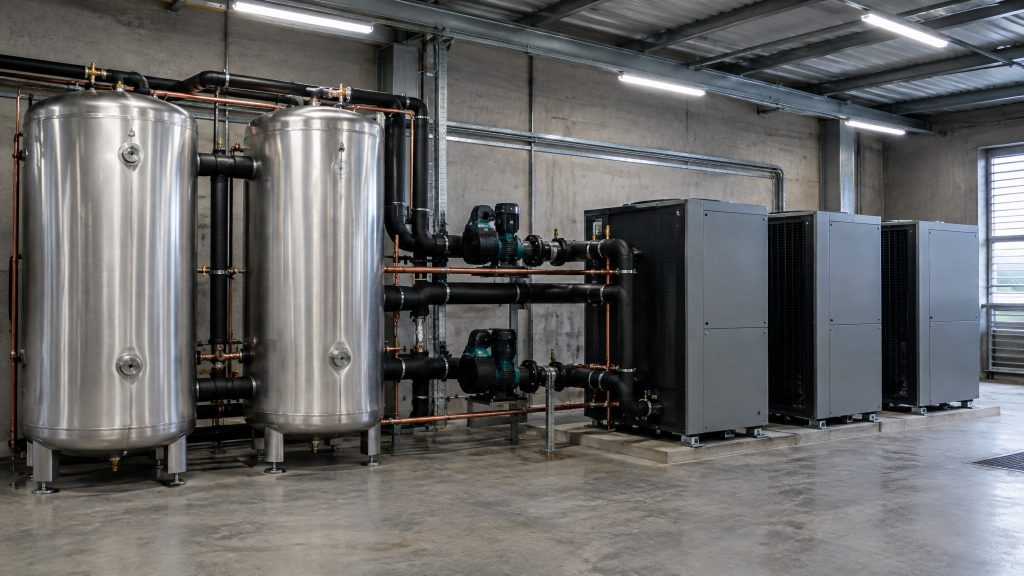
The gap between entry-level and large-scale pricing comes from engineering requirements, not markup. A single 11kW unit serving a guesthouse runs on standard single-phase power with almost no ancillary equipment. A 200kW modular array needs dedicated switchgear, circulation pumps and buffer vessels that can cost as much as the heat pumps themselves. That’s why commercial quotes carry line items a residential estimate never has to.
Labour Rates for Commercial Projects
Commercial labour runs R800 to R1,400 an hour in 2026, because these jobs need certified electricians and plumbers who know industrial regulations and safety protocols. A domestic installer usually isn’t qualified to work on three-phase distribution boards or pressurised commercial plumbing, so their lower rate doesn’t apply once downtime starts costing the business money. When you compare plumber quotes, check that every bidder has actually included the specialised trades your site requires.
ITS Modular Heat Pump System Price Breakdown by Capacity
Modular design lets a facility scale capacity precisely instead of committing to oversized equipment that sits idle if demand shifts. ITS builds its commercial range out of standardised 50kW modules, so a site can go from 50kW to 200kW while keeping the same service procedures and spare-parts inventory across every size. For model-specific pricing beyond these commercial configurations, see the ITS heat pump pricing guide.
50kW Single Module Costs and Features
The ITS-50VD3pro 50kW commercial heat pump is the module larger arrays are built from, and it retails around R105,834. It combines three-phase power, vertical air discharge and GSM-based remote monitoring in one unit, built for continuous commercial duty. It works standalone for a smaller hotel or clinic, and it slots straight into a bigger array later if demand grows.
Scaling to 100kW, 150kW, and 200kW Configurations
Stacking modules builds in redundancy a monolithic system can’t match: if one unit fails, the rest keep running instead of the whole plant going down. The ITS-150VD3pro 150kW modular system is three ITS-50VD3pro 50kW units installed side by side, priced around R317,501. Larger sites can step up to the ITS-100VD3pro at around R211,667 or the ITS-200VD3pro at around R423,335, and both keep each module independently serviceable and separately controlled.
Smaller Commercial Units for Light Industrial Use
Not every commercial job needs a full 50kW module, particularly when you’re retrofitting a smaller estate or a light industrial workshop with moderate hot water demand. The ITS-22HD3 gives you 22kW of three-phase heating at around R34,014, sitting between domestic units and the full commercial arrays. For even lighter loads, the ITS-11HD at around R22,674 offers commercial-grade construction in a single-phase package, suited to staff accommodation or a small laundry.
Installation Variables Driving Commercial Hot Water Heat Pump Quotes
Equipment cost is only one line in the total project spend, and budgeting off the unit price alone is a mistake. Site-specific factors, electrical condition, pipe routing, commissioning requirements, can double or triple the final invoice against the original equipment estimate. Spot these variables early and you can scope the project properly instead of fielding change orders mid-installation.
Three-Phase Power and Electrical Upgrades
Most commercial heat pumps need three-phase power, and an older building may not have it at all, which means a transformer upgrade or new cable runs before anything else happens. Even a site with existing three-phase supply often needs a panel upgrade to handle the startup current and continuous load of several 50kW modules running at once. These aren’t optional extras; they’re non-negotiable safety requirements, and a quote that omits them isn’t comparable to one that includes them.
Site Complexity and Piping Requirements
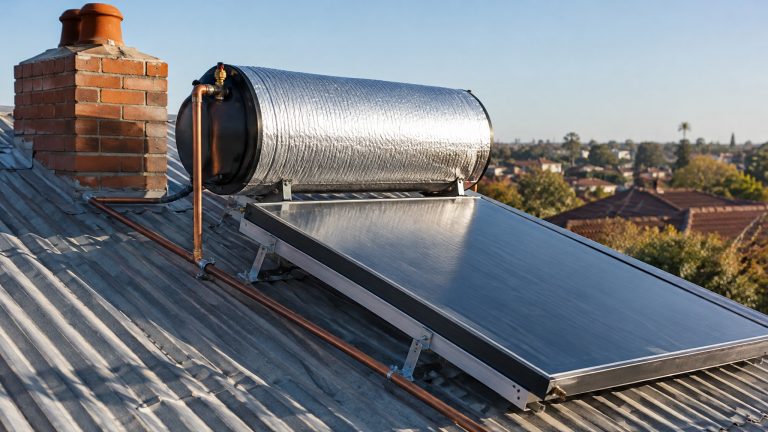
Commercial hot water systems bring hydraulic complexity a domestic install never sees: buffer tanks, variable-speed circulation pumps, and legionella prevention measures required in public facilities. Retrofitting an existing plant room often means custom steelwork, vibration isolation and acoustic treatment, all of which add labour hours well beyond simply mounting equipment. If you’re weighing solar geyser conversion costs instead, keep in mind solar thermal carries similar balance-of-plant expenses despite a different equipment profile.
This isn’t a route for a facility unwilling to invest in proper infrastructure preparation first.
ROI Analysis: Heat Pump for Hotel Hot Water and Industrial Use
Return on investment for a commercial system works differently from a residential payback period, because commercial usage stays consistent all year. A hotel, hospital or food processing plant consumes hot water continuously regardless of season, which means the energy savings accumulate faster than they do for a home with intermittent use. That steady demand profile makes commercial heat pump economics more predictable than residential projections built on assumed occupancy.
Energy Efficiency Gains Over Electric Boilers
Swapping resistive electric boilers for heat pumps typically cuts electricity consumption by 60% to 70% under South African climate conditions. Inverter technology adds R5,000 to R10,000 to equipment cost, but it delivers 30% greater efficiency by modulating compressor speed to match real-time demand instead of cycling on and off. For a facility running 24/7, that premium pays back within months through lower peak demand charges and lower overall consumption.
Inverter Technology Payback Periods
Payback compresses fast for high-volume users, because every percentage point of efficiency gain applies across a huge annual kilowatt-hour total. A hotel using 50,000 kWh a month for hot water might recover an inverter premium in under six months; a guesthouse using 5,000 kWh could take two years. Your own payback period depends on measured consumption data, not an industry average, so get a metered baseline before approving the spend.
Sizing Commercial Systems: Matching kW Output to Demand
Correct sizing prevents two failures at once: running short during peak hours, and paying for capacity nobody uses. A facility manager needs to calculate peak simultaneous demand from fixture counts, occupancy and process requirements, not from a floor-area rule of thumb built for residential jobs. Undersize it and the system can’t hold temperature during the morning rush; oversize it and the unit short-cycles and wears out early.
A modular stack is insurance against sizing errors, because extra modules can go in later if demand grows. A facility that starts with two 50kW modules can expand to three or four later using the same mounting points and electrical connections, without a full system replacement. That flexibility matters most for a phased development or a site with uncertain long-term occupancy.
Redundancy also shapes the sizing decision. Lose one module out of a three-unit stack and you still have roughly 66% capacity while it’s repaired. A monolithic 150kW unit gives you no such fallback: any failure means a complete hot water outage until a technician sources and fits the replacement part. For hospitality and healthcare, where service can’t lapse, that modular redundancy is worth the modest upfront premium.
Comparing Commercial Heat Pump Options Against Domestic Alternatives
An industrial heat pump installation needs equipment built for continuous operation under conditions that would wreck a domestic unit within months. A residential heat pump uses a lighter-duty compressor, a thinner heat exchanger and a consumer-grade controller built for intermittent evening use, not a 24/7 commercial cycle. Try to save money by running several domestic units in parallel and you end up with a maintenance headache, plus voided warranties once the manufacturer spots commercial use.
Light-commercial models like the ITS-11HD bridge the gap for a smaller estate, but they can’t replace a heavy-duty modular system on a large site. These units share the commercial-grade metal casing and Wi-Fi control of the bigger models while running on single-phase power a smaller property can actually supply. Stack eleven of them to reach 121kW, though, and you’d burn through roof space, complicate maintenance access, and still lack the coordinated control logic a modular 50kW system has built in.
A true commercial unit also brings features a domestic alternative doesn’t have: GSM remote monitoring, fault logging, and integration with a building management system. That lets a facility manager diagnose a problem remotely and schedule preventive maintenance before it causes a failure. A domestic unit has none of that, so problems surface as guest complaints instead of a flagged alert.
Planning Your Industrial Heat Pump Installation Timeline
A commercial installation needs more lead time than a domestic one, because of equipment availability, specialised labour scheduling and longer commissioning. Expect four to eight weeks from order to final handover for a modular system, and up to twelve weeks for a larger configuration if modules have to be sourced sequentially. Rush that timeline and you risk incomplete testing and early failures that cost far more than the delay would have.
Scheduling the work during a low-occupancy period keeps disruption down for a hotel or factory that can’t afford an extended hot water outage. Coordinate with the electrical contractor to schedule the three-phase shutdown during a planned maintenance window, rather than during peak production or guest check-in. Buffer tank installation and pre-commissioning checks can often happen while the existing system stays running, which shrinks the actual cutover to days rather than weeks.
Commissioning a commercial system means verifying performance under load, something a domestic install never requires. A technician has to check flow rates, temperature differentials and control sequences across every operating mode before signing off on warranty activation. Skip that step to hit an arbitrary deadline, and any later failure turns into a dispute over whether it came from the installation or the equipment.
Frequently Asked Questions
How much does it cost to install a heat pump in South Africa?
Commercial heat pump installation starts at R45,000 in 2026 for light-commercial applications and exceeds R150,000 for large-scale modular systems. Final costs depend heavily on electrical infrastructure upgrades, piping complexity, and specialized labour rates ranging from R800 to R1,400 per hour. Request itemized quotes that separate equipment from balance-of-plant expenses to make accurate comparisons.
Are heat pumps good for commercial buildings?
Heat pumps excel in commercial buildings with continuous hot water demand like hotels, hospitals, and food processing facilities because consistent usage accelerates return on investment. They reduce electricity consumption by 60% to 70% compared to resistive boilers, with inverter models delivering additional 30% efficiency gains. Success depends on proper sizing, three-phase power availability, and professional installation meeting commercial regulations.
What is the best heat pump in South Africa?
The best commercial heat pump depends entirely on your facility’s specific load profile, electrical infrastructure, and redundancy requirements rather than universal rankings. Modular systems like the ITS-50VD3pro offer scalability and serviceability advantages for larger installations, while light-commercial units suit smaller estates. Prioritize equipment with commercial-grade components, remote monitoring capabilities, and local technical support over marketing claims about efficiency ratings.
How long does commercial heat pump installation take?
Expect four to eight weeks from order to handover for standard modular installations, with larger configurations potentially requiring twelve weeks if equipment must be sourced sequentially. Commissioning and performance validation add several days beyond physical installation, as technicians must test all operating modes under load conditions. Schedule cutover during low-occupancy periods to minimize operational disruption while allowing adequate time for proper testing.