
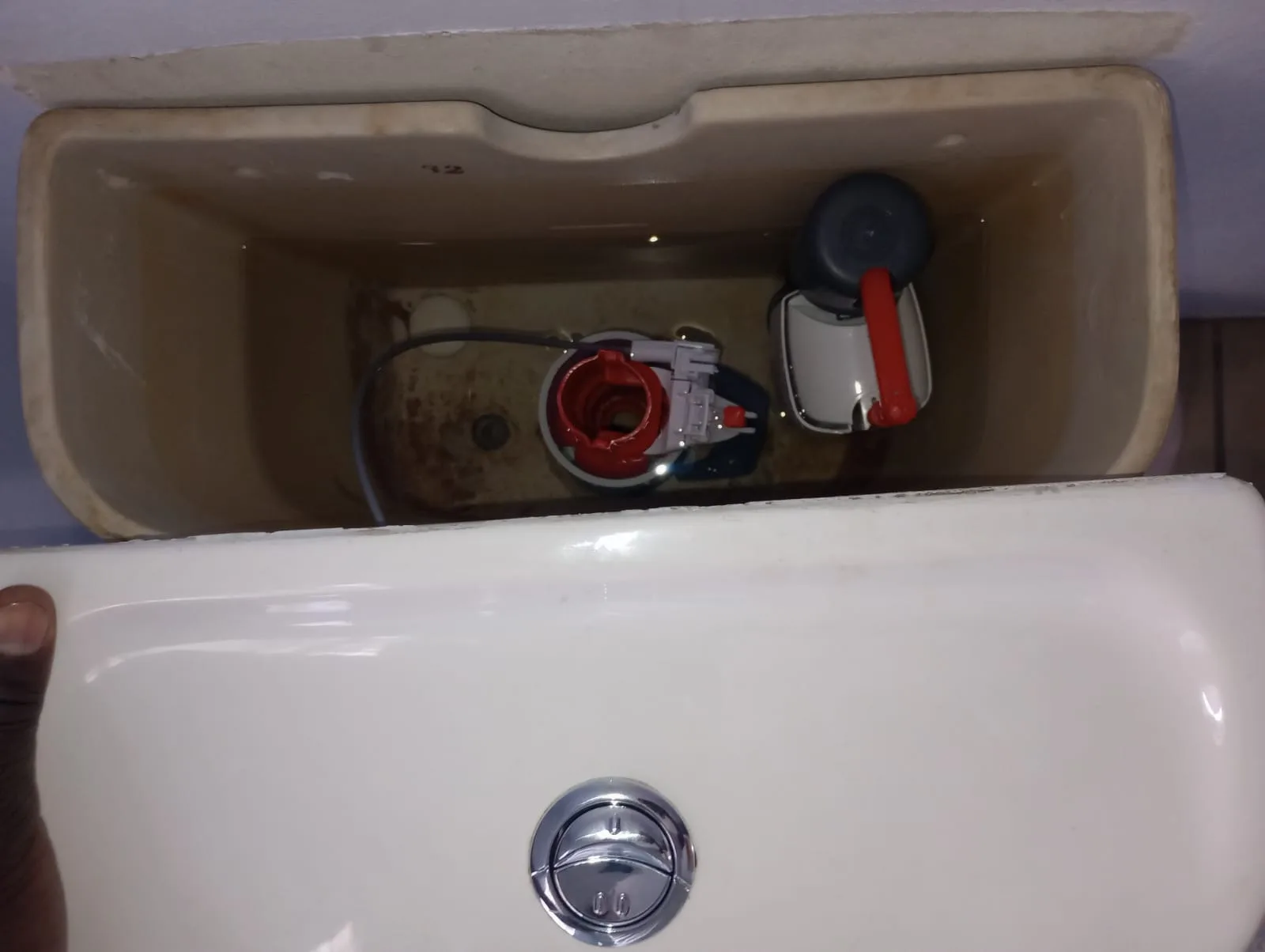
Dual-flush toilets use separate reduced and full-flush settings to save water, but the buttons, cables, towers and seals must work together accurately. When one part sticks or wears, the toilet may run continuously, flush weakly or deliver the same volume from both buttons.
Before you worry
The smaller button is intended for liquid waste and the larger setting for a full flush. A noticeable difference between the two is normal. A fault exists when a button sticks, neither setting clears properly, or water continues entering the pan.
How to recognise the problem
- One button does not return after use.
- Both buttons produce the same flush.
- The reduced flush is too weak for normal use.
- The toilet runs after either button is pressed.
- The button assembly feels loose or disconnected.
Common causes
- Incorrect cable or rod adjustment.
- Worn flush-valve seal.
- Scale causing the flush tower to stick.
- Broken button springs or plastic clips.
- Water level set too low for the intended flush volume.
What you can safely check yourself
- Press each button separately and observe the response.
- Check whether the cistern fills to its normal level.
- Look for water trickling into the pan after the flush.
- Take a photo of the mechanism before adjustment.
- Turn off the isolation valve if the toilet will not stop running.
What you should never do
- Do not force a stuck button.
- Do not add weights to the mechanism.
- Do not raise the water level above the overflow.
- Do not fit incompatible generic parts without checking dimensions.
When to call a plumber
Call a plumber when the mechanism is concealed, parts are broken, water runs continuously, or adjustments do not restore a clear difference between the two flush settings.
How professionals solve it
A plumber inspects button travel, linkage, water level, valve seal and overflow. The mechanism is cleaned, adjusted or replaced with compatible parts, then both flush volumes are tested repeatedly to confirm proper operation and shut-off.
How to prevent it happening again
- Use each button gently and fully.
- Keep hard-water scale under control.
- Avoid cistern cleaning products that damage seals.
- Repair intermittent sticking before parts break.
- Use compatible replacement components.
CUSTOMER QUESTIONS
Why do both dual-flush buttons give the same volume?
The linkage may be misadjusted, the mechanism may stick, or the cistern water level may be wrong so both settings empty similarly.
Why does the small button not clear the pan?
It is often intended for liquid waste only. If solids do not clear, check water level, rim flow and whether the reduced-flush path is restricted.
Why does a dual-flush toilet keep running?
A worn flush-valve seal, a sticking tower, or a button that does not return can leave the outlet partially open.
Can I force a stuck flush button?
No. Forcing can break clips and cables. Isolate the water if the toilet will not stop running and arrange repair.
Can a dual-flush cistern be converted to a single flush?
Sometimes, but the replacement must suit the cistern and pan. Repairing the correct dual-flush mechanism is usually better.
What can I safely check myself?
Test each button separately, confirm the cistern fills to a normal level, look for water trickling into the pan, and close the isolation valve if it will not stop.
What causes weak dual flushing?
Low water level, scale on the flush tower, partial blockage at the outlet, or worn seals that never fully open the valve.
Do generic dual-flush parts always fit?
Not always. Button assemblies and valves vary by brand and cistern depth. Compatible dimensions matter for reliable shut-off.
How do plumbers fix dual-flush faults?
They inspect button travel, cables or rods, water level, valve seal and overflow, then clean, adjust or replace parts and retest both flush volumes.
How can I prevent dual-flush problems returning?
Press buttons fully but gently, control scale, avoid harsh cistern chemicals that attack seals, and repair intermittent sticking early.
Need professional plumbing assistance?
We can help you interpret signs linked to dual flush problems and arrange service if required.