
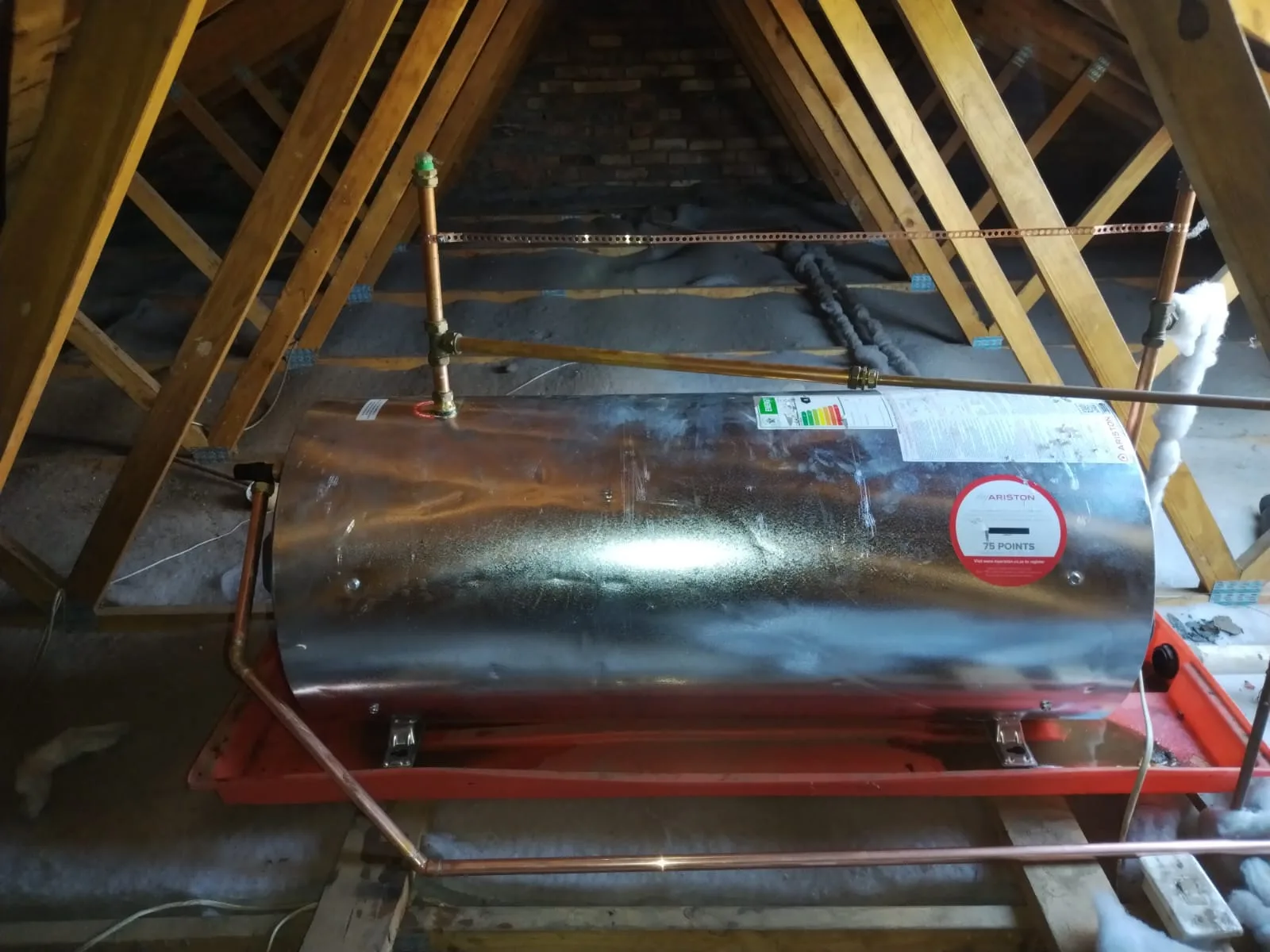
A conventional electric geyser heats water with an immersion element, while a heat pump moves heat from the surrounding air into the water. Heat pumps can reduce electricity use, but they cost more upfront and need suitable space, airflow and maintenance.
Before you worry
There is no single best option for every property. Household size, climate, roof space, noise sensitivity, existing plumbing, hot-water demand and budget all affect the decision.
How to recognise the problem
- High electricity use from water heating.
- Insufficient hot-water recovery for household demand.
- Limited installation space.
- Frequent element or thermostat repairs.
- A need to reduce long-term operating costs.
Common causes
- Conventional resistance heating uses more direct electricity.
- Heat-pump performance changes with ambient temperature.
- Poor sizing causes slow recovery.
- Long pipe runs increase heat loss.
- Incorrect control settings waste energy.
What you can safely check yourself
- Review electricity bills and hot-water demand.
- Measure available installation space.
- Check whether outdoor airflow and drainage are practical.
- Ask for realistic recovery and noise information.
What you should never do
- Do not choose equipment only by advertised savings.
- Do not undersize the storage or heating capacity.
- Do not install a heat pump in an unventilated space.
- Do not ignore backup-heating requirements.
When to call a plumber
Consult a qualified installer when replacing an ageing geyser, planning a renovation or trying to reduce water-heating costs. A site assessment is necessary before selecting equipment.
How professionals solve it
The installer calculates demand, reviews the existing cylinder and electrical supply, selects capacity, plans drainage and airflow, and commissions the controls. Performance is then checked under realistic household conditions.
How to prevent it happening again
- Size the system correctly.
- Insulate hot-water pipes.
- Maintain filters, coils and controls.
- Use sensible temperature settings.
- Monitor energy use after installation.
CUSTOMER QUESTIONS
Does a heat pump replace the geyser cylinder?
Some systems use a separate cylinder while others integrate components. The design depends on the product and the property.
Are heat pumps noisy?
They use a fan and compressor, so product choice and placement matter for noise-sensitive homes.
Which system heats water faster?
Recovery depends on capacity, ambient conditions, element size and storage volume. Conventional elements may recover faster in some cases; heat pumps use less electricity.
Why choose a heat pump over a standard geyser?
Heat pumps move heat from the air into the water and can cut electricity use for hot water, but they cost more upfront and need suitable space and airflow.
What should I check before deciding?
Review bills and hot-water demand, measure installation space, confirm outdoor airflow and drainage, and ask for realistic recovery and noise figures.
What mistakes should I avoid?
Do not choose only by advertised savings, undersize capacity, install in an unventilated space, or ignore backup-heating needs.
When should I involve a qualified installer?
When replacing an ageing geyser, planning a renovation, or aiming to cut water-heating costs. A site assessment is needed before selecting equipment.
How do professionals specify the system?
They calculate demand, review the existing cylinder and electrical supply, select capacity, plan drainage and airflow, commission controls, and check performance under real use.
How do I keep either system efficient long term?
Size correctly, insulate hot pipes, maintain filters/coils/controls on heat pumps, use sensible temperatures, and monitor energy use after install.
Can Plumb A Nator advise on heat pump vs geyser for my home?
Yes. Contact the team with details of demand, space and current setup so we can recommend a practical path for your property.
Need a plumber for heat pump vs geyser?
Send details about heat pump vs geyser and our team will recommend the most appropriate service.