
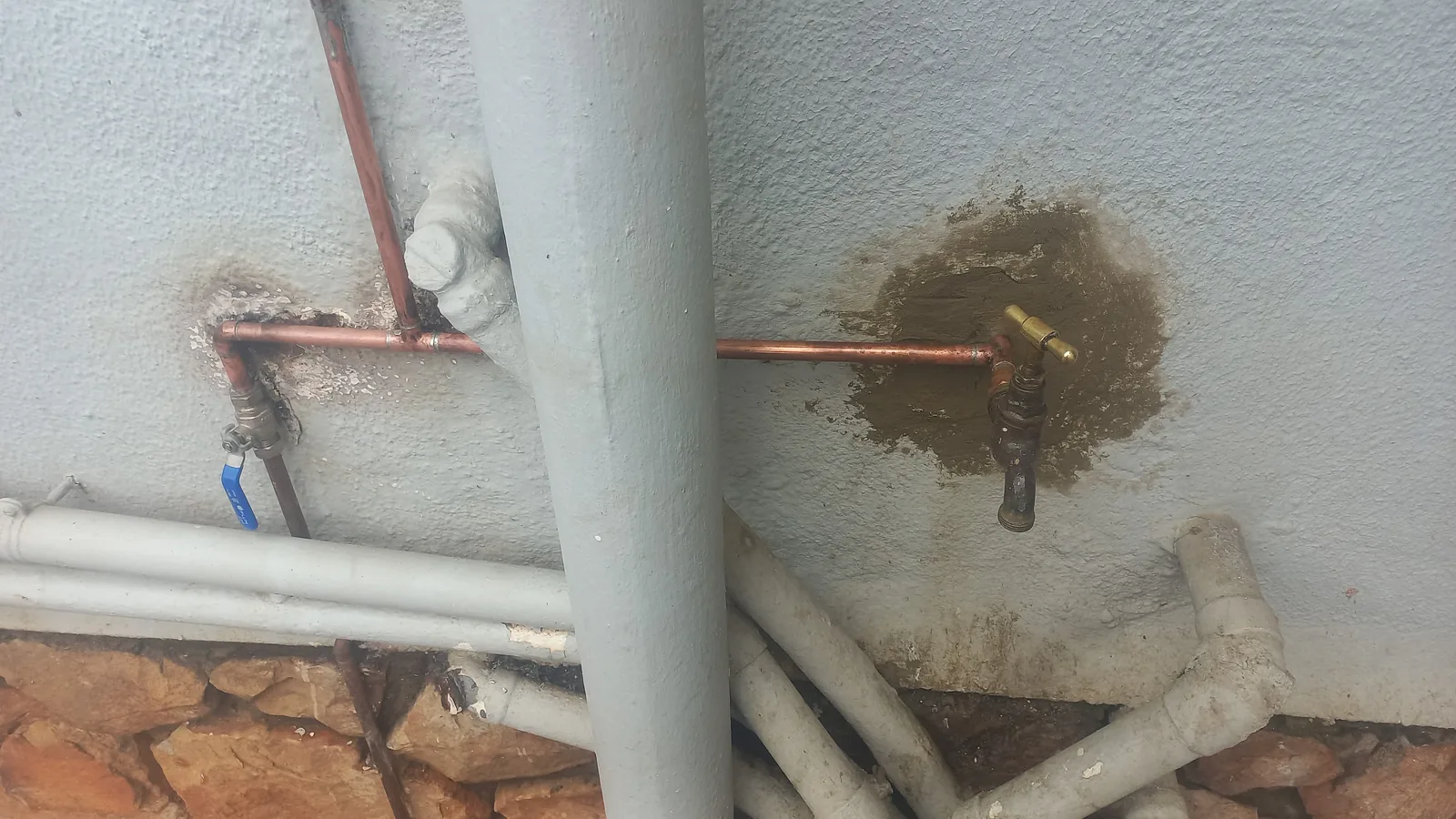
Finding a burst pipe is straightforward when water is spraying from an exposed line. Concealed leaks are different. The plumber must narrow the search, confirm the affected system and identify a practical access point without damaging more of the property than necessary.
The investigation begins with questions
The plumber will ask when the problem started, which fixtures are affected, whether pressure changed and where dampness or sounds were noticed. This history helps distinguish supply leaks from drains, roofs or appliances.
Meter and isolation tests
With fixtures off, meter movement can indicate ongoing use. Isolating branches, geysers, irrigation and appliances helps determine which part of the system is losing water.
Pressure testing
The plumber may measure static pressure and observe whether a sealed section loses pressure. A pressure drop suggests leakage, but the test must be appropriate for the pipe material and installation.
Acoustic leak detection
Escaping pressurised water creates sound that can sometimes be traced through walls, floors or ground. Acoustic equipment is most effective where background noise and pipe depth allow a clear signal.
Thermal imaging
Hot-water leaks may create temperature differences that a thermal camera can reveal. Thermal images show surface patterns rather than the pipe itself, so findings should be interpreted with other evidence.
Moisture mapping
Moisture meters help trace the extent of dampness and distinguish active wet areas from old stains. They are particularly useful in ceilings, drywall, timber and floor finishes.
Tracer gas, dyes and specialised methods
In difficult cases, technicians may use safe tracer methods or cameras for particular systems. The method depends on pipe type, access and whether the line can be isolated.
Targeted opening and confirmation
Non-destructive tools narrow the likely area, but a controlled opening may still be required to see the pipe, confirm the exact failure and complete the repair.
Why leak detection is not always instant
Multiple pipe routes, thick concrete, intermittent leaks and external noise can complicate detection. A careful staged process is more reliable than promising an exact location without evidence.
CUSTOMER QUESTIONS
Can every leak be found without breaking tiles?
Not always. Detection can minimise unnecessary damage, but final access may still be required to confirm and repair.
Does thermal imaging find cold-water leaks?
It may show moisture-related temperature changes, but it is generally more direct for hot-water leaks.
How accurate is acoustic detection?
Accuracy depends on pipe material, pressure, depth, surrounding materials and background noise.
Why start with questions and history?
When the problem started, which fixtures are affected and where dampness appears helps separate supply leaks from drains or roofs.
What do meter and isolation tests show?
Meter movement with fixtures off can indicate ongoing use. Isolating branches helps locate which part of the system is losing water.
What does a pressure drop mean?
A sealed section that loses pressure suggests leakage, provided the test is suitable for the pipe material and installation.
When is moisture mapping useful?
Moisture meters help trace active damp versus old stains in ceilings, drywall, timber and floor finishes.
Why is detection not always instant?
Multiple routes, thick concrete, intermittent leaks and noise can complicate findings. A staged process is more reliable.
Will the plumber always open a wall?
Only when needed. Non-destructive methods narrow the area first so any opening can be targeted.
Can Plumb A Nator help locate a hidden burst?
Yes. Contact the team with symptoms and photos so the right detection approach can be planned.
Questions about how plumbers find burst pipes?
Share what you are seeing related to how plumbers find burst pipes and we will suggest sensible next steps.