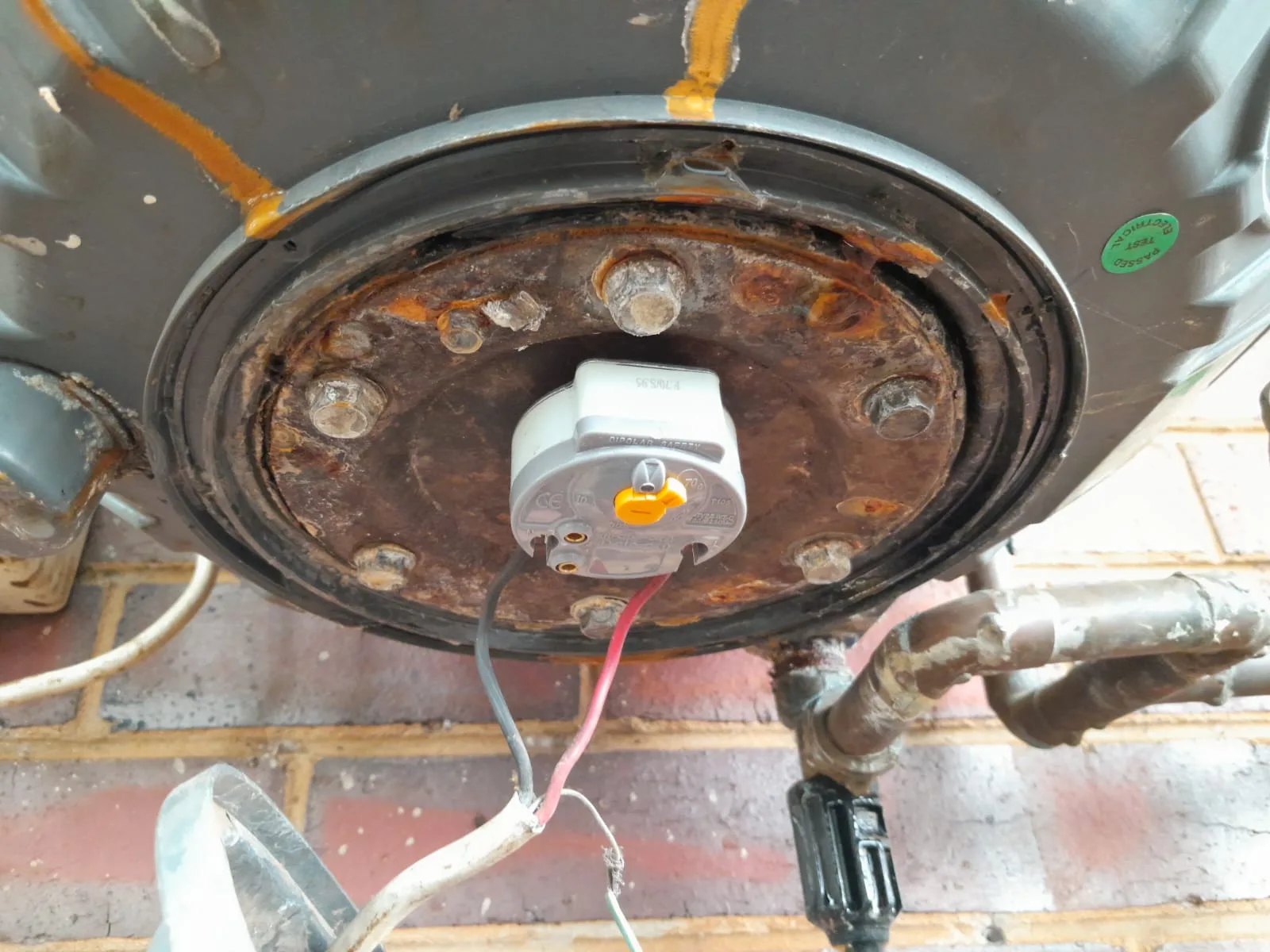
The thermostat controls when the geyser element switches on and off. A faulty or poorly set thermostat can leave water cold, cause overheating, increase electricity use or repeatedly trip the system. Because the thermostat is part of the electrical circuit, testing must be done safely.
Before you worry
Temperature can also be affected by a failed element, mixing valve, pipe losses or unusually high demand. Note whether the problem is constant and whether the water is dangerously hot.
How to recognise the problem
- Water is consistently too hot or too cold.
- The geyser heats only intermittently.
- The reset trips repeatedly.
- Electricity trips during heating.
- The geyser runs for unusually long periods.
Common causes
- Worn thermostat contacts.
- Incorrect temperature setting.
- Poor contact with the cylinder pocket.
- Scale or overheating damage.
- Loose or damaged wiring.
- A separate element fault.
What you can safely check yourself
- Avoid using scalding hot water.
- Switch off the geyser circuit if overheating is suspected.
- Note whether the issue occurs at all outlets.
- Do not remove the electrical cover.
What you should never do
- Do not bypass the thermostat.
- Do not increase the temperature to compensate for another fault.
- Do not work on live wiring.
- Do not repeatedly reset a tripping safety device.
When to call a plumber
Professional help is needed when water is dangerously hot, the geyser does not heat, the reset trips, or the electrical supply trips. These symptoms can involve both plumbing and electrical safety.
How professionals solve it
The circuit is isolated and the thermostat, element and wiring are tested. The correct thermostat is fitted and positioned properly, then the system is monitored through a heating cycle to confirm safe cut-off and stable temperature.
How to prevent it happening again
- Use appropriate temperature settings.
- Address scale and element problems.
- Keep electrical covers secure and dry.
- Investigate repeated resets promptly.
- Use compatible replacement parts.
CUSTOMER QUESTIONS
What does a geyser thermostat do?
It controls when the heating element switches on and off so water reaches a safe target temperature.
Why is water suddenly too hot?
A stuck or failed thermostat, wrong setting or related control fault can allow continued heating.
Why is water cold or only lukewarm?
The thermostat may not call for heat, contacts may be worn, or an element/wiring fault may be present.
Can a thermostat raise electricity use?
Yes. If it fails to switch off correctly the geyser can heat longer than needed.
Why does the reset keep tripping?
Overheating, a faulty thermostat, element problems or wiring defects are common causes.
What temperature should it be set to?
A suitable setting depends on safety, hygiene and system design. A qualified technician can confirm the correct range.
What can I safely do myself?
Avoid scalding outlets, isolate the circuit if overheating is suspected, and do not open electrical covers.
What should I never do?
Do not bypass the thermostat, work on live wiring, or keep resetting a tripping safety device.
How do professionals fix thermostat faults?
They isolate power, test thermostat, element and wiring, fit the correct part and verify a safe heating cycle.
Can Plumb A Nator help with thermostat problems?
Yes. Contact the team for safe diagnosis and geyser thermostat repair in Gauteng.
Need professional plumbing assistance?
We can help you interpret signs linked to thermostat problems and arrange service if required.