
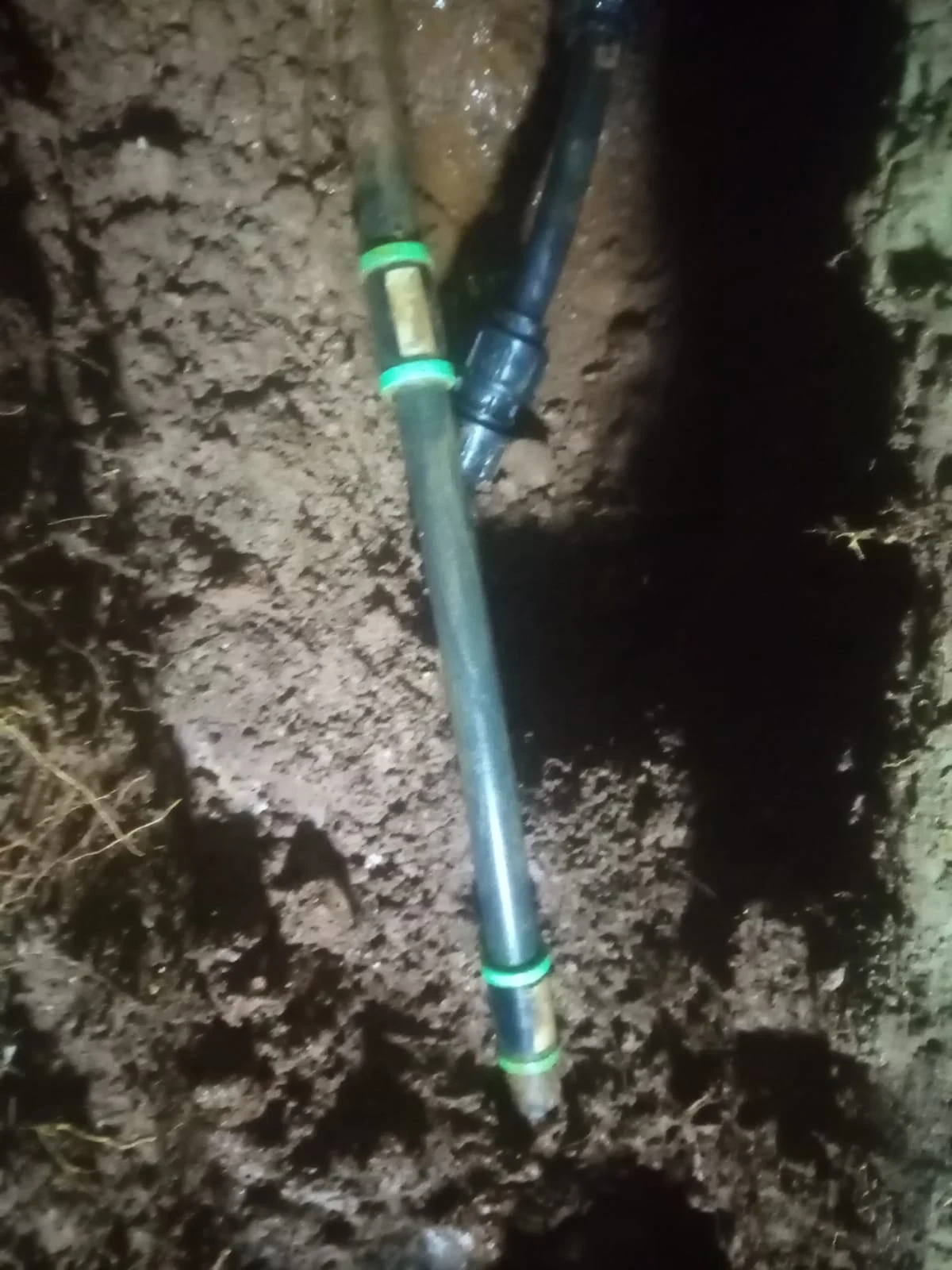
Tree roots do not normally break into a perfectly sound pipe from nowhere. They are attracted to moisture and nutrients escaping through a crack, displaced joint or damaged section. Once inside, fine roots thicken, trap debris and gradually restrict the sewer line.
Before you worry
A tree near a sewer route does not automatically mean roots are the cause. Repeated blockages in the same section, especially after mechanical clearing, are a stronger reason to investigate with a drain camera.
How to recognise the problem
- The same sewer line blocks repeatedly.
- Toilets gurgle or drain slowly.
- Outside inspection points overflow.
- Mechanical cleaning provides only temporary relief.
- A blockage occurs near mature trees or shrubs.
Common causes
- Cracked clay, concrete, PVC or ageing sewer pipes.
- Open or displaced joints.
- Pipe settlement that creates gaps.
- Old repair points or poorly sealed connections.
- Roots seeking moisture during dry periods.
What you can safely check yourself
- Record which fixtures are affected and how often.
- Stop using water when wastewater is backing up.
- Identify nearby trees and the likely sewer route.
- Keep overflow areas isolated and avoid direct contact.
What you should never do
- Do not pour herbicides or corrosive chemicals into the sewer.
- Do not assume cutting the roots is a permanent repair.
- Do not excavate near services without locating the pipe and other utilities.
When to call a plumber
Professional help is needed when the blockage returns, sewage overflows, several fixtures are affected, or roots are suspected near a known sewer route. The line should be inspected after clearing so the entry point can be identified.
How professionals solve it
The plumber first restores flow, then uses CCTV inspection to locate root masses and pipe defects. Roots may be cut mechanically or removed with suitable jetting equipment. Depending on the damage, the pipe may require local repair, lining or replacement.
How to prevent it happening again
- Repair cracked or displaced sewer sections.
- Avoid planting aggressive-root species directly over sewer routes.
- Maintain inspection access points.
- Investigate repeat blockages instead of relying on repeated clearing.
- Keep records of the camera findings and repaired locations.
Frequently asked questions
Will cutting tree roots solve the problem permanently?
Usually not if the pipe opening remains. Roots can regrow through the same defect.
Can roots enter PVC sewer pipes?
Yes, particularly at damaged, poorly joined or displaced fittings, although sound modern joints are more resistant.
Must the tree be removed?
Not always. The priority is repairing the pipe defect. Tree management depends on species, location and the advice of a suitable tree professional.
Looking for a qualified plumber?
Explain your tree roots in sewer pipes concern and we will outline options before work starts.