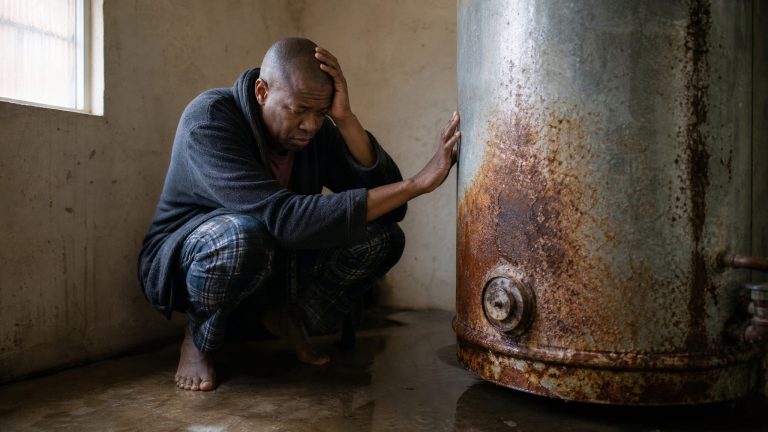
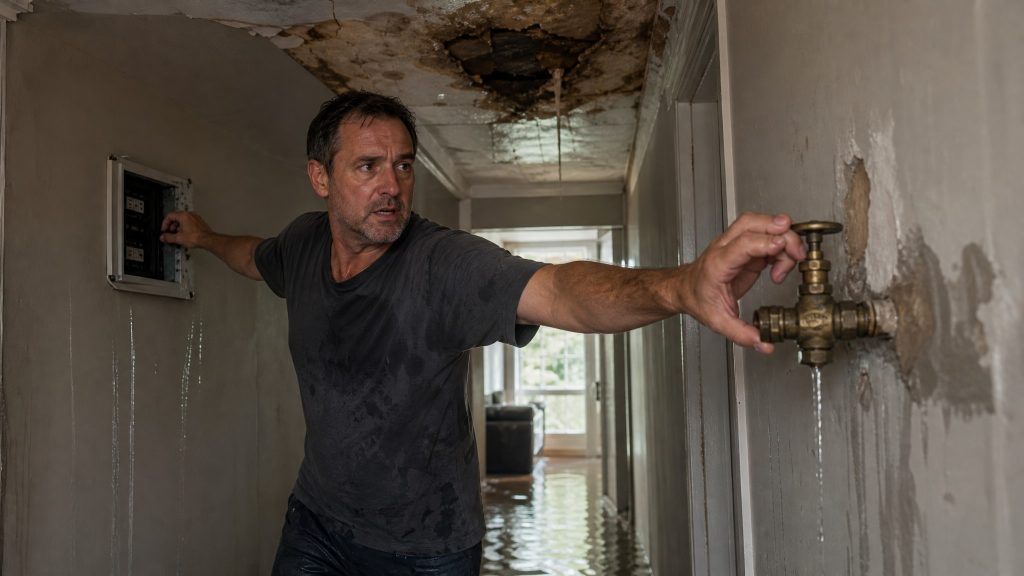
A burst geyser can flood ceilings and wreck a home within minutes. When you need a burst geyser emergency plumber in Pretoria, waiting for standard business hours isn’t really an option, because water damage gets worse with every minute that passes. Our 24-hour plumber Pretoria teams are stationed across the metro specifically to handle these failures at any hour, so help arrives before the ceiling comes down.
Immediate Steps When Your Geyser Bursts in Pretoria
Isolate the water supply and the electrical power the moment you find a leak. That stops electrocution risk and limits how much water gets into your ceiling cavity. While our technicians get to you, these steps protect your property and give you a record for the insurance claim you’ll likely file afterward.
Find your main water stopcock and turn it off completely. This one action stops the refill cycle that turns a small rupture into a flood in your roof space. Then switch off the geyser’s dedicated circuit breaker at your distribution board, to remove any risk of live current reaching standing water. Water conducts electricity well, and an energized element during a burst is a real hazard for anyone nearby.
Don’t try to drain the geyser yourself unless you have plumbing training and the right tools for high-temperature discharge.
Photograph the scene before you clean up any water. Insurers want visual evidence of the initial damage to process claims fairly. Open windows and doors to ventilate soaked areas, which slows mold growth while you wait for the emergency plumber Pretoria geyser specialist. Quick isolation keeps the structural risk down and makes the assessment easier once a professional takes over.
Pretoria Suburbs Covered for Emergency Geyser Response
Our dispatch network positions technicians across the city so response stays fast when a geyser bursts in Pretoria. Whether you’re in the eastern suburbs, the northern precincts, or the central areas, proximity is what determines how quickly we can stop active flooding in your home.
We run emergency crews servicing Menlyn, Faerie Glen, Garsfontein and Moreleta Park in the east, where older housing stock often means tired cylinders. Northern coverage runs through Montana, Sinoville, Wonderboom and Annlin, so attic installations in townhouse complexes get reached without delay. Centurion, Lyttelton and Eldoraigne residents get dedicated support from southern-based units that know the infrastructure quirks in those areas. Hatfield, Brooklyn, Queenswood and Riviera fall under our central deployment zone, so university-area homes and heritage properties get priority attention after hours.
Pretoria emergency plumbers generally prioritize callouts where water is actively flooding living spaces or threatening electrical systems, ahead of minor leaks. If you’re seeing ceiling sagging, water coming through light fittings, or pooling near appliances, say so clearly when you book, so dispatchers can send the nearest vehicle equipped for major extraction work.
What to Expect From Our 24-Hour Plumber Pretoria Callout
Knowing the workflow of a Pretoria emergency plumbing service ahead of time cuts down on the anxiety of waiting. You should know exactly what happens from the moment a technician arrives until they confirm your system is safe again.
Arrival Protocol and Safety Checks
The technician first checks that all utilities are properly isolated before entering the affected area, and repeats the shutdown steps if there’s any doubt they were done right. They assess the structural stability of wet plasterboard and check for hidden moisture behind walls, using thermal imaging or moisture meters. This safety sweep is what prevents secondary collapses or electrical faults during the repair itself.
Diagnostic Process and Repair Options
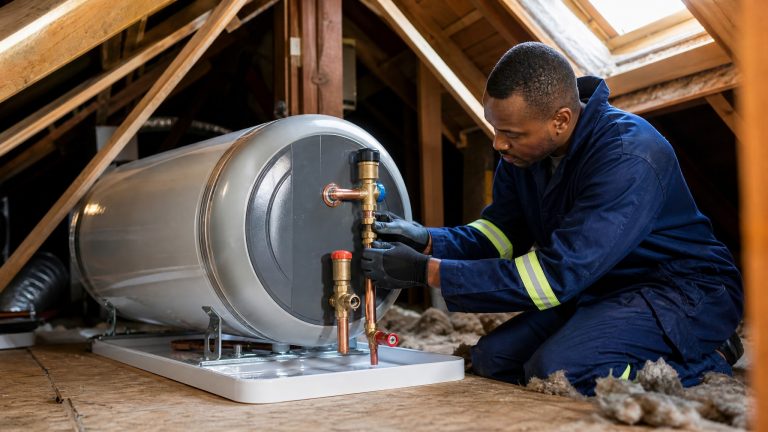
Deciding whether a burst geyser needs repair or full replacement means examining the failure point, the corrosion, and the unit’s age during the after-hours visit. The plumber checks the thermostat, the pressure relief valve and the anode to tell component failure apart from a catastrophic tank rupture. Geyser failures are behind a large share of residential water damage insurance claims in South Africa, which is why getting the diagnosis right matters both for safety and for getting reimbursed.
They test water quality and measure sediment inside the cylinder to work out how much life is left beyond the immediate fault. If the tank shell shows pitting or a weak seam, a patch repair would only be temporary, and potentially dangerous, so the honest advice at that point is replacement. You get a clear explanation of the findings, with photos backing up whatever’s recommended.
Repair vs Replacement: Making the Right Choice During an Emergency
An emergency replacement is a good window to switch to solar hot water, since the ceiling access and drainage are already open. Not every failure calls for full replacement, though. What separates a viable repair from a necessary renewal comes down to specific technical checks, not guesswork.
When a Burst Geyser Can Be Repaired
Component-level fixes make sense when the storage cylinder itself is sound and the failure is a replaceable part, like a thermostat or a valve. Technicians can fit new elements, reset safety switches or replace corroded pipe connections, as long as the tank body passes pressure testing and shows no internal wear. Age matters a lot here: units under eight years old with intact warranties often justify a targeted repair over a full swap.
A repair won’t fix underlying end-of-life deterioration in a cylinder that’s over twelve years old.
Corrosion patterns tell the real story. A pinhole leak points to systemic metal fatigue that’s likely to show up elsewhere soon. If several components have failed at once, or a water quality test shows heavy scaling, spending money on repairs is throwing it at a dying asset. Your emergency plumber will say so plainly, because coming back to fix the same unit three months later doesn’t help anyone.
Upgrading to Solar During Emergency Replacement
When replacement is unavoidable, switching to solar cuts future electricity costs for water heating, and it makes use of the ceiling access the emergency already opened up. The installation labor overlaps a lot with standard replacement work, which brings down the premium usually attached to retrofit projects. Our Pretoria technicians carry Apollo and Alliance solar conversion kits on emergency vehicles, so a same-day upgrade is possible when replacement is needed.
That turns a disaster into a long-term investment that pays off through lower monthly bills. You avoid paying twice for ceiling access, scaffolding and drainage setup, by combining the emergency response with a planned efficiency upgrade. The decision comes down to roof orientation and available mounting space, which the technician checks on-site before recommending a system size.
Solar Geyser Conversions Available for Pretoria Emergencies
What’s already stocked on the vehicle determines whether an emergency upgrade happens today or waits weeks for a special order. That’s why our vehicles carry specific products ready to install immediately. You get proven solar technology without an extended cold-water spell when things go wrong unexpectedly.
Retrofit Options for Existing Electric Geysers
Retrofit conversions keep a functional electric cylinder and add solar collectors and circulation to cut grid dependence a lot. The 200L solar geyser conversion kit suits most family homes and is priced around ZAR 15,449, offering real savings without replacing the storage vessel itself. Smaller households do well with the 150L high-pressure solar geyser conversion at around ZAR 13,451, while larger properties may need the 300L high-pressure solar geyser conversion, priced around ZAR 19,482.
These kits fit existing plumbing configurations with minimal disruption during an emergency install. Retrofit makes sense when your current cylinder is fairly new but you want to hedge against rising electricity tariffs right away.
Complete High-Pressure Solar Systems
A full system replacement becomes necessary when the existing cylinder can’t support a retrofit, or has reached end-of-life at the same time as the emergency. The 200L high-pressure solar geyser from Alliance is a complete thermosyphon system priced around ZAR 19,325, built for medium households that need dependable daily hot water. Larger demand is met by the 300L high-pressure solar geyser at around ZAR 28,085, suited to guest houses or multi-occupancy properties.
Installation follows the protocols in our same-day geyser replacement workflow, keeping the work compliant with SANS standards even on an emergency timeline. Choosing a complete system generally means better warranty coverage and no compatibility questions between old and new components.
Transparent Pricing for Geyser Repair Pretoria Services
Not knowing what a job will cost adds to the stress of an emergency, so understanding the fee structure beforehand prevents unpleasant surprises on the invoice. You shouldn’t face hidden charges just because you called outside normal business hours.
Callout fees cover the technician’s travel, diagnostic time and after-hours availability, whether or not repairs go ahead, and that reflects the real cost of keeping a 24/7 response team across Pretoria. The final price depends on parts, labor complexity, how accessible the geyser is, and whether the job falls on a weekend or public holiday when supplier markups apply. We give written estimates before starting any non-emergency portion of the work, so you’re in control of spending once the immediate danger is contained.
For cost breakdowns specific to your suburb and system type, see our Pretoria geyser installation pricing guide, which lays out typical ranges for different scenarios. Emergency premiums exist, but they stay proportional to the actual extra cost involved, not an arbitrary multiplier. Transparency means explaining each line on the invoice so you know what you’re paying for.
Insurance Claims and Warranty Support After a Geyser Burst
Paperwork on top of water damage overwhelms a lot of homeowners, yet proper documentation is what determines whether an insurer covers the restoration in full. You need specific evidence gathered during the emergency response to support a successful claim and avoid the usual rejection reasons.
Photograph all the damage before remediation starts: wide shots for room context, close-ups of the failure point on the geyser itself. Keep the damaged component if you can, since adjusters sometimes want to inspect it to tell wear apart from a manufacturing defect. Get a detailed technical report from the attending plumber describing the cause, the extent, and the recommended remedial action, in language insurers recognize. Our team documents findings systematically, because we know what claims assessors need to see before they’ll approve a payout.
Check your policy wording on gradual wear exclusions. Some insurers deny cover for cylinders past a certain age, regardless of how sudden the failure looked. The geyser burst insurance claim process resource covers common pitfalls and documentation requirements specific to South African policies. For water damage more broadly, our burst pipe emergency procedures article covers mitigation steps that apply across different types of failure.