Water spreading across your floor doesn’t wait for a convenient time. A burst pipe emergency demands action in minutes, not hours. What you do right now decides whether you’re mopping up a small mess or replacing a ceiling. This guide walks South African homeowners through the exact steps to take, why load shedding makes things worse, and when it’s time to stop improvising and call a professional.
Burst Pipe Emergency: What to Do Right Now (Step-by-Step)
The most common cause of a worsening burst pipe isn’t the initial crack. It’s the delay between discovery and shutting off the mains. Every extra minute the water runs adds to the damage bill. So the priority sequence below matters more than any repair skill.
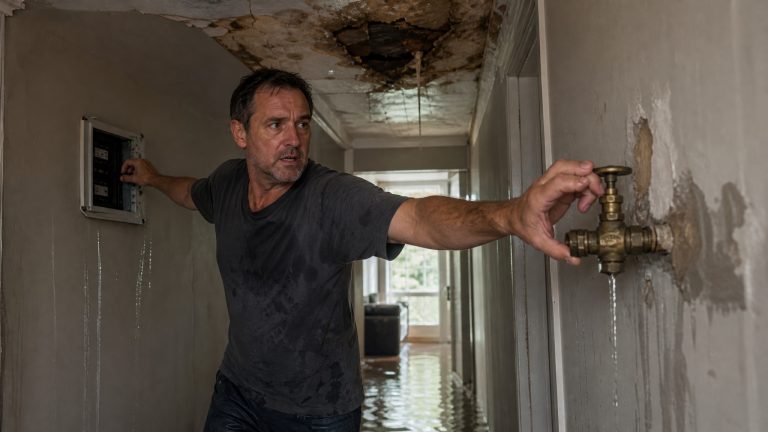
First 5 Minutes: Stop the Water and Power
- Shut off the water mains immediately. This is the single most important action you can take.
- Switch off the electricity to any affected area, especially if water is near plug points, lights, or the geyser circuit.
- Move furniture, electronics, and valuables away from the water before it spreads further.
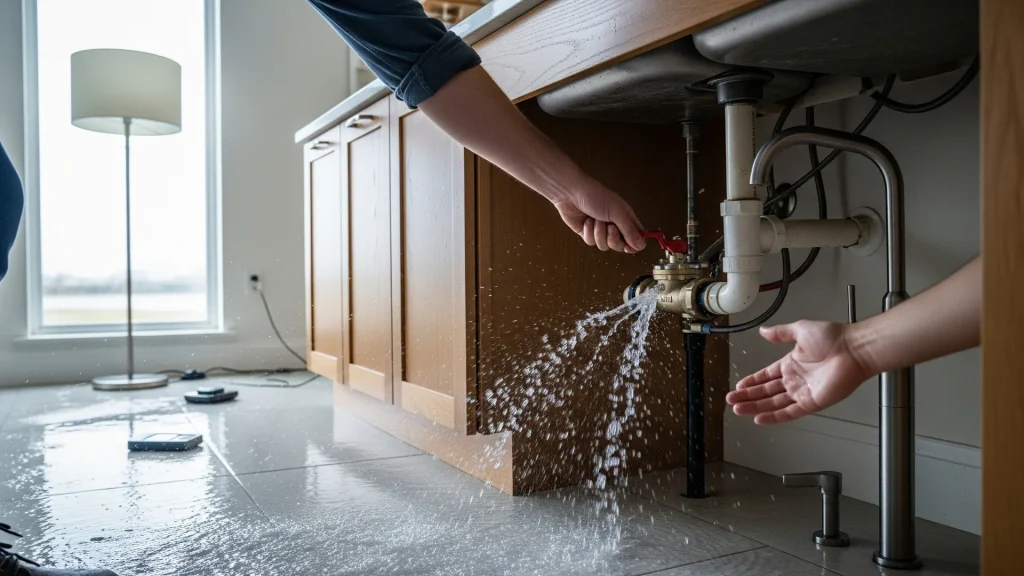
- Open a nearby tap to drain the remaining pressure from the pipes.
- Note the location and severity of the burst so you can describe it clearly to a plumber.
Even a modest household leak can lose well over a thousand litres of water in a single day. That’s why cutting the mains within minutes matters far more than the repair itself. Once the water is off, you can slow down and think clearly about next steps.
How to Shut Off Your Water Mains in a South African Home
Knowing how to stop a burst pipe fast starts with knowing where your mains valve actually is. Many homeowners only discover this during the emergency itself, which costs precious minutes.
Where to Find the Mains Valve
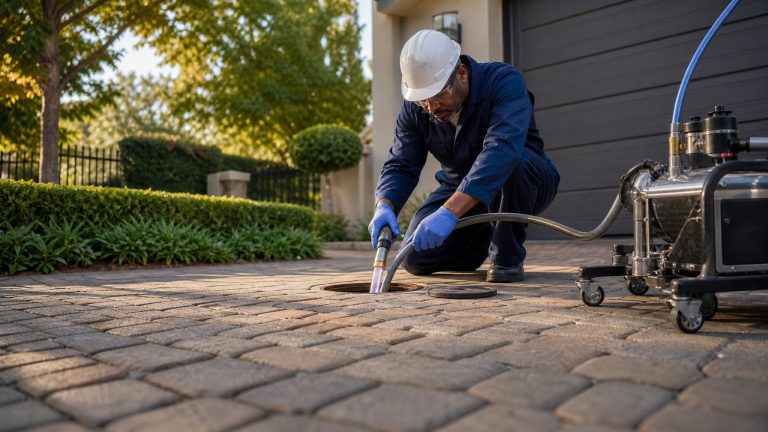
Most South African properties have a water meter near the street boundary, usually inside a small concrete or plastic box set into the pavement or driveway. Next to or just before that meter, there’s typically a stopcock or ball valve you can turn by hand or with a spanner. Some homes also have a secondary internal valve, often under the kitchen sink or near an outside tap. This one controls water to the house itself rather than the whole property.
Burst Pipe Shut Off Water Mains: Common SA Layouts
Layouts vary depending on when and how the property was built.
- Freestanding houses usually have the meter box on the pavement outside the property, with a shut-off valve right beside it.
- Sectional title units and complexes often share a mains connection. You may need to shut off water at an internal isolation valve for your unit specifically, or contact the body corporate for the shared valve location.
- Older homes, particularly those built before the 1980s, sometimes have the valve buried under grass, gravel, or paving near the boundary wall rather than in a visible box.
In older Johannesburg and Cape Town suburbs with pre-1980s plumbing, the mains valve is often a small brass tap near the water meter at the property boundary, sometimes buried under grass or paving. Locate and test your valve now, before an emergency, so you’re not searching for it while water pours through the ceiling. Knowing the water mains location for your specific property type is one of the simplest ways to prepare for a plumbing emergency.
Load Shedding and Burst Pipes: Why Power Cuts Make It Worse
Load shedding doesn’t just cut your lights. It changes how water moves through your pipes, and that has real consequences for burst pipe risk.
Pressure Surges When Power Returns
When power drops, electric pumps and geyser elements stop working mid-cycle. When power returns, pressure in the system can spike suddenly as pumps restart and heating elements resume. Pipes and joints already weakened by age, corrosion, or a slow existing leak fail far more easily under that surge than under steady, normal pressure. If your home already struggles with inconsistent flow, it’s worth understanding broader water pressure problems in SA homes and how they interact with power interruptions.
Burst Pipe After Load Shedding: What Changes in Your Response
A burst pipe after load shedding often shows up right as the power comes back on, sometimes hours after the outage started. This means your response needs an extra step. If you know power is about to be restored and you’ve noticed any dampness, weak flow, or unusual noise from your pipes during the outage, shut off the mains before the surge hits rather than after. Many SA homeowners recognise this pattern: a geyser pipe bursts just after power is restored following load shedding, because the sudden pressure surge stresses already-weakened joints. If your geyser has been showing early warning signs, it’s also worth checking whether the issue is geyser pressure relief valve leaks rather than the pipe itself.
Temporary Fixes vs Calling an Emergency Plumber
Once the mains are off and the immediate danger has passed, you’ll want to limit further damage while you arrange proper repairs. There’s a real difference between a sensible stop-gap and a fix that only delays the inevitable.
Safe DIY Containment While You Wait
A burst pipe temporary fix can buy you time without making things worse, as long as it’s genuinely temporary.
- Wrap the damaged section tightly with a rubber sheet or old inner tube, then secure it with hose clamps or several layers of plumber’s tape.
- Use a pipe repair clamp if you have one on hand, tightened firmly over the split.
- Place buckets, towels, and old sheets under and around the leak to catch drips and protect flooring.
- Prop up any sagging ceiling boards carefully rather than pushing on them. Waterlogged boards can collapse suddenly.
When a Temporary Fix Is Not Enough
None of these measures repair the pipe. They only reduce mess while you wait for a professional. If the burst is at a joint, if the pipe is a pressurised line feeding the geyser, or if you can’t get a clamp to hold without leaking, stop trying to manage it yourself. It’s worth understanding when a DIY temporary fix isn’t enough before you invest more time patching something that needs a proper repair. At that point, calling an emergency plumber for the burst pipe is the only sensible option. Waiting rarely saves money once you account for the water damage.
Signs of a Hidden Burst Pipe in Walls or Ceilings
Not every burst pipe announces itself with a spray of water across the kitchen. Some bursts happen inside a wall cavity or above a ceiling, out of sight, and the damage builds quietly until it’s serious.
Detecting a Burst Pipe Behind Walls
Watch for these signs of a burst pipe in a wall:
- Damp or discoloured patches on paint or wallpaper that grow over hours or days
- A musty, mouldy smell in a room with no visible leak
- Warm patches on a wall, which can indicate a hot water pipe has failed
- Your water meter still ticking over when every tap in the house is closed
Hidden burst pipe detection often comes down to that last point: if the meter is moving with nothing turned on, water is going somewhere in the system. Ageing plumbing raises the odds of this happening. If your home has old galvanised or ageing pipes in older houses, treat any of these signs seriously.
Geyser Burst Pipe and Ceiling Leak Scenarios
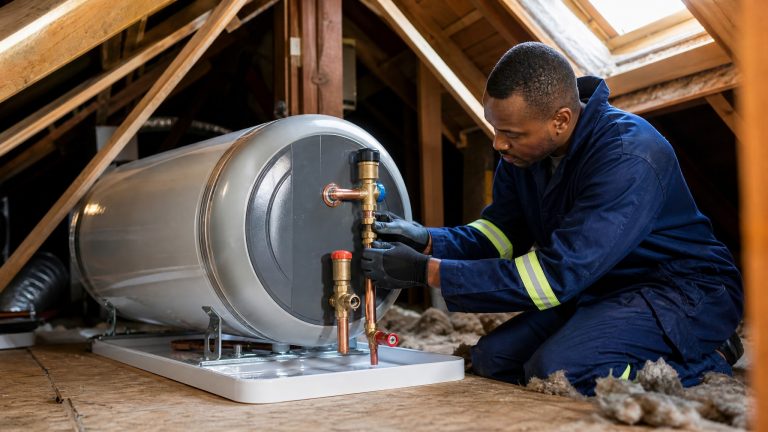
A burst pipe in the ceiling is one of the more common hidden-leak scenarios in South African homes, largely because the geyser itself usually sits in the roof space. Signs of a geyser burst pipe overhead include a sudden wet patch on the ceiling board, sagging or bulging plaster, and water dripping from a light fitting. Most qualified plumbers advise treating any ceiling stain that appears suddenly and grows within hours as an active burst pipe emergency rather than a slow, ignorable leak. If the geyser itself is the source rather than a connecting pipe, it’s worth reviewing typical geyser replacement costs so you know what you’re dealing with before the plumber arrives.
Limiting Water Damage and Handling Your Insurance Claim
Once the water is off and help is on the way, your focus shifts to protecting the property and preparing for a possible claim.
Water Damage Prevention Checklist
- Move furniture, rugs, and electronics away from wet areas immediately
- Open windows and doors to ventilate the space and slow mould growth
- Mop up standing water rather than letting it soak into flooring or skirting
- Use fans or a dehumidifier if you have one, to speed up drying
- Check ceilings and walls in adjoining rooms, since water travels sideways along beams and joists
Acting on burst pipe water damage prevention quickly cuts the chance of mould, warped flooring, and electrical faults developing later.
Documenting a Burst Pipe Insurance Claim in South Africa
Before any repairs begin, photograph and video the damage from multiple angles. South African insurers generally expect to see the source of the burst, the extent of the water damage, and proof that you acted promptly to limit further loss. Keep any receipts for emergency containment materials, and ask your plumber for a written report describing the cause and location of the burst. This documentation supports a burst pipe insurance claim in South Africa. It also helps avoid disputes over whether the damage was sudden or the result of long-term neglect, which many policies exclude. Once your claim is underway, you may also want to look into how much burst pipe repair typically costs so you can assess quotes against your policy’s payout.
A burst pipe is stressful, but the sequence is simple: shut off the mains, cut the power, contain what you can, and get a professional in fast. If you’re dealing with a burst pipe right now, don’t wait for the damage to spread further. You can find a reliable emergency plumber through plumber-plumbers.co.za and get a callout booked before the water does any more harm.