If you own a house built between the 1950s and the 1970s in South Africa, there’s a good chance your sewer and stormwater lines are still original. Concrete pipe replacement in old houses has become a common project for owners of these properties, simply because the pipes are reaching the end of their working life at the same time. Understanding why this matters now, what the warning signs look like, and what replacement actually costs can save you from a much bigger repair bill later.
Why South African Homes from the 1950s-1970s Still Have Concrete Pipes
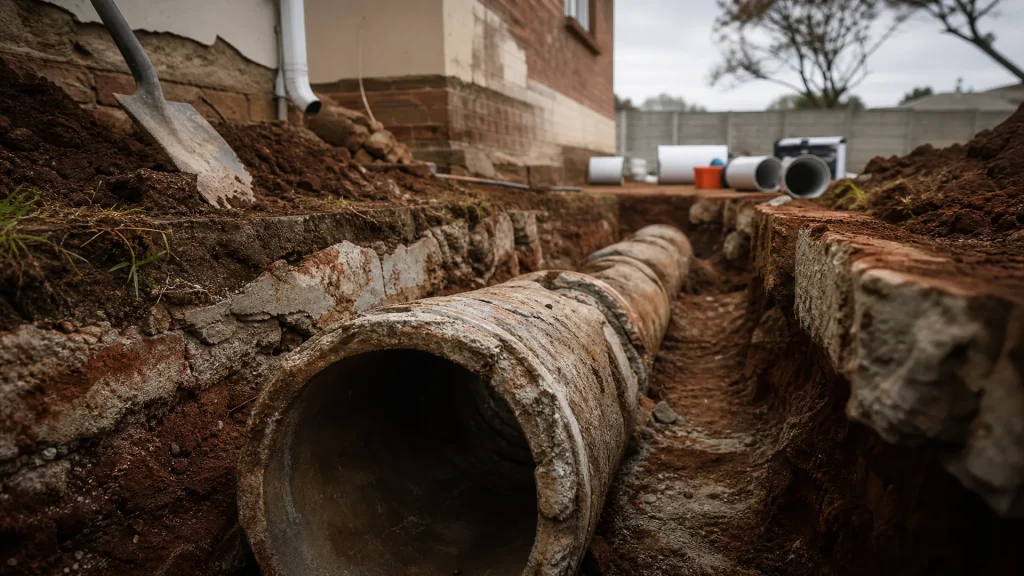
Homes built across South Africa from the 1950s through the 1970s were commonly fitted with concrete and asbestos-cement (AC) sewer and stormwater pipes, materials that were standard practice before uPVC became the norm. Concrete was cheap, strong under load, and readily available, so it became the default choice for municipal connections and private drainage in most suburbs of that era. Builders didn’t consider it a temporary fix. At the time, it was expected to last for generations.
That’s part of the problem homeowners face today. Concrete pipe corrosion in South Africa is a known issue in older municipal networks and private properties alike, and it doesn’t announce itself until damage is already underway underground.
Concrete vs asbestos-cement pipe: what builders used and when
Solid concrete pipe was typically used for larger stormwater and sewer runs, while asbestos-cement pipe was common for smaller diameter sewer and water connections, especially from the 1950s into the 1970s. Visually, the two can look similar once buried and coated in soil, which is why homeowners often can’t tell which one they have just by looking at an exposed pipe end. A plumber can usually identify the material during a camera inspection or when a section is exposed for repair. That identification matters, because AC pipe carries specific handling requirements that plain concrete doesn’t.
The Concrete Sewer Pipe Deterioration Timeline
Concrete and asbestos-cement pipe runs of this era are now well past the 50-70 year service life typically cited for these materials, so most surviving installations are already in their expected degradation window. That doesn’t mean every old pipe is about to fail. It does mean the odds of hidden deterioration rise sharply the older the installation gets, and few homeowners have any record of the pipe ever being inspected, let alone replaced.
How hydrogen sulphide and root intrusion accelerate decay
Root ingress, hydrogen sulphide (sewer gas) corrosion, and ground movement are the three most commonly cited causes of concrete sewer pipe failure in older suburbs. Sewer gas reacts with moisture inside the pipe to form a mild acid that slowly eats away at the concrete’s inner surface, weakening the pipe from the inside out. Tree and shrub roots, meanwhile, are drawn to the moisture and nutrients inside a sewer line and will exploit any hairline crack or loose joint to work their way in. Once roots are established, they widen existing damage and trap solids. That speeds up blockages and further corrosion.
When a 50-year-old pipe becomes a 5-year problem
Deterioration in concrete pipe generally follows a pattern: fine hairline cracking first, then joint separation as the surrounding soil shifts or the pipe loses structural strength, and finally partial or full collapse. The tricky part is that a pipe can sit in the cracking or joint-separation stage for years without any obvious symptom at the surface. Then a heavy rain event, nearby construction, or root growth pushes it past a tipping point, and what looked like a stable 50-year-old pipe becomes an urgent five-year (or five-day) problem. That’s why plumbers who work on older properties treat age alone as a reason for caution, even when there’s nothing visible yet.
Warning Signs You Need Concrete Pipe Replacement in Your Old House
Most concrete and AC pipe failures give some warning before they become an emergency, but the signs aren’t always where homeowners think to look.
Above-ground symptoms vs below-ground evidence
Above ground, watch for damp or discoloured patches on lawns that don’t dry out even in warm weather, unusually lush or fast-growing grass in one strip of the yard, gurgling drains, slow-draining sinks and showers, and a persistent sewage smell near the house or garden. Cracks in paving or driveway sections that sit above a pipe run, and small sinkholes or soft spots in the soil, are also strong indicators of below-ground pipe collapse or washout.
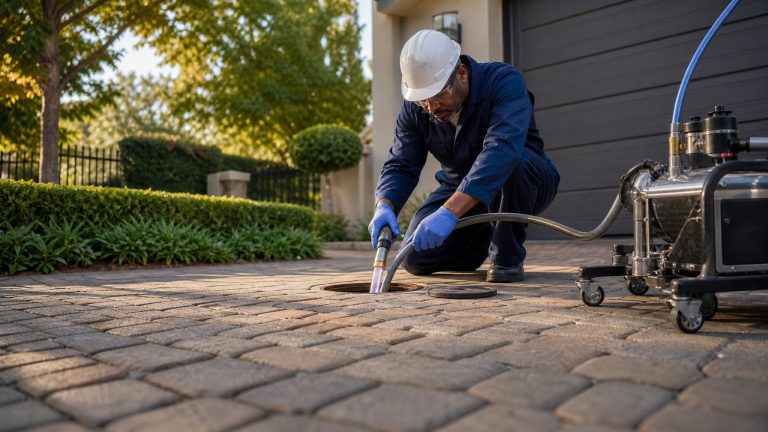
Below ground, the evidence is less visible but more definitive: joint separation, root masses inside the pipe, and sections of collapsed or crushed piping. These are usually only confirmed once a professional runs a camera through the line. Because many of these symptoms overlap with other plumbing problems, it helps to understand sewage backup causes and solutions before assuming the worst, and to rule out simpler blockages first.
Plumbers who regularly work on pre-1980 properties generally recommend a CCTV drain camera inspection before any renovation or property purchase, since surface symptoms often lag years behind internal pipe collapse. If you’re planning to buy an older home, it’s worth knowing what to check during a plumbing inspection before buying an older home so concrete and AC pipe condition doesn’t get missed in the general home inspection.
If you’re already noticing damp patches, sinkholes, or slow drains at home, a quick photo sent to a plumber can often flag whether the issue looks urgent, before you commit to a full inspection.
Trenchless vs Traditional Pipe Replacement: Costs and Trade-offs
Once a concrete or AC pipe is confirmed to be failing, the next decision is how to replace it. There are two broad approaches, and the right one depends on the pipe’s condition, location, and access.
How trenchless pipe technology works for concrete and AC lines
Trenchless pipe technology covers methods like pipe bursting and pipe relining, both of which avoid digging up the full length of the old pipe. Pipe bursting pulls a new pipe through the path of the old one while fracturing the original concrete or AC pipe outward into the surrounding soil. Relining instead inserts a resin-coated liner inside the existing pipe, which cures in place to form a new internal pipe wall. Both methods work through small access points rather than a continuous trench, so there’s far less disruption to lawns, driveways, and paving.
Trenchless methods aren’t right for every situation. A badly collapsed section, sharp bends, or a pipe with severe misalignment can limit what relining or bursting can achieve, and in those cases a section of open trenching may still be needed.
What drives underground pipe replacement cost up or down
Underground pipe replacement cost in South Africa depends heavily on pipe length, depth, access, and the extent of damage. Traditional open-trench replacement generally costs less per metre in materials but adds expenses for excavation, reinstating paving or landscaping, and labour time, especially where pipes run under driveways, patios, or established gardens. Trenchless methods usually carry a higher cost per metre for the specialised equipment and materials, but that’s often offset by lower excavation and reinstatement costs, particularly on properties where digging a full trench would mean breaking up expensive surfaces.
Distance from the point of access, depth of the pipe, soil type, and whether the work needs to tie into a municipal connection all affect the final quote. For comparison, homeowners who’ve dealt with a single burst section rather than a full pipe replacement can get a sense of scale from a burst pipe repair cost guide, though a full concrete or AC pipe replacement is a larger undertaking than a single repair. Because every property and pipe run is different, getting an on-site quote is the only reliable way to know what your specific job will cost.
Asbestos Cement Pipe Replacement: Safety and Compliance Considerations
Asbestos cement pipe replacement carries safety requirements that plain concrete pipe work doesn’t. AC pipe contains bonded asbestos fibres, which are only a health risk when the material is broken, drilled, or disturbed in a way that releases dust. Intact, buried AC pipe sitting undisturbed underground isn’t an immediate hazard, but any excavation, cutting, or removal work changes that.
Handling and disposal rules for AC pipe sections
Professional handling of AC pipe generally follows standard safety practice: wetting down sections before cutting to limit dust, using appropriate protective equipment, and disposing of removed sections through a licensed waste facility rather than general rubble removal. A reputable plumber or contractor will be familiar with this process and should be able to explain how they plan to handle and dispose of any AC pipe sections found on your property. If a quote doesn’t mention AC handling procedures at all, that’s worth asking about directly before work begins.
Insurance, Warranties, and Getting a Reliable Quote
Replacing a failed concrete or AC pipe is a significant expense, so it’s worth knowing where insurance can help and where it likely won’t.
What home insurance typically covers (and excludes)
Most South African home insurance policies cover sudden and accidental damage, such as a pipe bursting and causing water damage to floors, walls, or belongings. Gradual deterioration, however, is usually excluded. Concrete and AC pipe failure is typically a slow process of corrosion, cracking, and root intrusion rather than a single sudden event, so insurers often treat the pipe replacement itself as a maintenance issue rather than a covered claim. The resulting water damage from a sudden failure may still be covered even if the pipe replacement isn’t, so it’s worth reading your policy wording carefully or asking your insurer directly how they classify old pipe failures. Any warranty from a plumber on replacement work is separate from your home insurance, and should be confirmed in writing before the job starts.
Questions to ask before hiring a plumber for pipe replacement
Before hiring anyone for concrete pipe replacement in an old house, ask what method they recommend and why, what warranty applies to workmanship and materials, whether they handle AC pipe disposal in-house or subcontract it, and whether the quoted price includes reinstating paving, landscaping, or driveways disturbed during the work. It’s also worth asking whether the job requires any local permits, since plumbing permit requirements for underground work can affect both timeline and cost. Comparing at least two quotes, and confirming both are based on the same scope of work, helps avoid surprises partway through the job.
If you suspect slow drains or recurring blockages might be pointing to a bigger pipe problem, it’s worth checking blocked drain cleaning cost factors to understand whether you’re dealing with a simple clog or something more serious underground. And if your concerns extend beyond the sewer line to the rest of your home’s plumbing, it can help to see how ageing copper pipes compare to modern plastic plumbing so you get a full picture of what an older property’s pipe network is facing.
Concrete pipe replacement in an old house is rarely urgent until suddenly it is. Given how far past their expected service life most 1950s-1970s installations already sit, a proactive inspection is a far cheaper starting point than an emergency callout after a collapse. If you own a pre-1980s property and haven’t had your sewer line camera-inspected, it’s worth arranging one before the next heavy rain season puts it to the test. To find a reliable plumber for major pipe work, get an on-site assessment before small warning signs turn into an expensive, disruptive failure.