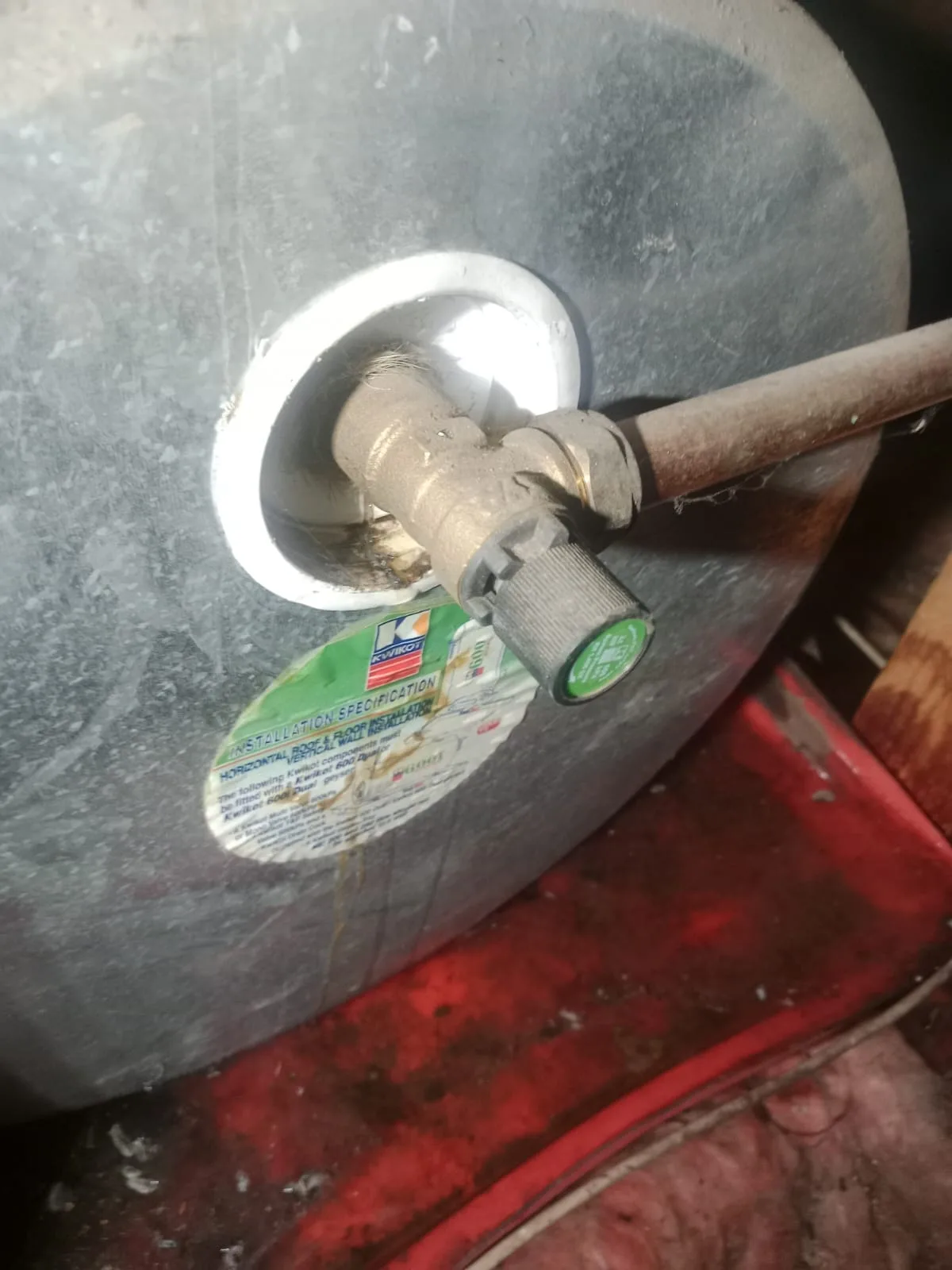
Regular geyser maintenance focuses on early detection rather than unnecessary disturbance. Visible pipework, valves, discharge points, the drip tray and hot-water performance can reveal developing problems before they cause major damage.
Before you worry
Homeowners should limit checks to safe visual observations. Electrical testing, valve servicing and work inside the ceiling should be handled by suitably qualified professionals.
How to recognise the problem
- New drips or corrosion around valves.
- Changes in heating time or hot-water capacity.
- Unusual noises during heating.
- Water in the drip tray.
- Blocked or redirected discharge pipes.
- High pressure or water hammer.
Common causes
- Ageing seals and valves.
- Scale accumulation.
- Pressure fluctuations.
- Corrosion.
- Poor installation or unsupported pipework.
- Blocked drainage from the tray.
What you can safely check yourself
- Check visible discharge outlets for unusual flow.
- Look for ceiling stains beneath the geyser.
- Listen for new noises.
- Test hot-water performance at normal outlets.
- Keep records of service dates and repairs.
What you should never do
- Do not open electrical covers.
- Do not operate or block safety valves unnecessarily.
- Do not enter an unsafe ceiling space.
- Do not drain the geyser without proper procedure.
When to call a plumber
Arrange inspection when there are leaks, pressure changes, electrical trips, persistent noise, poor heating or an ageing unit with no recent service history.
How professionals solve it
A maintenance visit may include checking pressure-control components, visible pipework, the tray and drain, electrical safety, thermostat operation, element condition and signs of corrosion. Any servicing should finish with leak and performance testing.
How to prevent it happening again
- Inspect visible areas every few months.
- Address small leaks immediately.
- Keep tray drainage clear.
- Use compliant replacement components.
- Review replacement planning as the unit ages.
CUSTOMER QUESTIONS
How often should a geyser be checked?
Do a visual homeowner check every few months. Professional intervals depend on age, water quality and manufacturer guidance.
Does flushing a geyser remove scale?
It can help in some systems when done correctly, but it may not remove hard deposits from every component.
Can maintenance prevent every failure?
No, but regular checks catch many developing problems early and reduce the chance of sudden water damage.
What can I safely inspect myself?
Visible discharge outlets, ceiling stains under the geyser, new noises, hot-water performance at taps, and service records. Stay out of unsafe ceilings.
What must I never do?
Do not open electrical covers, block safety valves, enter an unsafe ceiling space, or drain the geyser without the correct procedure.
Why is water in the drip tray a concern?
It often means a valve is discharging, a joint is leaking, or drainage is blocked. Investigate before the tray overflows into the ceiling.
When should I call a plumber?
Leaks, pressure changes, electrical trips, persistent noise, poor heating, or an ageing unit with no recent service history.
What does a professional maintenance visit include?
Checks of pressure-control components, visible pipework, tray and drain, electrical safety, thermostat and element condition, and leak/performance testing.
How do I reduce repeat issues?
Inspect visible areas regularly, fix small leaks quickly, keep tray drainage clear, use compliant parts, and plan replacement as the unit ages.
Can Plumb A Nator help with geyser servicing?
Yes. Contact the team for inspection, repair or replacement advice across Gauteng service areas.
Need help with geyser maintenance checklist?
Tell us how geyser maintenance checklist affects your property and we will help plan the right response.