
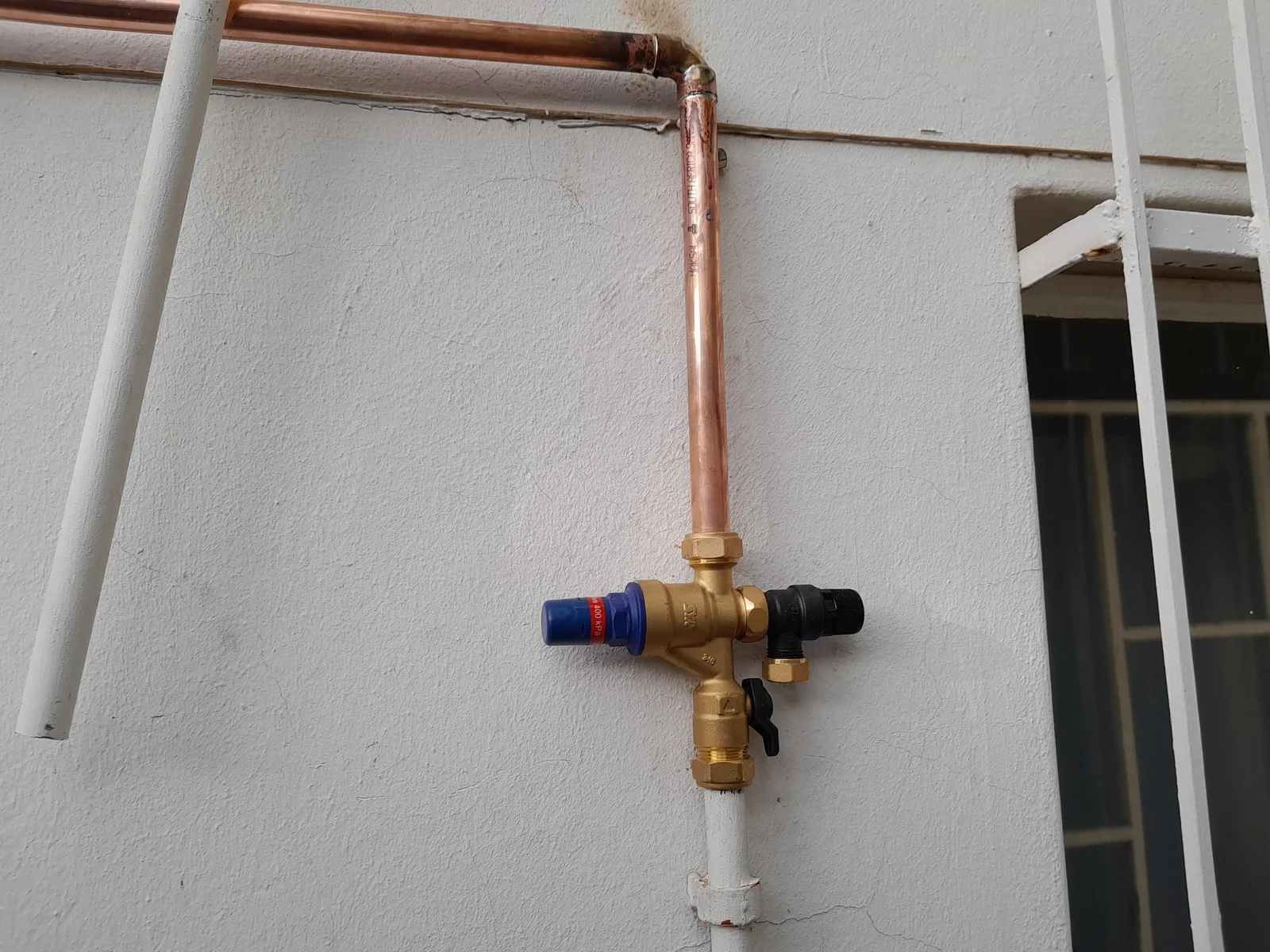
A geyser pressure-control valve regulates incoming water pressure and helps protect the hot-water system. Some discharge can be normal during heating, but constant flow, heavy dripping or water appearing in the wrong place may indicate excessive pressure, valve failure or another installation problem.
Before you worry
A small amount of water from a designated discharge pipe while the geyser heats can be normal. The important questions are how much water is flowing, whether it stops, and whether the discharge comes from the correct pipe.
How to recognise the problem
- Continuous dripping or flowing from the discharge pipe.
- Water hammer or unusually high pressure at hot taps.
- Leaks around the valve body or connections.
- The valve whistles or vibrates.
- Hot-water pressure changes suddenly.
Common causes
- Normal thermal expansion during heating.
- Excessive municipal or booster-pump pressure.
- A worn or contaminated valve seat.
- Incorrect valve rating or installation.
- Blocked discharge pipework.
- A failed expansion-control component.
What you can safely check yourself
- Observe when the valve discharges and for how long.
- Check whether cold-water pressure is unusually high at several outlets.
- Keep the discharge point visible and unobstructed.
- Record the valve markings without dismantling it.
What you should never do
- Do not cap or plug a discharge pipe.
- Do not adjust sealed pressure-control components.
- Do not replace a valve with one of an unknown rating.
- Do not ignore continuous high-volume discharge.
When to call a plumber
Call a plumber when discharge is constant, pressure is excessive, the valve body leaks, or the discharge pipe is blocked or incorrectly routed. Pressure-control faults can damage the geyser and connected fittings.
How professionals solve it
The plumber measures supply pressure, checks the valve rating and installation, inspects discharge routing and tests related components. A faulty valve is replaced with a compliant, correctly rated unit and the system is retested under pressure and during heating.
How to prevent it happening again
- Use correctly rated pressure-control equipment.
- Keep discharge lines clear.
- Investigate water hammer and pressure surges.
- Inspect valves during geyser maintenance.
- Avoid unapproved booster-pump settings.
CUSTOMER QUESTIONS
Is it normal for a geyser valve to drip?
Limited discharge during heating can be normal as water expands. Constant or heavy flow needs checking.
Can I close the discharge pipe to stop water loss?
No. Blocking a safety discharge path is dangerous and can damage the geyser and connected fittings.
Why is my hot-water pressure suddenly high?
The pressure-control valve may be faulty, incorrectly rated, or affected by supply-pressure or booster-pump changes.
When is discharge a real problem?
When it is continuous, high-volume, comes from the wrong place, or is paired with water hammer, body leaks or pressure spikes.
What can I safely observe myself?
Note when the valve discharges and for how long, check whether cold pressure is high at several taps, and keep the discharge point visible.
What must I never do?
Do not cap the discharge, adjust sealed pressure components, fit an unknown-rated valve, or ignore continuous high-volume discharge.
What causes excess discharge?
Thermal expansion, high municipal or booster pressure, a worn valve seat, wrong valve rating, blocked discharge pipework, or a failed expansion-control part.
How do professionals fix it?
They measure supply pressure, check valve rating and installation, inspect discharge routing, replace a faulty valve with a compliant unit, and retest under pressure and heat.
How can I reduce repeat valve problems?
Use correctly rated equipment, keep discharge lines clear, investigate water hammer, inspect valves during maintenance, and avoid unapproved booster settings.
When should I call Plumb A Nator?
For constant discharge, excessive pressure, valve-body leaks, blocked routing, or when you need the valve inspected or replaced safely.
Need help with geyser pressure valve explained?
Tell us how geyser pressure valve explained affects your property and we will help plan the right response.