
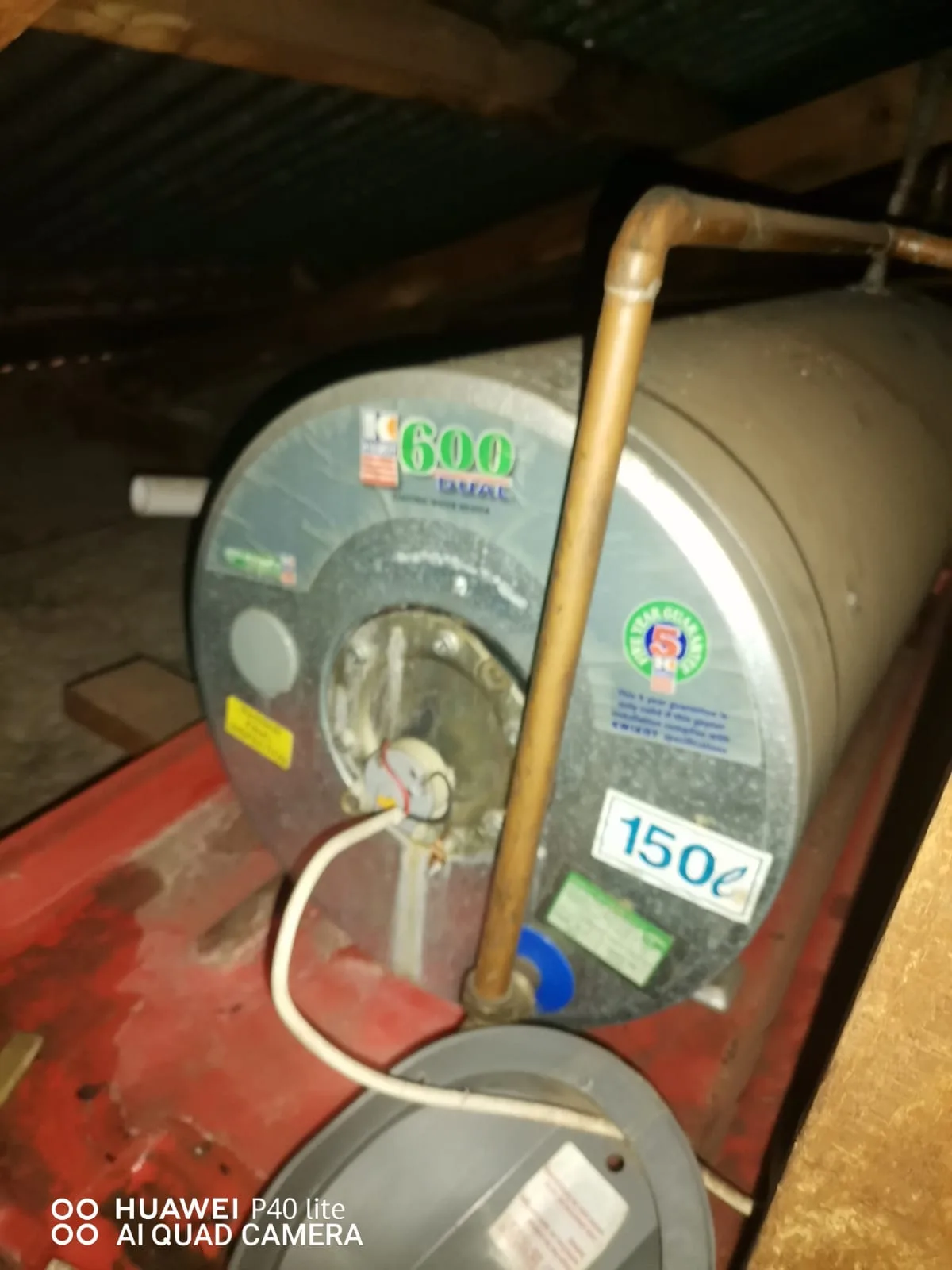
Water near a geyser can come from a valve, connection, overflow, drain cock, tray or the cylinder itself. The source matters: a minor fitting leak may be repairable, while a corroded cylinder can require replacement and may release a large volume of water.
Before you worry
Do not assume every drip means the cylinder has burst. Trace the visible direction of the water from a safe distance and note whether it appears only while heating or flows continuously.
How to recognise the problem
- Water stains or sagging ceiling boards.
- Dripping from valves or pipe joints.
- Water collecting in the geyser tray.
- Continuous flow from an overflow or discharge pipe.
- Rust, corrosion or moisture on the cylinder casing.
- A sudden drop in hot-water pressure.
Common causes
- Loose or failed pipe connections.
- Worn pressure or expansion valves.
- A leaking drain cock or vacuum breaker.
- Corrosion of the inner cylinder.
- Excessive pressure.
- A failed drip tray or blocked tray drain.
What you can safely check yourself
- Switch off the geyser electricity if water is near electrical components and it is safe to do so.
- Close the water supply to the geyser if the leak is significant and the valve is accessible.
- Move belongings away from the affected ceiling area.
- Photograph the leak and note which pipe is discharging.
What you should never do
- Do not stand beneath a bulging or saturated ceiling.
- Do not touch wet electrical fittings.
- Do not plug safety discharge pipes.
- Do not enter a flooded ceiling void.
When to call a plumber
Treat heavy leaking, ceiling saturation, electrical tripping or visible cylinder corrosion as urgent. Smaller continuous leaks also need prompt repair because they can worsen and waste water.
How professionals solve it
A plumber isolates the system, identifies the exact source, checks pressure and assesses the cylinder, valves, tray and pipework. Repair may involve replacing a valve or fitting, resealing a connection, repairing tray drainage or replacing the geyser.
How to prevent it happening again
- Inspect visible valves and pipes regularly.
- Keep the tray drain clear.
- Maintain correct pressure-control equipment.
- Repair corrosion and small leaks early.
- Replace ageing cylinders before repeated failures.
CUSTOMER QUESTIONS
Can a leaking geyser be repaired?
Many valve and connection leaks can be repaired. A leaking or badly corroded cylinder usually requires replacement.
Why does the geyser leak only when heating?
Thermal expansion may reveal a faulty valve or pressure problem during the heating cycle.
Is water in the drip tray serious?
Yes. The tray is a warning system, not a place where water should remain continuously.
What are the most common geyser leak sources?
Loose fittings, pressure/expansion valves, drain cocks, vacuum breakers, tray drains and cylinder corrosion.
Should I switch off electricity first?
If water is near electrical components and it is safe, switch off power, then isolate water if the leak is significant.
When is a geyser leak an emergency?
Heavy flow, saturated ceilings, electrical tripping or rapid water spread need urgent isolation and a plumber.
Can high pressure cause leaks?
Yes. Excess pressure stresses valves and joints and can force continuous discharge from safety devices.
Does a continuous overflow mean the cylinder failed?
Not always—faulty valves or pressure issues can discharge continuously. A technician must identify the exact source.
How do I prevent repeat geyser leaks?
Keep tray drains clear, maintain pressure control, inspect valves and replace ageing cylinders before repeated failures.
Can Plumb A Nator attend leaking geysers in Gauteng?
Yes. Emergency and scheduled geyser assessment, isolation guidance and repair or replacement as required.
Questions about why geysers leak?
Describe the situation around why geysers leak so we can advise whether a visit or repair is needed.