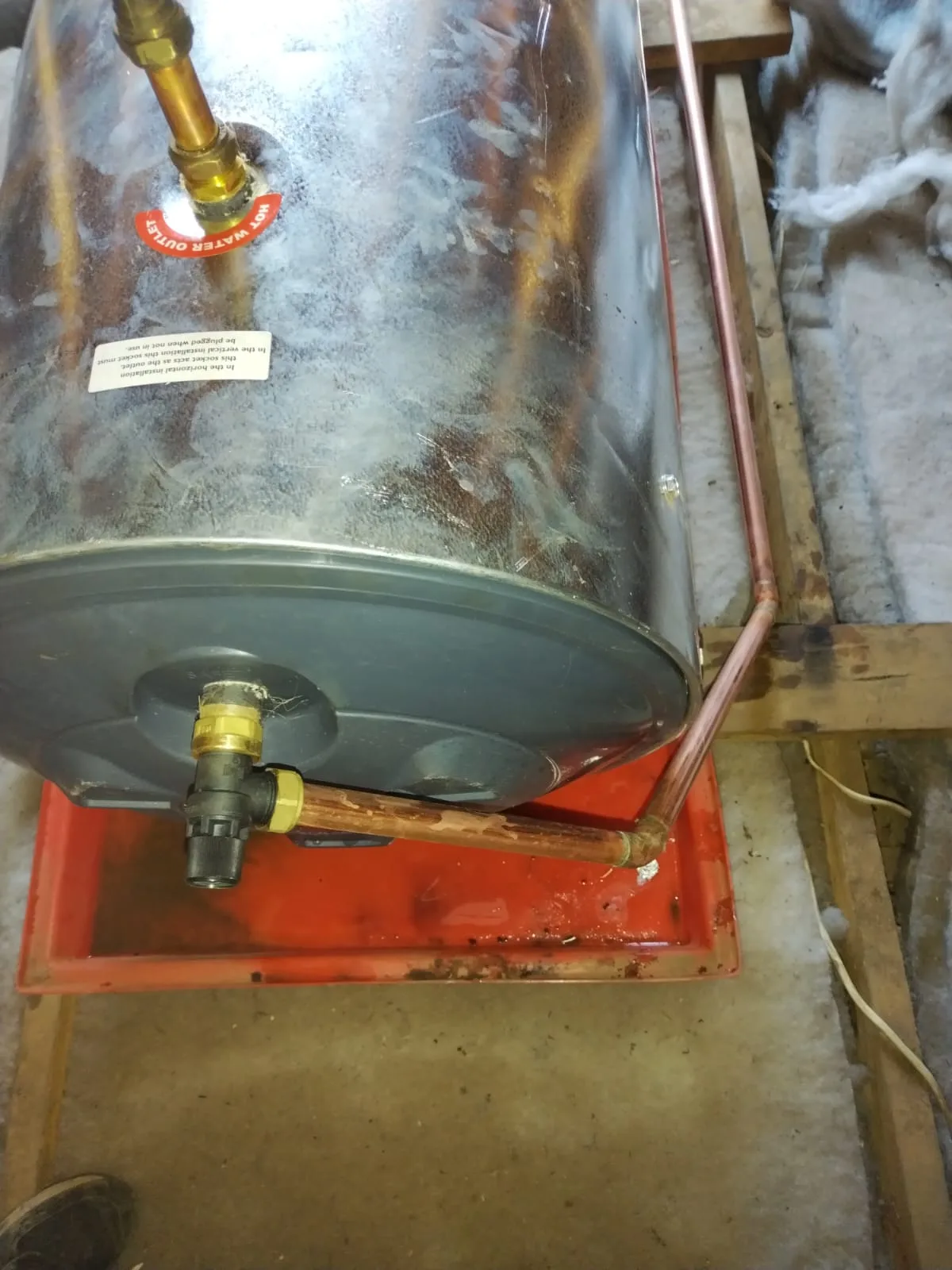
A small amount of water from a geyser system can have several causes, but active leakage into a ceiling or electrical area should never be ignored. The urgency depends on the volume, temperature, location, pressure behaviour and whether the leak is controlled.
Quick action checklist
- Protect people from water, sewage, heat and electricity.
- Isolate the relevant water supply when safe.
- Stop using affected fixtures and appliances.
- Limit damage without attempting unsafe repairs.
- Take photographs and give the plumber clear information.
Call urgently when water is entering the ceiling
Water staining, dripping light fittings, sagging boards or a rapidly spreading ceiling patch may indicate a failed geyser, pipe or connection in the roof space. Keep everyone away from the area because wet ceilings can collapse.
Treat water near electricity as an emergency
A geyser combines water and electrical components. If water is near wiring, isolators, plugs, lights or the distribution board, do not touch wet equipment. Switch off the geyser circuit only when the board is safely reachable by a dry route.
Heavy or continuous leakage needs immediate attention
Water pouring from the geyser area, running continuously from a pipe or rapidly filling a drip tray indicates an active fault. Close the incoming water supply to the geyser or the property when the correct valve can be reached safely.
Very hot water or steam increases the risk
Escaping hot water can burn occupants and damage ceilings, flooring and belongings. Do not enter the roof space or handle hot pipes. Isolate from a safe location and wait for qualified assistance.
Unusual pressure symptoms should not be ignored
Banging, violent vibration, distorted components or abnormal discharge can indicate pressure or control problems. Never cap a safety valve or discharge pipe; these components are intended to relieve dangerous conditions.
A dripping safety pipe may still require inspection
Occasional discharge during heating can occur in some systems, but constant running, a sudden increase or large volumes of water can indicate excessive pressure, a faulty valve, thermostat trouble or another system problem.
A full drip tray or blocked overflow is urgent
The tray and overflow are intended to direct limited leakage outside. If the tray is overflowing into the ceiling, the outlet may be blocked or the leak may exceed its capacity. This requires prompt isolation and repair.
When a small leak can be scheduled
A minor, contained drip from an accessible fitting with no electrical risk, ceiling damage or pressure symptoms may allow a scheduled repair. Even then, arrange inspection soon because small leaks can worsen and cause corrosion or mould.
What to do before the plumber arrives
Keep people away, isolate the geyser circuit if safe, close the appropriate water valve, move belongings from below the leak and take photographs from a safe position. Do not climb into a wet roof space or dismantle the geyser.
What the plumber may inspect
The plumber may assess the tank, thermostat and element area, pressure-control valve, vacuum breakers, temperature-and-pressure safety valve, flexible connectors, pipework, drip tray and overflow. The correct repair depends on the exact source and system condition.
CUSTOMER QUESTIONS
When is a leaking geyser an emergency?
When water enters the ceiling, runs continuously, is near electricity, is very hot, or shows abnormal pressure symptoms.
Should I switch off a leaking geyser?
Yes when the circuit can be isolated safely from a dry position.
Should I turn off the water as well?
Close the geyser isolation valve or main supply when water is flowing actively and the valve is safe to operate.
Is overflow-pipe discharge always normal?
Limited discharge can occur, but continuous or heavy flow needs inspection. Never block a safety discharge.
Can a leaking geyser become dangerous?
Pressure, corrosion and component failure can escalate. Heavy discharge, noise, distortion or ceiling water needs urgent attention.
Can I keep using hot water?
Avoid use until the source and safety condition are known, especially with electrical or ceiling risk.
What if the drip tray is full?
A full or overflowing tray can dump water into the ceiling and needs prompt isolation and repair.
Is a small accessible drip always safe to wait on?
Only if contained with no electrical or structural risk—and still arrange inspection soon.
What should I not do in the roof space?
Do not climb into a wet roof, dismantle the cylinder or touch wet electrical parts.
Can Plumb A Nator attend geyser leaks urgently?
Yes. Emergency isolation and repair support is available across Gauteng.
Need help deciding if a leaking geyser is an emergency?
Share what you are seeing around the geyser and we will suggest sensible next steps.