Grease buildup drain cleaning prevention is one of those topics where most advice stops at “don’t pour grease down the sink”, and then leaves you without a practical plan. That’s not enough. Kitchen grease management is about what you do before there’s a blockage: how you dispose of fats and oils, whether your kitchen needs an interceptor, and what a realistic weekly routine actually looks like. Get this right and you’ll rarely need to call a plumber for a drain emergency.
Why Grease Buildup Is a Bigger Drain Problem Than You Think
Most homeowners expect a grease clog to announce itself immediately. It doesn’t. The problem builds slowly, invisibly, inside your pipes, until the day the water simply won’t drain.
Municipal water authorities consistently identify grease, fats, and oils as one of the leading causes of residential sewer blockages, accounting for a significant share of drain call-outs in urban areas. That’s not surprising once you understand what actually happens inside the pipe.
How grease behaves inside pipes over time
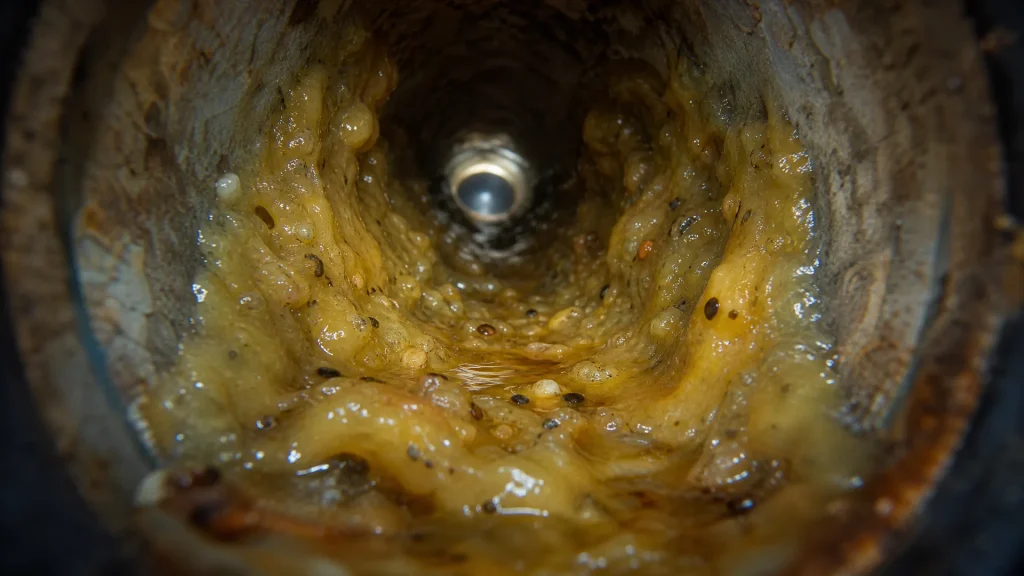
Hot grease is liquid and flows freely, so it feels harmless when you pour it. But pipes are cooler than your pan. Within a short distance from the drain, grease cools and begins to stick to the pipe wall. It doesn’t wash away. Each pour adds another thin layer.
Over weeks and months, that coating thickens. Food particles, soap scum, and debris catch on the sticky surface. The effective diameter of the pipe gradually narrows. In older or narrower pipes, common in South African homes built before the 1990s, this process happens faster.
A pattern plumbers see regularly: a homeowner pours hot bacon fat down the sink for months with no obvious problem, then faces a full blockage when the accumulated grease finally seals the P-trap or a downstream pipe bend. Clearing it requires a professional snake or hydro-jet, a far more expensive outcome than prevention. For context on what that repair can cost, see blocked drain cleaning costs in South Africa.
Correct Cooking Oil Disposal: What to Do Instead of Pouring It Down the Sink
Knowing what counts as a drain-damaging substance is the first step toward better cooking oil disposal habits.
Fats, oils, and grease: what counts
The FOG category, fats, oils, and grease, is broader than most people assume. It includes:
- Cooking oils (sunflower, canola, olive, coconut)
- Animal fats (bacon grease, lard, chicken fat, dripping)
- Dairy fats (butter, cream)
- Sauces and gravies with a high fat content
- Food scraps coated in oil or grease
All of these solidify or congeal at or near room temperature inside pipes. Even small amounts, added consistently, contribute to buildup.
Safe disposal methods for South African households
The practical alternatives are simple:
- Cool and jar method. Pour hot fat or oil into a glass jar or empty tin. Let it solidify completely, seal it, and put it in your general waste bin. This is the most reliable method for small amounts of cooking fat.
- Re-use for cooking. Strained cooking oil, especially from frying, can be reused several times. Store it in a sealed container at room temperature or in the fridge.
- Municipal waste bin. Once solidified or contained, all FOG waste goes in the rubbish, not the recycling or the drain.
One disposal method to avoid: the “hot water and dish soap” flush. Experienced South African plumbers consistently advise against it. It temporarily liquefies grease and pushes it further along the pipe, where it re-solidifies in a section that is harder and more expensive to access. The problem doesn’t disappear, it just moves somewhere worse.
Kitchen Sink Grease Trap Basics: Do You Need One and How to Maintain It
A kitchen sink grease trap (also called a grease interceptor) is a device fitted under the sink or in the drainage line. It slows wastewater flow and allows grease to float to the surface while water drains through below, separation by density.
Who needs a grease trap
Residential kitchens that do moderate cooking rarely require a grease trap if correct disposal habits are followed. However, households that cook heavily, daily frying, large batch cooking, or running a home-based food business, benefit from an under-sink interceptor. They’re relatively inexpensive to install and can be added to most standard kitchen sink plumbing.
Commercial kitchens are a different matter. South African health and environmental by-laws in most municipalities require commercial food operations to install and maintain grease traps as a condition of their operating permit. The requirement exists because commercial volumes of grease overwhelm standard drainage systems rapidly.
Signs that any grease trap needs attention:
- Slow drainage from the kitchen sink
- Foul odours near the drain or under the sink
- Visible grease on the underside of the interceptor lid
- More than one month since the last inspection
Grease trap maintenance routine
For a residential under-sink interceptor, a monthly inspection and clean is sufficient for most households. Heavy-use home kitchens should clean the unit every two to three weeks.
The process is straightforward: remove the unit, empty the accumulated grease into a sealed container (bin it, don’t pour it down another drain), scrub the interior with warm soapy water, rinse, and refit.
Commercial kitchens are typically required to clean their grease traps every one to three months under health and environmental regulations. Residential kitchens with heavy cooking activity would do well to apply the same discipline. A building-wide plumbing maintenance schedule follows the same logic, regular, scheduled attention prevents costly reactive repairs.
Building a Drain Maintenance Routine That Prevents Blockages
A drain maintenance routine doesn’t need to be complicated. Consistency matters more than complexity.
Weekly and monthly habits
Weekly:
- Run very hot (not boiling) water down the kitchen drain for 30–60 seconds after washing up. This helps move any minor residue through before it accumulates.
- Wipe greasy pans with a paper towel before rinsing, this removes the bulk of the fat before it ever reaches the drain.
Monthly:
- Pour half a cup of bicarbonate of soda (baking soda) down the drain, followed by half a cup of white vinegar. Let it fizz for 15–20 minutes, then flush with hot water. This mild treatment helps break down light organic residue and deodorises the drain.
- Inspect any under-sink grease interceptor and clean it if needed.
Quarterly (high-use kitchens):
- Book a professional inspection. A licensed plumber can run a camera or snake check to catch partial blockages before they become full ones. Homeowners who keep to this kind of quarterly schedule report far fewer emergency call-outs than those who only act when something goes wrong.
Drain cleaning products: what works and what damages pipes
Many supermarket drain cleaners rely on caustic chemistry, sodium hydroxide (lye) or sulphuric acid. These can shift a fresh, partial grease clog, but they carry real risks:
- Older pipes (cast iron, older PVC) can corrode with repeated chemical use.
- The chemicals don’t remove the grease, they partially dissolve it, and the residue can re-solidify further down the line.
- They’re a short-term fix, not a maintenance strategy.
Enzyme-based drain cleaners are a safer option for regular maintenance. They use biological action to break down organic matter including grease. They work more slowly than caustic products but don’t damage pipe material. Use them monthly as a preventive measure rather than waiting for a blockage.
Warning Signs You Already Have a Grease Clog, and When to Call a Plumber
Even with good habits, grease buildup can develop, especially in an older home where previous occupants weren’t as careful. Recognise these warning signs early.
Symptoms of a developing or established grease clog:
- Water drains noticeably slower than usual from the kitchen sink
- Gurgling or bubbling sounds when the sink drains or when you flush a nearby toilet
- Recurring blockages that clear briefly then return
- Persistent foul odours from the drain, even after cleaning
- Water backing up into the sink or a connected fixture
Minor slow drainage can sometimes be resolved with a plunger or an enzyme treatment. But if the blockage is recurring, if multiple fixtures are affected, or if the clog has been building for months, a professional hydro-jet or snake is the right tool, not another bottle of drain cleaner.
Knowing when to call an emergency plumber versus attempting a DIY fix can save you from making a partial blockage worse. Left untreated, serious grease clogs can escalate into sewage backup causes and solutions, a significantly more disruptive and costly problem.
How to Prevent Drain Blockages Long-Term: A Simple Household Action Plan
Grease buildup drain cleaning prevention comes down to four consistent habits. Here’s a practical checklist to bookmark and use:
Disposal rules (every time you cook):
- Cool and jar all cooking fat and oil, bin it, don’t drain it
- Wipe pans with paper towel before washing
- Never flush FOG waste with hot water and soap
Grease trap maintenance (monthly):
- Inspect under-sink interceptor if fitted
- Clean and empty the interceptor, dispose of grease in the bin
- Note any slow drainage and address it before it worsens
Drain maintenance routine (weekly/monthly):
- Weekly hot-water flush after washing up
- Monthly baking-soda-and-vinegar treatment
- Quarterly professional check for heavy-use kitchens
Know when to escalate:
- Call a plumber if drainage is consistently slow, odours persist, or blockages recur
- Don’t apply repeated caustic chemicals to a pipe that keeps blocking, get a professional assessment
Proactive care is always cheaper than emergency repair. If you’re unsure about the state of your drains or want expert advice on grease trap installation, how to find a reliable plumber in South Africa is a practical starting point for connecting with a qualified professional in your area.