
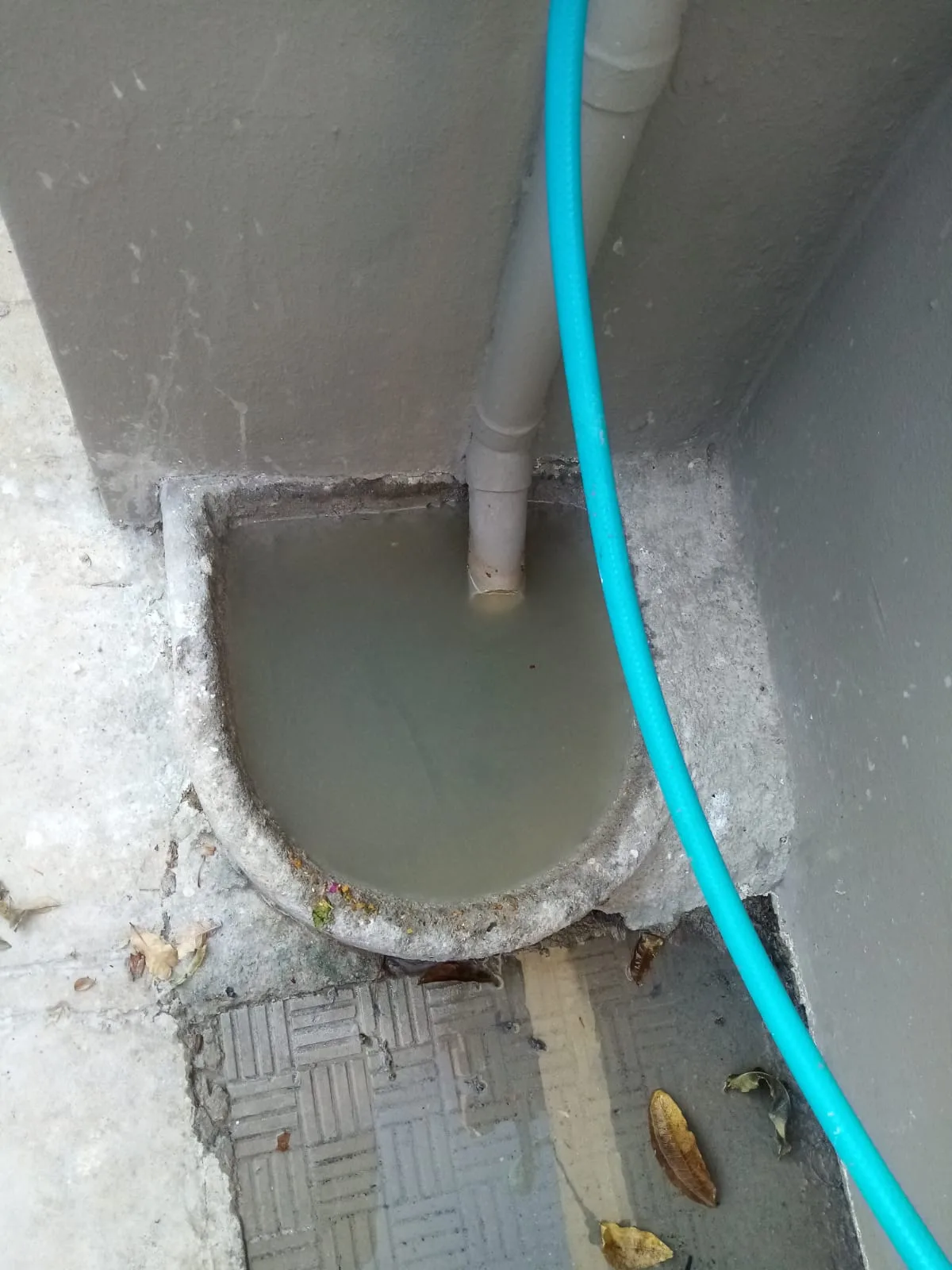
Outdoor drains handle wastewater, rainwater or both, depending on the system. When they block, water may pond around buildings, carry contamination across paving or reveal a deeper sewer problem. Identifying whether the drain is sewer, stormwater or surface drainage is essential.
Before you worry
Do not assume every outdoor grate is connected to the same system. Stormwater and sewer drainage should normally remain separate, and the safe response depends on what the drain carries.
How to recognise the problem
- Water stands around an outside grate.
- A gully overflows when indoor fixtures are used.
- Bad sewer smells come from an inspection point.
- Rainwater remains long after a storm.
- Soil or paving sinks near a drain route.
Common causes
- Leaves, sand and garden debris.
- Grease or waste entering gullies.
- Roots in sewer or stormwater lines.
- Collapsed or displaced underground pipes.
- Incorrect gradients.
- Blocked municipal connections or downstream lines.
What you can safely check yourself
- Identify whether the water appears clean or contaminated.
- Remove loose surface leaves without reaching into the pipe.
- Stop indoor water use if a sewer gully is overflowing.
- Photograph the conditions and nearby inspection points.
What you should never do
- Do not enter manholes.
- Do not handle sewage without proper protection.
- Do not redirect contaminated water into stormwater channels.
- Do not excavate before services are located.
When to call a plumber
Call a plumber when wastewater is involved, the drain repeatedly overflows, the blockage is underground, or there are signs of pipe collapse. Stormwater problems may also require drainage or civil expertise depending on the system.
How professionals solve it
The line is traced, access points are checked and the obstruction is removed with mechanical or jetting equipment. CCTV inspection can locate roots, collapse or displaced joints. Surface levels and gradients may also need assessment.
How to prevent it happening again
- Keep leaves and soil away from grates.
- Do not pour grease or waste into gullies.
- Maintain accessible inspection points.
- Repair cracked pipes and root entry.
- Check outdoor drainage before the rainy season.
CUSTOMER QUESTIONS
Why does my outside drain overflow when I use the washing machine?
The appliance may share a blocked waste line or gully. Stop indoor use and have the line cleared.
Can rain cause sewer drains to overflow?
Yes where stormwater incorrectly enters the sewer, or where downstream capacity is restricted.
Who is responsible for a blockage outside my boundary?
It depends on location and municipal rules. A plumber can help identify private versus municipal responsibility.
What is the difference between a sewer gully and a stormwater grate?
Sewer gullies carry wastewater from fixtures; stormwater grates carry rain. They should stay separate.
When should I call a plumber for outdoor drainage?
When wastewater is involved, overflow repeats, the blockage is underground, or there are signs of collapse.
Can I clear leaves from an outdoor grate myself?
Yes for surface debris only. Do not reach into the pipe or enter manholes.
Do tree roots affect outdoor drains?
Roots commonly enter cracked joints on sewer and some stormwater lines and need camera confirmation.
Is CCTV useful on outdoor drains?
Yes. It shows roots, displaced joints, silt and collapse without unnecessary excavation.
How do I reduce outdoor drain problems before the rainy season?
Clear grates, keep soil and leaves away, maintain inspection points and repair known cracks.
Can Plumb A Nator help with outdoor drain problems?
Yes. Contact the team for assessment, clearing and CCTV on Gauteng properties.
Want practical advice on outdoor drain problems?
Describe the situation around outdoor drain problems so we can advise whether a visit or repair is needed.