
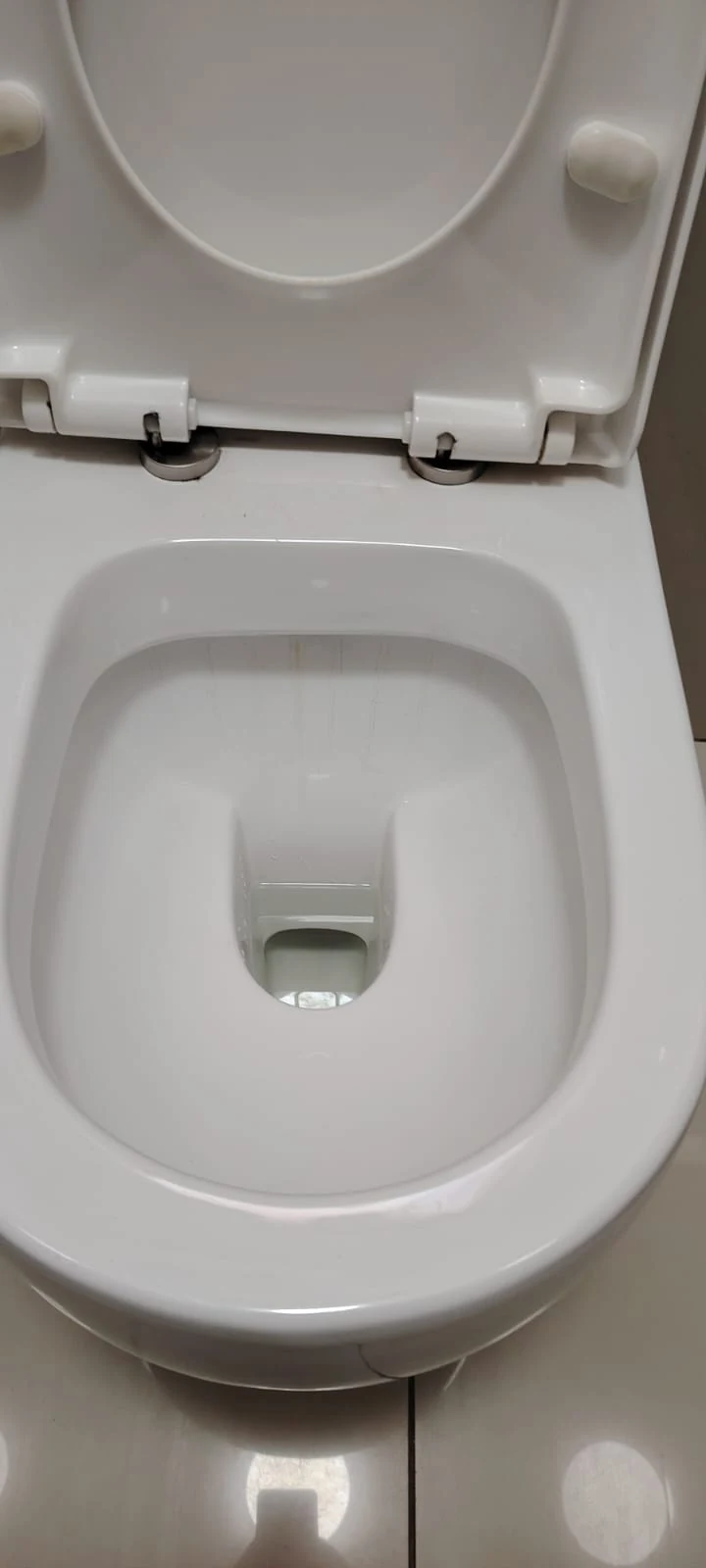
Water around the base of a toilet should never be ignored. It may come from condensation or a nearby supply connection, but it can also indicate a failed pan connector, damaged seal, loose toilet or crack. Wastewater leakage creates a hygiene risk and can damage floors and ceilings below.
Before you worry
Dry the area completely and do not flush immediately. Check whether water appears while the cistern fills, only during a flush, or even when the toilet is unused. That timing helps identify whether the source is clean supply water or wastewater.
How to recognise the problem
- Water appears around the pan after flushing.
- The toilet rocks or moves when used.
- A damp smell or staining develops at the base.
- Flooring becomes swollen, loose or discoloured.
- Water appears on the ceiling below the bathroom.
Common causes
- Failed pan connector or outlet seal.
- Loose fixing bolts allowing movement.
- Leaking inlet hose, isolation valve or cistern bolts.
- Condensation running down the outside of the cistern.
- Cracked pan, cistern or concealed connection.
What you can safely check yourself
- Stop using the toilet if water appears after flushing.
- Dry the floor and observe when moisture returns.
- Check visible supply connections without tightening them.
- Keep children and pets away from possible wastewater.
- Use another toilet until the leak is assessed.
What you should never do
- Do not seal around the base to hide an active leak.
- Do not rock or force a loose toilet.
- Do not keep flushing to locate the leak if wastewater escapes.
- Do not assume clear-looking water is hygienic.
When to call a plumber
Call a plumber promptly when water appears during flushing, the toilet moves, the floor is damaged, there is an odour, or moisture is visible below the bathroom. A failed outlet seal normally requires the toilet to be lifted and correctly reset.
How professionals solve it
A plumber isolates the source, checks supply fittings and tests the toilet under controlled flushing. If the outlet seal has failed, the pan is removed, the connection and floor are inspected, damaged parts are replaced and the toilet is securely refitted and leak-tested.
How to prevent it happening again
- Have a rocking toilet refixed before the seal fails.
- Do not use the pan as support when standing or climbing.
- Repair supply drips before they damage flooring.
- Keep floor joints visible enough to notice moisture early.
- Investigate recurring damp smells around the toilet.
Frequently asked questions
Can silicone stop a toilet leaking at the base?
Silicone may hide the water but does not repair a failed outlet seal. Sealing over the leak can trap moisture and delay proper diagnosis.
Is water at the base always sewage?
No. It may come from the supply hose, cistern bolts or condensation, but water appearing during flushing should be treated as potentially contaminated.
Why does the toilet move slightly?
Fixings may be loose, the floor may be uneven or damaged, or the installation may not be properly supported.
Need help with toilet leaking at base?
Tell us how toilet leaking at base affects your property and we will help plan the right response.