Your geyser is probably the single biggest electricity user in your home. It heats water around the clock, whether you need hot water or not. A geyser timer installation in South Africa is one of the fastest, cheapest ways to cut that waste. This guide covers what it costs, who should install it, and how quickly it pays for itself.
How Does a Geyser Timer Work (And Why It Saves You Money)
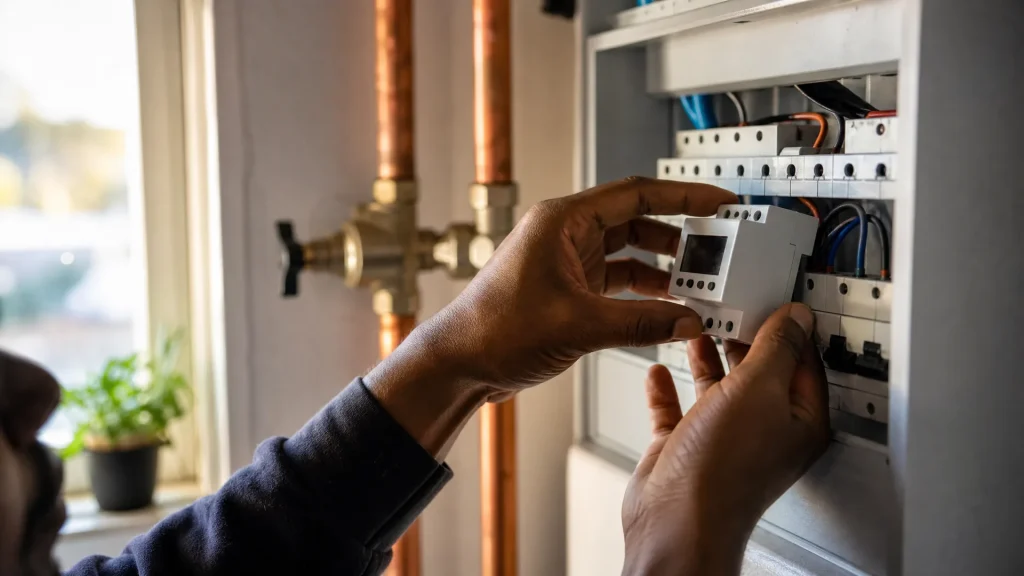
A geyser timer is a small switch, usually fitted at the geyser’s isolator or distribution board. It turns the element on and off on a schedule. Instead of heating water 24 hours a day, the geyser only runs during the hours you actually need hot water.
Geysers don’t just heat water once and stop. As stored water slowly loses heat, the thermostat kicks the element back on to reheat it. This happens repeatedly through the day and night, even while everyone is asleep or out at work. A timer breaks that cycle. It cuts power during the hours nobody needs hot water, so the geyser stops reheating water that just sits there losing heat.
Geysers typically account for around 40-50% of an average South African home’s electricity bill. That makes them the single biggest target for load management in most households, ahead of stoves, lighting, or appliances.
Geyser Watt Usage in South Africa Explained
Most South African homes run a geyser element rated somewhere around 3000W. A 150-litre geyser left switched on all day and night, reheating constantly, uses considerably more electricity over a month than the same unit switched off for eight to ten off-peak hours using a timer.
The maths is simple. An element only draws power while it’s actually heating, not while water just sits in the tank. But a geyser with no timer reheats far more often, because it responds to every bit of standby heat loss, day and night. Cut those extra cycles, and you cut a large share of the wasted electricity, without changing how much hot water your household actually uses.
Geyser Timer Installation Cost in South Africa (Including Johannesburg)
Cost is the question most homeowners ask first, and reasonably so. Pricing for a geyser timer installation in South Africa depends on the type of timer, your existing wiring, and how easy the geyser is to access.
A basic mechanical timer is the cheapest option. It’s a simple dial or digital switch that runs a fixed daily schedule, and installation is usually quick if the wiring at your distribution board is already in reasonable shape. A smart Wi-Fi geyser controller costs more upfront because it includes app control, usage monitoring, and often a mobile data or Wi-Fi connection. But it gives you far more flexibility than a fixed schedule.
Johannesburg homeowners generally pay in a similar range to the rest of the country for standard installations. Older properties in some suburbs can add cost if the distribution board needs upgrading or the geyser wiring doesn’t meet current standards. Callout fees, travel time, and whether the installer also needs to check the geyser’s condition all factor into the final quote.
What Affects the Price of Installation
A few things swing the price up or down: the type of timer you choose, whether your geyser already has an isolator switch installed correctly, how accessible the geyser is (roof space versus an easy cupboard), and whether any wiring needs to be replaced or upgraded to meet safety standards. Homes with older or non-compliant electrical setups will cost more to bring up to standard before a timer can go in safely. It’s worth reviewing the geyser installation requirements in South Africa before booking, so you know what a compliant setup should look like.
Plumber or Electrician: Who Do You Actually Need?
This is one of the most common points of confusion. A geyser timer installation in South Africa is fundamentally an electrical job. It involves wiring into the circuit that feeds your geyser element, so a qualified electrician should handle the timer itself and issue the relevant electrical certificate.
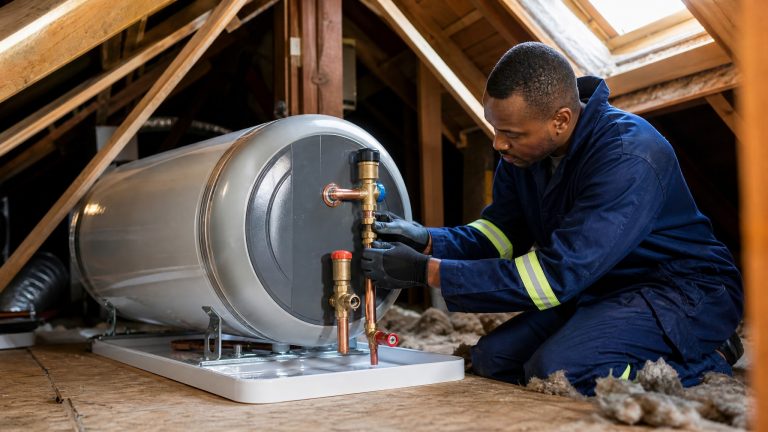
A plumber’s role is different but just as important. Before any timer goes in, someone needs to confirm the geyser, its pressure relief valve (PRV), and its pipework are in good working order. There’s little point installing a timer on a geyser that’s already leaking or close to failing. Many households book a combined assessment, where a plumber checks the unit and a licensed electrician wires the timer, so both the mechanical and electrical sides are covered in one visit. If you’re not sure who to trust with either job, finding a reliable plumber in South Africa is a good first step before you commit to a quote.
Best Time to Run Your Geyser on South African Tariffs
Timing matters as much as the timer itself. The goal is to heat water when electricity is cheapest, and to avoid heating it during expensive peak periods when demand on the grid is highest.
Off-Peak Electricity and Municipal Time-of-Use Rates
Many South African municipalities, including Johannesburg, Cape Town, and Tshwane, apply time-of-use or off-peak tariff structures where electricity costs more during weekday morning and evening peaks. Homeowners on these tariffs often see the fastest payback from a timer, because shifting geyser heating into off-peak windows directly avoids the highest charging periods.
As a general rule, it makes sense to schedule your geyser to heat water in the early hours before the household wakes up, and again in the late afternoon before peak evening demand, rather than running continuously through the day. The exact best schedule depends on your municipality’s specific tariff times and your household’s actual hot water habits. It’s worth checking your municipal account for your area’s peak and off-peak windows.
Geyser Timer and Load Shedding Compatibility
A common worry is whether a geyser timer still works during load shedding. The honest answer is that a timer’s schedule and Eskom’s load shedding schedule are two separate things, and they don’t always line up.
A basic mechanical timer keeps running its own fixed schedule regardless of power cuts. Once power returns, it resumes at whatever point its dial says it should be. That’s fine most of the time, but it does mean your geyser might miss a scheduled heating window if load shedding overlaps with it. Smart geyser controllers handle this better. Some can shift the heating schedule around outages automatically, using app-based scheduling to make up missed heating cycles when power returns. If load shedding is a major concern for your household, a smart controller is worth the extra upfront cost over a basic timer.
Geyser Timer vs Smart Geyser Controller vs Geyser Blanket
These three options often get confused, but they solve different problems and can be used together.
A basic geyser timer is the cheapest option. It runs a fixed daily on/off schedule and needs no app or data connection. It’s a solid choice if your household’s hot water routine is predictable and doesn’t change much week to week.
A smart geyser controller costs more but adds flexibility. You can adjust the schedule remotely, monitor usage, and in some cases get load-shedding-aware scheduling that a basic timer can’t offer. This suits households with irregular routines or frequent power interruptions.
A geyser blanket is different again. It’s insulation wrapped around the geyser tank to slow down heat loss, so the geyser doesn’t need to reheat as often in the first place. It doesn’t switch anything on or off. Used together, a timer or controller and a blanket complement each other well: the blanket reduces standby heat loss, while the timer or controller manages when heating actually happens. If you’re weighing up whether insulation alone makes financial sense, it’s worth reading whether is a geyser blanket worth it for your specific geyser.
Payback Period: How Fast Does a Geyser Timer Pay for Itself
Most homeowners want to know how long it takes to recover the installation cost. The honest answer is that it depends on your household’s hot water habits, your tariff structure, and the type of timer you install. But the payback period is usually short compared to most home energy upgrades.
A basic mechanical timer typically pays for itself within a few months to about a year, because the installation cost is relatively low and the electricity savings from cutting unnecessary reheating cycles start immediately. A smart controller costs more upfront, so its payback period stretches a bit longer. But it can keep delivering extra savings afterward through more precise scheduling and load-shedding-aware adjustments that a basic timer can’t match.
Households on time-of-use or off-peak municipal tariffs tend to see the fastest returns, because shifting heating away from peak charging periods compounds the savings from simply switching the geyser off during idle hours. In practice, that means a family running a geyser continuously, with no timer at all, has the most to gain. They usually see the quickest payback once one is installed.
Maintenance, Longevity, and When to Call a Professional
A timer only saves money if the geyser behind it is actually working properly. Before installation, it’s worth having a professional check a few basics: the pressure relief valve for leaks or corrosion, the thermostat for accuracy, and the element for signs of wear or scaling. A geyser with a faulty PRV, for instance, can waste water and money regardless of any timer schedule. It’s worth ruling out issues like a geyser leaking from the pressure relief valve before booking a timer install.
It’s also worth knowing the difference between a scheduling problem and a geyser problem. If hot water runs out at odd times or seems inconsistent, that could be the timer schedule, or it could be a failing element or thermostat. Homeowners unsure which it is can start by diagnosing hot water shortages before assuming the timer is at fault.
Finally, if your geyser is old, has needed repeated repairs, or shows signs of corrosion around fittings, a timer is not the right fix. In that case, it makes more financial sense to look at a full replacement rather than adding a timer to a unit nearing the end of its life. A geyser replacement cost guide can help you weigh that decision against the cost of a timer install.
Our licensed electricians and plumbers assess your geyser’s wiring, isolator switch, and municipal tariff structure before recommending a timer or smart controller install, so you get a solution that actually matches your home and your electricity plan. If you’re ready to start saving on your monthly bill, book a professional geyser timer or smart controller quote through plumber-plumbers.co.za and get an assessment tailored to your household.